Climate Science Centre, CSIRO Oceans and Atmosphere, Canberra, ACT, 2601, Australia.
Climate Science Centre, CSIRO Oceans and Atmosphere, Aspendale, VIC, 3195, Australia.
Nat Commun. 2021 Nov 26;12(1):6921. doi: 10.1038/s41467-021-27225-4.
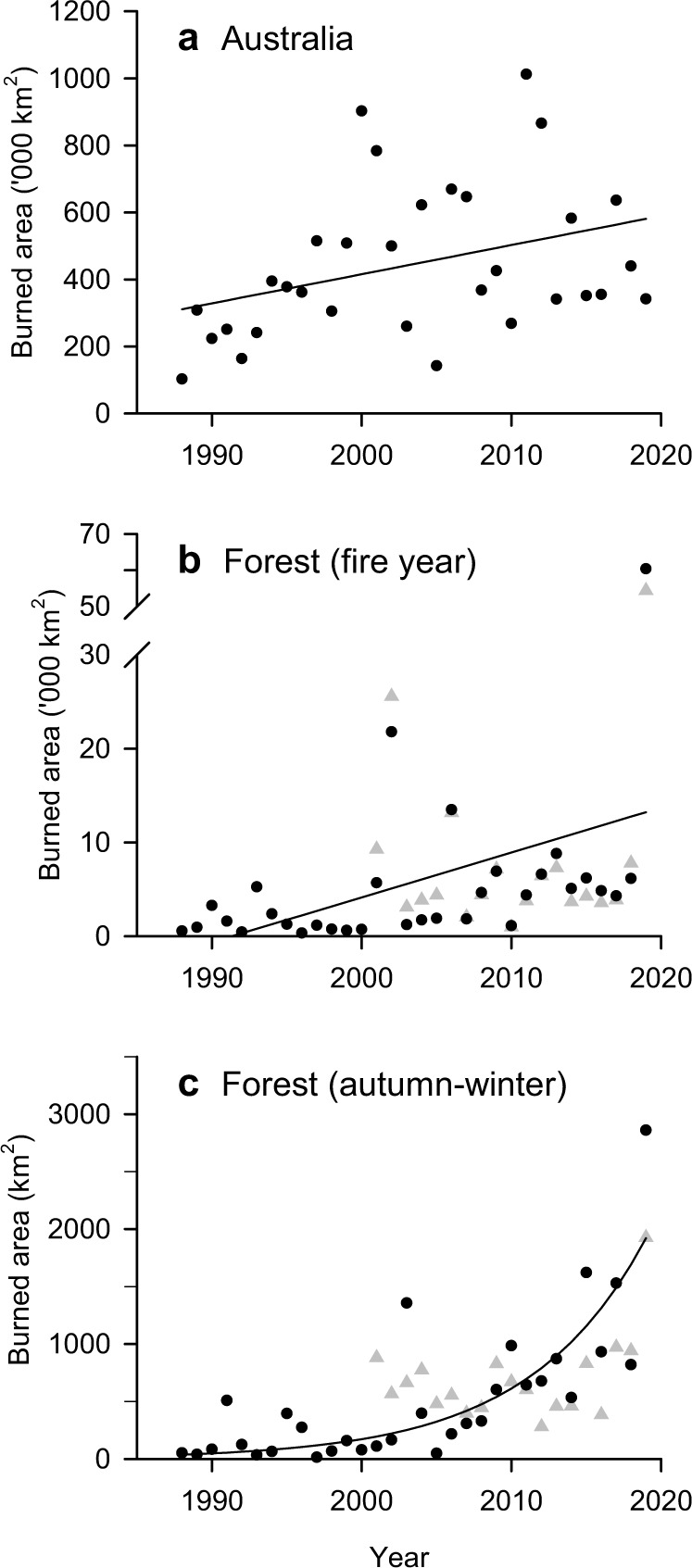
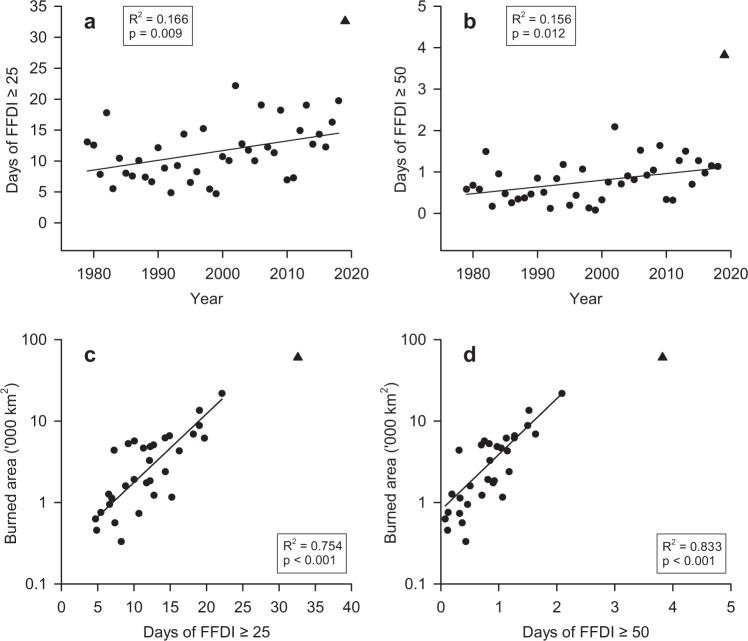
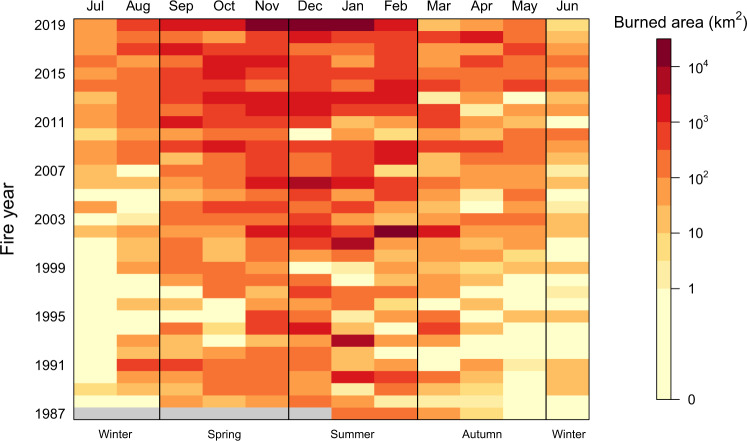
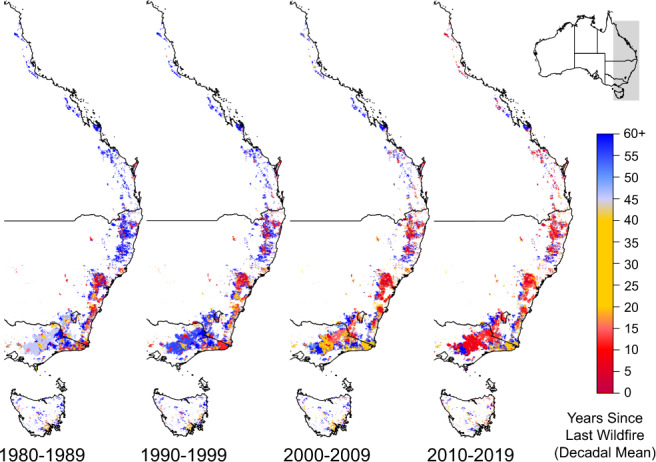
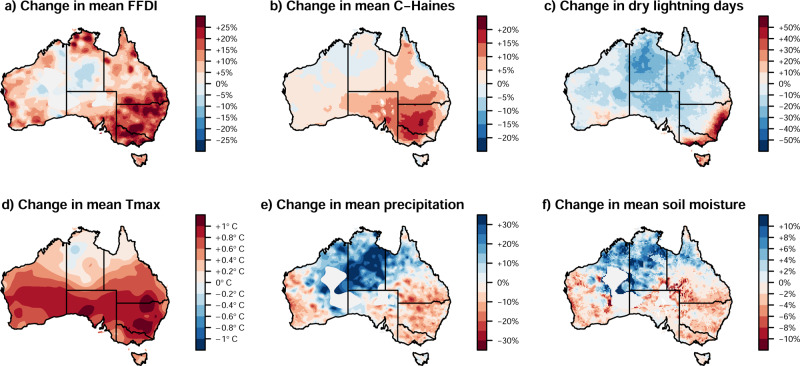
Fire activity in Australia is strongly affected by high inter-annual climate variability and extremes. Through changes in the climate, anthropogenic climate change has the potential to alter fire dynamics. Here we compile satellite (19 and 32 years) and ground-based (90 years) burned area datasets, climate and weather observations, and simulated fuel loads for Australian forests. Burned area in Australia's forests shows a linear positive annual trend but an exponential increase during autumn and winter. The mean number of years since the last fire has decreased consecutively in each of the past four decades, while the frequency of forest megafire years (>1 Mha burned) has markedly increased since 2000. The increase in forest burned area is consistent with increasingly more dangerous fire weather conditions, increased risk factors associated with pyroconvection, including fire-generated thunderstorms, and increased ignitions from dry lightning, all associated to varying degrees with anthropogenic climate change.
澳大利亚的火灾活动受到高度年际气候变率和极端事件的强烈影响。通过气候变化,人为气候变化有可能改变火灾动态。在这里,我们汇编了澳大利亚森林的卫星(19 年和 32 年)和地面(90 年)火灾面积数据集、气候和天气观测以及模拟的燃料负荷。澳大利亚森林的火灾面积呈线性正年度趋势,但在秋季和冬季呈指数增长。在过去的四十年中,每十年发生一次火灾的平均年数连续减少,而自 2000 年以来,森林大火年(>100 万公顷燃烧)的频率显著增加。森林火灾面积的增加与越来越危险的火灾天气条件、与热对流相关的风险因素(包括火灾引发的雷暴)以及来自干燥闪电的点火次数增加相一致,所有这些都与人为气候变化在不同程度上有关。