Bhattarai Dharmagat, Banday Aaqib Zaffar, Sadanand Rohit, Arora Kanika, Kaur Gurjit, Sharma Satish, Rawat Amit
Allergy Immunology Unit, Department of Pediatrics, Advanced Pediatrics Centre, Post Graduate Institute of Medical Education and Research (PGIMER), Chandigarh, 160012, India.
Appl Microsc. 2021 Nov 29;51(1):18. doi: 10.1186/s42649-021-00067-6.
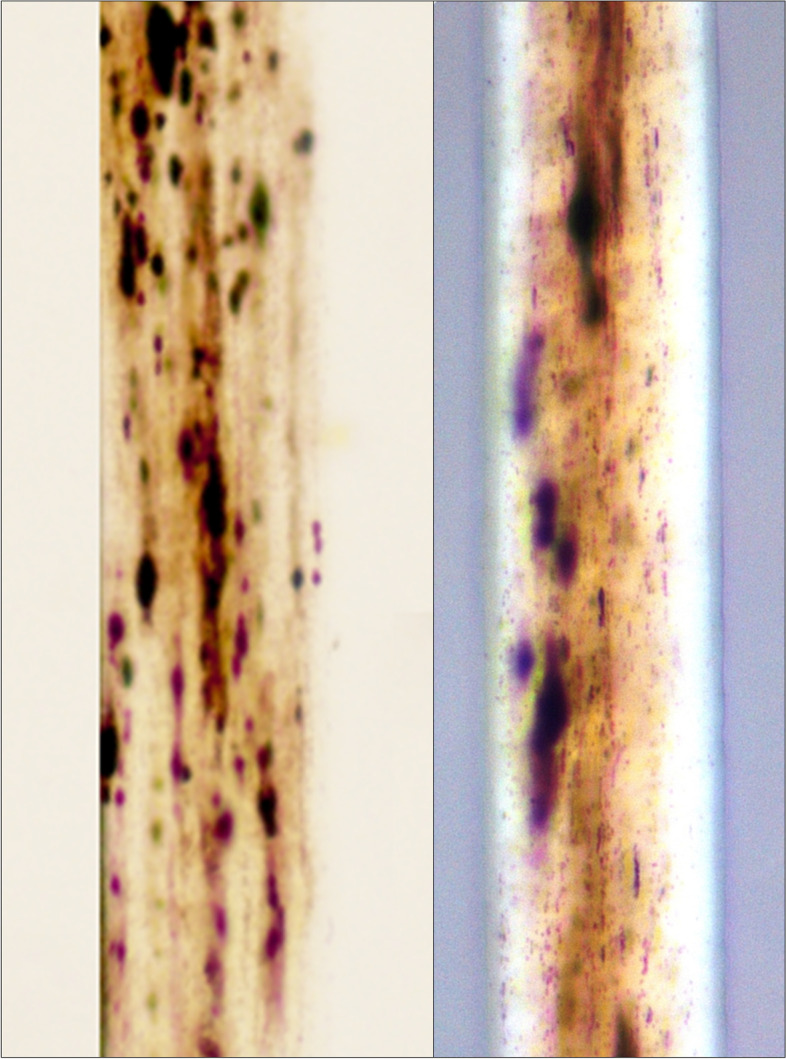
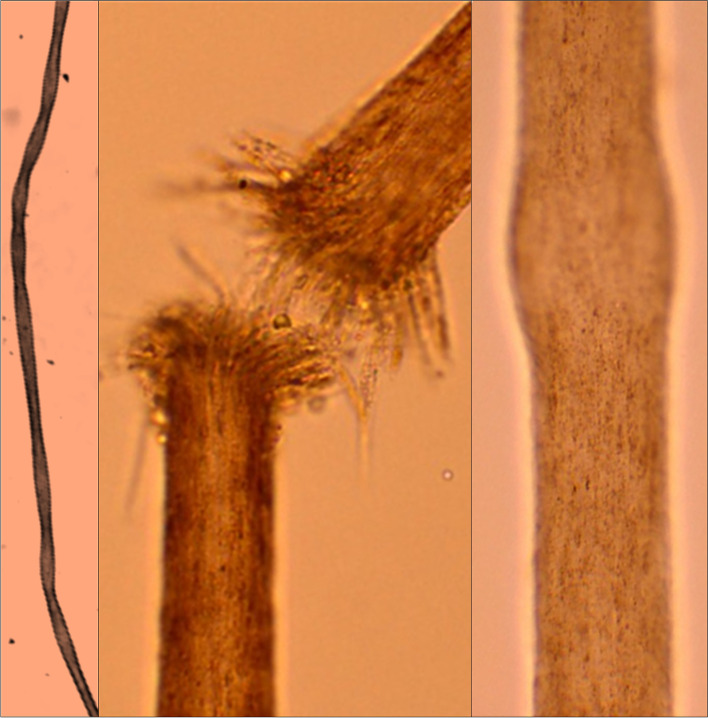
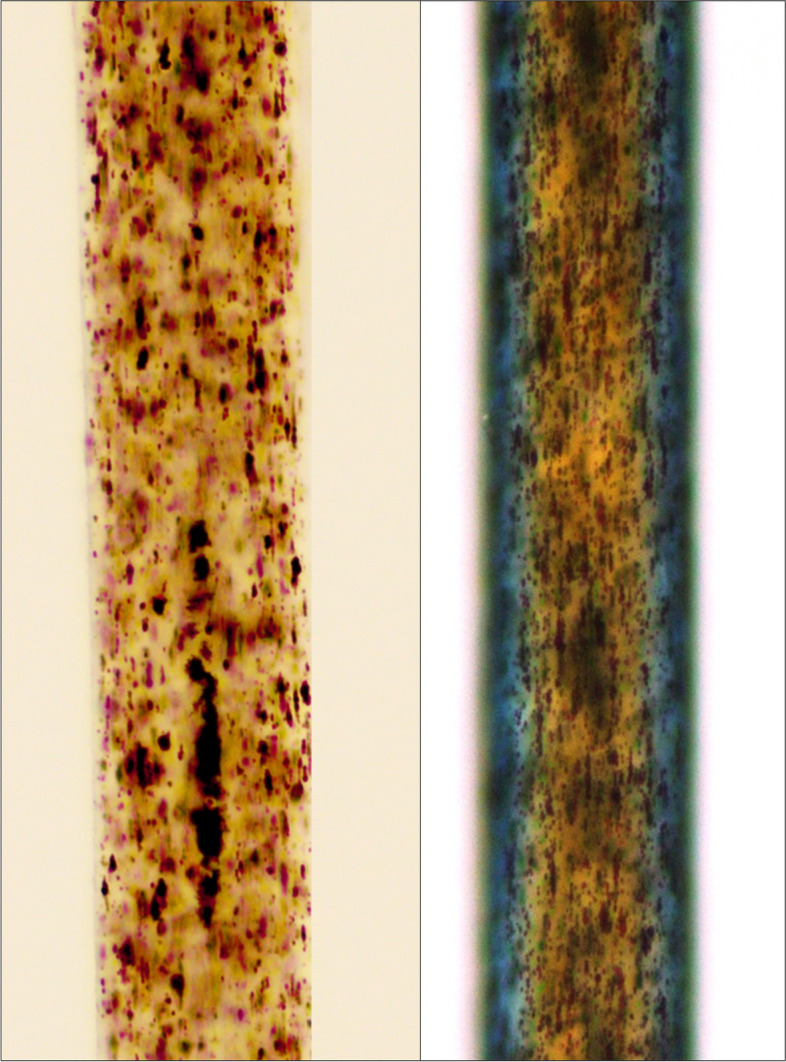
Hair, having distinct stages of growth, is a dynamic component of the integumentary system. Nonetheless, derangement in its structure and growth pattern often provides vital clues for the diagnosis of systemic diseases. Assessment of the hair structure by various microscopy techniques is, hence, a valuable tool for the diagnosis of several systemic and cutaneous disorders. Systemic illnesses like Comel-Netherton syndrome, Griscelli syndrome, Chediak Higashi syndrome, and Menkes disease display pathognomonic findings on hair microscopy which, consequently, provide crucial evidence for disease diagnosis. With minimal training, light microscopy of the hair can easily be performed even by clinicians and other health care providers which can, thus, serve as a useful tool for disease diagnosis at the patient's bedside. This is especially true for resource-constrained settings where access and availability of advanced investigations (like molecular diagnostics) is a major constraint. Despite its immense clinical utility and non-invasive nature, hair microscopy seems to be an underutilized diagnostic modality. Lack of awareness regarding the important findings on hair microscopy may be one of the crucial reasons for its underutilization. Herein, we, therefore, present a comprehensive overview of the available methods for hair microscopy and the pertinent findings that can be observed in various diseases.
毛发具有不同的生长阶段,是皮肤系统的一个动态组成部分。尽管如此,其结构和生长模式的紊乱往往为系统性疾病的诊断提供重要线索。因此,通过各种显微镜技术评估毛发结构是诊断多种系统性和皮肤疾病的宝贵工具。像科梅-内瑟顿综合征、格里塞利综合征、切迪阿克-东综合征和门克斯病等系统性疾病在毛发显微镜检查中呈现出具有诊断意义的表现,从而为疾病诊断提供关键证据。只需经过最少的培训,临床医生和其他医护人员就能轻松进行毛发的光学显微镜检查,因此它可作为在患者床边进行疾病诊断的有用工具。在资源有限的环境中尤其如此,因为先进检查(如分子诊断)的获取和可用性是一个主要限制因素。尽管毛发显微镜检查具有巨大的临床实用性和非侵入性,但它似乎是一种未得到充分利用的诊断方式。对毛发显微镜检查重要发现缺乏认识可能是其未得到充分利用的关键原因之一。因此,在此我们全面概述毛发显微镜检查的可用方法以及在各种疾病中可观察到的相关发现。