Sorbonne Paris Nord University, Inserm U1153, Inrae U1125, Cnam, Nutritional Epidemiology Research Team (EREN), Epidemiology and Statistics Research Center - University of Paris (CRESS), Bobigny, France.
IRIS, UMR CNRS 8156, EHESS, Inserm U997, Aubervilliers, France.
BMC Med. 2021 Nov 30;19(1):290. doi: 10.1186/s12916-021-02168-1.
Nutritional factors are essential for the functioning of the immune system and could therefore play a role in COVID-19 but evidence is needed. Our objective was to study the associations between diet and the risk of SARS-CoV-2 infection in a large population-based sample.
Our analyses were conducted in the French prospective NutriNet-Santé cohort study (2009-2020). Seroprevalence of anti-SARS-CoV-2 antibodies was assessed by ELISA on dried blood spots. Dietary intakes were derived from repeated 24 h dietary records (at least 6) in the two years preceding the start of the COVID-19 pandemic in France (February 2020). Multi-adjusted logistic regression models were computed.
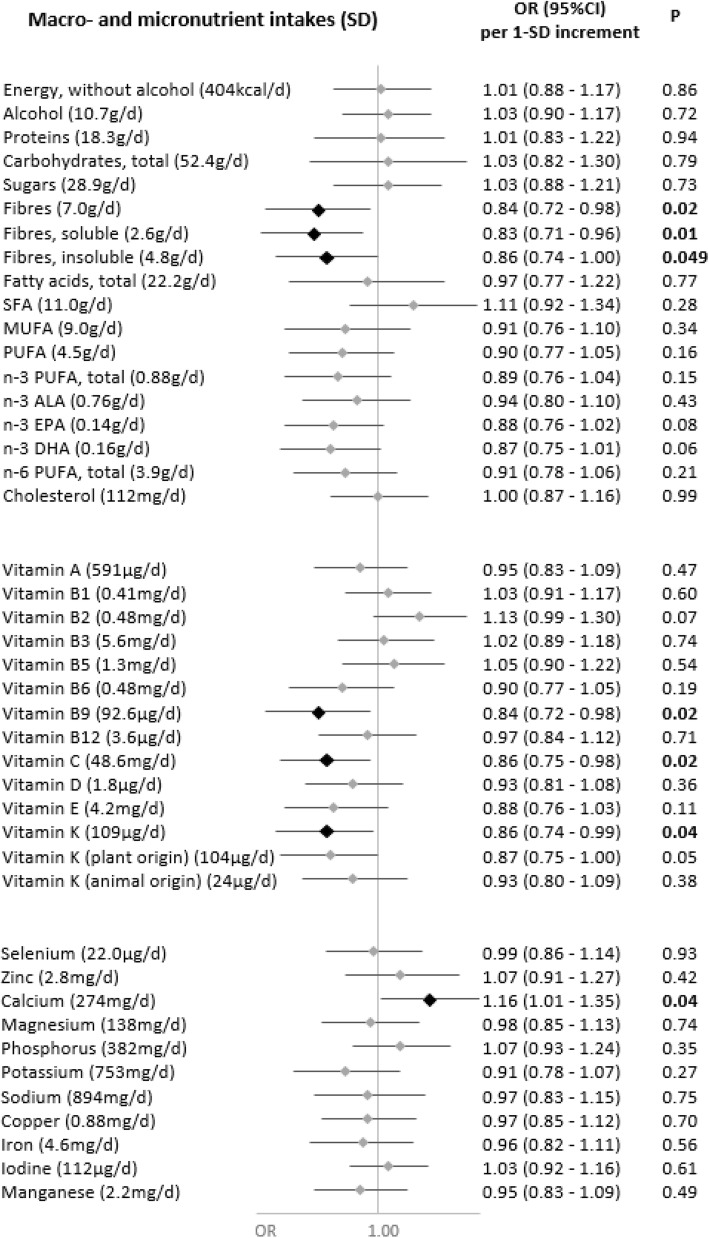
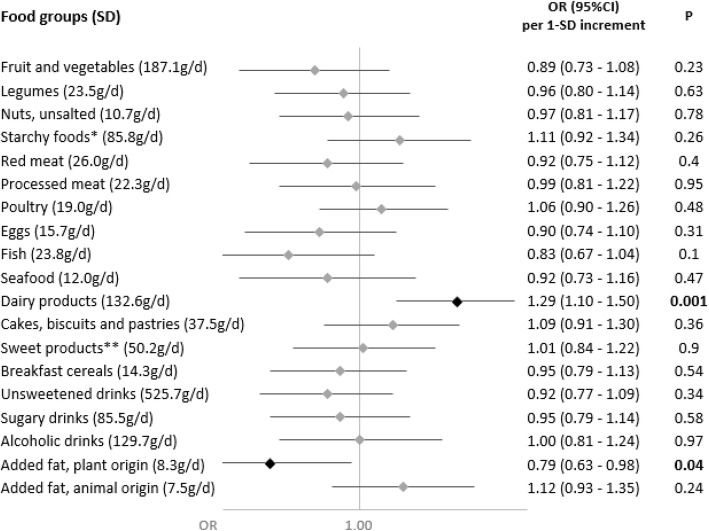
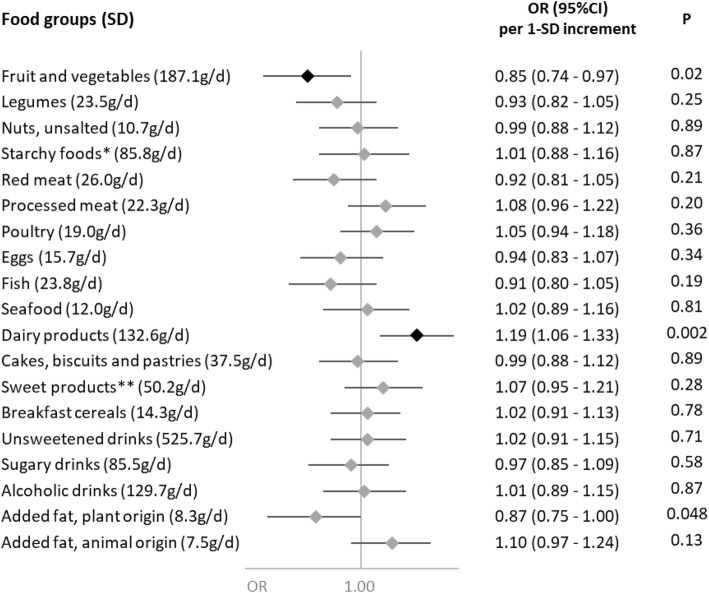
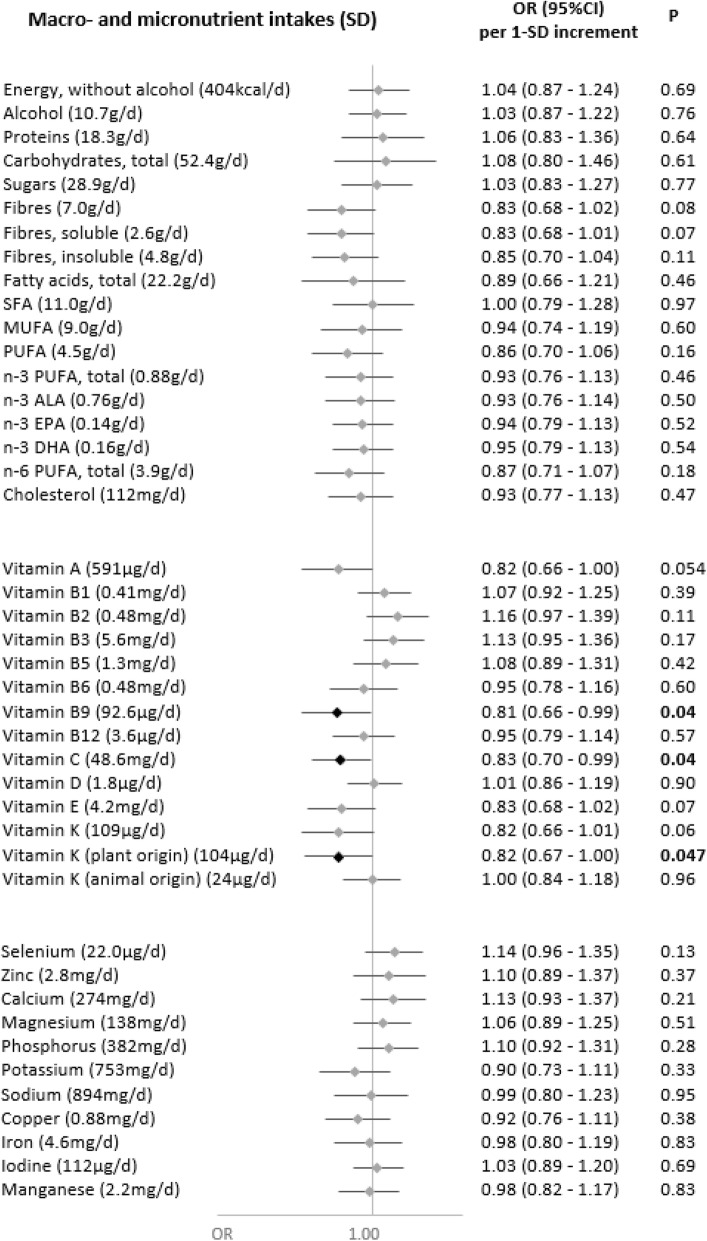
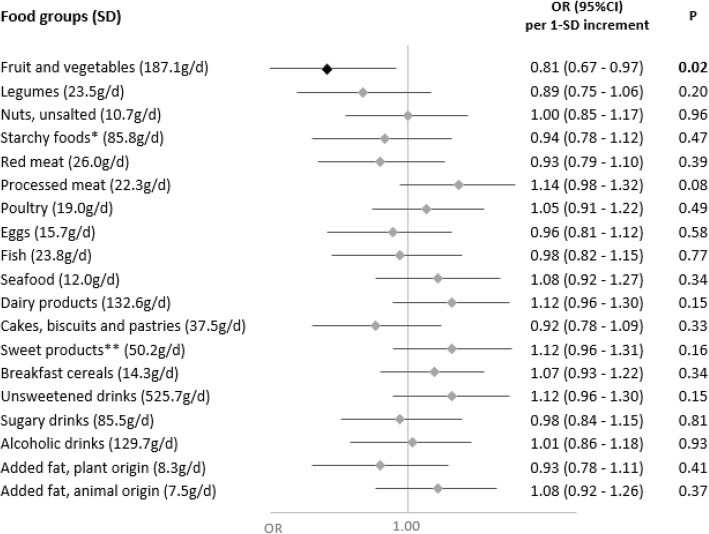
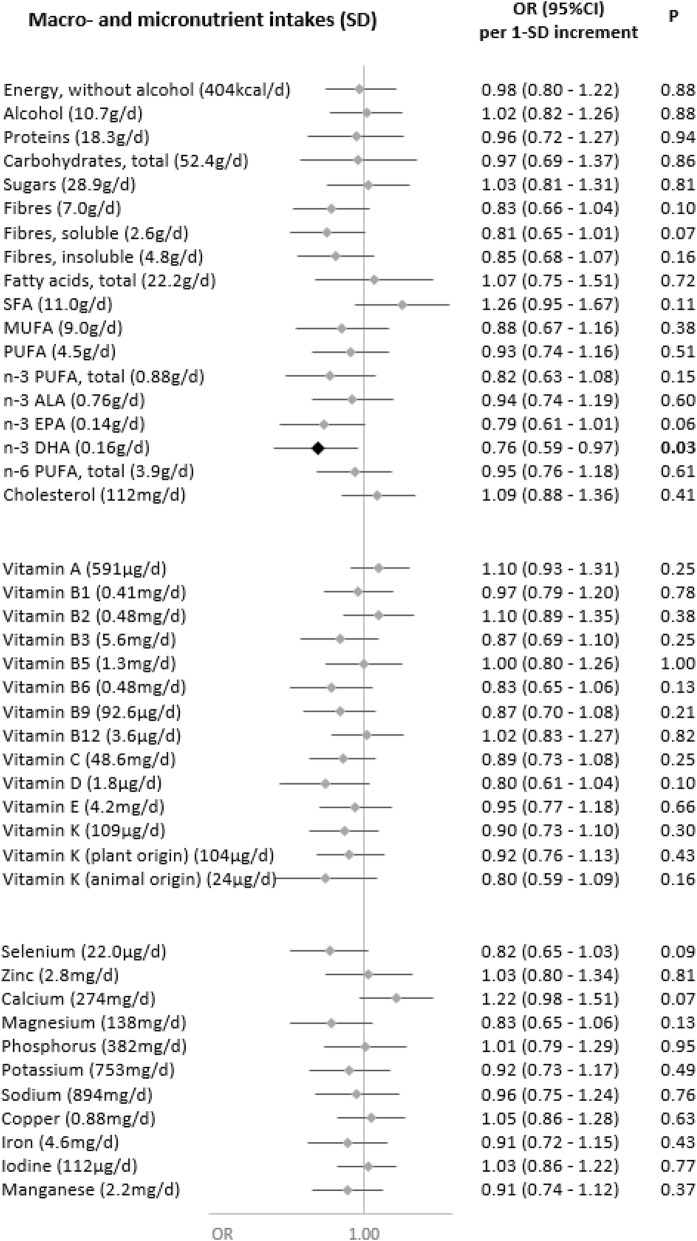
A total of 7766 adults (70.3% women, mean age: 60.3 years) were included, among which 311 were positive for anti-SARS-CoV-2 antibodies. Dietary intakes of vitamin C (OR for 1 SD=0.86 (0.75-0.98), P=0.02), vitamin B9 (OR=0.84 (0.72-0.98), P=0.02), vitamin K (OR=0.86 (0.74-0.99), P=0.04), fibers (OR=0.84 (0.72-0.98), P=0.02), and fruit and vegetables (OR=0.85 (0.74-0.97), P=0.02) were associated to a decreased probability of SARS-CoV-2 infection while dietary intakes of calcium (OR=1.16 (1.01-1.35), P=0.04) and dairy products (OR=1.19 (1.06-1.33), P=0.002) associated to increased odds. No association was detected with other food groups or nutrients or with the overall diet quality.
Higher dietary intakes of fruit and vegetables and, consistently, of vitamin C, folate, vitamin K and fibers were associated with a lower susceptibility to SARS-CoV-2 infection. Beyond its established role in the prevention of non-communicable diseases, diet could therefore also contribute to prevent some infectious diseases such as COVID-19.
营养因素对免疫系统的功能至关重要,因此可能在 COVID-19 中发挥作用,但需要有证据支持。我们的目的是在一个大型基于人群的样本中研究饮食与 SARS-CoV-2 感染风险之间的关系。
我们的分析是在法国前瞻性 NutriNet-Santé 队列研究(2009-2020 年)中进行的。通过 ELISA 检测干血斑中抗 SARS-CoV-2 抗体的血清阳性率。在法国 COVID-19 大流行开始前两年(2020 年 2 月),通过至少 6 次重复的 24 小时饮食记录来计算饮食摄入量。计算了多因素调整的逻辑回归模型。
共纳入 7766 名成年人(70.3%为女性,平均年龄:60.3 岁),其中 311 人抗 SARS-CoV-2 抗体阳性。维生素 C(OR 每 1 SD=0.86(0.75-0.98),P=0.02)、维生素 B9(OR=0.84(0.72-0.98),P=0.02)、维生素 K(OR=0.86(0.74-0.99),P=0.04)、膳食纤维(OR=0.84(0.72-0.98),P=0.02)和水果与蔬菜(OR=0.85(0.74-0.97),P=0.02)的饮食摄入量与 SARS-CoV-2 感染的可能性降低相关,而钙(OR=1.16(1.01-1.35),P=0.04)和乳制品(OR=1.19(1.06-1.33),P=0.002)的饮食摄入量与感染风险增加相关。与其他食物组或营养素或整体饮食质量没有关联。
水果和蔬菜以及维生素 C、叶酸、维生素 K 和膳食纤维的饮食摄入量较高与 SARS-CoV-2 感染的易感性降低相关。除了在预防非传染性疾病方面的既定作用外,饮食还可能有助于预防 COVID-19 等一些传染病。