Institute of Biomedicine, Research Centre for Integrative Physiology and Pharmacology, University of Turku, 20520, Turku, Finland.
Department of Food and Nutrition, University of Helsinki, 00014, Helsinki, Finland.
Eur J Nutr. 2022 Apr;61(3):1477-1490. doi: 10.1007/s00394-021-02749-z. Epub 2021 Nov 30.
An optimal diet for lowering the risk of gestational diabetes mellitus (GDM) is still to be defined, but may comprise of nutrient intakes, dietary patterns, diet quality, and eating frequency. This study was designed to investigate the contribution of diet in developing GDM in a comprehensive way.
The dietary intake of overweight or obese women, a risk group for GDM (n = 351), was assessed using 3-day food diaries and diet quality questionnaires in early pregnancy. Eating frequency and nutrient intakes were calculated, and dietary patterns identified using principal component analysis. The inflammatory potential of the diet was determined by calculating the dietary inflammatory index (DII) and energy-adjusted DII (E-DII™). GDM was diagnosed with an oral glucose tolerance test at 24-28 gestational weeks.
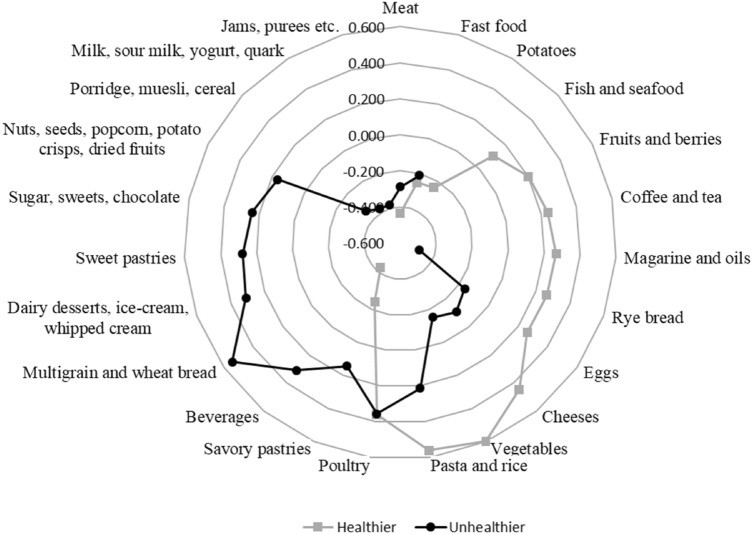
Higher adherence to 'healthier dietary pattern' characterized by consumptions of vegetables and rye bread associated with a reduced risk of GDM (adjusted OR 0.27, 95% CI 0.11-0.70). Higher E-DII score, indicating pro-inflammatory diet, was associated with a 27% higher risk of GDM (adjusted OR 1.27; 95% CI 1.08-1.49) for each E-DII point. In the evaluation of nutrient intakes, total fat, saturated fatty acids (SFAs), and trans fatty acids were higher and fiber lower in women developing GDM compared to women not developing GDM (all p < 0.05). Intakes of total fat, SFAs, and trans fatty acids were also significant predictors for GDM (all p < 0.05).
The results emphasize the importance of an overall healthy diet and limitation of foods with SFAs, and other nutrients with a high inflammatory potential in reducing the risk of GDM.
ClinicalTrials.gov Identifier: NCT01922791, August 14, 2013.
降低妊娠糖尿病(GDM)风险的最佳饮食仍有待确定,但可能包括营养素摄入、饮食模式、饮食质量和进食频率。本研究旨在全面研究饮食在 GDM 发病中的作用。
在妊娠早期,通过 3 天的食物日记和饮食质量问卷评估超重或肥胖的 GDM 高危妇女(n=351)的饮食摄入情况。计算进食频率和营养素摄入量,并使用主成分分析确定饮食模式。通过计算饮食炎症指数(DII)和能量调整的 DII(E-DII™)来确定饮食的炎症潜力。在 24-28 孕周时通过口服葡萄糖耐量试验诊断 GDM。
更高的“更健康的饮食模式”依从性,即食用蔬菜和黑麦面包,与 GDM 风险降低相关(调整后的 OR 0.27,95%CI 0.11-0.70)。E-DII 评分较高,表明饮食具有促炎作用,与 GDM 风险增加 27%相关(调整后的 OR 1.27;95%CI 1.08-1.49),E-DII 每增加 1 分。在评估营养素摄入量时,与未发生 GDM 的妇女相比,发生 GDM 的妇女的总脂肪、饱和脂肪酸(SFA)和反式脂肪酸更高,而膳食纤维更低(均 P<0.05)。总脂肪、SFA 和反式脂肪酸的摄入量也是 GDM 的显著预测因子(均 P<0.05)。
结果强调了整体健康饮食的重要性,限制 SFA 和其他具有高炎症潜力的营养素的摄入,可降低 GDM 的风险。
ClinicalTrials.gov 标识符:NCT01922791,2013 年 8 月 14 日。