Guo Dong, Liu Jiafeng, Li Yanping, Li Chao, Liu Quan, Ji Shengjun, Zhu Shuchai
Department of Radiation Oncology, Fourth Hospital of Hebei Medical University, Shijiazhuang, People's Republic of China.
Department of Radiotherapy, Rizhao Center Hospital, Rizhao, People's Republic of China.
J Inflamm Res. 2021 Nov 23;14:6129-6141. doi: 10.2147/JIR.S341399. eCollection 2021.
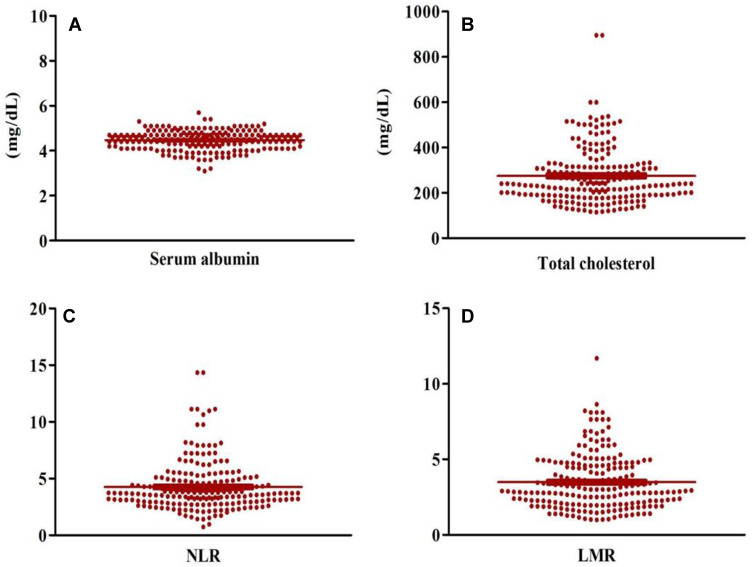
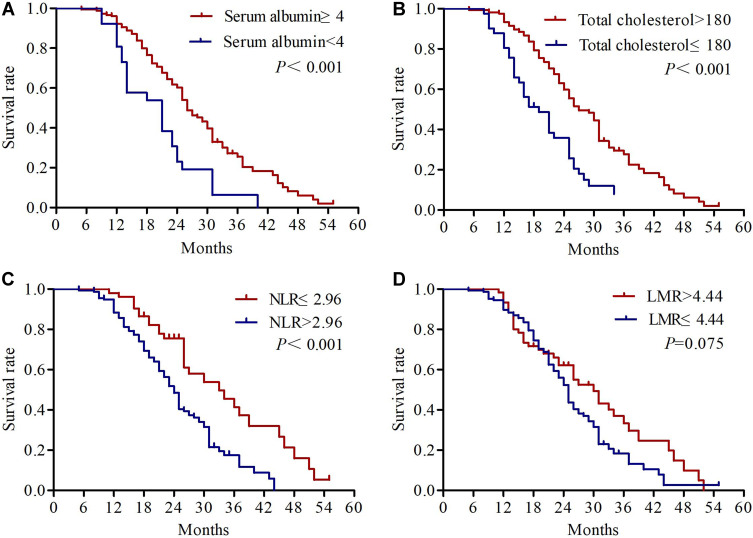
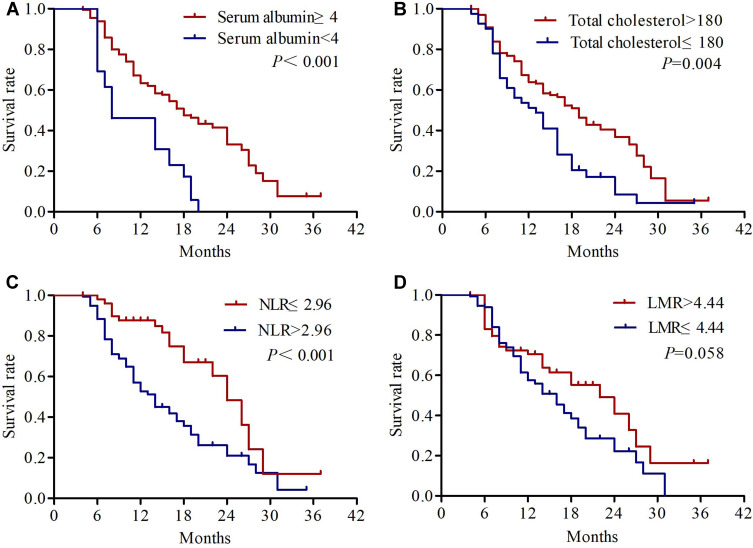
Naples prognosis score (NPS) is a new prognostic score according to host inflammatory and nutritional state, and it could be useful for predicting tumor prognosis based on albumin level, total cholesterol level, neutrophil-to-lymphocyte ratio, and lymphocyte-to-monocyte ratio. This study aimed to evaluate the clinical significance of Naples prognostic score (NPS) in stage III non-small cell lung cancer patients (NSCLC).
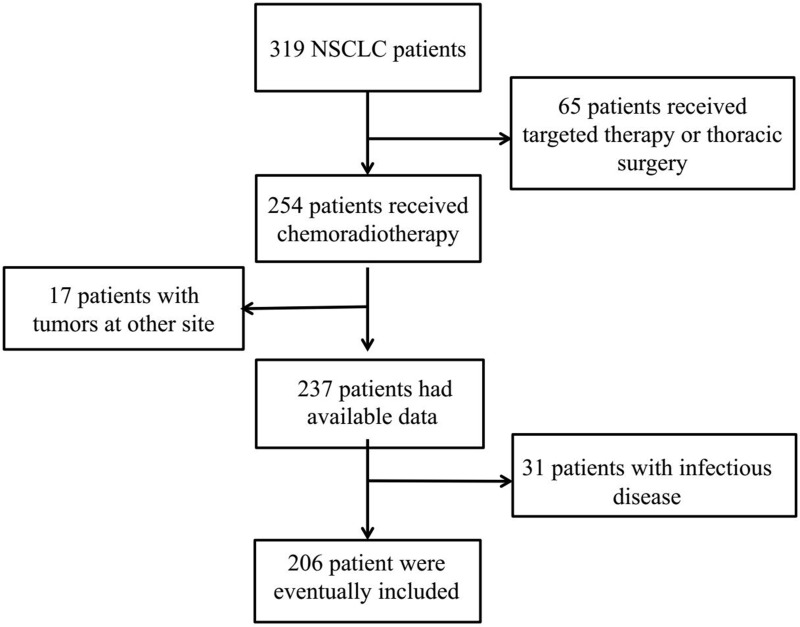
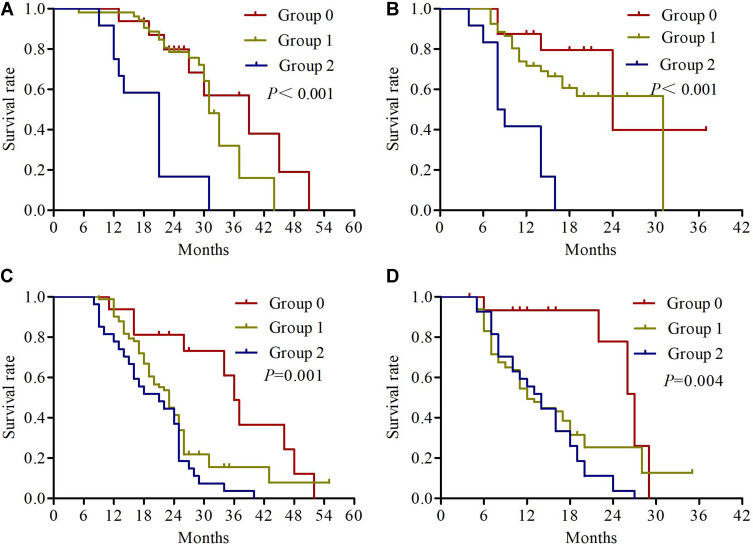
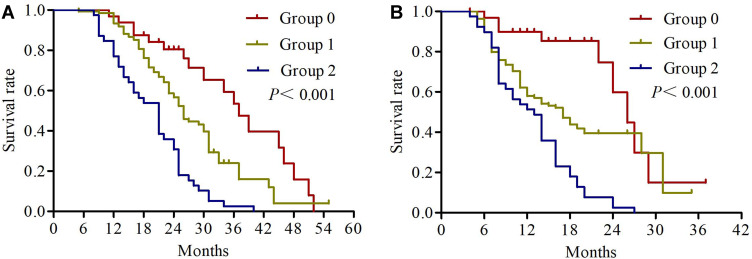
In this study, 206 patients diagnosed with locally advanced NCCLC receiving chemoradiotherapy were retrospectively reviewed from January 2013 to January 2017. The included patients were divided into 3 groups according to NPS (group 0, group 1, and group 2), and the associations of the NPS with clinical characteristics and outcomes were evaluated among the groups. Survival curves for the NPS were analyzed using the Kaplan-Meier method. Univariate and multivariate analyses were performed using the Cox proportional hazards regression model to evaluate the prognostic value of overall survival (OS) and progression-free survival (PFS).
The median follow-up time of this study was 37.0 (range, 13-59) months. The median OS was 27 months in group 0, 23 months in group 1, and 21 months in group 2, and median PFS was 15, 12 and 13 in group 0, group 1 and group 2, respectively. Age was significantly different among the 3 groups. The NPS was superior to other host inflammatory and nutritional indexes for prognostic risk stratification. In the multivariate analysis, NPS was identified as an independent prognostic indicator for OS and PFS (all <0.05).
The NPS system is considered to be a useful predictor of outcomes in patients with stage III NSCLC.
那不勒斯预后评分(NPS)是一种根据宿主炎症和营养状态得出的新预后评分,基于白蛋白水平、总胆固醇水平、中性粒细胞与淋巴细胞比值以及淋巴细胞与单核细胞比值,它可能有助于预测肿瘤预后。本研究旨在评估那不勒斯预后评分(NPS)在III期非小细胞肺癌患者(NSCLC)中的临床意义。
本研究回顾性分析了2013年1月至2017年1月期间206例诊断为局部晚期非小细胞肺癌并接受放化疗的患者。根据NPS将纳入的患者分为3组(0组、1组和2组),评估各组中NPS与临床特征及预后的相关性。采用Kaplan-Meier法分析NPS的生存曲线。使用Cox比例风险回归模型进行单因素和多因素分析,以评估总生存期(OS)和无进展生存期(PFS)的预后价值。
本研究的中位随访时间为37.0(范围13 - 59)个月。0组的中位OS为27个月,1组为23个月,2组为21个月;0组、1组和2组的中位PFS分别为15、12和13个月。3组之间年龄有显著差异。NPS在预后风险分层方面优于其他宿主炎症和营养指标。在多因素分析中,NPS被确定为OS和PFS的独立预后指标(均<0.05)。
NPS系统被认为是III期NSCLC患者预后的有用预测指标。