Jaworek Andrzej K, Jaworek Magdalena, Szafraniec Krystyna, Wojas-Pelc Anna, Szepietowski Jacek C
Department of Dermatology, Jagiellonian University Medical College, Krakow, Poland.
Department of Physiotherapy, Faculty of Health Sciences, Jagiellonian University Medical College, Krakow, Poland.
Postepy Dermatol Alergol. 2021 Oct;38(5):746-751. doi: 10.5114/ada.2020.95028. Epub 2020 May 10.
Many atopic dermatitis (AD) patients suffer from insomnia. Out of numerous factors associated with sleep disorders, melatonin seems to play a significant role.
To assess the relation between melatonin concentration and sleep disorders in adult patients with severe and very severe AD.
The study included 36 adult patients with severe and very severe AD and 20 healthy Caucasian volunteers. The severity of skin lesions was assessed by the EASI scale. Skin itch was evaluated by a visual-analogue scale (VAS), and sleep disorders were assessed by the Polish version of the Athens Insomnia Scale (AIS). Serum melatonin concentration of patients and controls was determined by ELISA.
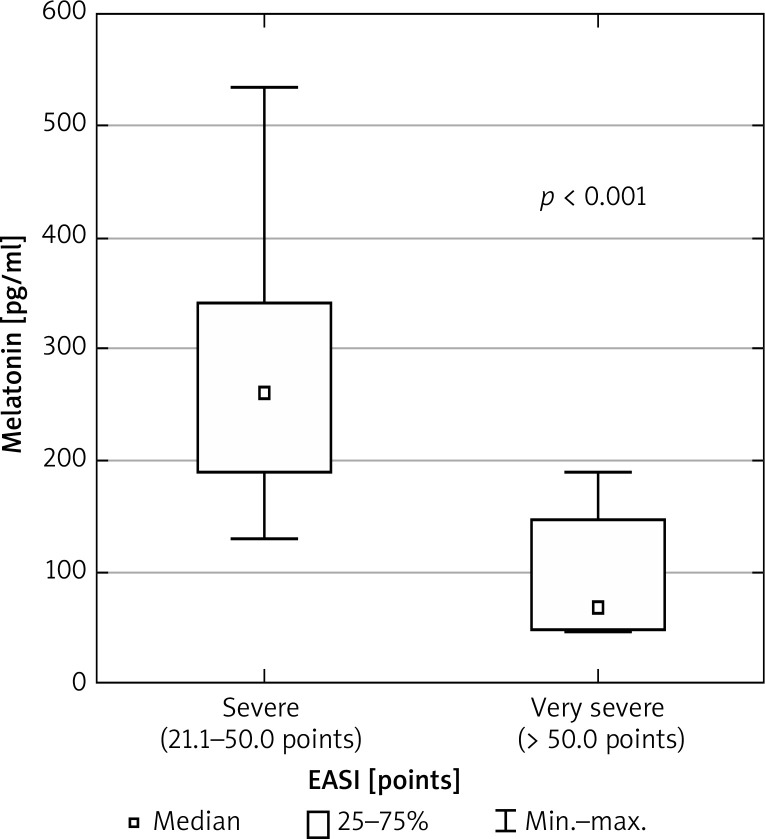
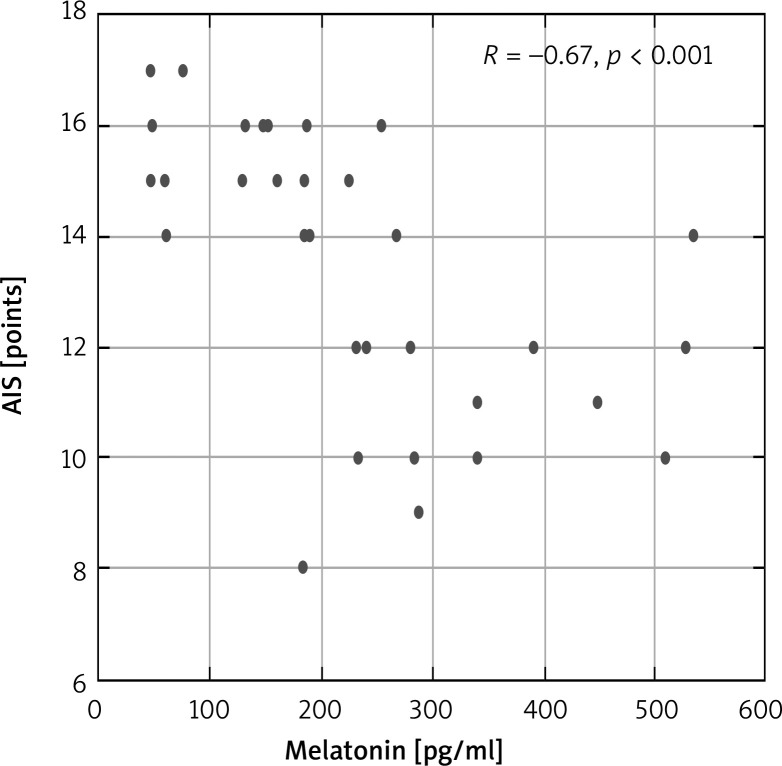
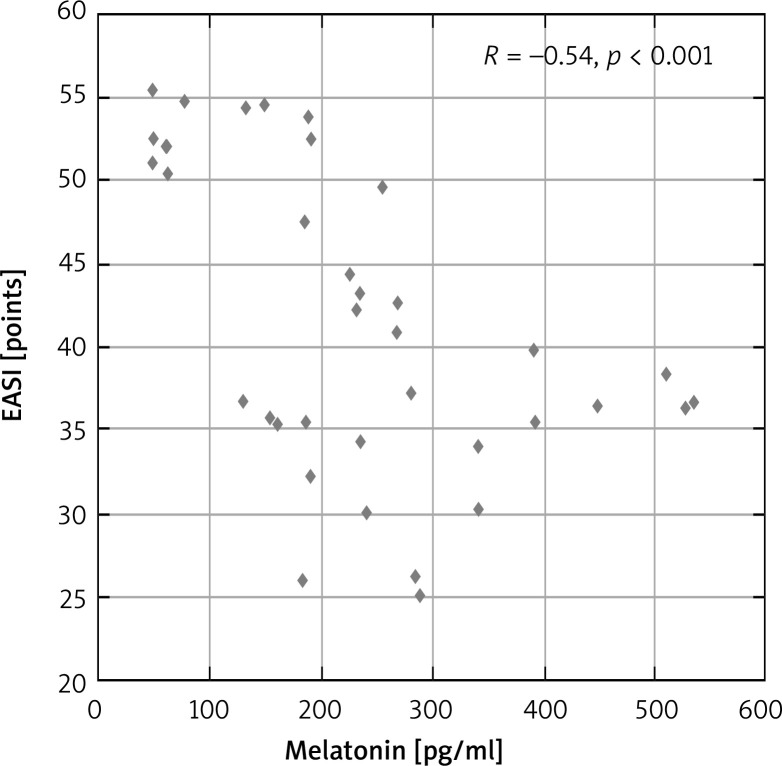
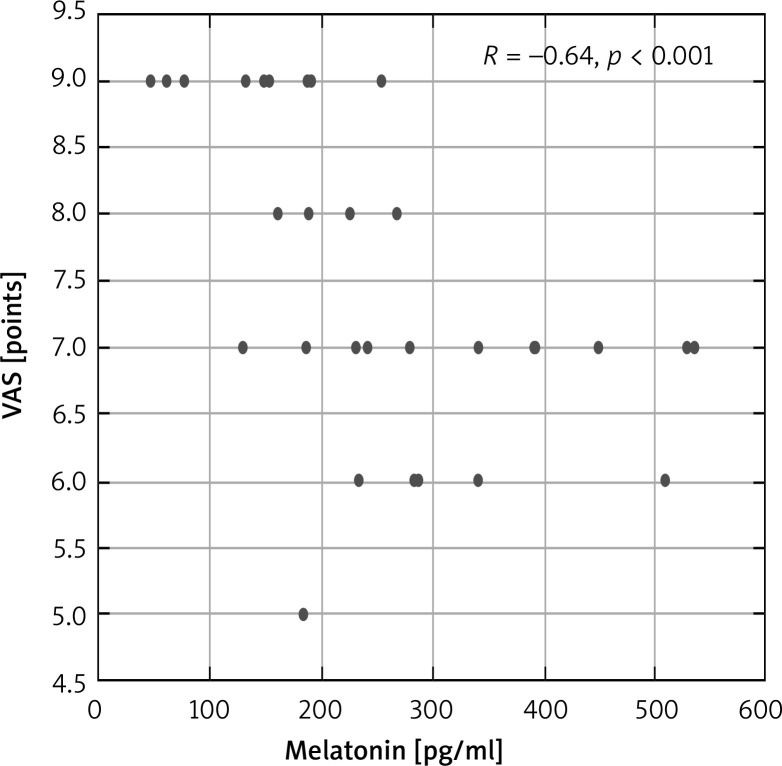
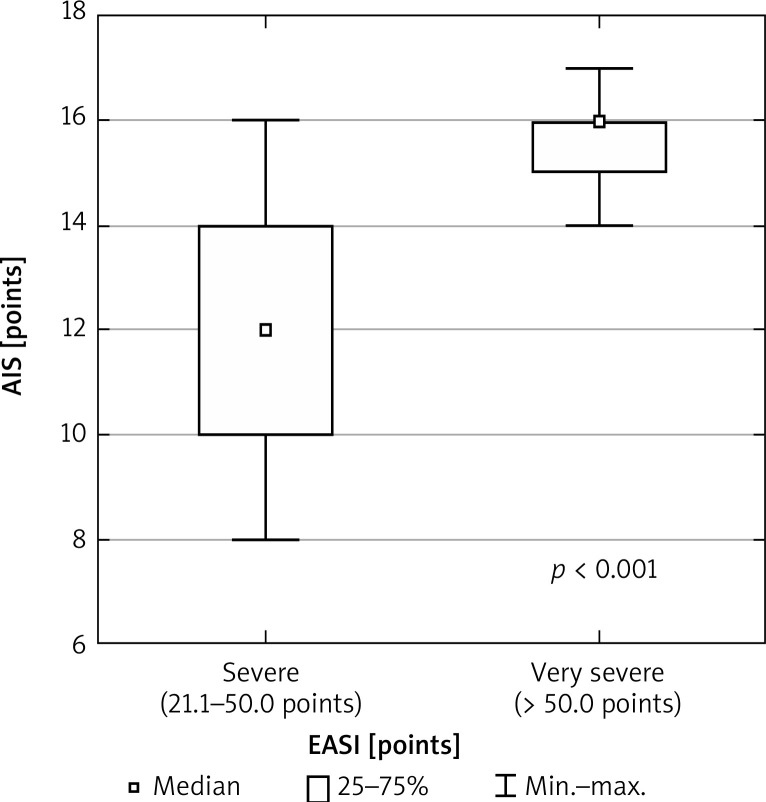
Melatonin concentration in patients with very severe AD was significantly ( < 0.001) lower than in patients with severe AD, however, melatonin concentration in the group of AD patients did not differ significantly ( = 0.33) from that observed in the control group. There was a significant negative correlation between the concentration of melatonin in the study group and the severity of itching ( = -0.54, < 0.001). The intensity of sleep disorders was significantly higher ( < 0.001) in patients with a very severe form of AD compared to patients with severe AD. Moreover, there was a significant negative correlation between melatonin concentration and sleep disorders ( = -0.67, < 0.001).
Our results clearly showed that sleep disturbances are more expressed in very severe AD patients compared to subjects suffering from severe disease. We also suggest that melatonin serum concentration could play a role in the pathogenesis of sleep disturbances in AD patients.
许多特应性皮炎(AD)患者患有失眠症。在与睡眠障碍相关的众多因素中,褪黑素似乎起着重要作用。
评估重度和极重度AD成年患者褪黑素浓度与睡眠障碍之间的关系。
该研究纳入了36例重度和极重度AD成年患者以及20名健康的白种人志愿者。通过EASI量表评估皮肤损伤的严重程度。通过视觉模拟量表(VAS)评估皮肤瘙痒情况,并通过雅典失眠量表(AIS)的波兰语版本评估睡眠障碍。采用酶联免疫吸附测定法(ELISA)测定患者和对照组的血清褪黑素浓度。
极重度AD患者的褪黑素浓度显著低于重度AD患者(<0.001),然而,AD患者组的褪黑素浓度与对照组相比无显著差异(=0.33)。研究组中褪黑素浓度与瘙痒严重程度之间存在显著负相关(=-0.54,<0.001)。与重度AD患者相比,极重度AD患者的睡眠障碍强度显著更高(<0.001)。此外,褪黑素浓度与睡眠障碍之间存在显著负相关(=-0.67,<0.001)。
我们的结果清楚地表明,与重度AD患者相比,极重度AD患者的睡眠障碍更为明显。我们还认为,血清褪黑素浓度可能在AD患者睡眠障碍的发病机制中起作用。