Department of Pathology and Laboratory Medicine, University of Vermont College of Medicine, Burlington, VT, USA.
Department of Biomedical and Health Sciences, University of Vermont College of Nursing and Health Sciences, Burlington, VT, USA.
Carcinogenesis. 2021 Dec 31;42(12):1428-1438. doi: 10.1093/carcin/bgab104.
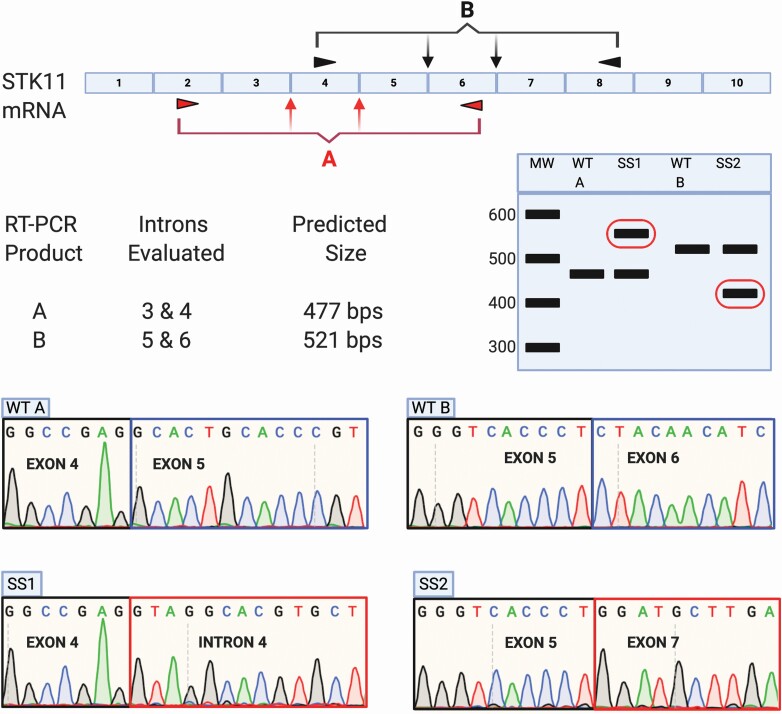
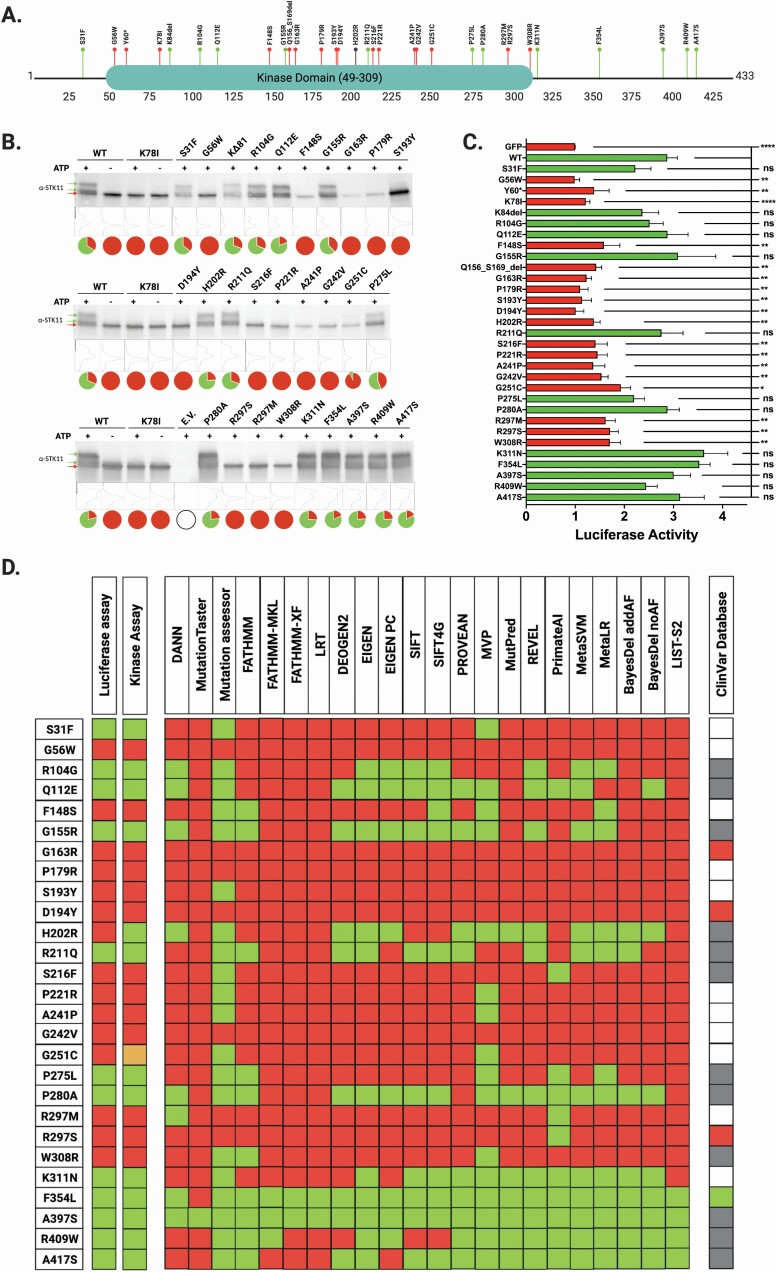
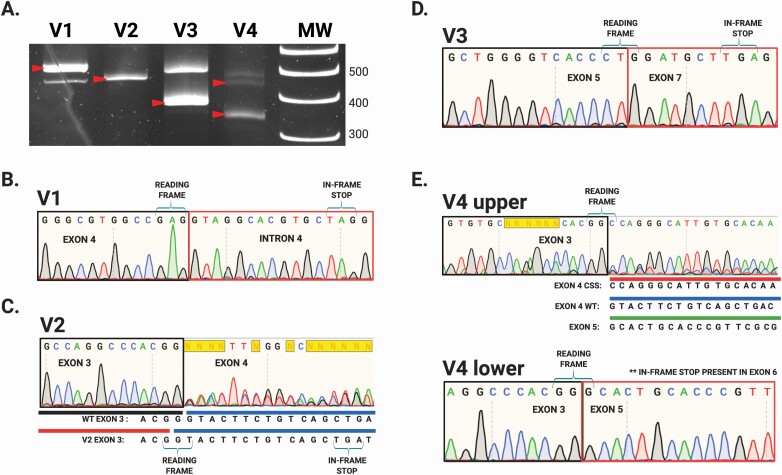
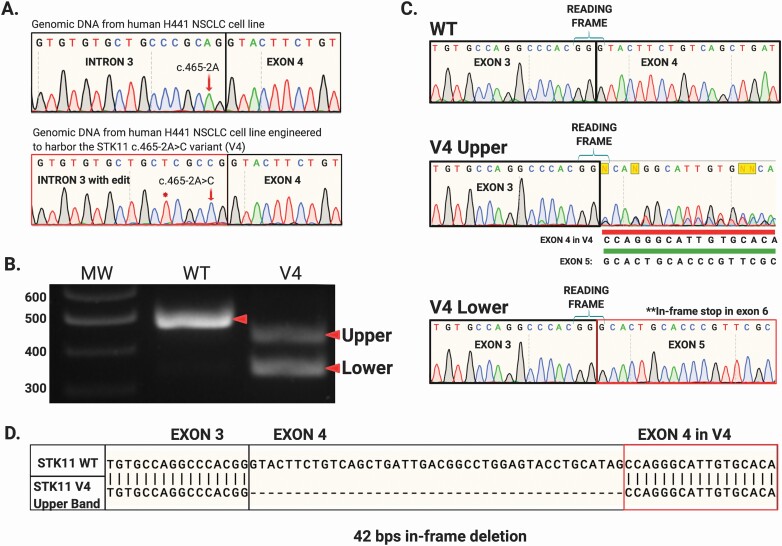
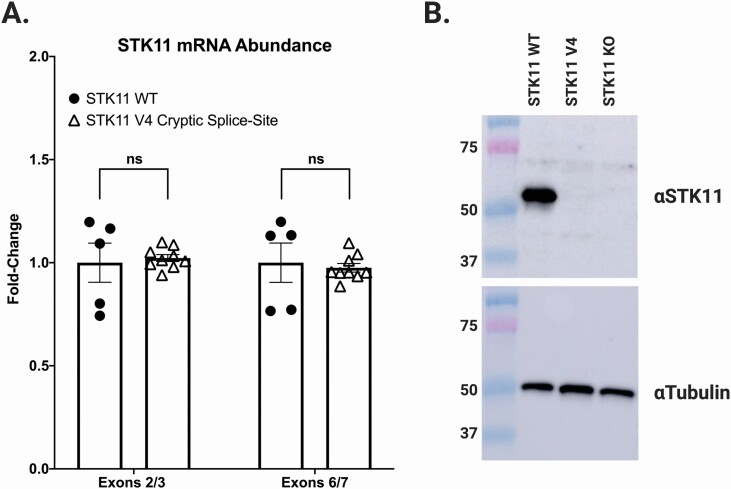
Serine/Threonine Kinase 11 (STK11) encodes an important tumor suppressor that is frequently mutated in lung adenocarcinoma. Clinical studies have shown that mutations in STK11 resulting in loss of function correlate with resistance to anti-PD-1 monoclonal antibody therapy in KRAS-driven non-small cell lung cancer (NSCLC), but the molecular mechanisms responsible remain unclear. Despite this uncertainty, STK11 functional status is emerging as a reliable biomarker for predicting non-response to anti-PD-1 therapy in NSCLC patients. The clinical utility of this biomarker ultimately depends upon accurate classification of STK11 variants. For nonsense variants occurring early in the STK11 coding region, this assessment is straightforward. However, rigorously demonstrating the functional impact of missense variants remains an unmet challenge. Here we present data characterizing four STK11 splice-site variants by analyzing tumor mRNA, and 28 STK11 missense variants using an in vitro kinase assay combined with a cell-based p53-dependent luciferase reporter assay. The variants we report were identified in primary human NSCLC biopsies in collaboration with the University of Vermont Genomic Medicine group. Additionally, we compare our experimental results with data from 22 in silico predictive algorithms. Our work highlights the power, utility and necessity of functional variant assessment and will aid STK11 variant curation, provide a platform to assess novel STK11 variants and help guide anti-PD-1 therapy utilization in KRAS-driven NSCLCs.
丝氨酸/苏氨酸激酶 11(STK11)编码一种重要的肿瘤抑制因子,其在肺腺癌中经常发生突变。临床研究表明,导致功能丧失的 STK11 突变与 KRAS 驱动的非小细胞肺癌(NSCLC)中抗 PD-1 单克隆抗体治疗的耐药性相关,但负责的分子机制仍不清楚。尽管存在这种不确定性,但 STK11 的功能状态正作为预测 NSCLC 患者对抗 PD-1 治疗无反应的可靠生物标志物出现。该生物标志物的临床实用性最终取决于 STK11 变体的准确分类。对于早期发生在 STK11 编码区的无意义变体,这种评估是直接的。然而,严格证明错义变体的功能影响仍然是一个未满足的挑战。在这里,我们通过分析肿瘤 mRNA 来描述四个 STK11 剪接位点变体的数据,并通过体外激酶测定法结合基于细胞的 p53 依赖性荧光素酶报告基因测定法来分析 28 个 STK11 错义变体。我们报告的变体是与佛蒙特大学基因组医学小组合作从原发性人非小细胞肺癌活检中鉴定出来的。此外,我们将我们的实验结果与来自 22 个计算预测算法的数据进行比较。我们的工作强调了功能变异评估的力量、实用性和必要性,并将有助于 STK11 变异的管理,为评估新型 STK11 变体提供平台,并有助于指导 KRAS 驱动的 NSCLC 中抗 PD-1 治疗的应用。