van der Weerd Nelleke, van Os Hine J A, Ali Mariam, Schoones Jan W, van den Maagdenberg Arn M J M, Kruyt Nyika D, Siegerink Bob, Wermer Marieke J H
Department of Neurology, Leiden University Medical Centre, Leiden, Netherlands.
Department of Human Genetics, Leiden University Medical Centre, Leiden, Netherlands.
Front Cell Neurosci. 2021 Nov 11;15:711604. doi: 10.3389/fncel.2021.711604. eCollection 2021.
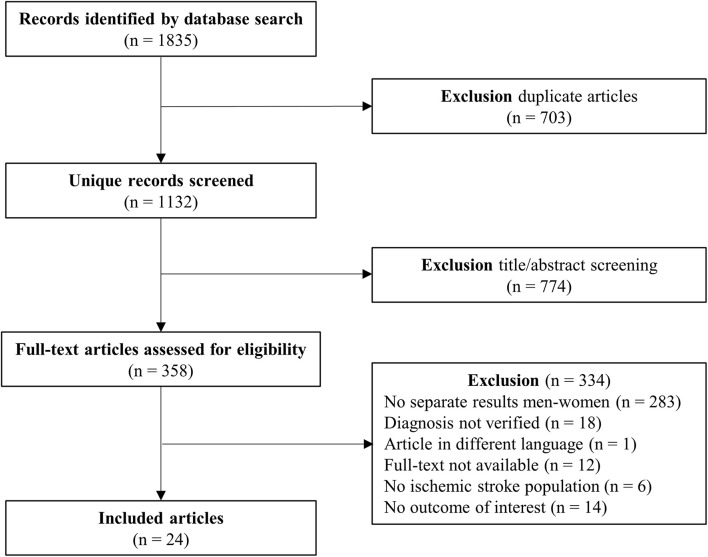
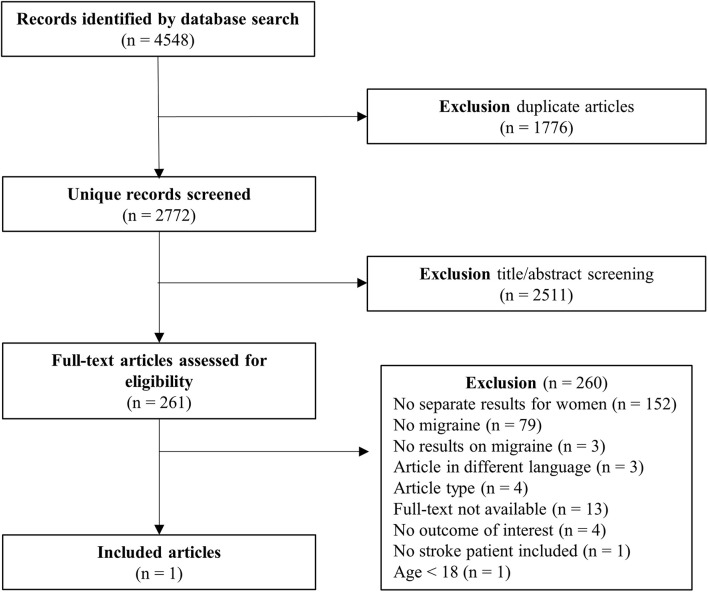
Women are more affected by stroke than men. This might, in part, be explained by sex differences in stroke pathophysiology. The hemostasis system is influenced by sex hormones and associated with female risk factors for stroke, such as migraine. To systematically review possible sex differences in hemostatic related factors in patients with ischemic stroke in general, and the influence of migraine on these factors in women with ischemic stroke. We included 24 studies with data on sex differences of hemostatic factors in 7247 patients with ischemic stroke (mean age 57-72 years, 27-57% women) and 25 hemostatic related factors. Levels of several factors were higher in women compared with men; FVII:C (116% ± 30% vs. 104% ± 30%), FXI (0.14 UI/mL higher in women), PAI-1 (125.35 ± 49.37 vs. 96.67 ± 38.90 ng/mL), D-dimer (1.25 ± 0.31 vs. 0.95 ± 0.24 μg/mL), and aPS (18.7% vs. 12.0% positive). In contrast, protein-S (86.2% ± 23.0% vs. 104.7% ± 19.8% antigen) and P-selectin (48.9 ± 14.4 vs. 79.1 ± 66.7 pg/mL) were higher in men. Most factors were investigated in single studies, at different time points after stroke, and in different stroke subtypes. Only one small study reported data on migraine and hemostatic factors in women with ischemic stroke. No differences in fibrinogen, D-dimer, t-PA, and PAI-1 levels were found between women with and without migraine. Our systematic review suggests that sex differences exist in the activation of the hemostatic system in ischemic stroke. Women seem to lean more toward increased levels of procoagulant factors whereas men exhibit increased levels of coagulation inhibitors. To obtain better insight in sex-related differences in hemostatic factors, additional studies are needed to confirm these findings with special attention for different stroke phases, stroke subtypes, and not in the least women specific risk factors, such as migraine.
女性比男性更容易受到中风的影响。这在一定程度上可能是由中风病理生理学中的性别差异所解释的。止血系统受性激素影响,并与女性中风风险因素相关,如偏头痛。旨在系统回顾一般缺血性中风患者止血相关因素可能存在的性别差异,以及偏头痛对缺血性中风女性患者这些因素的影响。我们纳入了24项研究,这些研究涉及7247例缺血性中风患者(平均年龄57 - 72岁,女性占27 - 57%)止血因素的性别差异数据以及25个止血相关因素。与男性相比,女性体内几种因素的水平更高;FVII:C(116% ± 30% 对 104% ± 30%)、FXI(女性比男性高0.14 UI/mL)、PAI - 1(125.35 ± 49.37对96.67 ± 38.90 ng/mL)、D - 二聚体(1.25 ± 0.31对0.95 ± 0.24 μg/mL)以及aPS(阳性率18.7%对12.0%)。相反,蛋白S(抗原86.2% ± 23.0%对104.7% ± 19.8%)和P - 选择素(48.9 ± 14.4对79.1 ± 66.7 pg/mL)在男性中更高。大多数因素是在单项研究中、中风后的不同时间点以及不同的中风亚型中进行研究的。只有一项小型研究报告了缺血性中风女性患者偏头痛与止血因素的数据。有偏头痛和无偏头痛的女性在纤维蛋白原、D - 二聚体、t - PA和PAI - 1水平上未发现差异。我们的系统评价表明,缺血性中风患者止血系统的激活存在性别差异。女性似乎更倾向于促凝血因子水平升高,而男性则表现为凝血抑制剂水平升高。为了更好地了解止血因素中与性别相关的差异,需要更多研究来证实这些发现,特别要关注不同的中风阶段、中风亚型,以及女性特有的风险因素,如偏头痛。