Chen I-Hsuan, Liang Pei-Jung, Chiu Valeria Jia-Yi, Lee Shu-Chun
Department of Physical Therapy, Fooyin University, Kaohsiung City, Taiwan.
Department of Rehabilitation Medicine, Taipei Tzu Chi Hospital, Buddhist Tzu Chi Medical Foundation, New Taipei City, Taiwan.
Front Neurol. 2021 Nov 11;12:769975. doi: 10.3389/fneur.2021.769975. eCollection 2021.
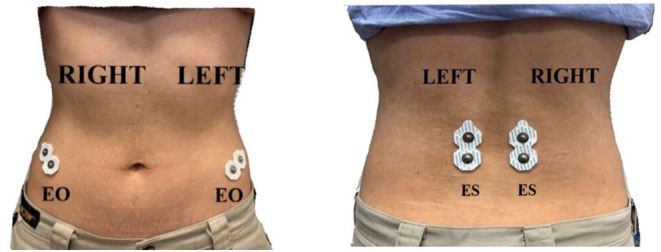
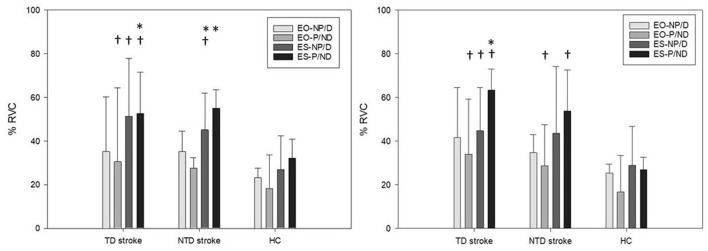
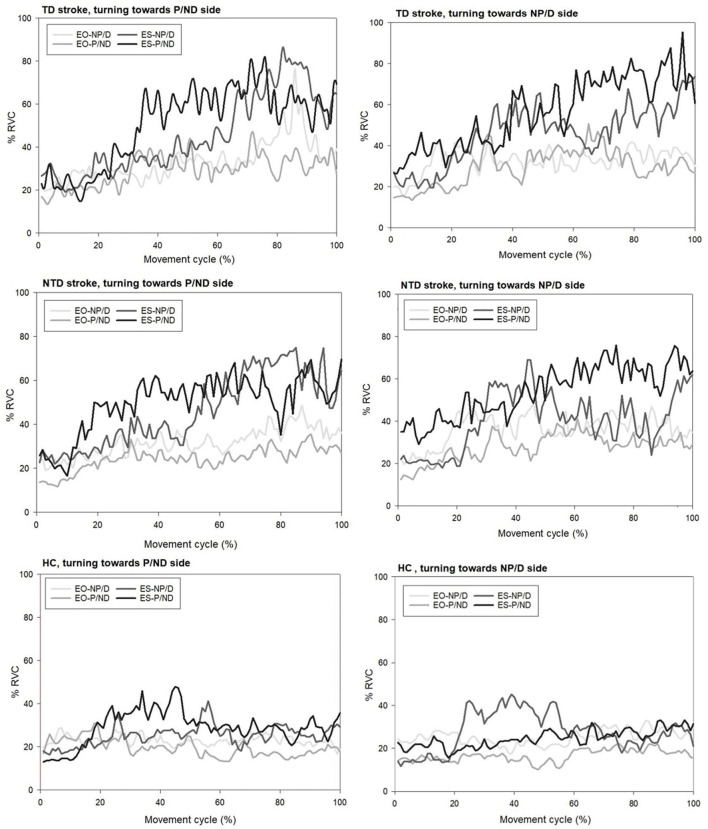
Recent evidence indicates that turning difficulty may correlate with trunk control; however, surface electromyography has not been used to explore trunk muscle activity during turning after stroke. This study investigated trunk muscle activation patterns during standing turns in healthy controls (HCs) and patients with stroke with turning difficulty (TD) and no TD (NTD). The participants with stroke were divided into two groups according to the 180° turning duration and number of steps to determine the presence of TD. The activation patterns of the bilateral external oblique and erector spinae muscles of all the participants were recorded during 90° standing turns. A total of 14 HCs, 14 patients with TD, and 14 patients with NTD were recruited. The duration and number of steps in the turning of the TD group were greater than those of the HCs, independent of the turning direction. However, the NTD group had a significantly longer turning duration than did the HC group only toward the paretic side. Their performance was similar when turning toward the non-paretic side; this result is consistent with electromyographic findings. Both TD and NTD groups demonstrated increased amplitudes of trunk muscles compared with the HC groups. Their trunk muscles failed to maintain consistent amplitudes during the entire movement of standing turns in the direction that they required more time or steps to turn toward (i.e., turning in either direction for the TD group and turning toward the paretic side for the NTD group). Patients with stroke had augmented activation of trunk muscles during turning. When patients with TD turned toward either direction and when patients with NTD turned toward the paretic side, the flexible adaptations and selective actions of trunk muscles observed in the HCs were absent. Such distinct activation patterns during turning may contribute to poor turning performance and elevate the risk of falling. Our findings provide insights into the contribution and importance of trunk muscles during turning and the association with TD after stroke. These findings may help guide the development of more effective rehabilitation therapies that target specific muscles for those with TD.
近期证据表明,转身困难可能与躯干控制相关;然而,表面肌电图尚未被用于探究中风后转身过程中的躯干肌肉活动。本研究调查了健康对照组(HCs)以及有转身困难(TD)和无转身困难(NTD)的中风患者在站立转身时的躯干肌肉激活模式。根据180°转身持续时间和步数将中风患者分为两组,以确定是否存在转身困难。在90°站立转身过程中记录了所有参与者双侧腹外斜肌和竖脊肌的激活模式。共招募了14名健康对照组、14名有转身困难的患者和14名无转身困难的患者。无论转身方向如何,TD组转身的持续时间和步数均大于健康对照组。然而,仅在向患侧转身时,NTD组的转身持续时间显著长于健康对照组。他们向非患侧转身时表现相似;这一结果与肌电图结果一致。与健康对照组相比,TD组和NTD组的躯干肌肉振幅均增加。在他们转身需要更多时间或步数的方向(即TD组向任一方向转身以及NTD组向患侧转身)的整个站立转身运动过程中,他们的躯干肌肉未能保持一致的振幅。中风患者在转身时躯干肌肉激活增强。当TD组患者向任一方向转身以及NTD组患者向患侧转身时,未观察到健康对照组中躯干肌肉的灵活适应性和选择性动作。这种转身过程中独特的激活模式可能导致转身表现不佳并增加跌倒风险。我们的研究结果为中风后转身过程中躯干肌肉的作用和重要性以及与转身困难的关联提供了见解。这些发现可能有助于指导开发更有效的康复治疗方法,针对有转身困难的患者的特定肌肉进行治疗。