Jiang Tao, Zheng Li, Li Xia, Liu Jia, Song Hu, Xu Yixin, Dong Chenhua, Liu Lianyu, Wang Hongyu, Wang Shuai, Wang Renhao, Song Jun
Department of General Surgery, The Affiliated Hospital of Xuzhou Medical University, Xuzhou, China.
Institute of Digestive Diseases, Xuzhou Medical University, Xuzhou, China.
Front Cell Dev Biol. 2021 Nov 10;9:678770. doi: 10.3389/fcell.2021.678770. eCollection 2021.
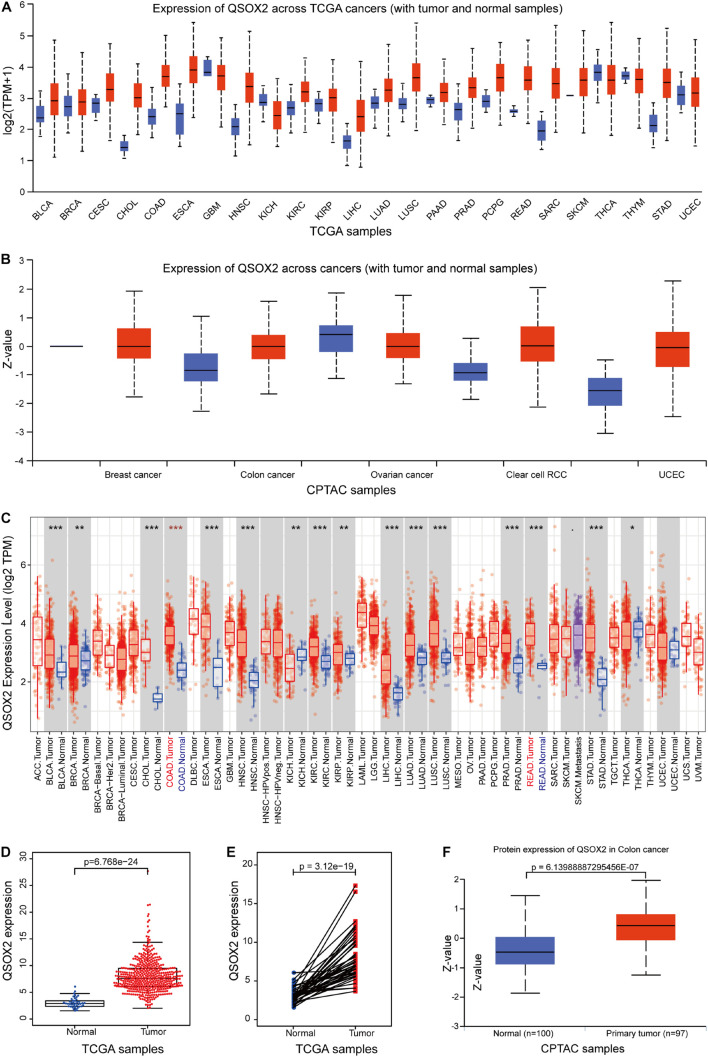
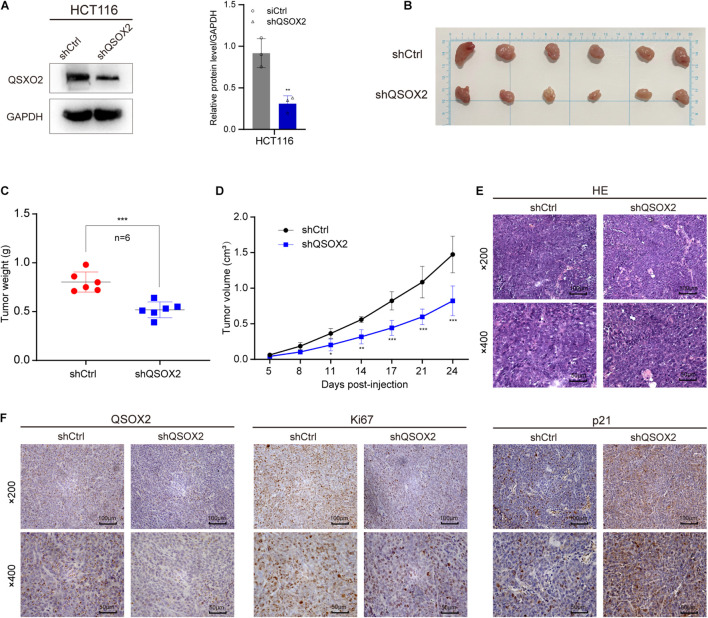
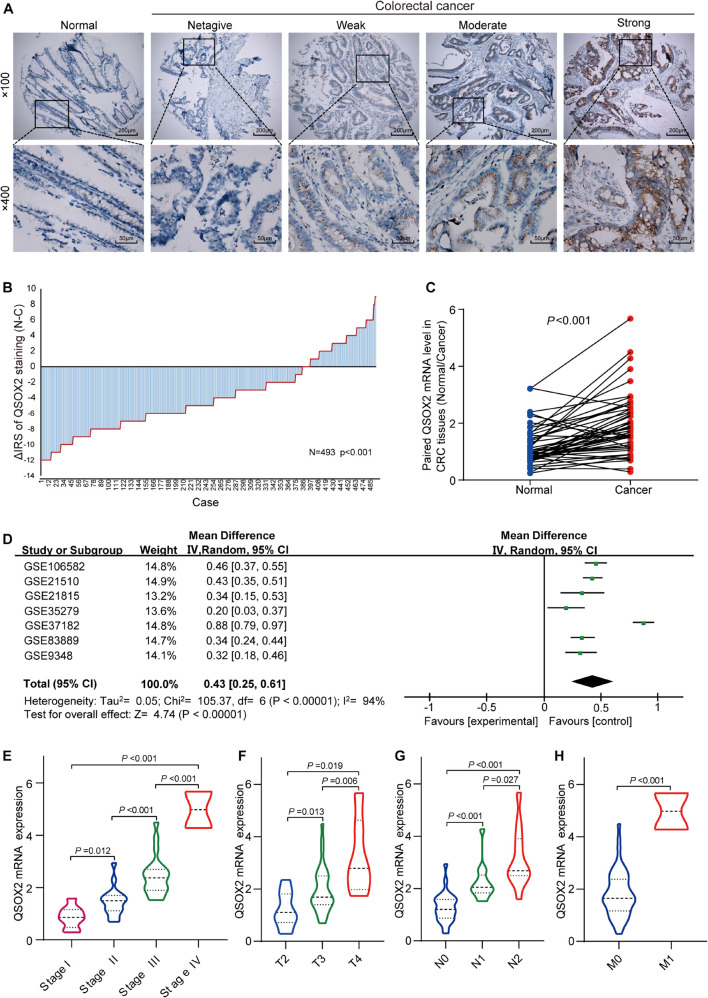
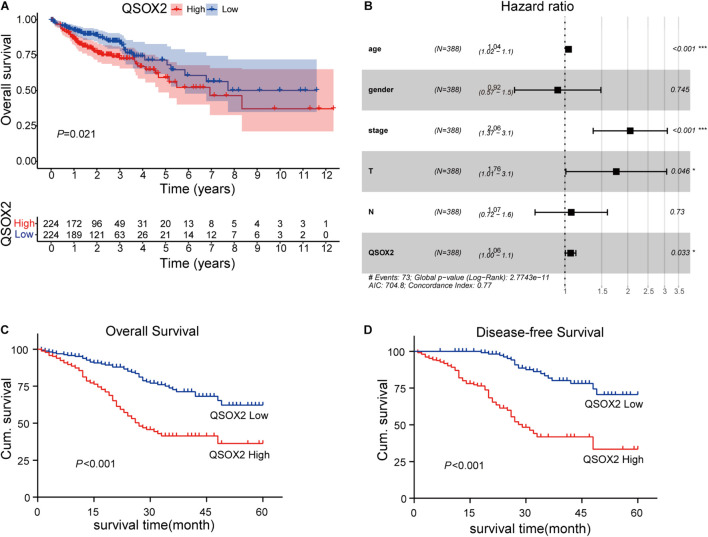
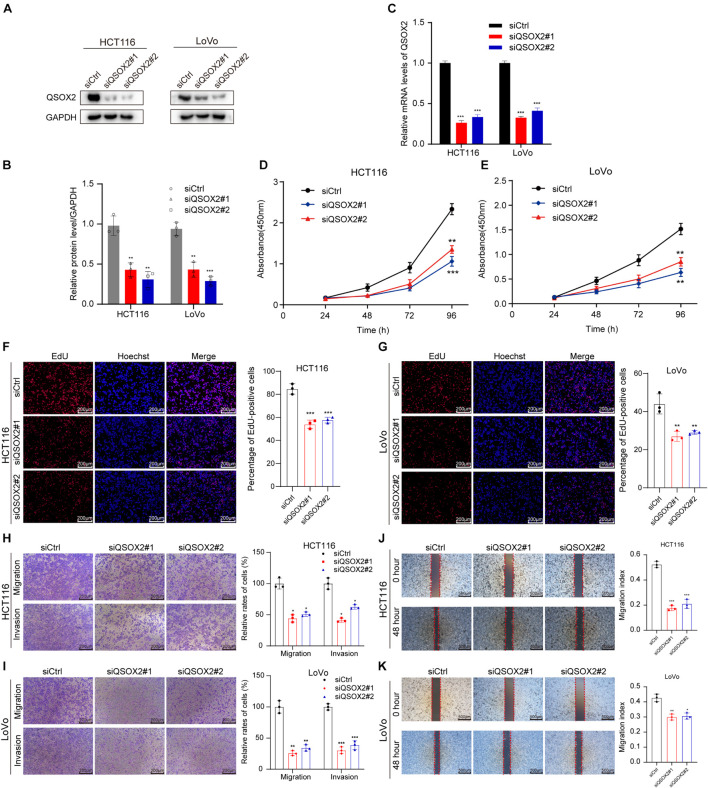
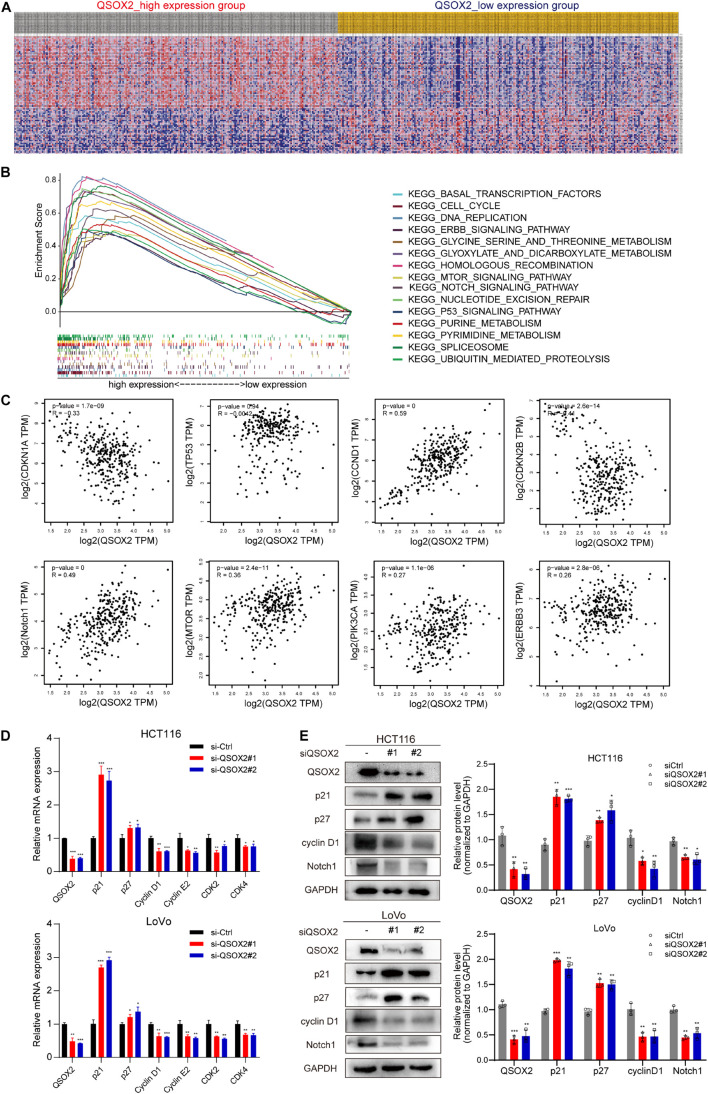
As a member of the atypical thiol oxidase family, quiescin sulfhydryl oxidase 2 (QSOX2) has been reported to play an important role in several biological processes, but the expression and function of QSOX2 in colorectal cancer (CRC) remains elusive. The difference of QSOX2 expression, and its relationship with clinicopathological features and prognosis in CRC, was analyzed by bioinformatic analysis and validated by clinical CRC specimen cohort. The functional characterization of QSOX2 was detected via and experiments in CRC cell lines, while the potential signaling pathways were predicted by Gene Set Enrichment Analysis (GSEA). Our data based on bioinformatical analysis and clinical validation demonstrated that the expression of QSOX2 in CRC tissues was significantly upregulated. Additionally, the chi-square test, logistic regression analysis, and Fisher's exact test showed that QSOX2 overexpression was significantly correlated with advanced clinicopathological parameters, such as pathological stage and lymph node metastasis. The Kaplan-Meier curves and univariate Cox regression model showed that QSOX2 overexpression predicts poor overall survival (OS) and disease-free survival (DFS) in CRC patients. More importantly, multivariate Cox regression model showed that QSOX2 overexpression could serve as an independent factor for CRC patients. and data showed that the proliferation and metastasis ability of CRC cells were suppressed on condition of QSOX2 inhibition. In addition, GSEA showed that the QSOX2 high expression phenotype has enriched multiple potential cancer-related signaling pathways. QSOX2 overexpression is strongly associated with malignant progression and poor oncological outcomes in CRC. QSOX2 might act as a novel biomarker for prognosis prediction and a new target for biotherapy in CRC.
作为非典型硫醇氧化酶家族的一员,静止期硫氢基氧化酶2(QSOX2)已被报道在多个生物学过程中发挥重要作用,但QSOX2在结直肠癌(CRC)中的表达和功能仍不清楚。通过生物信息学分析来分析QSOX2表达的差异及其与CRC临床病理特征和预后的关系,并通过临床CRC标本队列进行验证。通过在CRC细胞系中进行实验来检测QSOX2的功能特性,同时通过基因集富集分析(GSEA)预测潜在的信号通路。我们基于生物信息学分析和临床验证的数据表明,CRC组织中QSOX2的表达显著上调。此外,卡方检验、逻辑回归分析和Fisher精确检验表明,QSOX2过表达与晚期临床病理参数,如病理分期和淋巴结转移显著相关。Kaplan-Meier曲线和单因素Cox回归模型表明,QSOX2过表达预示着CRC患者的总生存期(OS)和无病生存期(DFS)较差。更重要的是,多因素Cox回归模型表明,QSOX2过表达可作为CRC患者的独立因素。实验数据表明,在QSOX2受到抑制的情况下,CRC细胞的增殖和转移能力受到抑制。此外,GSEA表明,QSOX2高表达表型富集了多个潜在的癌症相关信号通路。QSOX2过表达与CRC的恶性进展和不良肿瘤学结局密切相关。QSOX2可能作为一种新的预后预测生物标志物和CRC生物治疗的新靶点。