Norwegian Institute for Nature Research, Høgskoleringen 9, 7034, Trondheim, Norway.
Faculty of Environmental Sciences and Natural Resource Management, Norwegian University of Life Sciences, Universitetstunet 3, 1430, Ås, Norway.
Oecologia. 2022 Jan;198(1):139-151. doi: 10.1007/s00442-021-05087-3. Epub 2021 Dec 2.
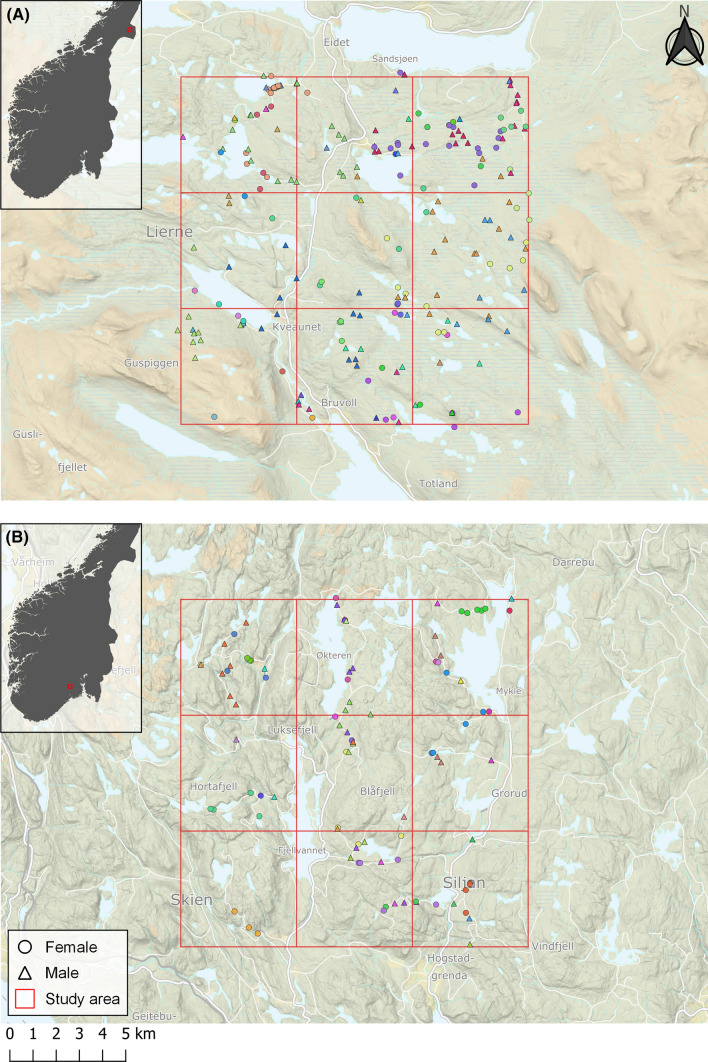
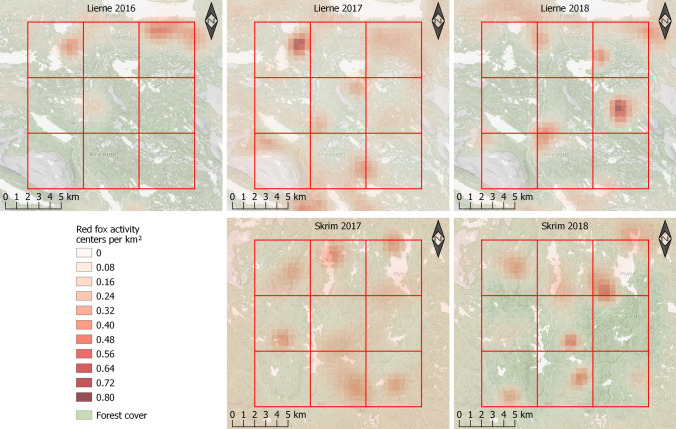
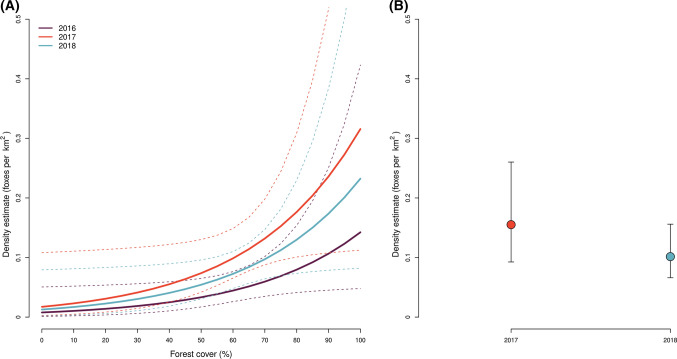
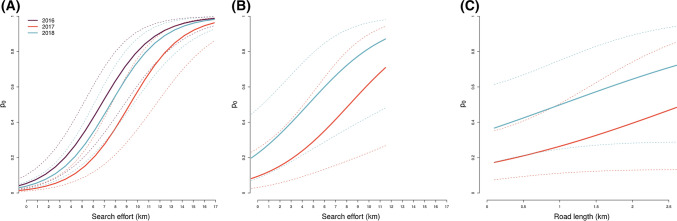
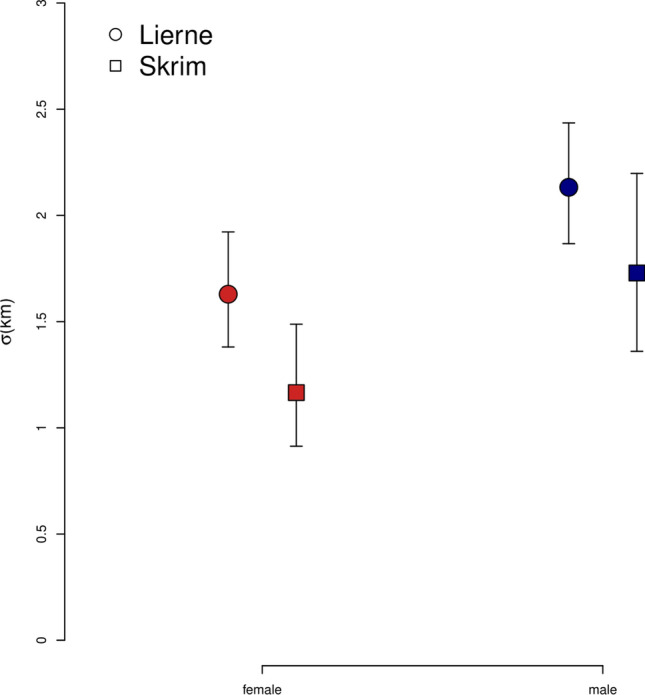
Spatial capture-recapture modelling (SCR) is a powerful tool for estimating density, population size, and space use of elusive animals. Here, we applied SCR modelling to non-invasive genetic sampling (NGS) data to estimate red fox (Vulpes vulpes) densities in two areas of boreal forest in central (2016-2018) and southern Norway (2017-2018). Estimated densities were overall lower in the central study area (mean = 0.04 foxes per km in 2016, 0.10 in 2017, and 0.06 in 2018) compared to the southern study area (0.16 in 2017 and 0.09 in 2018). We found a positive effect of forest cover on density in the central, but not the southern study area. The absence of an effect in the southern area may reflect a paucity of evidence caused by low variation in forest cover. Estimated mean home-range size in the central study area was 45 km [95%CI 34-60] for females and 88 km [69-113] for males. Mean home-range sizes were smaller in the southern study area (26 km [16-42] for females and 56 km [35-91] for males). In both study areas, detection probability was session-dependent and affected by sampling effort. This study highlights how SCR modelling in combination with NGS can be used to efficiently monitor red fox populations, and simultaneously incorporate ecological factors and estimate their effects on population density and space use.
空间捕获-再捕获建模(SCR)是一种强大的工具,可用于估计难以捉摸的动物的密度、种群数量和空间利用。在这里,我们将 SCR 建模应用于非侵入性遗传采样(NGS)数据,以估计挪威中部(2016-2018 年)和南部(2017-2018 年)两个地区的红狐( Vulpes vulpes )密度。与南部研究区相比(2017 年为 0.16,2018 年为 0.09),中部研究区的估计密度总体较低(2016 年为每公里 0.04 只,2017 年为 0.10 只,2018 年为 0.06 只)。我们发现森林覆盖率对中部研究区的密度有积极影响,但对南部研究区没有影响。南部地区没有这种影响可能反映了由于森林覆盖率变化不大而证据不足。在中部研究区,雌性的平均家域大小估计为 45 公里[95%CI 34-60],雄性为 88 公里[69-113]。南部研究区的平均家域大小较小(雌性为 26 公里[16-42],雄性为 56 公里[35-91])。在两个研究区,检测概率都与会议有关,并受采样努力的影响。本研究强调了 SCR 建模如何与 NGS 结合使用,以有效监测红狐种群,并同时纳入生态因素并估计其对种群密度和空间利用的影响。