Center for Proteomics and Metabolomics, Leiden University Medical Center, Albinusdreef 2, Leiden 2333ZA, The Netherlands.
Genome BC Proteomics Centre, University of Victoria, Victoria, British Columbia V8Z 7X8, Canada.
Anal Chem. 2021 Dec 14;93(49):16369-16378. doi: 10.1021/acs.analchem.1c02826. Epub 2021 Dec 3.
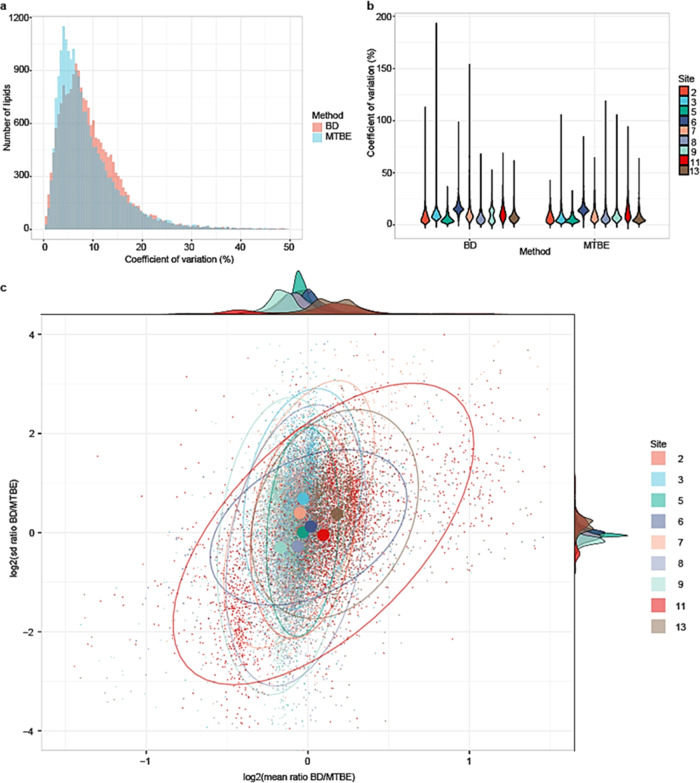
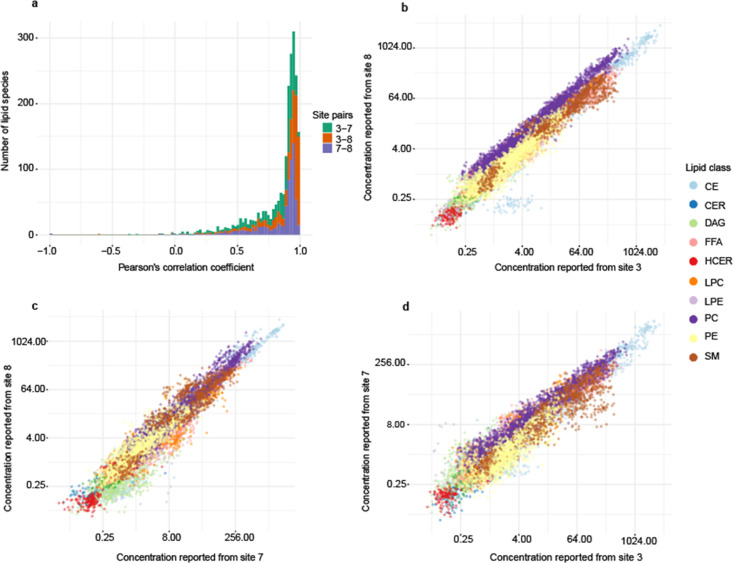
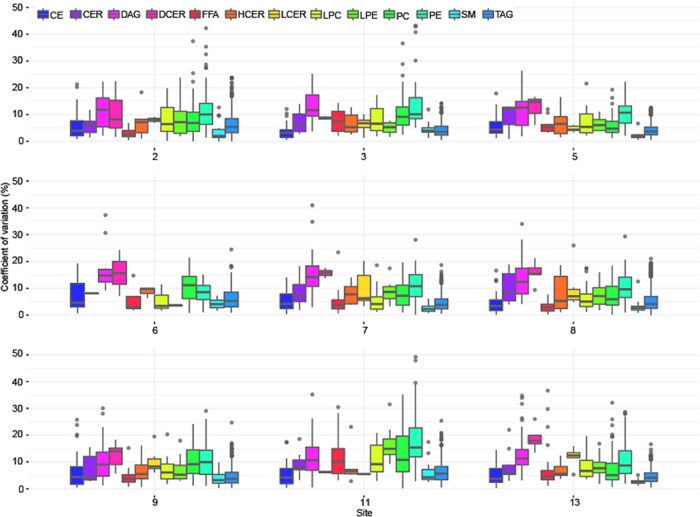
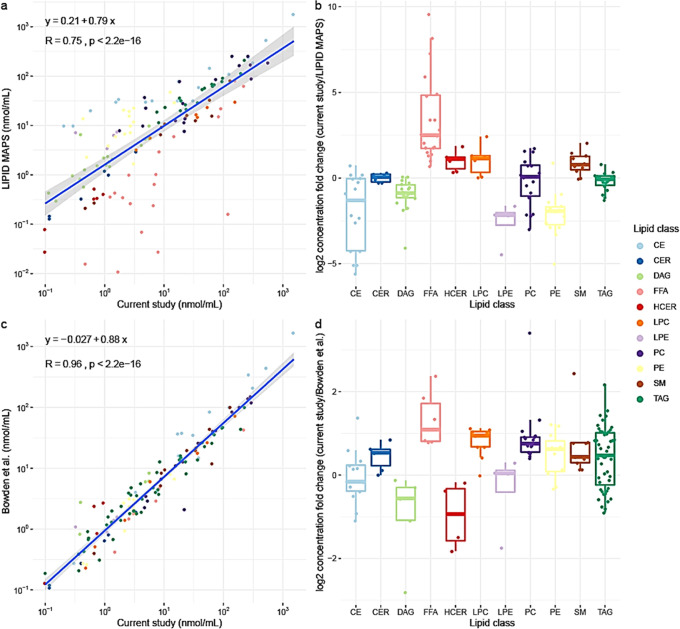
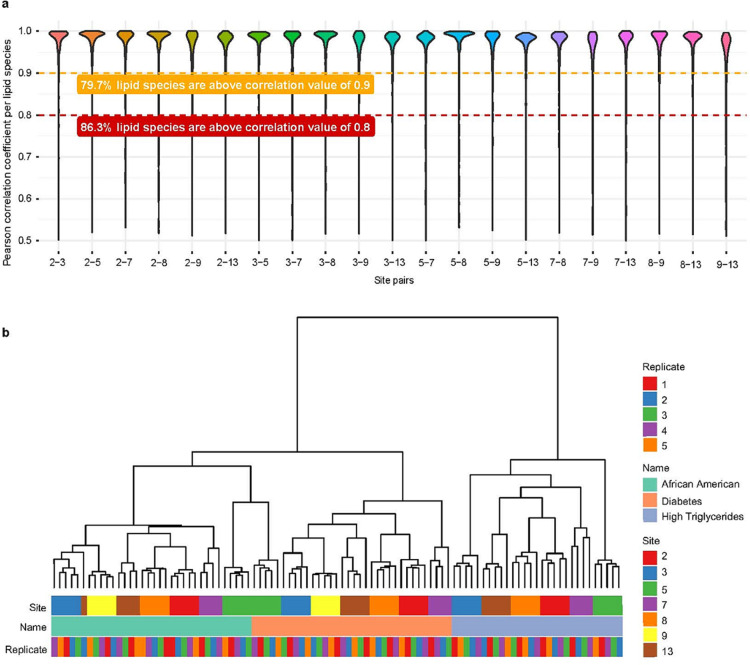
Modern biomarker and translational research as well as personalized health care studies rely heavily on powerful omics' technologies, including metabolomics and lipidomics. However, to translate metabolomics and lipidomics discoveries into a high-throughput clinical setting, standardization is of utmost importance. Here, we compared and benchmarked a quantitative lipidomics platform. The employed Lipidyzer platform is based on lipid class separation by means of differential mobility spectrometry with subsequent multiple reaction monitoring. Quantitation is achieved by the use of 54 deuterated internal standards and an automated informatics approach. We investigated the platform performance across nine laboratories using NIST SRM 1950-Metabolites in Frozen Human Plasma, and three NIST Candidate Reference Materials 8231-Frozen Human Plasma Suite for Metabolomics (high triglyceride, diabetic, and African-American plasma). In addition, we comparatively analyzed 59 plasma samples from individuals with familial hypercholesterolemia from a clinical cohort study. We provide evidence that the more practical methyl-tert-butyl ether extraction outperforms the classic Bligh and Dyer approach and compare our results with two previously published ring trials. In summary, we present standardized lipidomics protocols, allowing for the highly reproducible analysis of several hundred human plasma lipids, and present detailed molecular information for potentially disease relevant and ethnicity-related materials.
现代生物标志物和转化研究以及个性化医疗保健研究严重依赖强大的组学技术,包括代谢组学和脂质组学。然而,要将代谢组学和脂质组学的发现转化为高通量的临床环境,标准化至关重要。在这里,我们比较和基准测试了一种定量脂质组学平台。所采用的 Lipidyzer 平台基于通过差分迁移率光谱法进行脂质类分离,随后进行多重反应监测。通过使用 54 种氘化内部标准品和自动化信息学方法来实现定量。我们使用冷冻人血浆中的 NIST SRM 1950-代谢物以及三种 NIST 候选参考物质 8231-冷冻人血浆代谢组学套件(高甘油三酯、糖尿病和非裔美国人血浆)在九个实验室中研究了该平台的性能。此外,我们比较分析了来自家族性高胆固醇血症临床队列研究的 59 个个体的血浆样本。我们提供的证据表明,更实用的甲基叔丁基醚提取优于经典的 Bligh 和 Dyer 方法,并将我们的结果与之前发表的两项环试验进行了比较。总之,我们提出了标准化的脂质组学方案,能够高度重现性地分析数百种人血浆脂质,并提供与潜在疾病相关和与种族相关的材料的详细分子信息。