Chen Peng, Chen Fuchao, Lei Jiexin, Wang Gaohua, Zhou Benhong
Key Laboratory of Combinatorial Biosynthesis and Drug Discovery, Ministry of Education, Wuhan University School of Pharmaceutical Sciences, Wuhan, China.
Sinopharm Dongfeng General Hospital, Hubei University of Medicine, Shiyan, China.
Front Pharmacol. 2021 Nov 15;12:768097. doi: 10.3389/fphar.2021.768097. eCollection 2021.
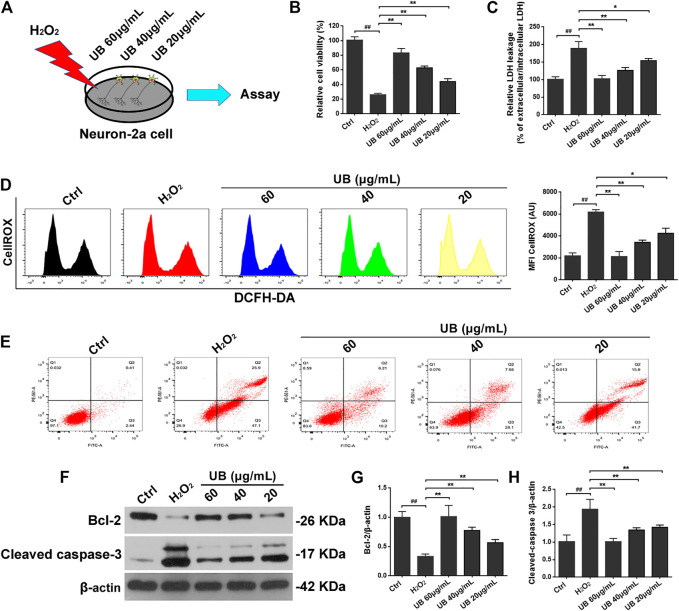
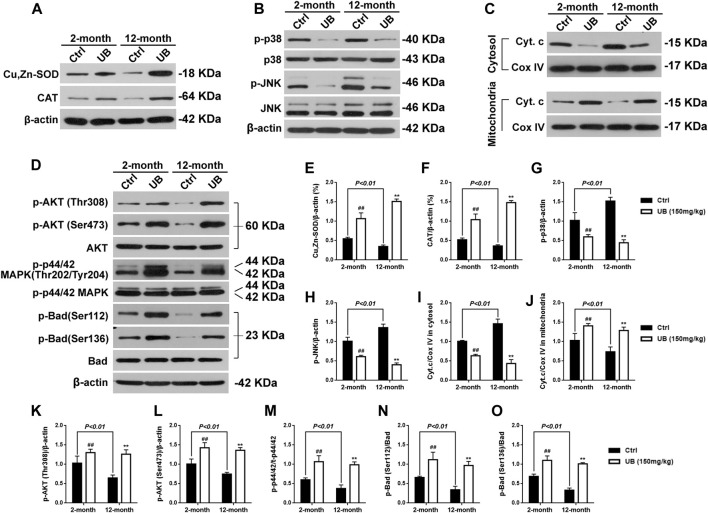
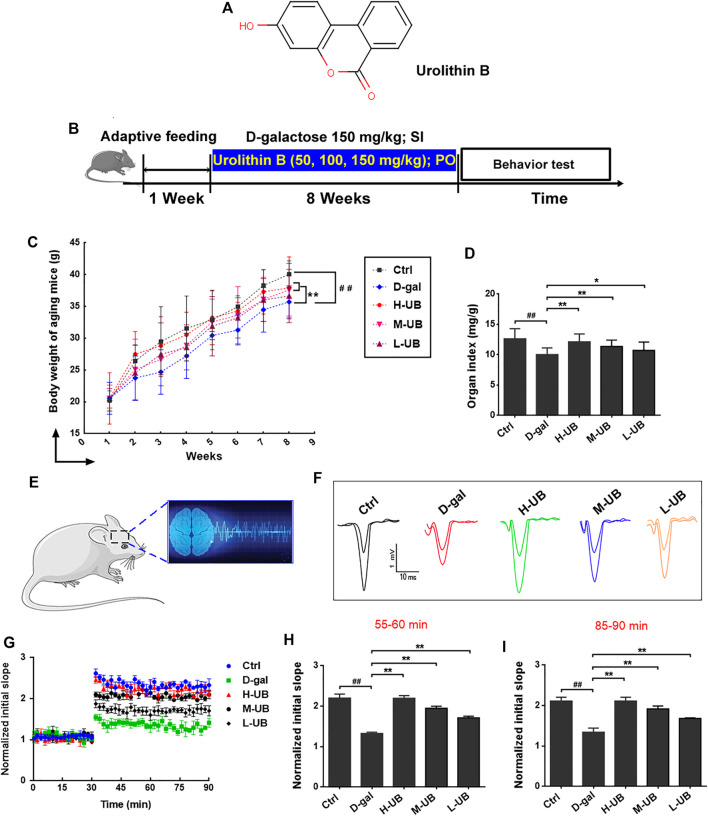
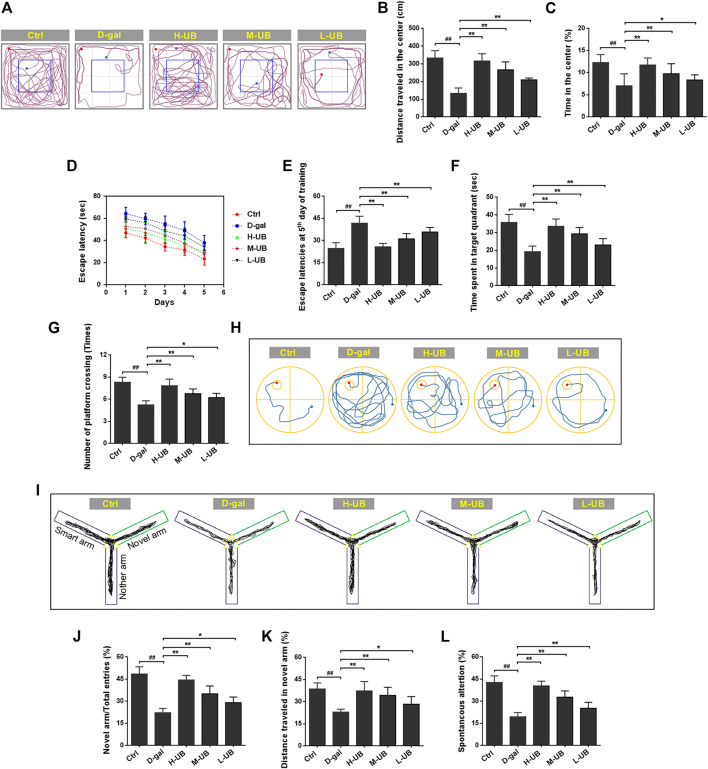
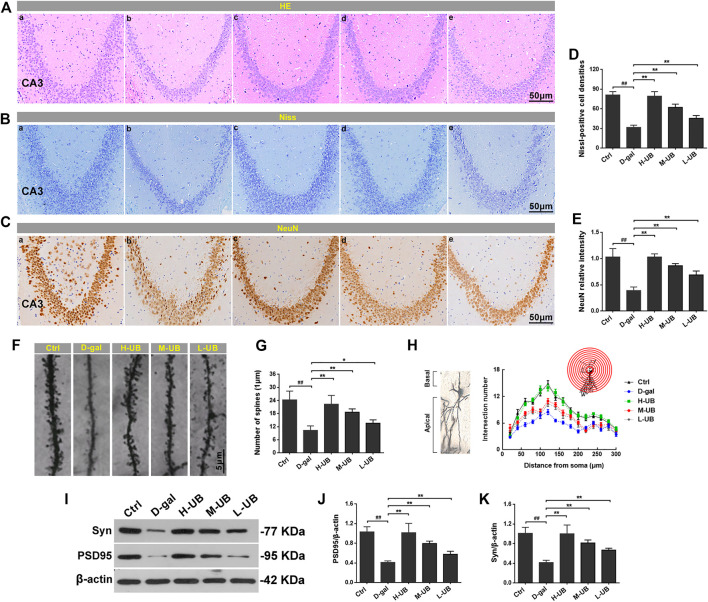
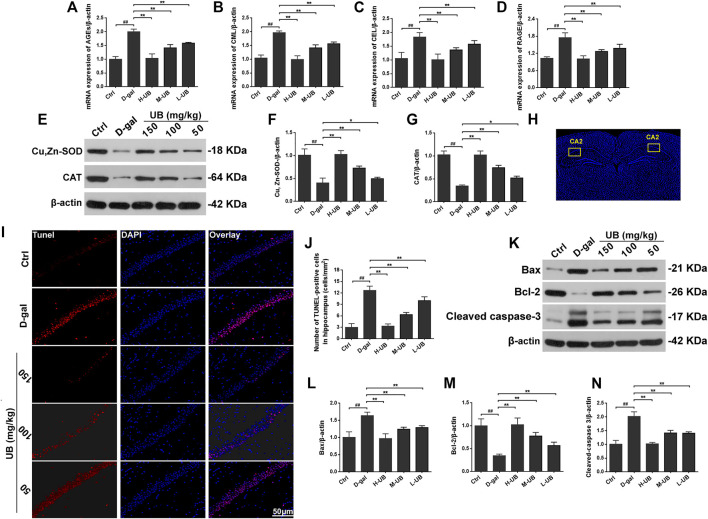
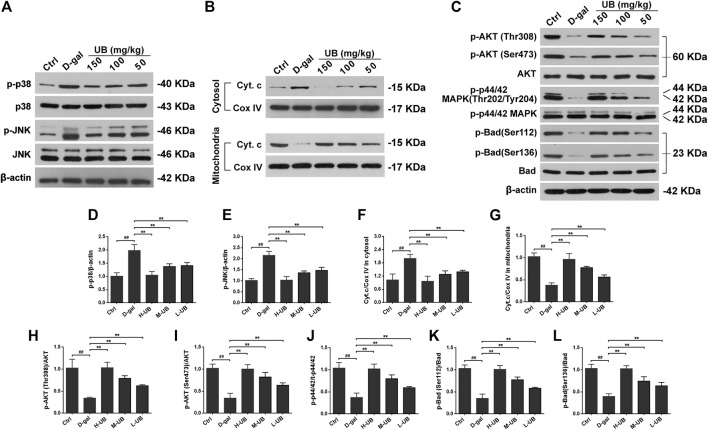
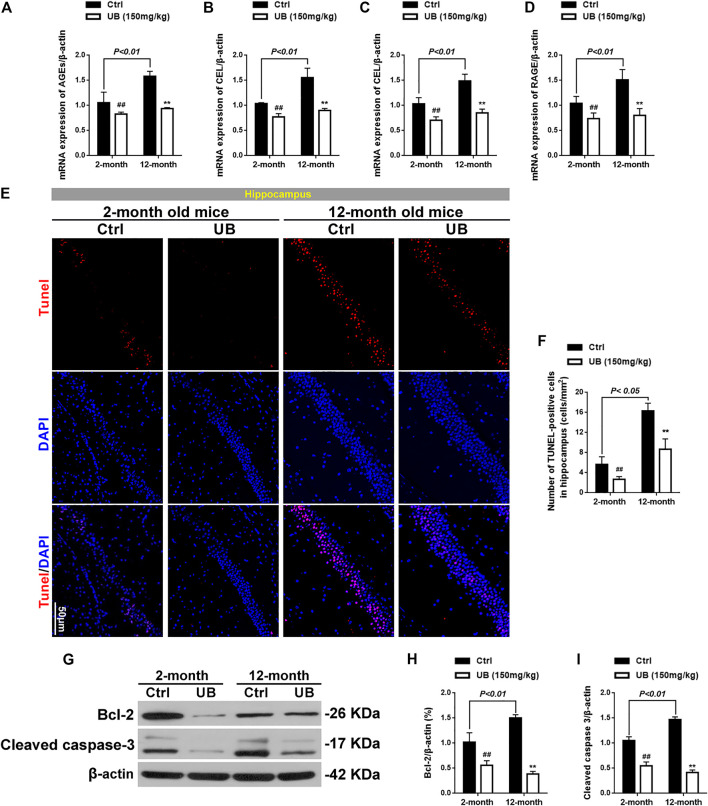
Despite considerable advances in pharmacotherapy, more effective therapeutic interventions for aging-related neurodegenerative disorders (NDs), such as Alzheimer's disease (AD), remain limited. Urolithin B (UB), one of the major subcategories of urolithins (microbiota metabolites) found in various tissues after ellagitannin consumption, has been shown to possess antioxidant, anti-inflammatory, and antiapoptotic effects. However, the neuroprotective effect of UB on brain aging in mice and its potential mechanisms were still unknown. In the current research, we first assessed the ameliorative effects of UB on oxidative injury and apoptosis induced by HO in neuro-2a cells. Then a subcutaneous injection of D-galactose in mice for 8 weeks was used to establish the aging model to evaluate the protective effects of UB. The capacity of memory and learning, alterations of hippocampus histology and corresponding molecular mechanisms were all evaluated. The D-gal-induced accelerated aging model demonstrated that UB could significantly ameliorate deficits in learning and memory by inhibiting the accumulation of advanced glycation end products (AGEs) and elevating the expression and activity of Cu, Zn-SOD and CAT. Furthermore, UB downregulated the c-Jun N-terminal kinase (JNK) signaling pathway and prevented cytochrome c release from isolated mitochondria, thereby inhibiting neuronal apoptosis during the aging process. More importantly, UB stimulation of aging mice activated ERK and phosphoinositide 3-kinase (PI3K), leading to neuronal survival along with Akt and p44/42 mitogen-activated protein kinase (MAPK) phosphorylation and activation. In summary, UB effectively alleviated cognitive deficits and ameliorated brain aging-related conditions and could be considered a healthcare product to prevent aging-associated NDs such as AD.
尽管药物治疗取得了显著进展,但针对与衰老相关的神经退行性疾病(NDs),如阿尔茨海默病(AD),更有效的治疗干预措施仍然有限。尿石素B(UB)是在食用鞣花单宁后在各种组织中发现的尿石素(微生物群代谢产物)的主要亚类之一,已被证明具有抗氧化、抗炎和抗凋亡作用。然而,UB对小鼠脑衰老的神经保护作用及其潜在机制仍不清楚。在当前的研究中,我们首先评估了UB对HO诱导的神经-2a细胞氧化损伤和凋亡的改善作用。然后,通过给小鼠皮下注射D-半乳糖8周来建立衰老模型,以评估UB的保护作用。评估了记忆和学习能力、海马组织学变化及相应的分子机制。D-半乳糖诱导的加速衰老模型表明,UB可以通过抑制晚期糖基化终产物(AGEs)的积累以及提高铜锌超氧化物歧化酶(Cu, Zn-SOD)和过氧化氢酶(CAT)的表达和活性,显著改善学习和记忆缺陷。此外,UB下调c-Jun氨基末端激酶(JNK)信号通路,并阻止细胞色素c从分离的线粒体中释放,从而在衰老过程中抑制神经元凋亡。更重要的是,对衰老小鼠进行UB刺激可激活细胞外信号调节激酶(ERK)和磷脂酰肌醇3激酶(PI3K),导致神经元存活,同时Akt和p44/42丝裂原活化蛋白激酶(MAPK)磷酸化并激活。总之,UB有效缓解了认知缺陷,改善了与脑衰老相关的状况,可被视为预防AD等与衰老相关的神经退行性疾病的保健品。