• 文献检索
  • 文档翻译
  • 深度研究
  • 学术资讯
  • Suppr Zotero 插件Zotero 插件
  • 邀请有礼
  • 套餐&价格
  • 历史记录
应用&插件
Suppr Zotero 插件Zotero 插件浏览器插件Mac 客户端Windows 客户端微信小程序
定价
高级版会员购买积分包购买API积分包
服务
文献检索文档翻译深度研究API 文档MCP 服务
关于我们
关于 Suppr公司介绍联系我们用户协议隐私条款
关注我们

Suppr 超能文献

核心技术专利:CN118964589B侵权必究
粤ICP备2023148730 号-1Suppr @ 2026

文献检索

告别复杂PubMed语法,用中文像聊天一样搜索,搜遍4000万医学文献。AI智能推荐,让科研检索更轻松。

立即免费搜索

文件翻译

保留排版,准确专业,支持PDF/Word/PPT等文件格式,支持 12+语言互译。

免费翻译文档

深度研究

AI帮你快速写综述,25分钟生成高质量综述,智能提取关键信息,辅助科研写作。

立即免费体验

基于物联网的远程哮喘患者监测系统的研究与开发。

Research and Development of an IoT-Based Remote Asthma Patient Monitoring System.

机构信息

Department of Electrical and Computer Engineering, North South University, Bashundhara, Dhaka-1229, Bangladesh.

Department of Computer Science, College of Computers and Information Technology, Taif University, Taif 21944, Saudi Arabia.

出版信息

J Healthc Eng. 2021 Nov 30;2021:2192913. doi: 10.1155/2021/2192913. eCollection 2021.

DOI:10.1155/2021/2192913
PMID:34868511
原文链接:https://pmc.ncbi.nlm.nih.gov/articles/PMC8639242/
Abstract

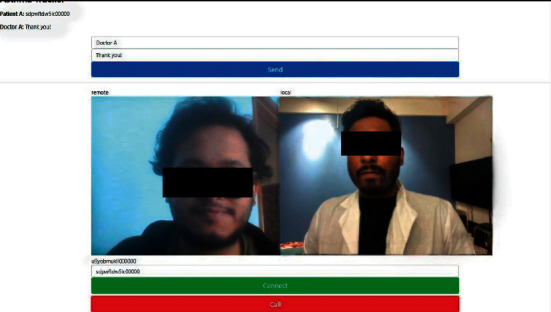
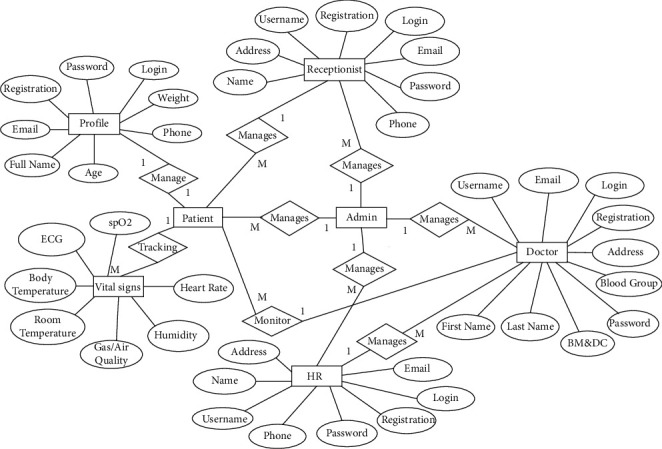
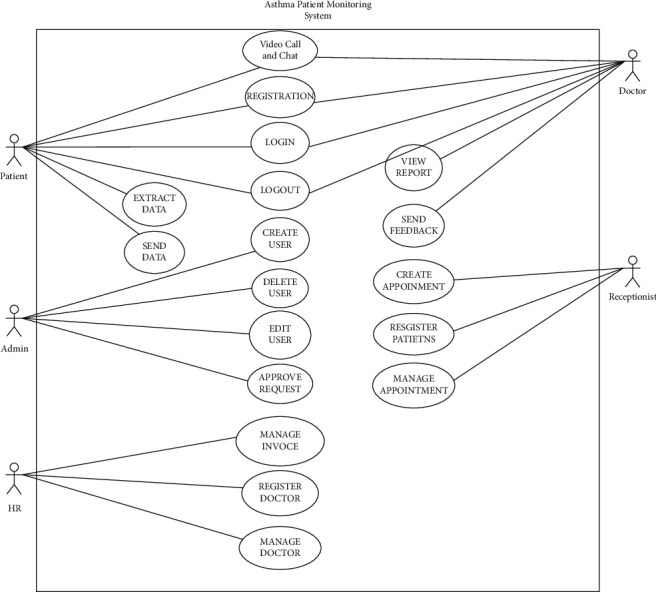
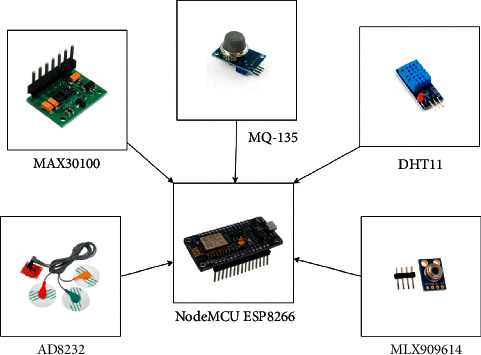
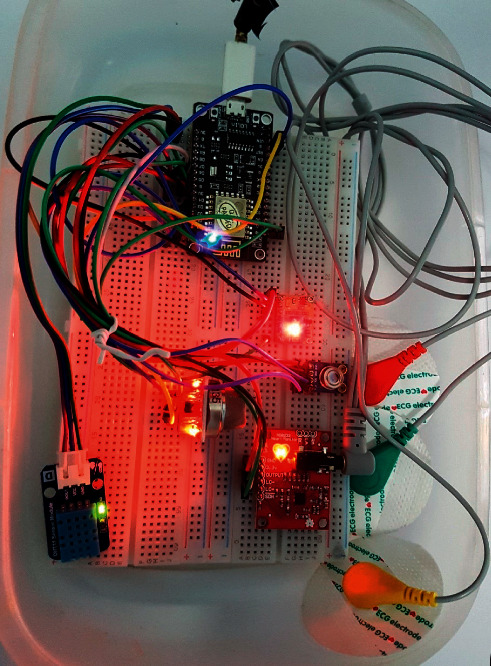
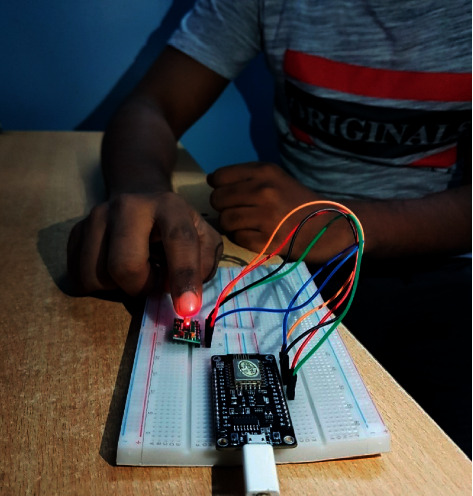
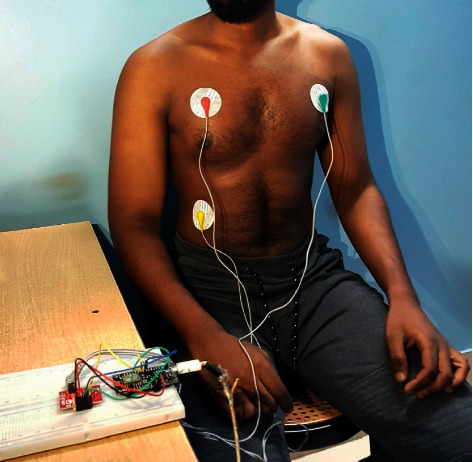
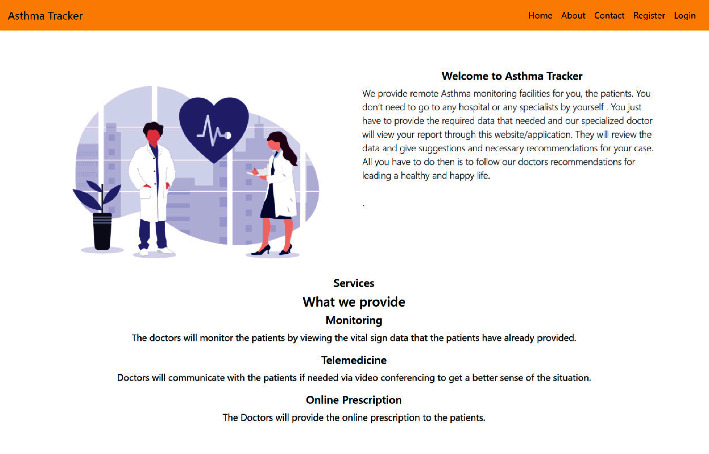
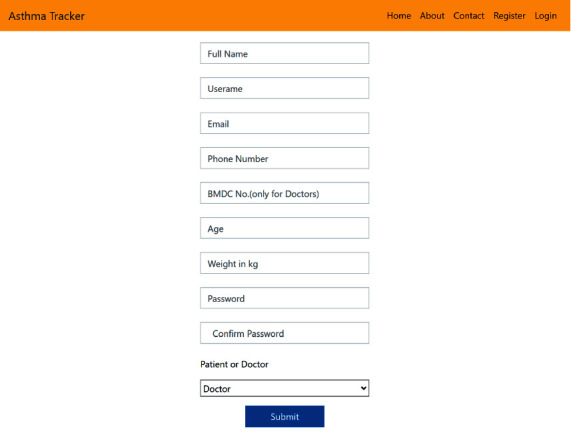
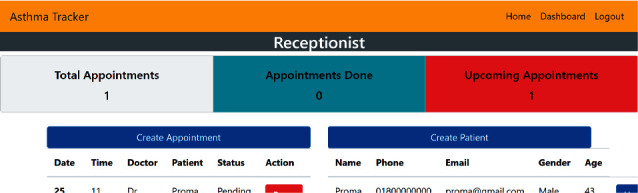
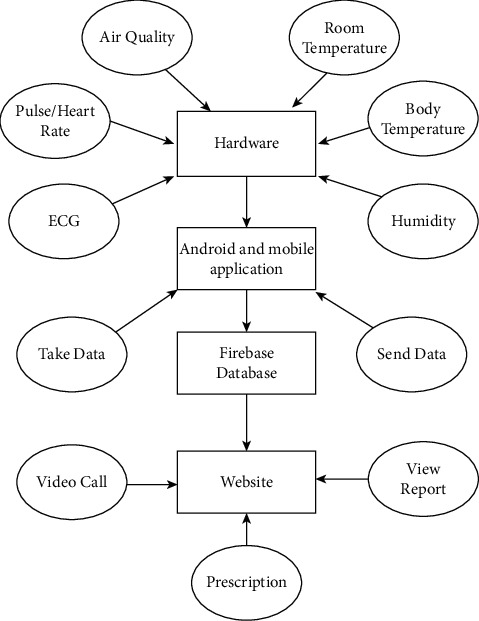
This paper presents the research and development of an Internet of Things- (IoT-) based remote health monitoring system for asthmatic patients. Asthma is an inflammatory disease. Asthma causes the lungs to swell and get narrower, making it difficult to carry air in and out of the lungs. This situation makes breathing very difficult. Remote patient monitoring (RPM) is a method of collecting health-related data from patients who are in a remote location and electronically transmitting it to healthcare providers for evaluation and consultation. The aim of this study is to design a monitoring system that allows doctors to monitor asthmatic patients from a remote area. The proposed system will allow patients to measure oxygen saturation (SpO2), heart rate, body temperature, humidity, volatile gases, room temperature, and electrocardiogram (ECG) using various sensors, which will be displayed in an application. This data is then sent to the doctor to monitor the patient's condition and suggest appropriate actions. Overall, the system consists of an Android application, a website, and various sensors. The Android studio and Java programming language were used to develop the application. For the frontend, the website was built using Hypertext Markup Language (HTML), Cascading Style Sheets (CSS), JavaScript, and jQuery. The system also uses Django, a Python-based open-source web framework, for the backend. The system developed the various sensors using an ESP8266 microcontroller compatible with the Arduino Integrated Development Environment (IDE). The system uses a MAX30100 pulse oximeter and heart rate sensor, a GY-906 MLX90614 noncontact precision thermometer, a DHT11 humidity and temperature sensor, a MQ-135 gas and air quality sensor, and an AD8232 ECG sensor for collecting various parameters that may trigger asthma attacks. Finally, the system developed the Asthma Tracker app and the Asthma Tracker website for remote health monitoring. The system was initially tested on demo patients and later deployed and tested on seven real human test subjects. Overall, the monitoring system produced satisfactory results. The data acquired by the sensors has a high level of accuracy. The system also maintained user-friendliness and low cost.

摘要

本文提出了一种基于物联网(IoT)的远程哮喘患者健康监测系统的研究与开发。哮喘是一种炎症性疾病。哮喘会导致肺部肿胀并变窄,使空气难以进出肺部。这种情况会导致呼吸困难。远程患者监测(RPM)是一种从远程位置收集患者健康相关数据并将其电子传输给医疗保健提供者进行评估和咨询的方法。本研究的目的是设计一种监测系统,使医生能够从远程区域监测哮喘患者。所提出的系统将允许患者使用各种传感器测量血氧饱和度(SpO2)、心率、体温、湿度、挥发性气体、室温以及心电图(ECG),这些数据将在应用程序中显示。然后,将这些数据发送给医生以监测患者的病情并提出适当的行动建议。总的来说,该系统由一个 Android 应用程序、一个网站和各种传感器组成。使用 Android Studio 和 Java 编程语言开发了该应用程序。对于前端,使用超文本标记语言(HTML)、层叠样式表(CSS)、JavaScript 和 jQuery 构建了网站。该系统还使用基于 Python 的开源 Web 框架 Django 作为后端。系统使用与 Arduino 集成开发环境(IDE)兼容的 ESP8266 微控制器开发了各种传感器。系统使用 MAX30100 脉搏血氧仪和心率传感器、GY-906 MLX90614 非接触式精密温度计、DHT11 湿度和温度传感器、MQ-135 气体和空气质量传感器以及 AD8232 ECG 传感器来收集可能引发哮喘发作的各种参数。最后,系统开发了哮喘追踪器应用程序和哮喘追踪器网站,用于远程健康监测。该系统最初在演示患者身上进行了测试,然后在七个真实的人体测试对象上进行了部署和测试。总的来说,监测系统取得了令人满意的结果。传感器采集的数据具有很高的准确性。该系统还保持了用户友好性和低成本。
https://cdn.ncbi.nlm.nih.gov/pmc/blobs/0486/8639242/fbc4b78a9e6b/JHE2021-2192913.031.jpg
https://cdn.ncbi.nlm.nih.gov/pmc/blobs/0486/8639242/dc8d864e1c9b/JHE2021-2192913.001.jpg
https://cdn.ncbi.nlm.nih.gov/pmc/blobs/0486/8639242/312fa015ad5b/JHE2021-2192913.002.jpg
https://cdn.ncbi.nlm.nih.gov/pmc/blobs/0486/8639242/c998c4558c4c/JHE2021-2192913.003.jpg
https://cdn.ncbi.nlm.nih.gov/pmc/blobs/0486/8639242/6dc57f738bb0/JHE2021-2192913.004.jpg
https://cdn.ncbi.nlm.nih.gov/pmc/blobs/0486/8639242/a25ed405db0b/JHE2021-2192913.005.jpg
https://cdn.ncbi.nlm.nih.gov/pmc/blobs/0486/8639242/a9a4b79782af/JHE2021-2192913.006.jpg
https://cdn.ncbi.nlm.nih.gov/pmc/blobs/0486/8639242/9c5c7dd024c6/JHE2021-2192913.007.jpg
https://cdn.ncbi.nlm.nih.gov/pmc/blobs/0486/8639242/a7b87a313f9c/JHE2021-2192913.008.jpg
https://cdn.ncbi.nlm.nih.gov/pmc/blobs/0486/8639242/508bec721bb7/JHE2021-2192913.009.jpg
https://cdn.ncbi.nlm.nih.gov/pmc/blobs/0486/8639242/e3ffcf1d4e7c/JHE2021-2192913.010.jpg
https://cdn.ncbi.nlm.nih.gov/pmc/blobs/0486/8639242/c34b0256f2c5/JHE2021-2192913.011.jpg
https://cdn.ncbi.nlm.nih.gov/pmc/blobs/0486/8639242/94c04b17938e/JHE2021-2192913.012.jpg
https://cdn.ncbi.nlm.nih.gov/pmc/blobs/0486/8639242/e69685a9db9d/JHE2021-2192913.013.jpg
https://cdn.ncbi.nlm.nih.gov/pmc/blobs/0486/8639242/08da4b04dde8/JHE2021-2192913.014.jpg
https://cdn.ncbi.nlm.nih.gov/pmc/blobs/0486/8639242/e349d5efb2c9/JHE2021-2192913.015.jpg
https://cdn.ncbi.nlm.nih.gov/pmc/blobs/0486/8639242/c53dc524e2ad/JHE2021-2192913.016.jpg
https://cdn.ncbi.nlm.nih.gov/pmc/blobs/0486/8639242/2b403a4bf2d0/JHE2021-2192913.017.jpg
https://cdn.ncbi.nlm.nih.gov/pmc/blobs/0486/8639242/fff874c55fb8/JHE2021-2192913.018.jpg
https://cdn.ncbi.nlm.nih.gov/pmc/blobs/0486/8639242/3dca935281c8/JHE2021-2192913.019.jpg
https://cdn.ncbi.nlm.nih.gov/pmc/blobs/0486/8639242/9beb31ad1434/JHE2021-2192913.020.jpg
https://cdn.ncbi.nlm.nih.gov/pmc/blobs/0486/8639242/055a18f526d5/JHE2021-2192913.021.jpg
https://cdn.ncbi.nlm.nih.gov/pmc/blobs/0486/8639242/30be929110fa/JHE2021-2192913.022.jpg
https://cdn.ncbi.nlm.nih.gov/pmc/blobs/0486/8639242/871307ac2837/JHE2021-2192913.023.jpg
https://cdn.ncbi.nlm.nih.gov/pmc/blobs/0486/8639242/ed3845194805/JHE2021-2192913.024.jpg
https://cdn.ncbi.nlm.nih.gov/pmc/blobs/0486/8639242/fc86fc3f18ec/JHE2021-2192913.025.jpg
https://cdn.ncbi.nlm.nih.gov/pmc/blobs/0486/8639242/e9c6a5d014a3/JHE2021-2192913.026.jpg
https://cdn.ncbi.nlm.nih.gov/pmc/blobs/0486/8639242/1acd337bf138/JHE2021-2192913.027.jpg
https://cdn.ncbi.nlm.nih.gov/pmc/blobs/0486/8639242/3486f0c38947/JHE2021-2192913.028.jpg
https://cdn.ncbi.nlm.nih.gov/pmc/blobs/0486/8639242/ea808fad0dad/JHE2021-2192913.029.jpg
https://cdn.ncbi.nlm.nih.gov/pmc/blobs/0486/8639242/bc40afa46526/JHE2021-2192913.030.jpg
https://cdn.ncbi.nlm.nih.gov/pmc/blobs/0486/8639242/fbc4b78a9e6b/JHE2021-2192913.031.jpg
https://cdn.ncbi.nlm.nih.gov/pmc/blobs/0486/8639242/dc8d864e1c9b/JHE2021-2192913.001.jpg
https://cdn.ncbi.nlm.nih.gov/pmc/blobs/0486/8639242/312fa015ad5b/JHE2021-2192913.002.jpg
https://cdn.ncbi.nlm.nih.gov/pmc/blobs/0486/8639242/c998c4558c4c/JHE2021-2192913.003.jpg
https://cdn.ncbi.nlm.nih.gov/pmc/blobs/0486/8639242/6dc57f738bb0/JHE2021-2192913.004.jpg
https://cdn.ncbi.nlm.nih.gov/pmc/blobs/0486/8639242/a25ed405db0b/JHE2021-2192913.005.jpg
https://cdn.ncbi.nlm.nih.gov/pmc/blobs/0486/8639242/a9a4b79782af/JHE2021-2192913.006.jpg
https://cdn.ncbi.nlm.nih.gov/pmc/blobs/0486/8639242/9c5c7dd024c6/JHE2021-2192913.007.jpg
https://cdn.ncbi.nlm.nih.gov/pmc/blobs/0486/8639242/a7b87a313f9c/JHE2021-2192913.008.jpg
https://cdn.ncbi.nlm.nih.gov/pmc/blobs/0486/8639242/508bec721bb7/JHE2021-2192913.009.jpg
https://cdn.ncbi.nlm.nih.gov/pmc/blobs/0486/8639242/e3ffcf1d4e7c/JHE2021-2192913.010.jpg
https://cdn.ncbi.nlm.nih.gov/pmc/blobs/0486/8639242/c34b0256f2c5/JHE2021-2192913.011.jpg
https://cdn.ncbi.nlm.nih.gov/pmc/blobs/0486/8639242/94c04b17938e/JHE2021-2192913.012.jpg
https://cdn.ncbi.nlm.nih.gov/pmc/blobs/0486/8639242/e69685a9db9d/JHE2021-2192913.013.jpg
https://cdn.ncbi.nlm.nih.gov/pmc/blobs/0486/8639242/08da4b04dde8/JHE2021-2192913.014.jpg
https://cdn.ncbi.nlm.nih.gov/pmc/blobs/0486/8639242/e349d5efb2c9/JHE2021-2192913.015.jpg
https://cdn.ncbi.nlm.nih.gov/pmc/blobs/0486/8639242/c53dc524e2ad/JHE2021-2192913.016.jpg
https://cdn.ncbi.nlm.nih.gov/pmc/blobs/0486/8639242/2b403a4bf2d0/JHE2021-2192913.017.jpg
https://cdn.ncbi.nlm.nih.gov/pmc/blobs/0486/8639242/fff874c55fb8/JHE2021-2192913.018.jpg
https://cdn.ncbi.nlm.nih.gov/pmc/blobs/0486/8639242/3dca935281c8/JHE2021-2192913.019.jpg
https://cdn.ncbi.nlm.nih.gov/pmc/blobs/0486/8639242/9beb31ad1434/JHE2021-2192913.020.jpg
https://cdn.ncbi.nlm.nih.gov/pmc/blobs/0486/8639242/055a18f526d5/JHE2021-2192913.021.jpg
https://cdn.ncbi.nlm.nih.gov/pmc/blobs/0486/8639242/30be929110fa/JHE2021-2192913.022.jpg
https://cdn.ncbi.nlm.nih.gov/pmc/blobs/0486/8639242/871307ac2837/JHE2021-2192913.023.jpg
https://cdn.ncbi.nlm.nih.gov/pmc/blobs/0486/8639242/ed3845194805/JHE2021-2192913.024.jpg
https://cdn.ncbi.nlm.nih.gov/pmc/blobs/0486/8639242/fc86fc3f18ec/JHE2021-2192913.025.jpg
https://cdn.ncbi.nlm.nih.gov/pmc/blobs/0486/8639242/e9c6a5d014a3/JHE2021-2192913.026.jpg
https://cdn.ncbi.nlm.nih.gov/pmc/blobs/0486/8639242/1acd337bf138/JHE2021-2192913.027.jpg
https://cdn.ncbi.nlm.nih.gov/pmc/blobs/0486/8639242/3486f0c38947/JHE2021-2192913.028.jpg
https://cdn.ncbi.nlm.nih.gov/pmc/blobs/0486/8639242/ea808fad0dad/JHE2021-2192913.029.jpg
https://cdn.ncbi.nlm.nih.gov/pmc/blobs/0486/8639242/bc40afa46526/JHE2021-2192913.030.jpg
https://cdn.ncbi.nlm.nih.gov/pmc/blobs/0486/8639242/fbc4b78a9e6b/JHE2021-2192913.031.jpg

相似文献

1
Research and Development of an IoT-Based Remote Asthma Patient Monitoring System.基于物联网的远程哮喘患者监测系统的研究与开发。
J Healthc Eng. 2021 Nov 30;2021:2192913. doi: 10.1155/2021/2192913. eCollection 2021.
2
Deep Learning-Based IoT System for Remote Monitoring and Early Detection of Health Issues in Real-Time.基于深度学习的物联网系统,用于实时远程监测和早期发现健康问题。
Sensors (Basel). 2023 May 30;23(11):5204. doi: 10.3390/s23115204.
3
Remote Monitoring of Colorectal Cancer Survivors Using a Smartphone App and Internet of Things-Based Device: Development and Usability Study.使用智能手机应用程序和物联网设备对结直肠癌幸存者进行远程监测:开发与可用性研究。
JMIR Cancer. 2023 Feb 15;9:e42250. doi: 10.2196/42250.
4
IOT based portable heart rate and SpO2 pulse oximeter.基于物联网的便携式心率和血氧脉搏血氧仪。
HardwareX. 2022 Apr;11:e00309. doi: 10.1016/j.ohx.2022.e00309. Epub 2022 Apr 21.
5
Design and development of patient health tracking, monitoring and big data storage using Internet of Things and real time cloud computing.利用物联网和实时云计算进行患者健康跟踪、监测及大数据存储的设计与开发。
PLoS One. 2024 Mar 11;19(3):e0298582. doi: 10.1371/journal.pone.0298582. eCollection 2024.
6
Developing a Low-Cost IoT-Based Remote Cardiovascular Patient Monitoring System in Cameroon.在喀麦隆开发一种基于物联网的低成本远程心血管疾病患者监测系统。
Healthcare (Basel). 2023 Jan 9;11(2):199. doi: 10.3390/healthcare11020199.
7
8
Real-time artificial intelligence based health monitoring, diagnosing and environmental control system for COVID-19 patients.基于实时人工智能的 COVID-19 患者健康监测、诊断和环境控制系统。
Math Biosci Eng. 2022 May 23;19(8):7586-7605. doi: 10.3934/mbe.2022357.
9
Design of a Remote Real-Time Monitoring System for Multiple Physiological Parameters Based on Smartphone.基于智能手机的多生理参数远程实时监测系统设计。
J Healthc Eng. 2019 Nov 19;2019:5674673. doi: 10.1155/2019/5674673. eCollection 2019.
10
Open-source Internet of Things remote aquatic environmental sensing.开源物联网远程水体环境传感
HardwareX. 2022 Jul 12;12:e00336. doi: 10.1016/j.ohx.2022.e00336. eCollection 2022 Oct.

引用本文的文献

1
Retracted: Research and Development of an IoT-Based Remote Asthma Patient Monitoring System.撤回:基于物联网的远程哮喘患者监测系统的研发。
J Healthc Eng. 2023 Jul 12;2023:9809127. doi: 10.1155/2023/9809127. eCollection 2023.
2
Healthcare Monitoring Using Low-Cost Sensors to Supplement and Replace Human Sensation: Does It Have Potential to Increase Independent Living and Prevent Disease?利用低成本传感器进行医疗保健监测,以补充和替代人体感知:它是否有潜力提高独立生活能力并预防疾病?
Sensors (Basel). 2023 Feb 14;23(4):2139. doi: 10.3390/s23042139.
3
Consortium Framework Using Blockchain for Asthma Healthcare in Pandemics.

本文引用的文献

1
The impact of COVID-19 on patients with asthma.COVID-19 对哮喘患者的影响。
Eur Respir J. 2021 Mar 4;57(3). doi: 10.1183/13993003.03142-2020. Print 2021 Mar.
2
A Smart Phone Based Handheld Wireless Spirometer with Functions and Precision Comparable to Laboratory Spirometers.一款基于智能手机的手持式无线肺活量计,其功能和精度可与实验室肺活量计相媲美。
Sensors (Basel). 2019 May 31;19(11):2487. doi: 10.3390/s19112487.
3
Best Treatment Guidelines For Bronchial Asthma.支气管哮喘最佳治疗指南
联盟框架使用区块链进行大流行中的哮喘医疗保健。
Sensors (Basel). 2022 Nov 7;22(21):8582. doi: 10.3390/s22218582.
4
IoT-Enabled Framework for Early Detection and Prediction of COVID-19 Suspects by Leveraging Machine Learning in Cloud.基于物联网的 COVID-19 疑似病例早期检测和预测框架,利用云环境中的机器学习技术。
J Healthc Eng. 2022 Apr 12;2022:7713939. doi: 10.1155/2022/7713939. eCollection 2022.
Med J Armed Forces India. 2007 Jul;63(3):264-8. doi: 10.1016/S0377-1237(07)80151-1. Epub 2011 Jul 21.
4
Effect of wireless channels on detection and classification of asthma attacks in wireless remote health monitoring systems.无线信道对无线远程健康监测系统中哮喘发作检测与分类的影响。
Int J Telemed Appl. 2014;2014:816369. doi: 10.1155/2014/816369. Epub 2014 Feb 10.
5
Prevalence and risk factors for bronchial asthma in Indian adults: a multicentre study.印度成年人支气管哮喘的患病率及危险因素:一项多中心研究。
Indian J Chest Dis Allied Sci. 2006 Jan-Mar;48(1):13-22.
6
Guidelines for management of asthma at primary and secondary levels of health care in India (2005).印度初级和二级医疗保健机构哮喘管理指南(2005年)
Indian J Chest Dis Allied Sci. 2005 Oct-Dec;47(4):309-43.
7
Genetic and perinatal risk factors for asthma onset and severity: a review and theoretical analysis.哮喘发病及严重程度的遗传和围产期危险因素:综述与理论分析
Epidemiol Rev. 2002;24(2):176-89. doi: 10.1093/epirev/mxf012.