Wu Qianqian, Jiang Sutian, Cheng Tong, Xu Manyu, Lu Bing
Department of Clinical Biobank, Affiliated Hospital of Nantong University, Nantong, China.
Department of Medicine, Nantong University, Nantong, China.
Front Cell Dev Biol. 2021 Nov 15;9:770301. doi: 10.3389/fcell.2021.770301. eCollection 2021.
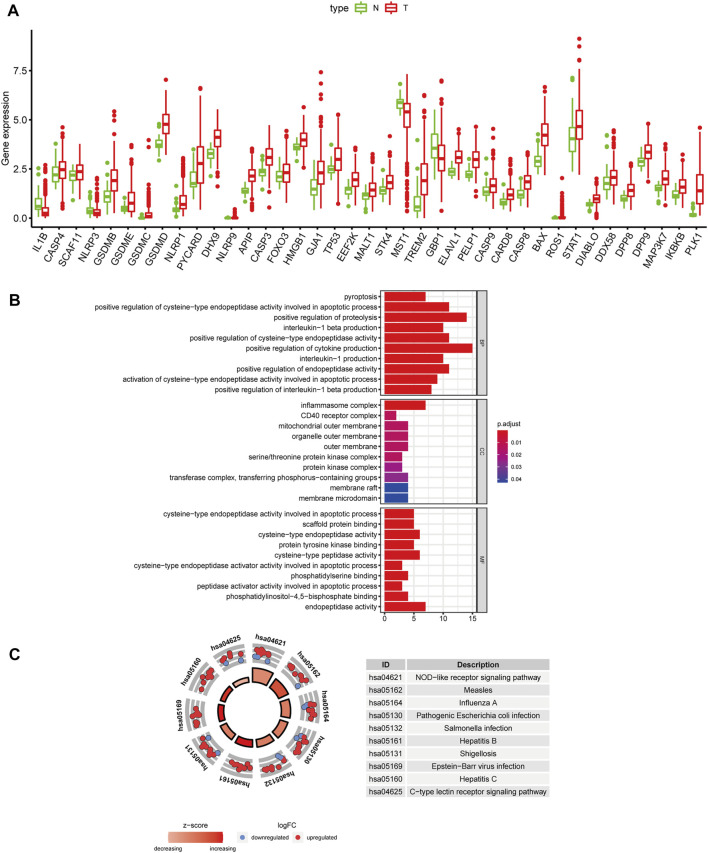
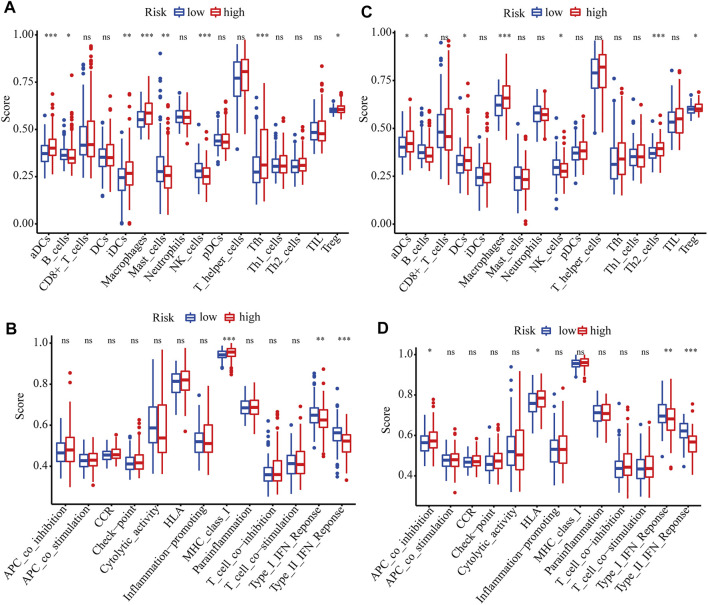
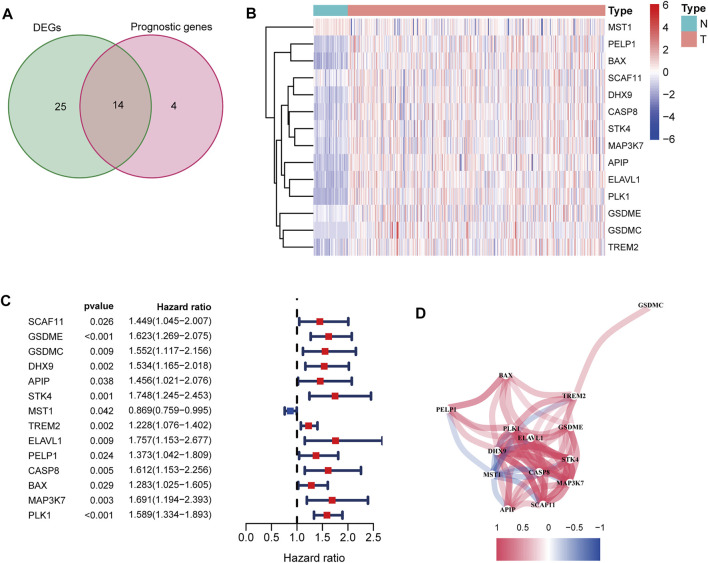
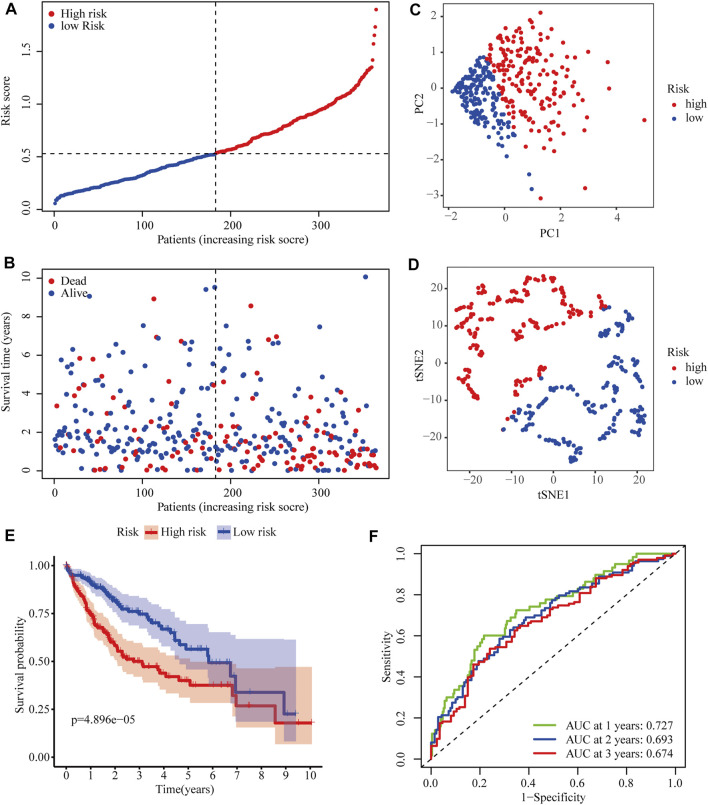
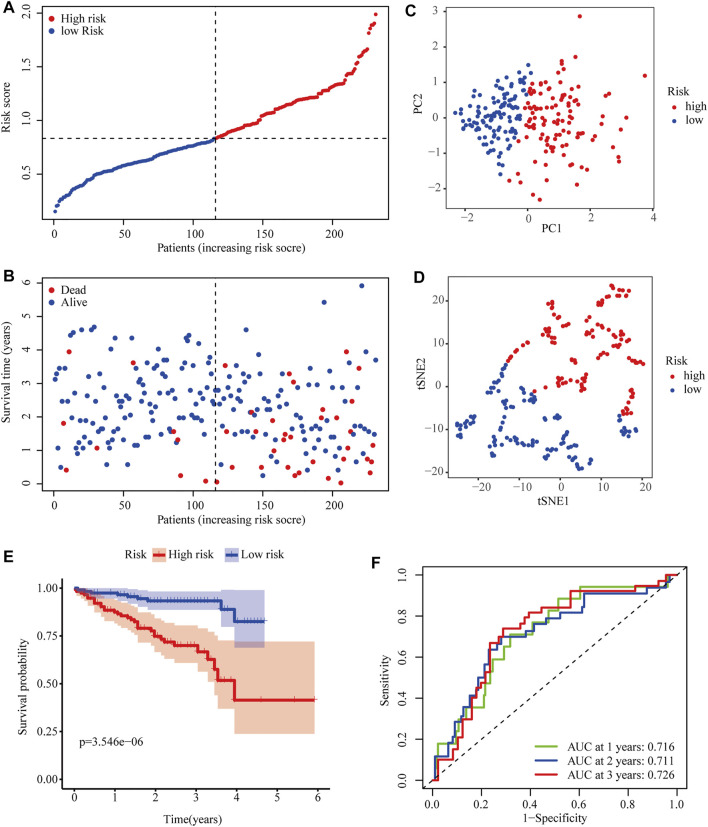
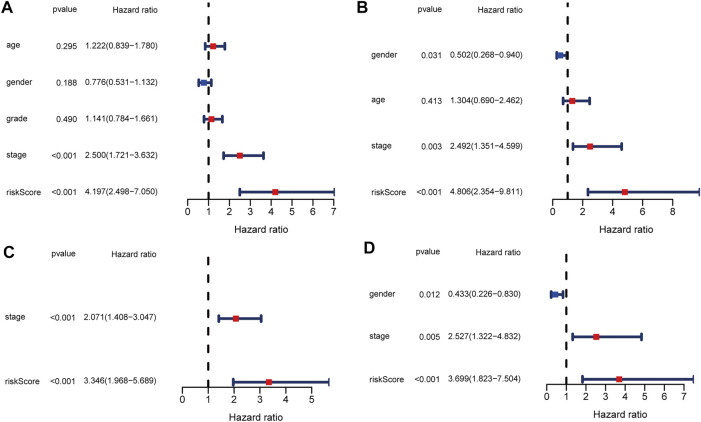
Hepatocellular carcinoma (HCC) is the second most lethal malignant tumor because of its significant heterogeneity and complicated molecular pathogenesis. Novel prognostic biomarkers are urgently needed because no effective and reliable prognostic biomarkers currently exist for HCC patients. Increasing evidence has revealed that pyroptosis plays a role in the occurrence and progression of malignant tumors. However, the relationship between pyroptosis-related genes (PRGs) and HCC patient prognosis remains unclear. In this study, 57 PRGs were obtained from previous studies and GeneCards. The gene expression profiles and clinical data of HCC patients were acquired from public data portals. Least absolute shrinkage and selection operator (LASSO) Cox regression analysis was performed to establish a risk model using TCGA data. Additionally, the risk model was further validated in an independent ICGC dataset. Our results showed that 39 PRGs were significantly differentially expressed between tumor and normal liver tissues in the TCGA cohort. Functional analysis confirmed that these PRGs were enriched in pyroptosis-related pathways. According to univariate Cox regression analysis, 14 differentially expressed PRGs were correlated with the prognosis of HCC patients in the TCGA cohort. A risk model integrating two PRGs was constructed to classify the patients into different risk groups. Poor overall survival was observed in the high-risk group of both TCGA ( < 0.001) and ICGC ( < 0.001) patients. Receiver operating characteristic curves demonstrated the accuracy of the model. Furthermore, the risk score was confirmed as an independent prognostic indicator via multivariate Cox regression analysis (TCGA cohort: HR = 3.346, < 0.001; ICGC cohort: HR = 3.699, < 0.001). Moreover, the single-sample gene set enrichment analysis revealed different immune statuses between high- and low-risk groups. In conclusion, our new pyroptosis-related risk model has potential application in predicting the prognosis of HCC patients.
肝细胞癌(HCC)因其显著的异质性和复杂的分子发病机制,成为第二大致命性恶性肿瘤。由于目前尚无针对HCC患者有效的、可靠的预后生物标志物,因此迫切需要新的预后生物标志物。越来越多的证据表明,细胞焦亡在恶性肿瘤的发生和发展中起作用。然而,细胞焦亡相关基因(PRGs)与HCC患者预后之间的关系仍不清楚。在本研究中,从先前的研究和基因卡片数据库中获取了57个PRGs。HCC患者的基因表达谱和临床数据来自公共数据平台。使用TCGA数据进行最小绝对收缩和选择算子(LASSO)Cox回归分析以建立风险模型。此外,该风险模型在独立的ICGC数据集中进一步得到验证。我们的结果表明,在TCGA队列中,39个PRGs在肿瘤组织和正常肝组织之间存在显著差异表达。功能分析证实这些PRGs富集于细胞焦亡相关途径。根据单因素Cox回归分析,14个差异表达的PRGs与TCGA队列中HCC患者的预后相关。构建了一个整合两个PRGs的风险模型,将患者分为不同的风险组。在TCGA(<0.001)和ICGC(<0.001)患者的高风险组中均观察到较差的总生存期。受试者工作特征曲线证明了该模型的准确性。此外,通过多因素Cox回归分析确认风险评分是一个独立的预后指标(TCGA队列:HR = 3.346,<0.001;ICGC队列:HR = 3.699,<0.001)。此外,单样本基因集富集分析揭示了高风险组和低风险组之间不同的免疫状态。总之,我们新的细胞焦亡相关风险模型在预测HCC患者预后方面具有潜在应用价值。