Pathology Advanced Translational Research Unit, Department of Pathology and Laboratory Medicine, School of Medicine, Emory University, Atlanta, Georgia.
Pathology Advanced Translational Research Unit, Department of Pathology and Laboratory Medicine, School of Medicine, Emory University, Atlanta, Georgia.
Transl Res. 2022 Mar;241:83-95. doi: 10.1016/j.trsl.2021.12.001. Epub 2021 Dec 3.
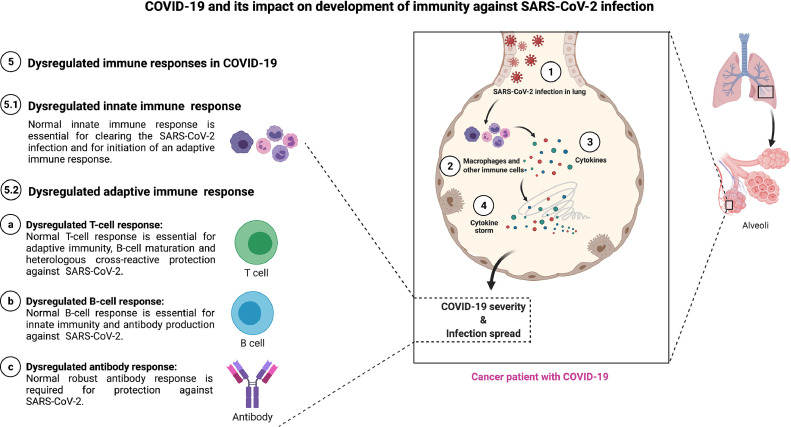
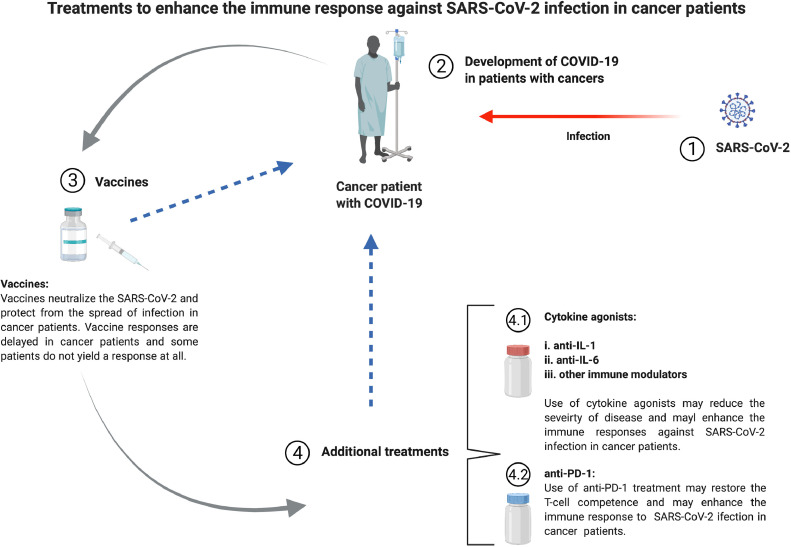
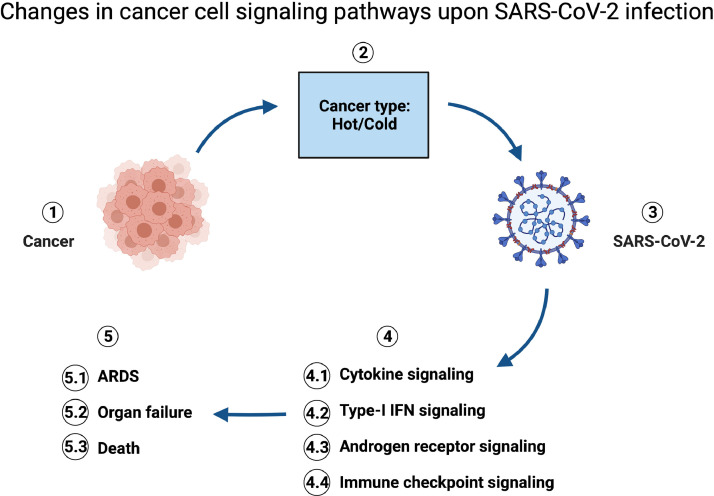
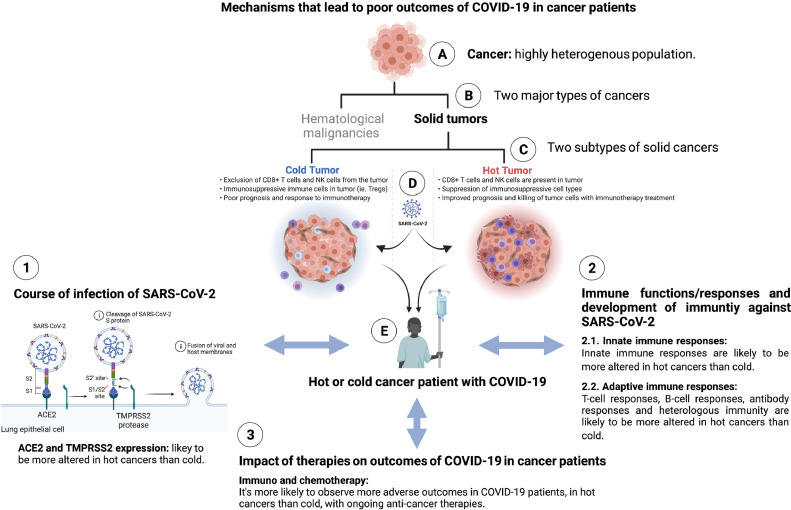
Patients with cancers have been severely affected by the COVID-19 pandemic. This is highlighted by the adverse outcomes in cancer patients with COVID-19 as well as by the impact of the COVID-19 pandemic on cancer care. Patients with cancer constitute a heterogeneous population that exhibits distinct mechanisms of immune dysfunction, associated with distinct systemic features of hot (T-cell-inflamed/infiltrated) and cold (Non-T-cell-inflamed and/or infiltrated) tumors. The former show hyper immune activated cells and a highly inflammatory environment while, contrastingly, the latter show the profile of a senescent and/or quiescent immune system. Thus, the evolution of SARS-CoV-2 infection in different types of cancers can show distinct trajectories which could lead to a variety of clinical and pathophysiological outcomes. The altered immunological environment including cytokines that characterizes hot and cold tumors will lead to different mechanisms of immune dysfunction, which will result in downstream effects on the course of SARS-CoV-2 infection. This review will focus on defining the known contributions of soluble pro- and anti-inflammatory mediators on immune function including altered T-cells and B-cells responses and as well on how these factors modulate the expression of SARS-CoV-2 receptor ACE2, TMPRSS2 expression, and lymph node fibrosis in cancer patients. We will propose immune mechanisms that underlie the distinct courses of SARS-CoV-2 infection in cancer patients and impact on the success of immune based therapies that have significantly improved cancer outcomes. Better understanding of the immune mechanisms prevalent in cancer patients that are associated to the outcomes of SARS-CoV-2 infection will help to identify the high-risk cancer patients and develop immune-based approaches to prevent significant adverse outcomes by targeting these pathways.
癌症患者受到了 COVID-19 大流行的严重影响。这突出表现在 COVID-19 癌症患者的不良结局,以及 COVID-19 大流行对癌症治疗的影响。癌症患者构成了一个异质群体,表现出不同的免疫功能障碍机制,与热肿瘤(T 细胞浸润/浸润)和冷肿瘤(非 T 细胞浸润和/或浸润)的不同全身特征相关。前者表现出过度免疫激活细胞和高度炎症环境,而后者则表现出衰老和/或静止的免疫系统特征。因此,SARS-CoV-2 在不同类型癌症中的感染演变可能表现出不同的轨迹,从而导致各种临床和病理生理结局。改变的免疫环境包括热肿瘤和冷肿瘤的特征性细胞因子,将导致不同的免疫功能障碍机制,从而对 SARS-CoV-2 感染的病程产生下游影响。本综述将重点定义已知的促炎和抗炎介质对免疫功能的贡献,包括改变的 T 细胞和 B 细胞反应,以及这些因素如何调节 SARS-CoV-2 受体 ACE2、TMPRSS2 表达和癌症患者淋巴结纤维化的表达。我们将提出免疫机制,这些机制是 SARS-CoV-2 感染在癌症患者中不同病程的基础,并影响免疫为基础的治疗的成功,这些治疗显著改善了癌症的结局。更好地了解与 SARS-CoV-2 感染结局相关的癌症患者中普遍存在的免疫机制,将有助于识别高风险癌症患者,并通过靶向这些途径开发免疫为基础的方法来预防重大不良结局。