Cancer Genomics and BioComputing of Complex Diseases Lab, Azrieli Faculty of Medicine, Bar-Ilan University, Safed 1311502, Israel.
Musculoskeletal Genetics Laboratory, Azrieli Faculty of Medicine, Bar-Ilan University, Safed 1311502, Israel.
Viruses. 2021 Mar 3;13(3):402. doi: 10.3390/v13030402.
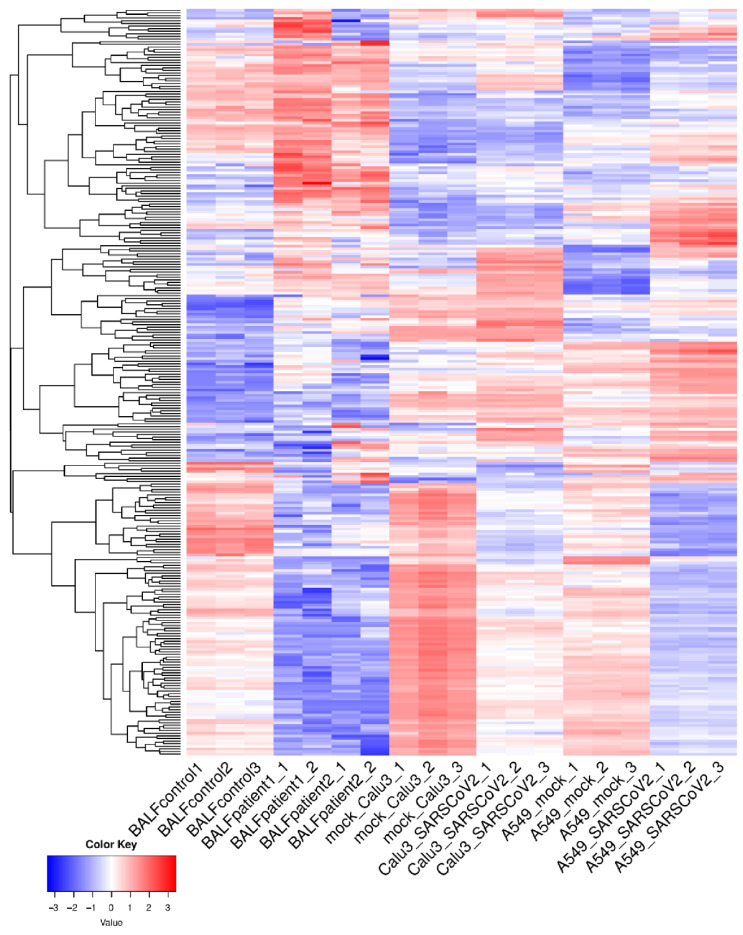
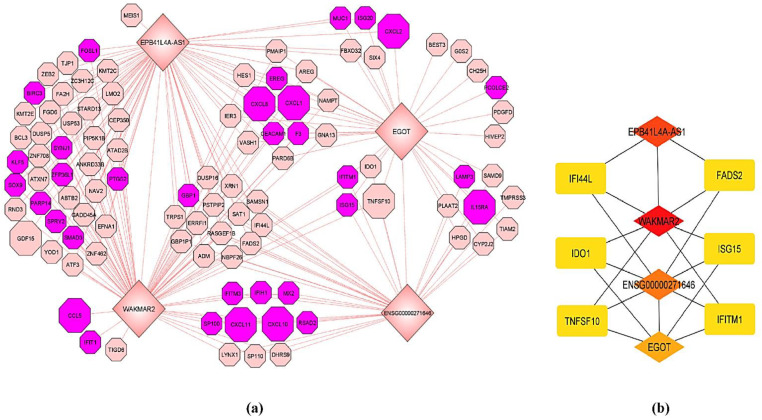
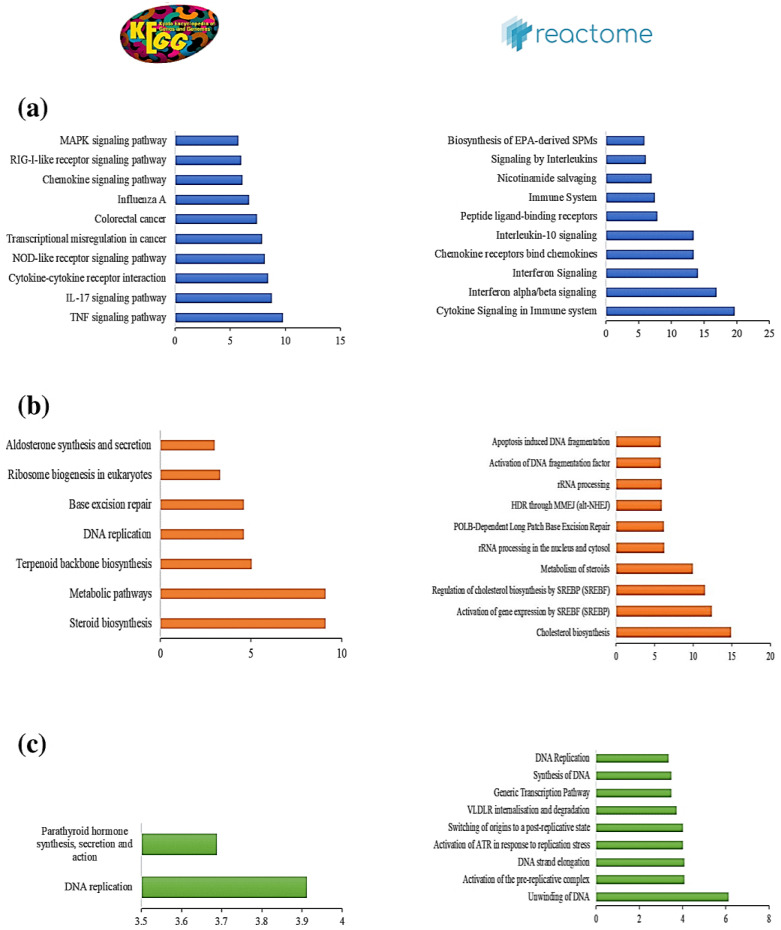
The recently emerged SARS-CoV-2 virus is responsible for the ongoing COVID-19 pandemic that has rapidly developed into a global public health threat. Patients severely affected with COVID-19 present distinct clinical features, including acute respiratory disorder, neutrophilia, cytokine storm, and sepsis. In addition, multiple pro-inflammatory cytokines are found in the plasma of such patients. Transcriptome sequencing of different specimens obtained from patients suffering from severe episodes of COVID-19 shows dynamics in terms of their immune responses. However, those host factors required for SARS-CoV-2 propagation and the underlying molecular mechanisms responsible for dysfunctional immune responses during COVID-19 infection remain elusive. In the present study, we analyzed the mRNA-long non-coding RNA (lncRNA) co-expression network derived from publicly available SARS-CoV-2-infected transcriptome data of human lung epithelial cell lines and bronchoalveolar lavage fluid (BALF) from COVID-19 patients. Through co-expression network analysis, we identified four differentially expressed lncRNAs strongly correlated with genes involved in various immune-related pathways crucial for cytokine signaling. Our findings suggest that the aberrant expression of these four lncRNAs can be associated with cytokine storms and anti-viral responses during severe SARS-CoV-2 infection of the lungs. Thus, the present study uncovers molecular interactions behind the cytokine storm activation potentially responsible for hyper-inflammatory responses in critical COVID-19 patients.
新出现的严重急性呼吸综合征冠状病毒 2 型(SARS-CoV-2)是引发当前 COVID-19 大流行的罪魁祸首,该病毒迅速演变为全球公共卫生威胁。COVID-19 重症患者具有明显的临床特征,包括急性呼吸功能障碍、中性粒细胞增多、细胞因子风暴和败血病。此外,此类患者的血浆中存在多种促炎细胞因子。对来自 COVID-19 重症患者的不同样本进行的转录组测序显示了其免疫反应的动态变化。然而,SARS-CoV-2 传播所必需的宿主因素以及 COVID-19 感染期间导致免疫功能失调的潜在分子机制仍不清楚。在本研究中,我们分析了从公开的 SARS-CoV-2 感染人肺上皮细胞系和 COVID-19 患者支气管肺泡灌洗液(BALF)转录组数据中获得的 mRNA-长链非编码 RNA(lncRNA)共表达网络。通过共表达网络分析,我们鉴定了四个差异表达的 lncRNA,它们与参与细胞因子信号转导的各种免疫相关途径的基因密切相关。我们的研究结果表明,这些四个 lncRNA 的异常表达可能与肺部严重 SARS-CoV-2 感染期间的细胞因子风暴和抗病毒反应有关。因此,本研究揭示了潜在的细胞因子风暴激活背后的分子相互作用,这些相互作用可能是导致 COVID-19 重症患者过度炎症反应的原因。