Department of Biochemistry, University of Oxford, Oxford, OX1 3QU, UK.
Dunn School of Pathology, University of Oxford, Oxford, OX1 3RE, UK.
Nat Commun. 2021 Dec 8;12(1):7147. doi: 10.1038/s41467-021-27414-1.
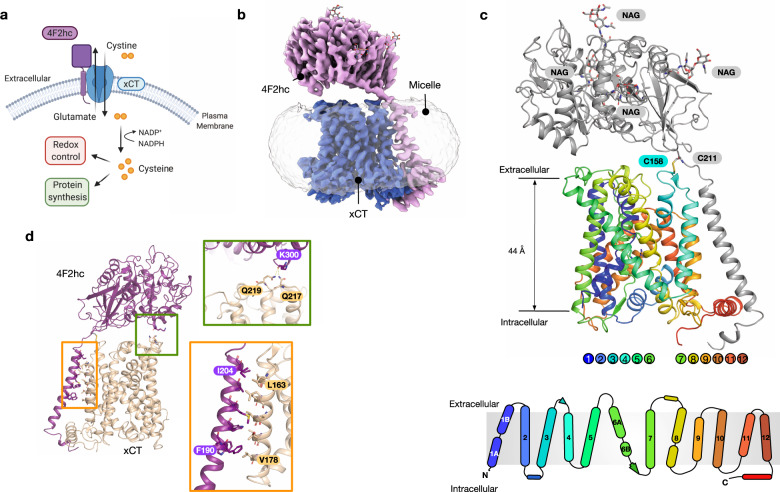
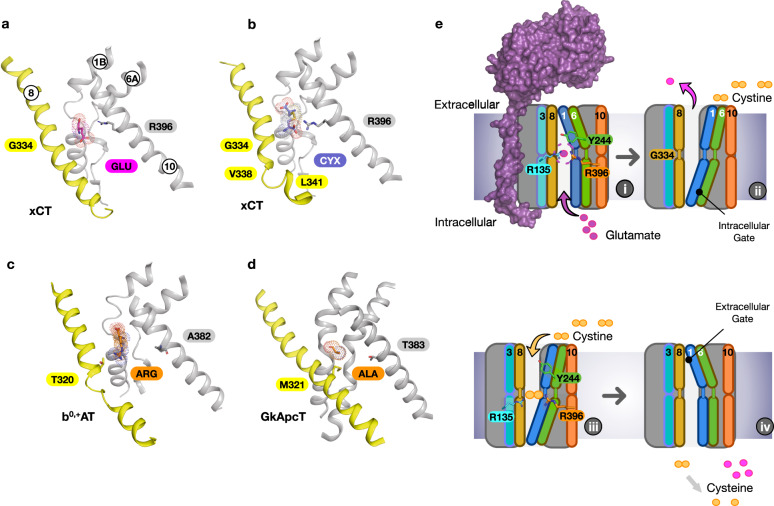
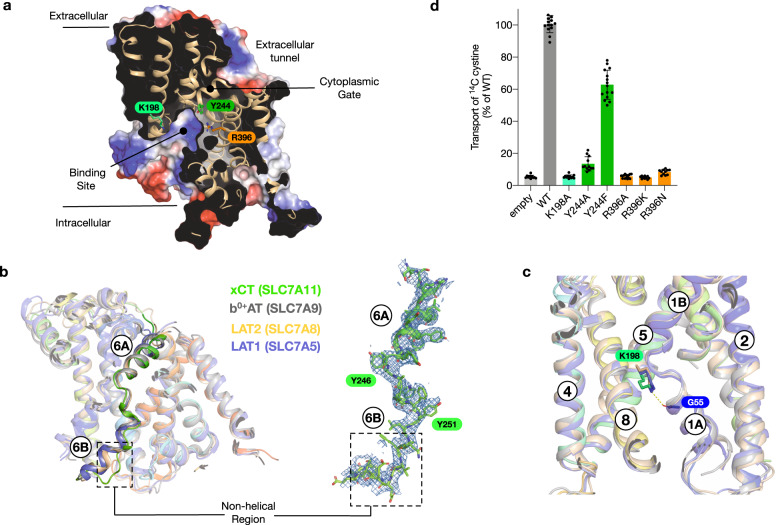
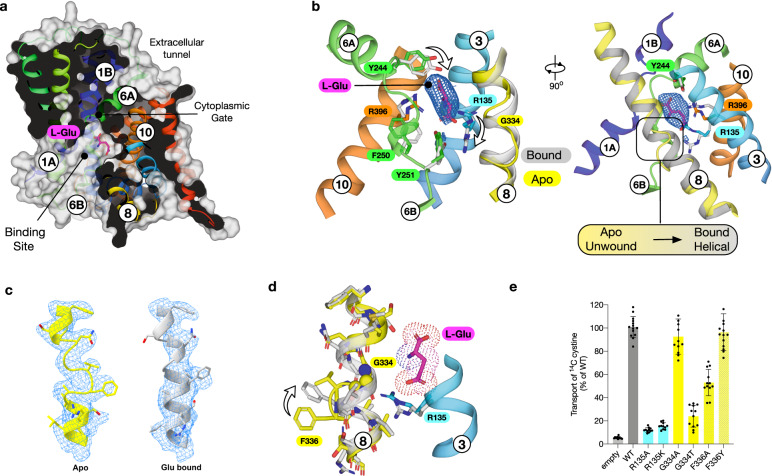
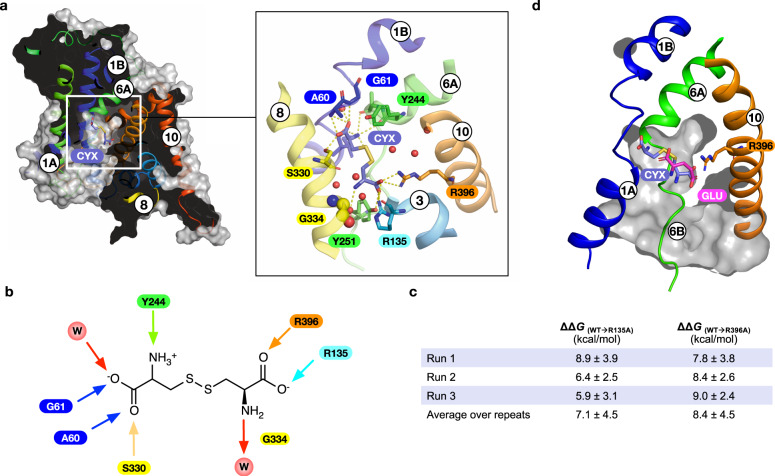
Cysteine plays an essential role in cellular redox homoeostasis as a key constituent of the tripeptide glutathione (GSH). A rate limiting step in cellular GSH synthesis is the availability of cysteine. However, circulating cysteine exists in the blood as the oxidised di-peptide cystine, requiring specialised transport systems for its import into the cell. System xc is a dedicated cystine transporter, importing cystine in exchange for intracellular glutamate. To counteract elevated levels of reactive oxygen species in cancerous cells system xc is frequently upregulated, making it an attractive target for anticancer therapies. However, the molecular basis for ligand recognition remains elusive, hampering efforts to specifically target this transport system. Here we present the cryo-EM structure of system xc in both the apo and glutamate bound states. Structural comparisons reveal an allosteric mechanism for ligand discrimination, supported by molecular dynamics and cell-based assays, establishing a mechanism for cystine transport in human cells.
半胱氨酸在细胞氧化还原动态平衡中起着至关重要的作用,是三肽谷胱甘肽 (GSH) 的关键组成部分。细胞 GSH 合成的限速步骤是半胱氨酸的可用性。然而,循环中的半胱氨酸以氧化的二肽胱氨酸的形式存在于血液中,需要专门的转运系统将其导入细胞。系统 xc 是一种专门的胱氨酸转运蛋白,将胱氨酸导入细胞以交换细胞内的谷氨酸。为了抵消癌细胞中活性氧水平的升高,系统 xc 经常被上调,使其成为癌症治疗的有吸引力的靶点。然而,配体识别的分子基础仍然难以捉摸,这阻碍了专门针对该转运系统的努力。在这里,我们展示了 apo 和谷氨酸结合状态下的系统 xc 的冷冻电镜结构。结构比较揭示了配体识别的变构机制,这得到了分子动力学和基于细胞的测定的支持,为人类细胞中的胱氨酸转运建立了一种机制。