Department of Human Pathophysiology, Institute of Medical Sciences, University of Rzeszow, Kopisto 2a, 35-959 Rzeszów, Poland.
Department of Clinical Science and Education, Division of Internal Medicine, Södersjukhuset, Karolinska Institutet, 11883 Stockholm, Sweden.
Int J Mol Sci. 2021 Nov 28;22(23):12889. doi: 10.3390/ijms222312889.
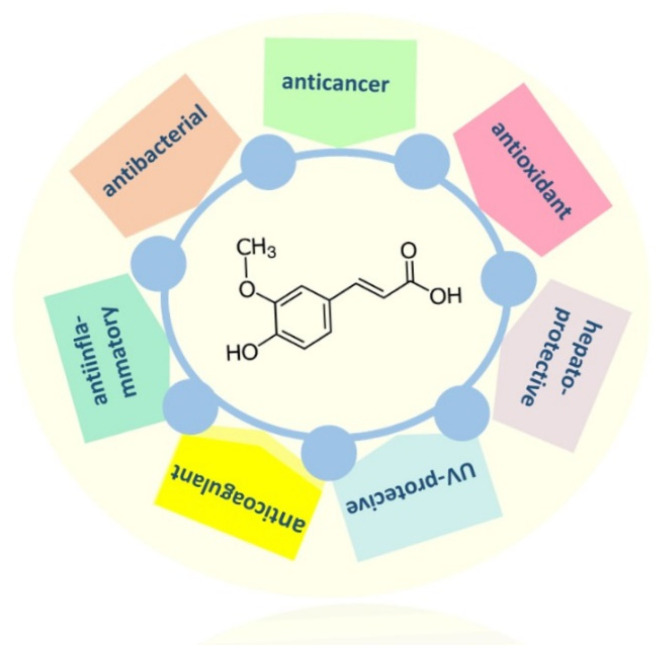
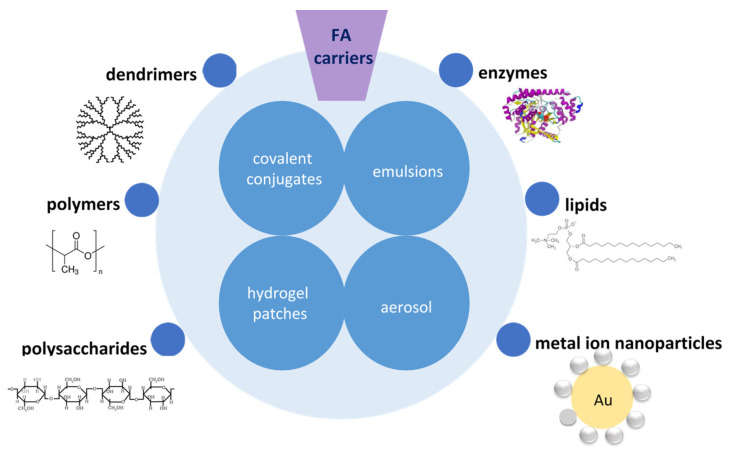
-ferulic acid (FA) is a derivative of 4-hydroxycinnamic acid, which is found in many food products, fruits and beverages. It has scientifically proven antioxidant, anti-inflammatory and antibacterial properties. However, its low ability to permeate through biological barriers (e.g., the blood-brain barrier, BBB), its low bioavailability and its fast elimination from the gastrointestinal tract after oral administration limit its clinical use, e.g., for the treatment of neurodegenerative diseases, such as Alzheimer's disease. Therefore, new nanotechnological approaches are developed in order to regulate intracellular transport of ferulic acid. The objective of this review is to summarize the last decade's research on biological properties of ferulic acid and innovative ways of its delivery, supporting pharmacological therapy.
阿魏酸(FA)是 4-羟基肉桂酸的衍生物,存在于许多食品、水果和饮料中。它具有科学证明的抗氧化、抗炎和抗菌特性。然而,其低穿透生物屏障(例如血脑屏障,BBB)的能力、低生物利用度以及口服后在胃肠道中快速消除限制了其临床应用,例如用于治疗神经退行性疾病,如阿尔茨海默病。因此,开发了新的纳米技术方法来调节阿魏酸的细胞内运输。本综述的目的是总结过去十年关于阿魏酸的生物学特性和创新给药方式的研究,以支持药物治疗。