The Centre for Translational Pharmacology, Institute of Molecular, Cell and Systems Biology, College of Medical, Veterinary and Life Sciences, University of Glasgow, Glasgow G12 8QQ, UK.
Neuroscience Next Generation Therapeutics (NGTx), Eli Lilly and Company, Cambridge, MA 02142.
Proc Natl Acad Sci U S A. 2021 Dec 14;118(50). doi: 10.1073/pnas.2107389118.
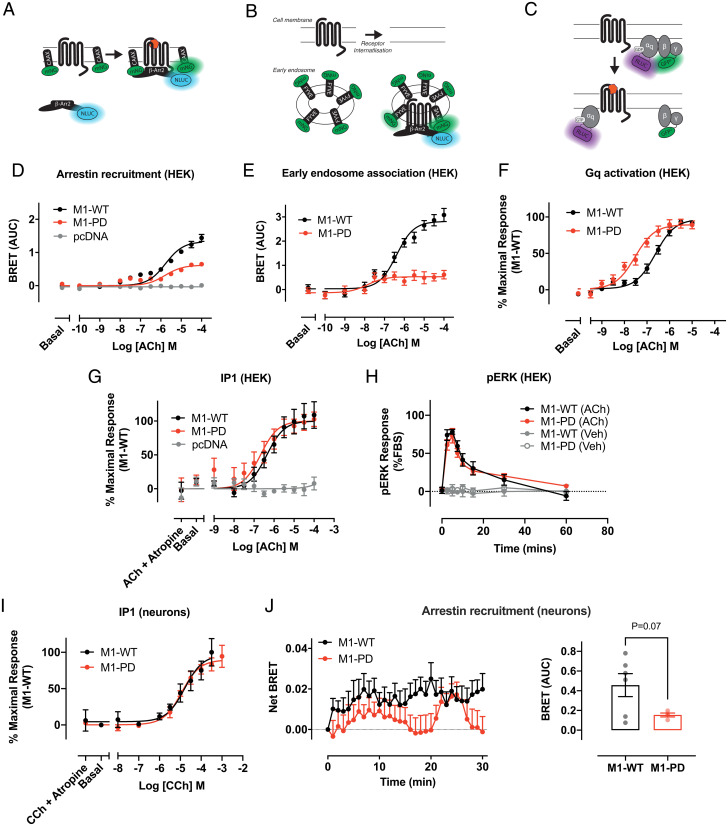
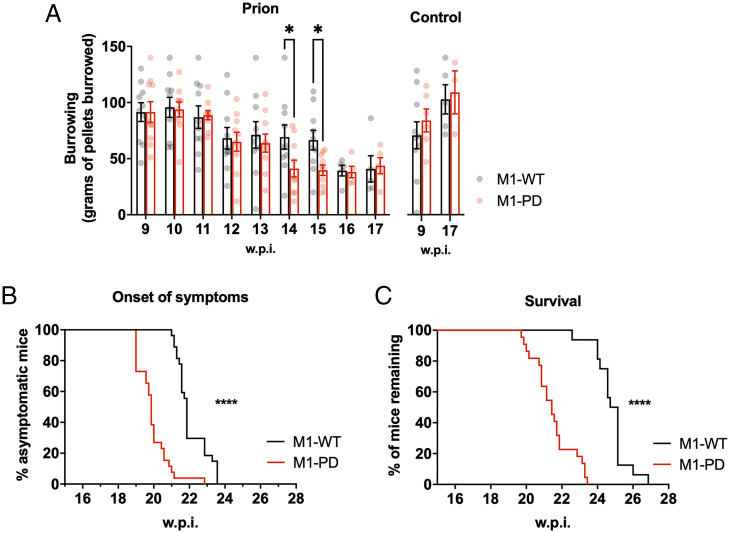
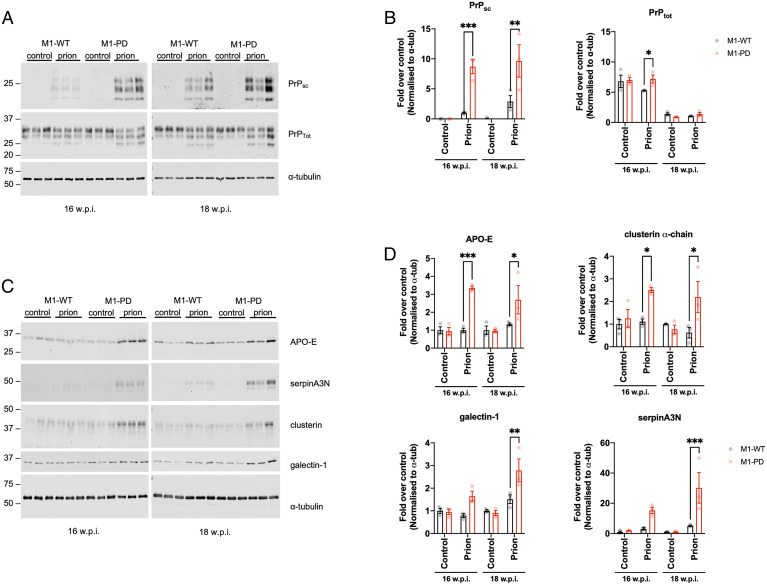
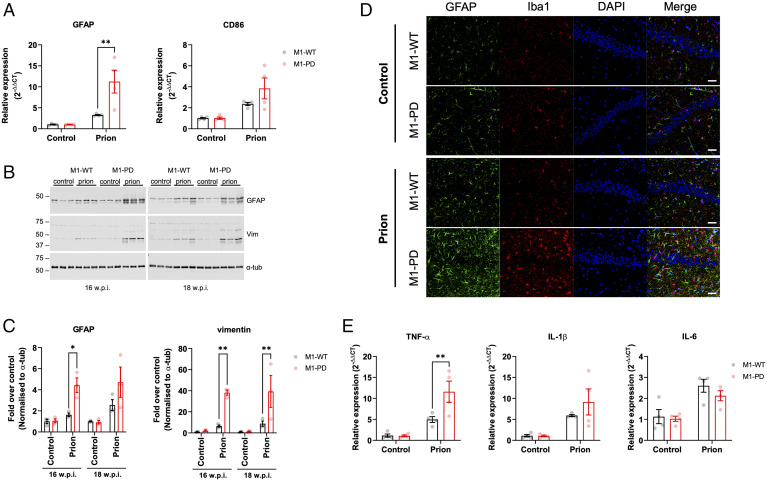
There are currently no treatments that can slow the progression of neurodegenerative diseases, such as Alzheimer's disease (AD). There is, however, a growing body of evidence that activation of the M1 muscarinic acetylcholine receptor (M1-receptor) can not only restore memory loss in AD patients but in preclinical animal models can also slow neurodegenerative disease progression. The generation of an effective medicine targeting the M1-receptor has however been severely hampered by associated cholinergic adverse responses. By using genetically engineered mouse models that express a G protein-biased M1-receptor, we recently established that M1-receptor mediated adverse responses can be minimized by ensuring activating ligands maintain receptor phosphorylation/arrestin-dependent signaling. Here, we use these same genetic models in concert with murine prion disease, a terminal neurodegenerative disease showing key hallmarks of AD, to establish that phosphorylation/arrestin-dependent signaling delivers neuroprotection that both extends normal animal behavior and prolongs the life span of prion-diseased mice. Our data point to an important neuroprotective property inherent to the M1-receptor and indicate that next generation M1-receptor ligands designed to drive receptor phosphorylation/arrestin-dependent signaling would potentially show low adverse responses while delivering neuroprotection that will slow disease progression.
目前,没有任何治疗方法可以减缓神经退行性疾病(如阿尔茨海默病)的进展。然而,越来越多的证据表明,激活 M1 毒蕈碱乙酰胆碱受体(M1 受体)不仅可以恢复 AD 患者的记忆丧失,而且在临床前动物模型中也可以减缓神经退行性疾病的进展。然而,由于与胆碱能相关的不良反应,针对 M1 受体的有效药物的研发受到了严重阻碍。通过使用表达 G 蛋白偏向性 M1 受体的基因工程小鼠模型,我们最近证实,通过确保激活配体维持受体磷酸化/阻滞蛋白依赖性信号,可以最小化 M1 受体介导的不良反应。在这里,我们使用相同的遗传模型,结合鼠朊病毒病(一种表现出 AD 关键特征的终末期神经退行性疾病),证实了磷酸化/阻滞蛋白依赖性信号传递提供的神经保护作用不仅延长了正常动物的行为,还延长了朊病毒病小鼠的寿命。我们的数据表明 M1 受体具有重要的固有神经保护特性,并指出旨在驱动受体磷酸化/阻滞蛋白依赖性信号的下一代 M1 受体配体可能具有低不良反应,同时提供神经保护作用,减缓疾病进展。