Department of Biochemistry and Molecular Biology, Indiana University School of Medicine, Indianapolis, Indiana, USA.
Department of Surgery, Indiana University School of Medicine, Indianapolis, Indiana, USA.
JPEN J Parenter Enteral Nutr. 2021 Nov;45(S2):16-25. doi: 10.1002/jpen.2287.
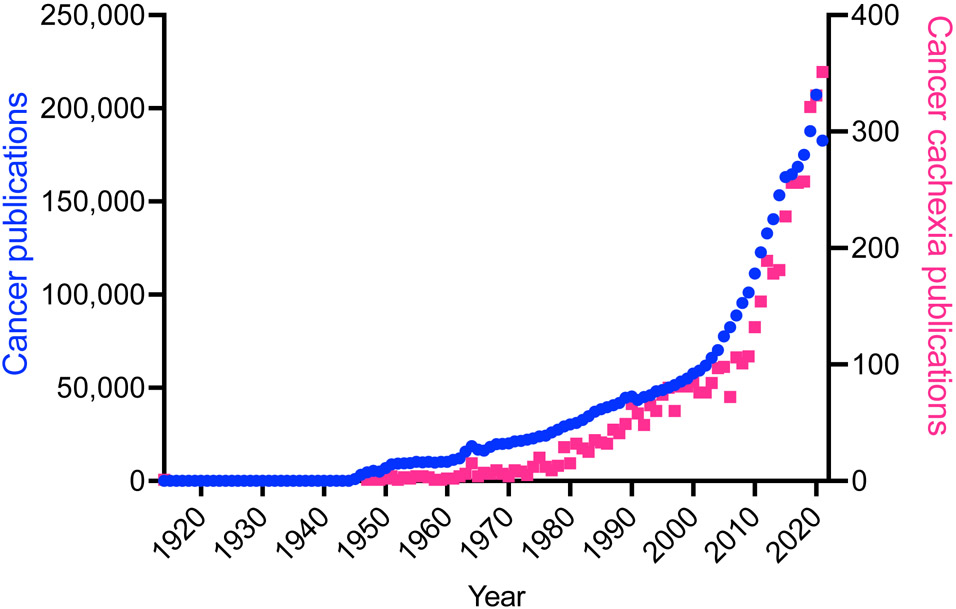
Cancer cachexia, or progressive weight loss, often despite adequate nutrition contributes greatly to cancer morbidity and mortality. Cachexia is metabolically distinct from starvation or protein malnutrition, although many patients with cancer and cachexia exhibit lowered appetite and food consumption. Tumors affect neural mechanisms that regulate appetite and energy expenditure, while promoting wasting of peripheral tissues via catabolism of cardiac and skeletal muscle, adipose, and bone. These multimodal actions of tumors on the host suggest a need for multimodal interventions. However, multiple recent consensus guidelines for management of cancer cachexia differ in treatment recommendations, highlighting the lack of effective, available therapies. Challenges to defining appropriate nutrition or other interventions for cancer cachexia include lack of consensus on definitions, low strength of evidence from clinical trials, and a scarcity of robust, rigorous, and mechanistic studies. However, efforts to diagnose, stage, and monitor cachexia are increasing along with clinical trial activity. Furthermore, preclinical models for cancer cachexia are growing more sophisticated, encompassing a greater number of tumor types in organ-appropriate contexts and for metastatic disease to model the clinical condition more accurately. It is expected that continued growth, investment, and coordination of research in this topic will ultimately yield robust biomarkers, clinically useful classification and staging algorithms, targetable pathways, pivotal clinical trials, and ultimately, cures. Here, we provide an overview of the clinical and scientific knowledge and its limitations around cancer cachexia.
癌症恶病质,或进行性体重下降,尽管有充足的营养,也常常极大地导致癌症发病率和死亡率上升。恶病质与饥饿或蛋白质营养不良不同,尽管许多癌症恶病质患者表现出食欲下降和食物摄入减少。肿瘤影响调节食欲和能量消耗的神经机制,同时通过心脏和骨骼肌肉、脂肪和骨的分解代谢促进外周组织的消耗。肿瘤对宿主的这些多模式作用表明需要多模式干预。然而,最近关于癌症恶病质管理的多项共识指南在治疗建议上存在差异,突出了缺乏有效、可用的治疗方法。癌症恶病质适当营养或其他干预措施的定义存在挑战,包括对定义缺乏共识、临床试验证据强度低,以及缺乏强有力、严格和机制研究。然而,诊断、分期和监测恶病质的努力正在增加,同时临床试验活动也在增加。此外,癌症恶病质的临床前模型越来越复杂,在适当的器官背景下包含更多的肿瘤类型,并用于转移性疾病,以更准确地模拟临床状况。预计在这个课题的研究方面的持续增长、投资和协调将最终产生强大的生物标志物、临床上有用的分类和分期算法、可靶向的途径、关键临床试验,最终实现治愈。在这里,我们概述了癌症恶病质的临床和科学知识及其局限性。