
基于下一代测序的 HBV 基因型 C 患者 HBsAg+/HBsAb+状态下 HBV 准种特征对免疫状态的影响。
The Impact of HBV Quasispecies Features on Immune Status in HBsAg+/HBsAb+ Patients With HBV Genotype C Using Next-Generation Sequencing.
机构信息
Department of Laboratory Medicine, Shanghai Eastern Hepatobiliary Surgery Hospital, Shanghai, China.
Clinical Laboratory Medicine Center, Yueyang Hospital of Integrated Traditional Chinese and Western Medicine, Shanghai University of Traditional Chinese Medicine, Shanghai, China.
出版信息
Front Immunol. 2021 Nov 25;12:775461. doi: 10.3389/fimmu.2021.775461. eCollection 2021.
BACKGROUND
This study aimed to explore the molecular mechanism of the coexistence of hepatitis B surface antigen (HBsAg) and hepatitis B surface antibody (HBsAb) serological pattern intensive characterization of HBV s gene in both chronic hepatitis B (CHB) and hepatocellular carcinoma (HCC) patients.
METHOD
A total of 73 HBsAg+/HBsAb+ patients (CHB = 36, HCC = 37) and 96 HBsAg+/HBsAb- patients (CHB = 47, HCC = 49) were enrolled from 13 medical centers in China. The sequence features were elaborated based on the combination of next-generation sequencing (NGS) and multidimensional bioinformatics analysis.
RESULTS
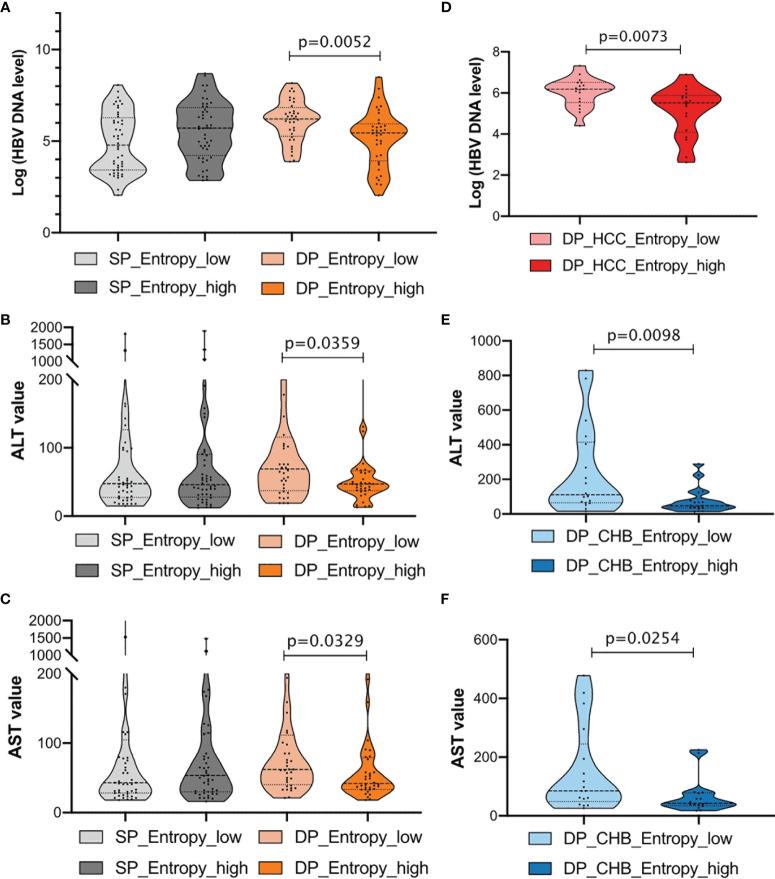
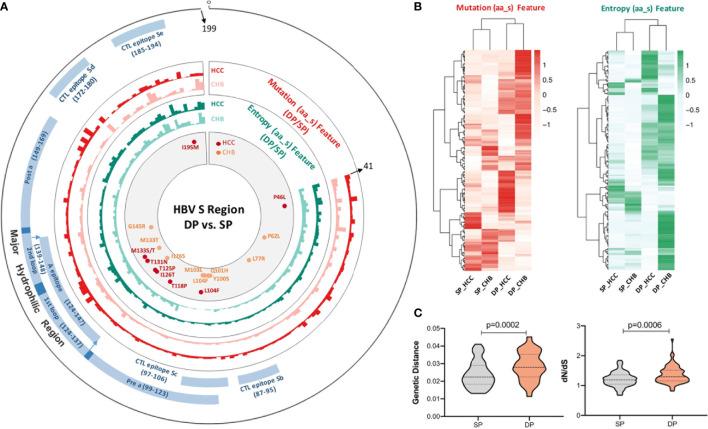
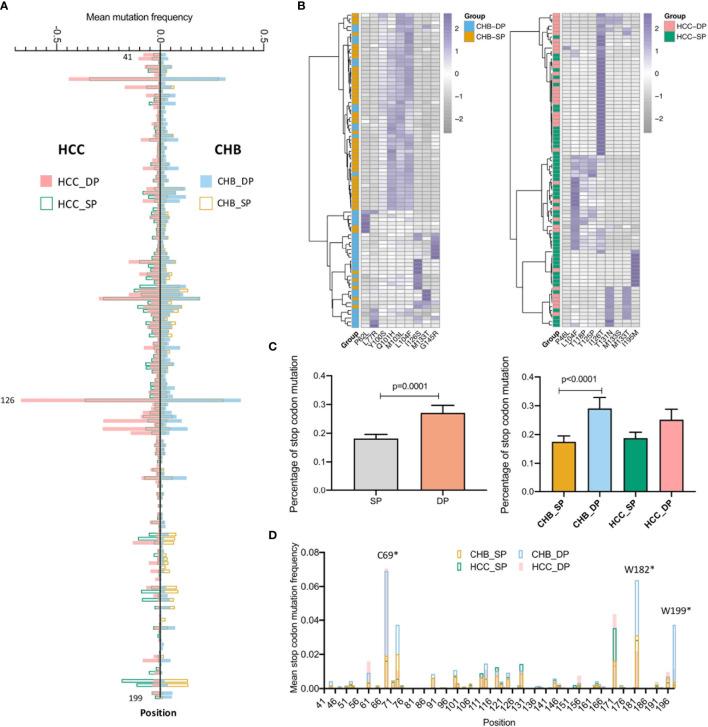
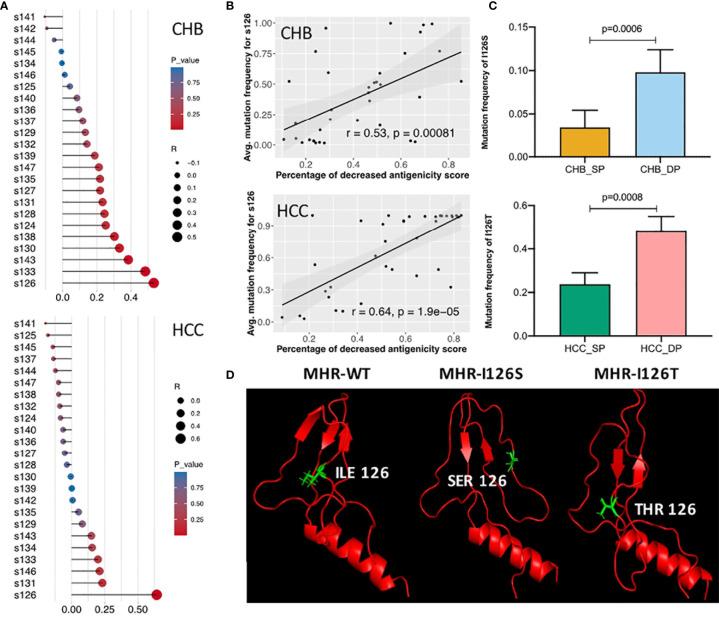
The 16 high-frequency missense mutations, changes of stop codon mutation, clustering, and random forest models based on quasispecies features demonstrated the significant discrepancy power between HBsAg+/HBsAb+ and HBsAg+/HBsAb- in CHB and HCC, respectively. The immunogenicity for cytotoxic T lymphocyte (CTL) epitope Se and antigenicity for the major hydrophilic region (MHR) were both reduced in HBsAg+/HBsAb+ patients (CTL Se: p < 0.0001; MHR: p = 0.0216). Different mutation patterns were observed between HBsAg+/HBsAb+ patients with CHB and with HCC. Especially, mutations in antigenic epitopes, such as I126S in CHB and I126T in HCC, could impact the conformational structure and alter the antigenicity/immunogenicity of HBsAg.
CONCLUSION
Based on NGS and bioinformatics analysis, this study indicates for the first time that point mutations and quasispecies diversities of HBV s gene could alter the MHR antigenicity and CTL Se immunogenicity and could contribute to the concurrent HBsAg+/HBsAb+ with different features in HCC and CHB. Our findings might renew the understanding of this special serological profile and benefit the clinical management in HBV-related diseases.
背景
本研究旨在探索乙型肝炎表面抗原(HBsAg)和乙型肝炎表面抗体(HBsAb)共存的分子机制,深入分析慢性乙型肝炎(CHB)和肝细胞癌(HCC)患者乙型肝炎病毒(HBV)s 基因的序列特征。
方法
本研究共纳入中国 13 家医疗中心的 73 例 HBsAg+/HBsAb+患者(CHB = 36,HCC = 37)和 96 例 HBsAg+/HBsAb-患者(CHB = 47,HCC = 49)。采用下一代测序(NGS)和多维生物信息学分析相结合的方法,对序列特征进行了详细阐述。
结果
16 种高频错义突变、终止密码子突变的变化、聚类以及基于准种特征的随机森林模型均显示了 CHB 和 HCC 中 HBsAg+/HBsAb+和 HBsAg+/HBsAb-之间的显著差异。HBsAg+/HBsAb+患者的细胞毒性 T 淋巴细胞(CTL)表位 Se 的免疫原性和主要亲水区域(MHR)的抗原性均降低(CTL Se:p < 0.0001;MHR:p = 0.0216)。HBsAg+/HBsAb+患者中 CHB 和 HCC 之间存在不同的突变模式。特别是,HBsAg 抗原表位(如 CHB 中的 I126S 和 HCC 中的 I126T)的突变可能会影响其构象结构,并改变 HBsAg 的抗原性/免疫原性。
结论
本研究首次基于 NGS 和生物信息学分析表明,HBV s 基因的点突变和准种多样性可能改变 MHR 的抗原性和 CTL Se 的免疫原性,并有助于解释 HCC 和 CHB 中不同特征的 HBsAg+/HBsAb+共存现象。我们的研究结果可能会更新对这种特殊血清学模式的认识,并有助于乙型肝炎相关疾病的临床管理。


 Zotero 插件