Lin Xu-Tao, Wu Qiu-Ning, Qin Si, Fan De-Jun, Lv Min-Yi, Chen Xi, Cai Jia-Wei, Weng Jing-Rong, Zou Yi-Feng, Rong Yu-Ming, Gao Feng
Department of Gastrointestinal Endoscopy, The Sixth Affiliated Hospital of Sun Yat-sen University, Guangzhou, China.
Guangdong Provincial Key Laboratory of Colorectal and Pelvic Floor Diseases, Guangdong Institute of Gastroenterology, The Sixth Affiliated Hospital of Sun Yat-sen University, Guangzhou, China.
Front Genet. 2021 Nov 25;12:755789. doi: 10.3389/fgene.2021.755789. eCollection 2021.
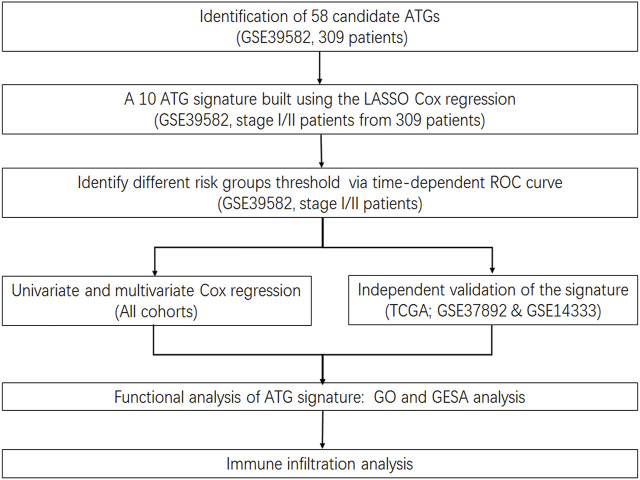
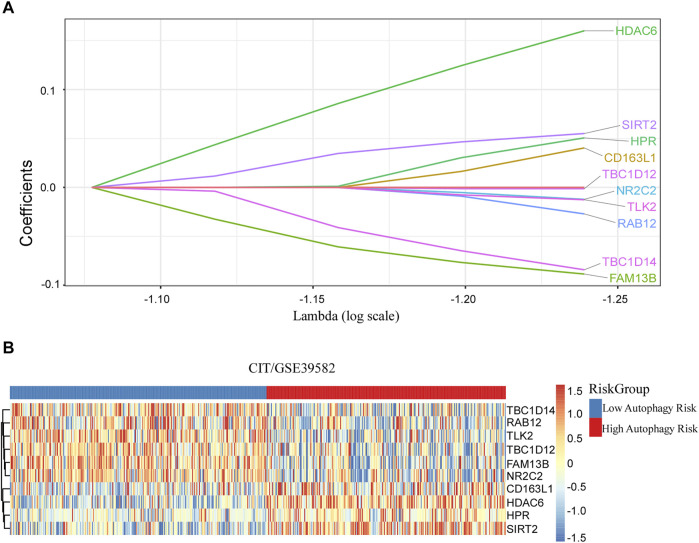
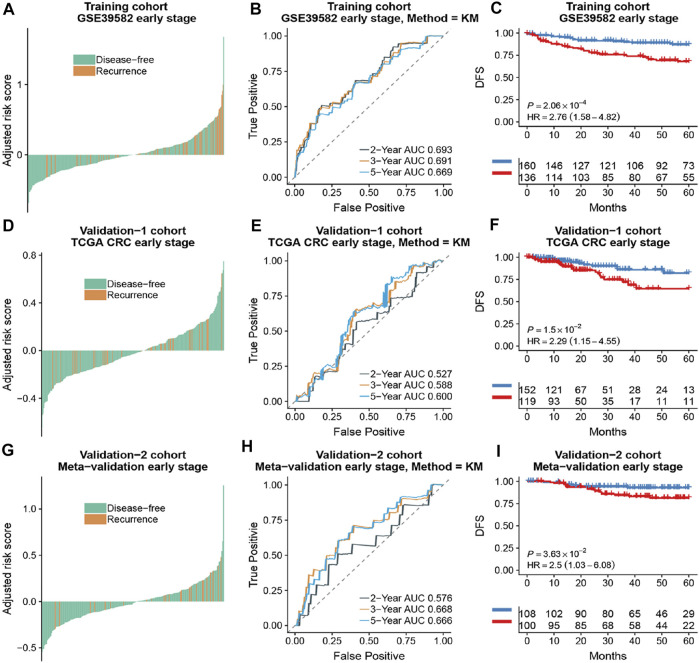
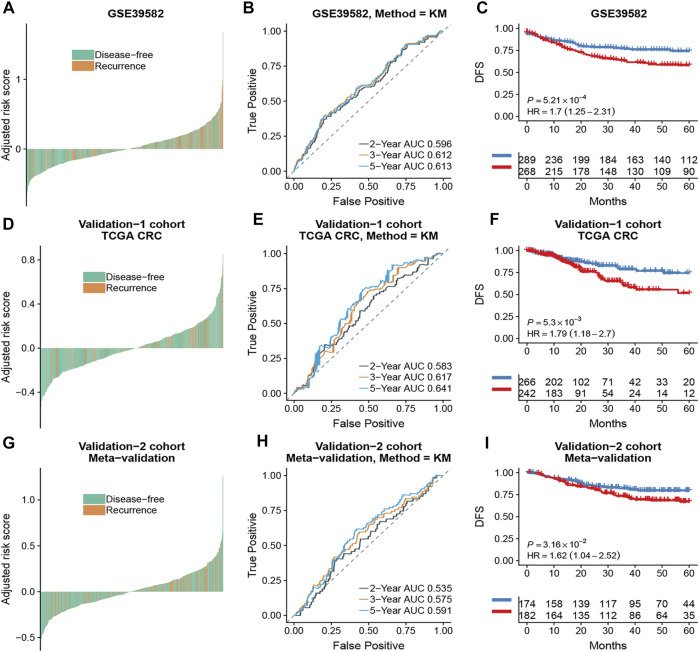
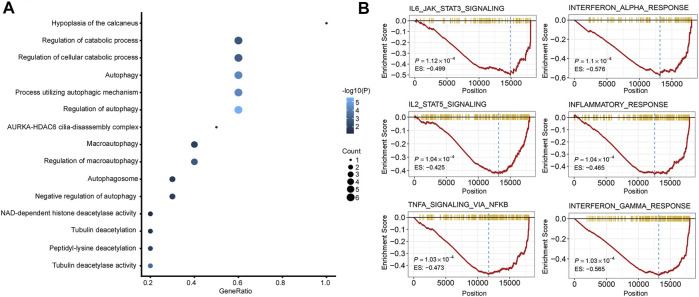
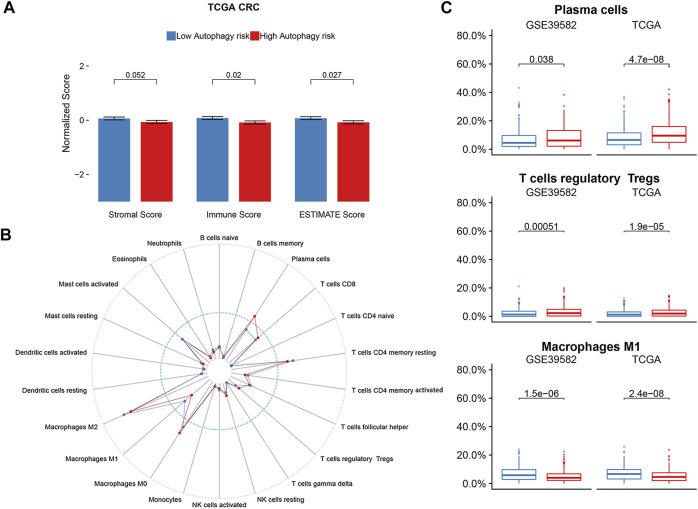
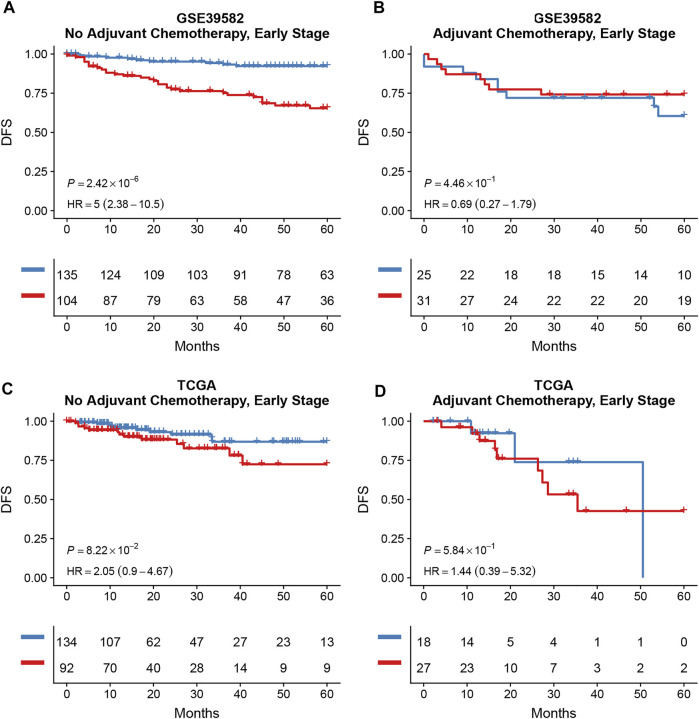
A certain number of early-stage colorectal cancer (CRC) patients suffer tumor recurrence after initial curative resection. In this context, an effective prognostic biomarker model is constantly in need. Autophagy exhibits a dual role in tumorigenesis. Our study aims to develop an autophagy-related gene (ATG) signature-based on high-throughput data analysis for disease-free survival (DFS) prognosis of patients with stage I/II CRC. Gene expression profiles and clinical information of CRC patients extracted from four public datasets were distributed to discovery and training cohort (GSE39582), validation cohort (TCGA CRC, n = 624), and meta-validation cohort (GSE37892 and GSE14333, n = 420). Autophagy genes significantly associated with prognosis were identified. Among 655 autophagy-related genes, a 10-gene ATG signature, which was significantly associated with DFS in the training cohort (HR, 2.76[1.56-4.82]; = 2.06 × 10⁻⁴), was constructed. The ATG signature, stratifying patients into high and low autophagy risk groups, was validated in the validation (HR, 2.29[1.15-4.55]; = 1.5 × 10⁻²) and meta-validation cohorts (HR, 2.5[1.03-6.06]; = 3.63 × 10⁻²) and proved to be prognostic in a multivariate analysis. Functional analysis revealed enrichment of several immune/inflammatory pathways in the high autophagy risk group, where increased infiltration of T regulatory cells (Tregs) and decreased infiltration of M1 macrophages were observed. Our study established a prognostic ATG signature that effectively predicted DFS for early-stage CRC patients. Meanwhile, the study also revealed the possible relationship among autophagy process, immune/inflammatory response, and tumorigenesis.
一定数量的早期结直肠癌(CRC)患者在初次根治性切除术后会出现肿瘤复发。在此背景下,一直需要一种有效的预后生物标志物模型。自噬在肿瘤发生中具有双重作用。我们的研究旨在基于高通量数据分析开发一种自噬相关基因(ATG)特征,用于I/II期CRC患者的无病生存期(DFS)预后评估。从四个公共数据集中提取的CRC患者的基因表达谱和临床信息被分配到发现和训练队列(GSE39582)、验证队列(TCGA CRC,n = 624)和meta验证队列(GSE37892和GSE14333,n = 420)。确定了与预后显著相关的自噬基因。在655个自噬相关基因中,构建了一个10基因的ATG特征,该特征在训练队列中与DFS显著相关(HR,2.76[1.56 - 4.82];P = 2.06×10 - 4)。将患者分为高自噬风险组和低自噬风险组的ATG特征在验证队列(HR,2.29[1.15 - 4.55];P = 1.5×10 - 2)和meta验证队列(HR,2.5[1.03 - 6.06];P = 3.63×10 - 2)中得到验证,并在多变量分析中被证明具有预后价值。功能分析显示高自噬风险组中几种免疫/炎症途径富集,在该组中观察到调节性T细胞(Tregs)浸润增加和M1巨噬细胞浸润减少。我们的研究建立了一种预后ATG特征,可有效预测早期CRC患者的DFS。同时,该研究还揭示了自噬过程、免疫/炎症反应和肿瘤发生之间的可能关系。