Zhao Haibi, Huang Chengzhi, Luo Yuwen, Yao Xiaoya, Hu Yong, Wang Muqing, Chen Xin, Zeng Jun, Hu Weixian, Wang Junjiang, Li Rongjiang, Yao Xueqing
School of Biology and Biological Engineering, South China University of Technology, Guangzhou, China.
Department of Gastrointestinal Surgery, Guangdong Provincial People's Hospital, Guangdong Academy of Medical Sciences, Guangzhou, China.
Front Oncol. 2021 May 25;11:595099. doi: 10.3389/fonc.2021.595099. eCollection 2021.
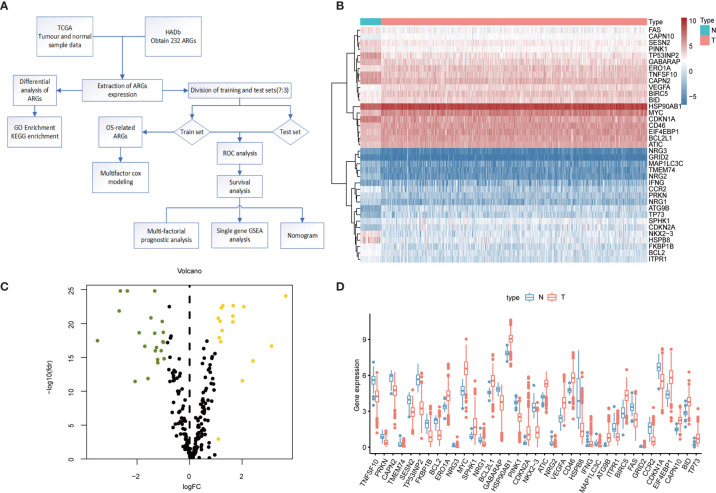
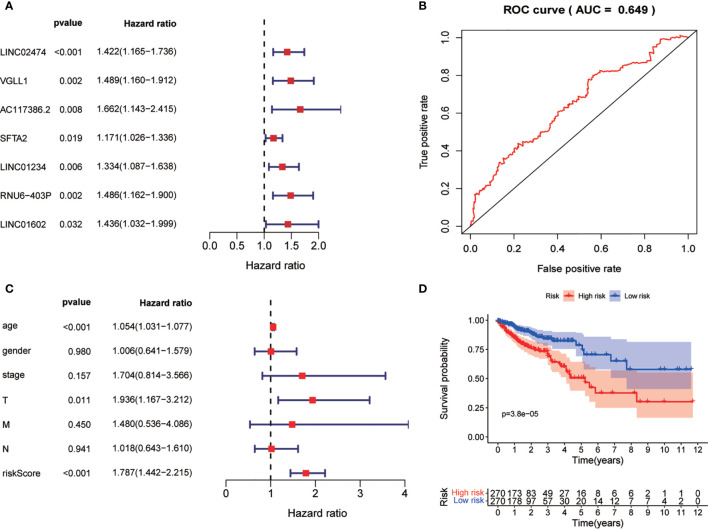
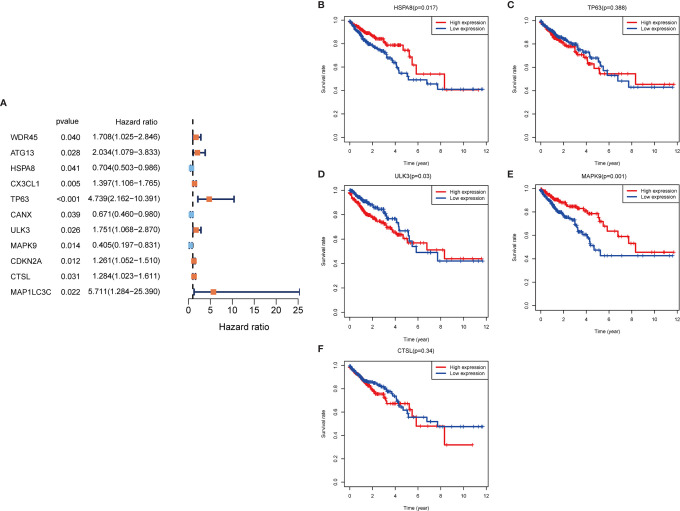
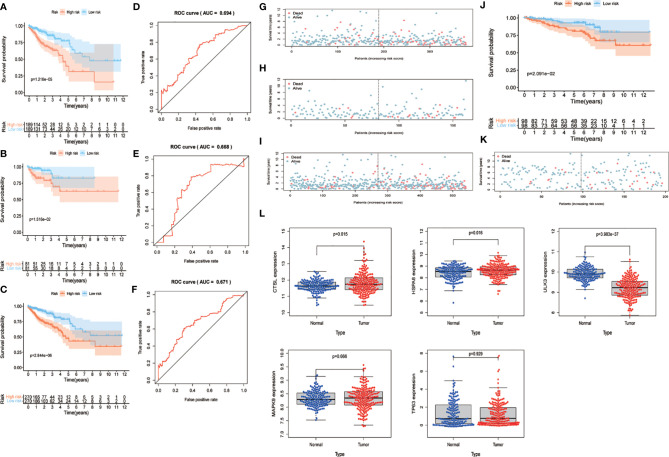
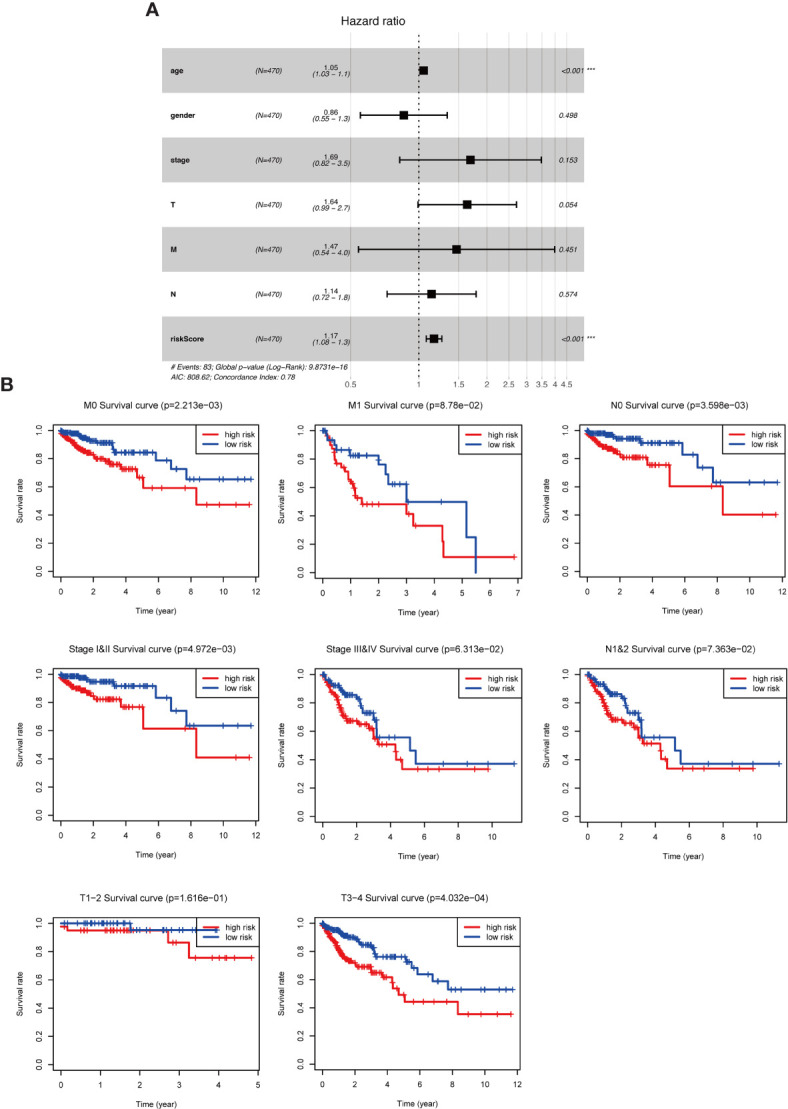
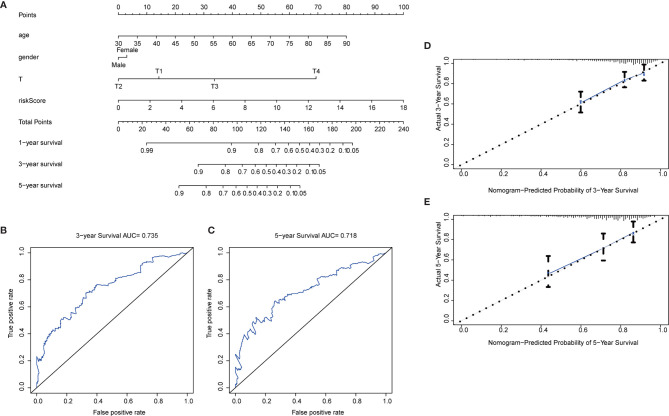
Autophagy plays a complex role in tumors, sometimes promoting cancer cell survival and sometimes inducing apoptosis, and its role in the colorectal tumor microenvironment is controversial. The purpose of this study was to investigate the prognostic value of autophagy-related genes (ARGs) in colorectal cancer. We identified 37 differentially expressed autophagy-related genes by collecting TCGA colorectal tumor transcriptome data. A single-factor COX regression equation was used to identify 11 key prognostic genes, and a prognostic risk prediction model was constructed based on multifactor COX analysis. We classified patients into high and low risk groups according to prognostic risk parameters (p <0.001) and determined the prognostic value they possessed by survival analysis and the receiver operating characteristic (ROC) curve in the training and test sets of internal tests. In a multifactorial independent prognostic analysis, this risk value could be used as an independent prognostic indicator (HR=1.167, 95% CI=1.078-1.264, P<0.001) and was a robust predictor without any staging interference. To make it more applicable to clinical procedures, we constructed nomogram based on risk parameters and parameters of key clinical characteristics. The area under ROC curve for 3-year and 5-year survival rates were 0.735 and 0.718, respectively. These will better enable us to monitor patient prognosis, thus improve patient outcomes.
自噬在肿瘤中发挥着复杂的作用,有时促进癌细胞存活,有时诱导凋亡,其在结直肠癌肿瘤微环境中的作用存在争议。本研究的目的是探讨自噬相关基因(ARGs)在结直肠癌中的预后价值。我们通过收集TCGA结直肠癌肿瘤转录组数据,鉴定出37个差异表达的自噬相关基因。使用单因素COX回归方程鉴定出11个关键预后基因,并基于多因素COX分析构建预后风险预测模型。我们根据预后风险参数(p<0.001)将患者分为高风险组和低风险组,并通过内部测试训练集和测试集的生存分析及受试者工作特征(ROC)曲线确定它们所具有的预后价值。在多因素独立预后分析中,该风险值可作为独立的预后指标(HR=1.167,95%CI=1.078-1.264,P<0.001),是一个不受任何分期干扰的稳健预测指标。为使其更适用于临床程序,我们基于风险参数和关键临床特征参数构建了列线图。3年和5年生存率的ROC曲线下面积分别为0.735和0.718。这些将更好地使我们能够监测患者预后,从而改善患者结局。