Department of Pulmonary Medicine, Shanghai Respiratory Research Institute, Zhongshan Hospital, Fudan University, Shanghai, 200032, China.
Shanghai Engineering Research Center of Internet of Things for Respiratory Medicine, Shanghai, 200032, China.
Clin Epigenetics. 2021 Dec 14;13(1):220. doi: 10.1186/s13148-021-01203-5.
Early lung cancer detection remains a clinical challenge for standard diagnostic biopsies due to insufficient tumor morphological evidence. As epigenetic alterations precede morphological changes, expression alterations of certain imprinted genes could serve as actionable diagnostic biomarkers for malignant lung lesions.
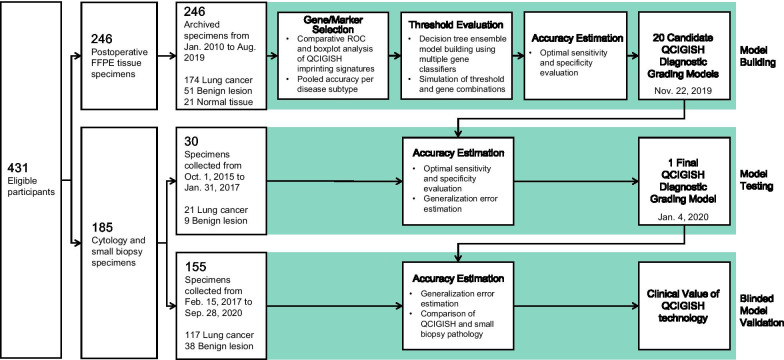
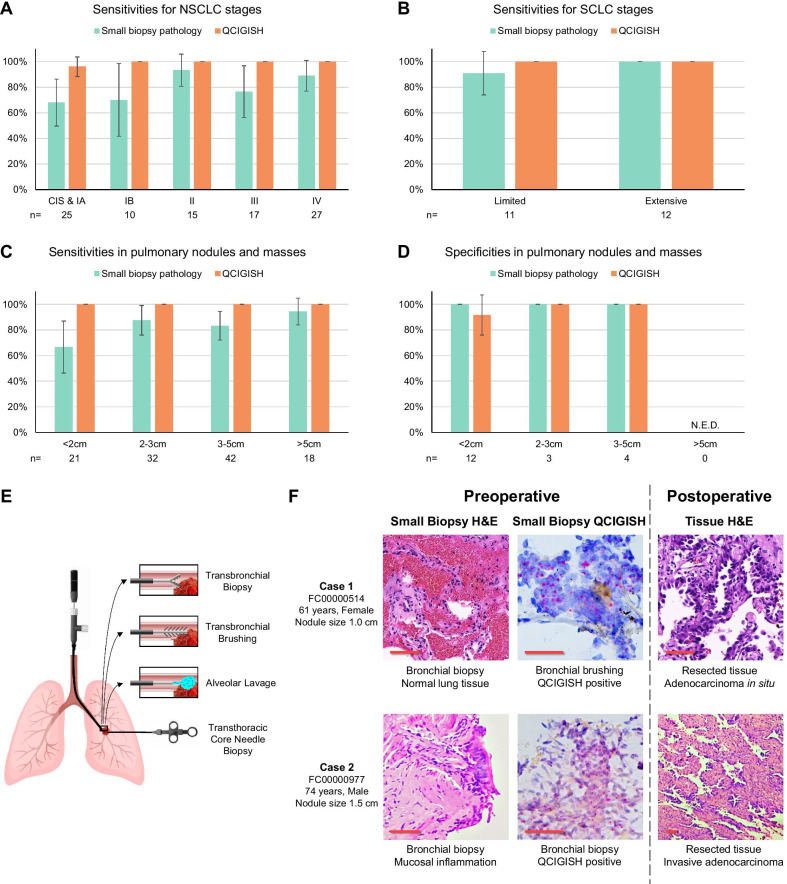
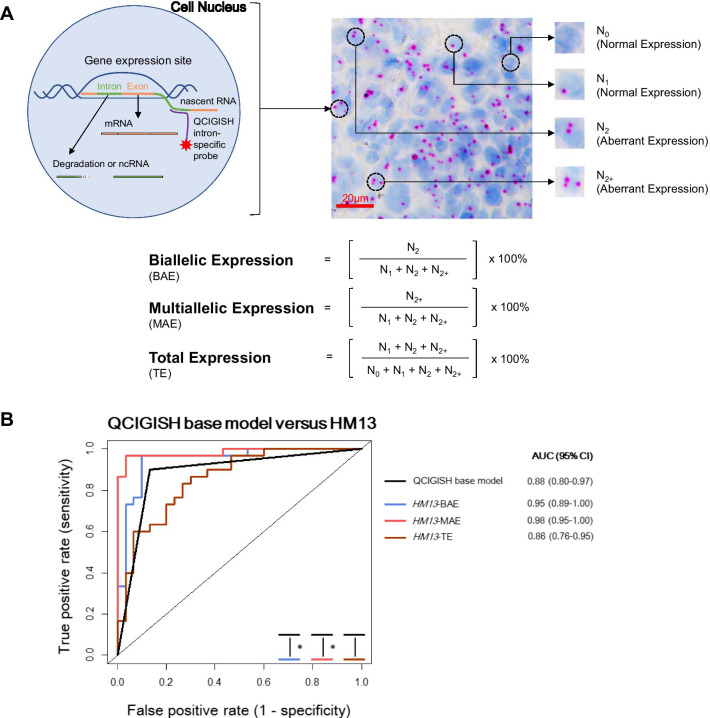
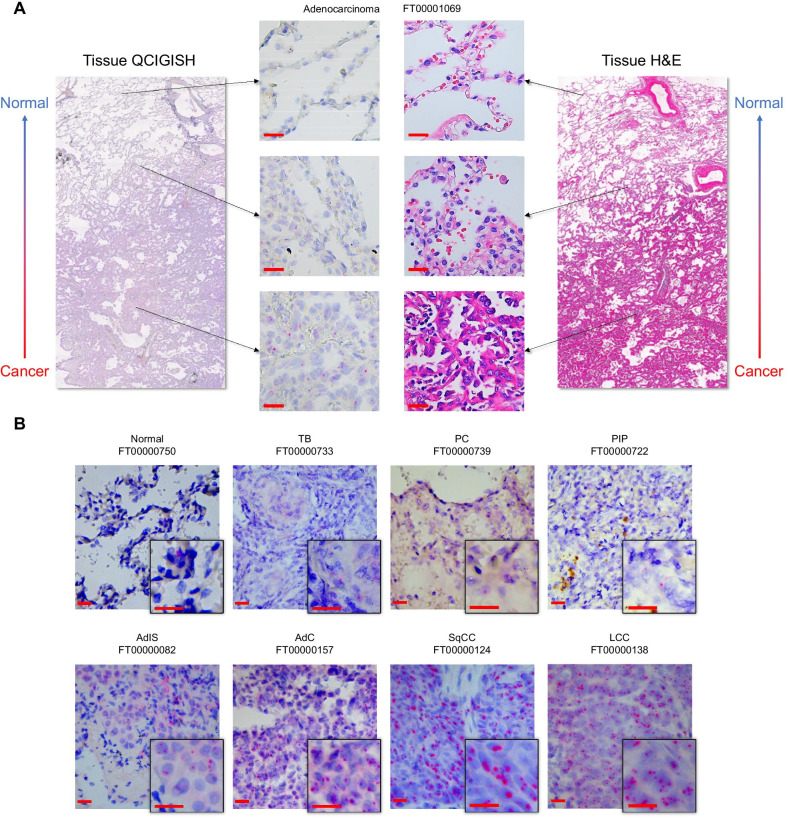
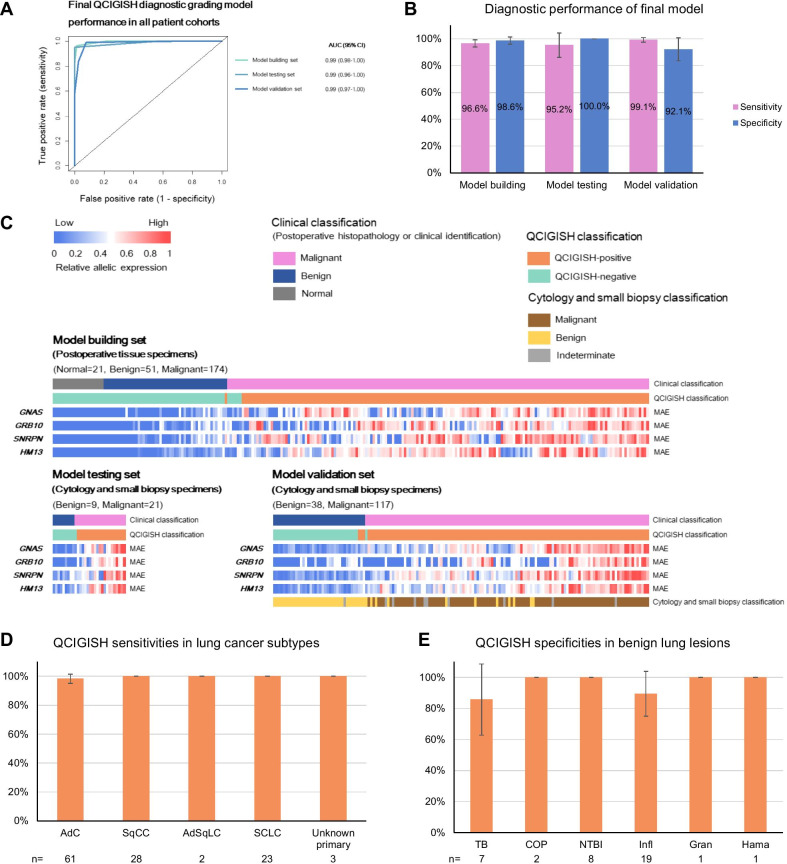
Using the previously established quantitative chromogenic imprinted gene in situ hybridization (QCIGISH) method, elevated aberrant allelic expression of imprinted genes GNAS, GRB10, SNRPN and HM13 was observed in lung cancers over benign lesions and normal controls, which were pathologically confirmed among histologically stained normal, paracancerous and malignant tissue sections. Based on the differential imprinting signatures, a diagnostic grading model was built on 246 formalin-fixed and paraffin-embedded (FFPE) surgically resected lung tissue specimens, tested against 30 lung cytology and small biopsy specimens, and blindly validated in an independent cohort of 155 patients. The QCIGISH diagnostic model demonstrated 99.1% sensitivity (95% CI 97.5-100.0%) and 92.1% specificity (95% CI 83.5-100.0%) in the blinded validation set. Of particular importance, QCIGISH achieved 97.1% sensitivity (95% CI 91.6-100.0%) for carcinoma in situ to stage IB cancers with 100% sensitivity and 91.7% specificity (95% CI 76.0-100.0%) noted for pulmonary nodules with diameters ≤ 2 cm.
Our findings demonstrated the diagnostic value of epigenetic imprinting alterations as highly accurate translational biomarkers for a more definitive diagnosis of suspicious lung lesions.
由于肿瘤形态学证据不足,标准诊断活检对早期肺癌的检测仍然是一个临床挑战。由于表观遗传改变先于形态变化,某些印迹基因的表达改变可以作为恶性肺病变的有作用诊断生物标志物。
使用先前建立的定量显色印迹基因原位杂交(QCIGISH)方法,在肺癌中观察到印迹基因 GNAS、GRB10、SNRPN 和 HM13 的异常等位基因表达升高,这些基因在组织学染色的正常、癌旁和恶性组织切片中经病理证实。基于差异印迹特征,在 246 例福尔马林固定石蜡包埋(FFPE)手术切除的肺组织标本上构建了诊断分级模型,对 30 例肺细胞学和小活检标本进行了测试,并在 155 例患者的独立队列中进行了盲法验证。QCIGISH 诊断模型在盲法验证组中显示出 99.1%的敏感性(95%CI97.5-100.0%)和 92.1%的特异性(95%CI83.5-100.0%)。特别重要的是,QCIGISH 对原位癌至 IB 期癌症的敏感性达到 97.1%(95%CI91.6-100.0%),对直径≤2cm 的肺结节的敏感性为 100%,特异性为 91.7%(95%CI76.0-100.0%)。
我们的研究结果表明,表观遗传印迹改变具有诊断价值,可以作为可疑肺部病变更明确诊断的高度准确的转化生物标志物。