Gunnels Taylor F, Stranford Devin M, Mitrut Roxana E, Kamat Neha P, Leonard Joshua N
Department of Biomedical Engineering, Northwestern University, Evanston, IL 60208, USA.
Center for Synthetic Biology, Northwestern University, Evanston, IL 60208, USA.
bioRxiv. 2021 Dec 10:2021.12.04.471153. doi: 10.1101/2021.12.04.471153.
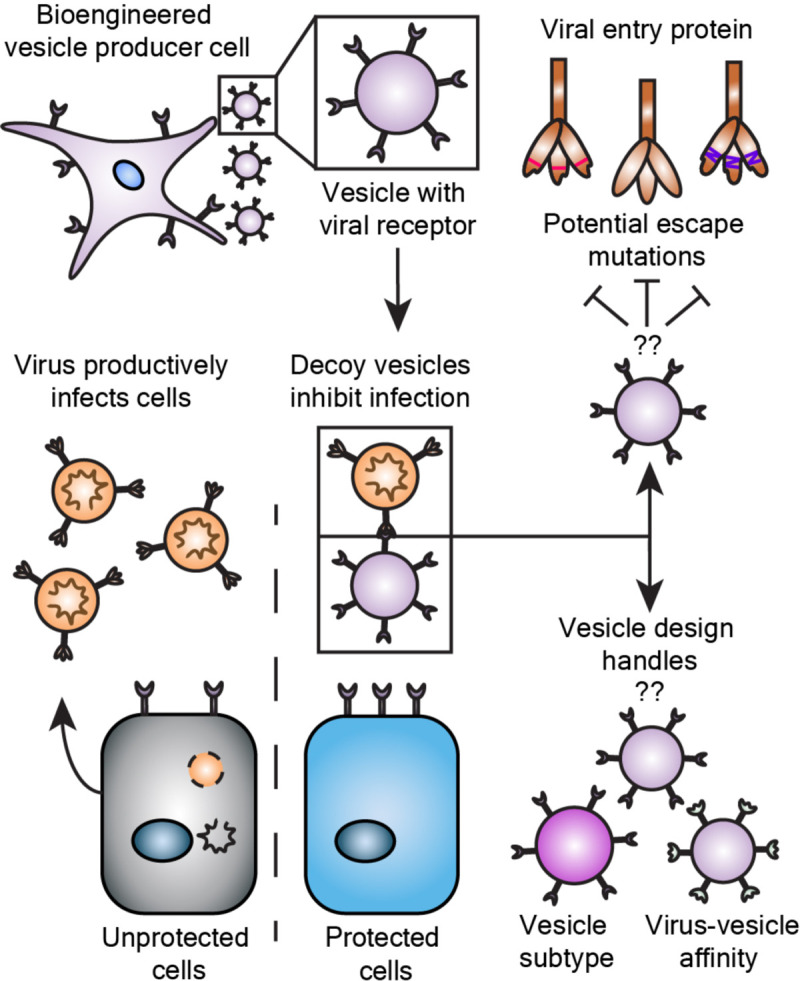
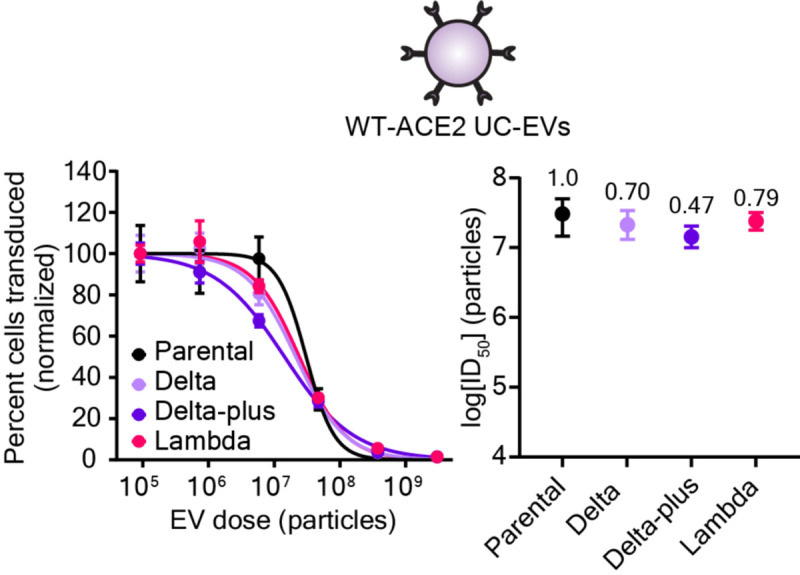
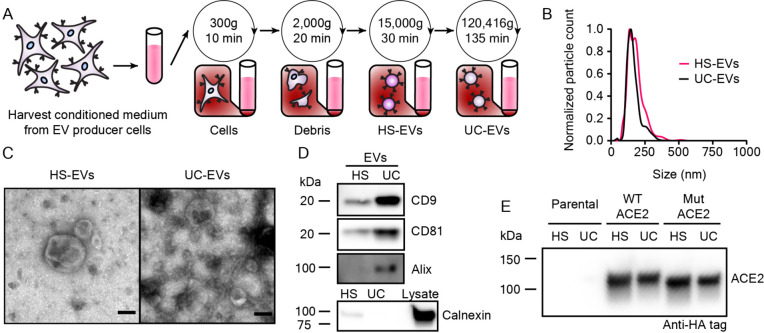
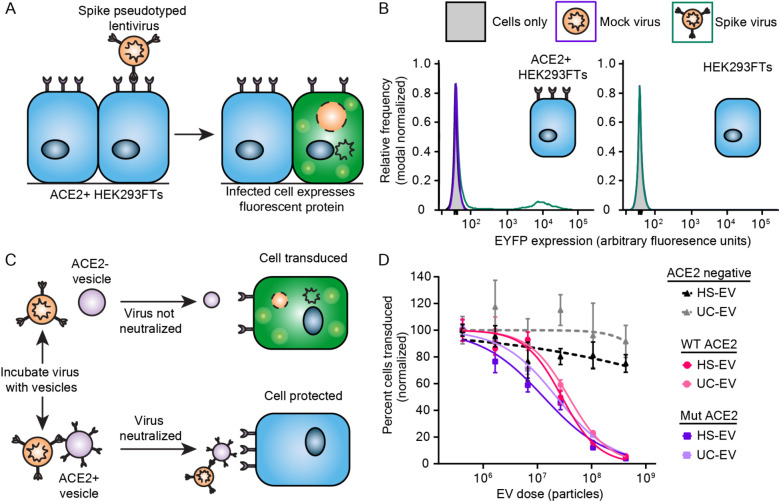
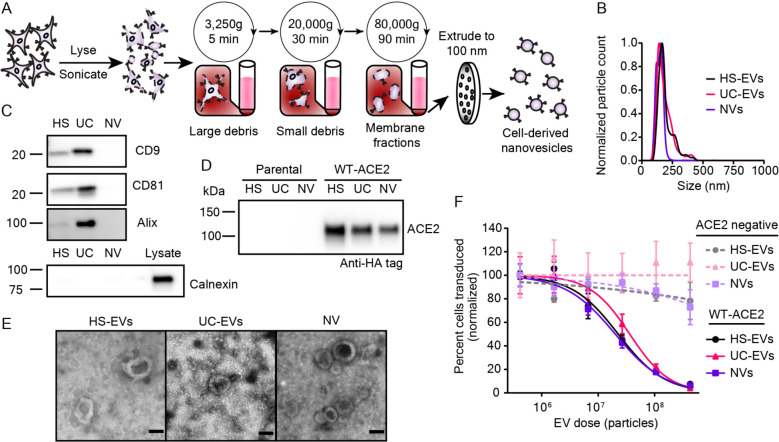
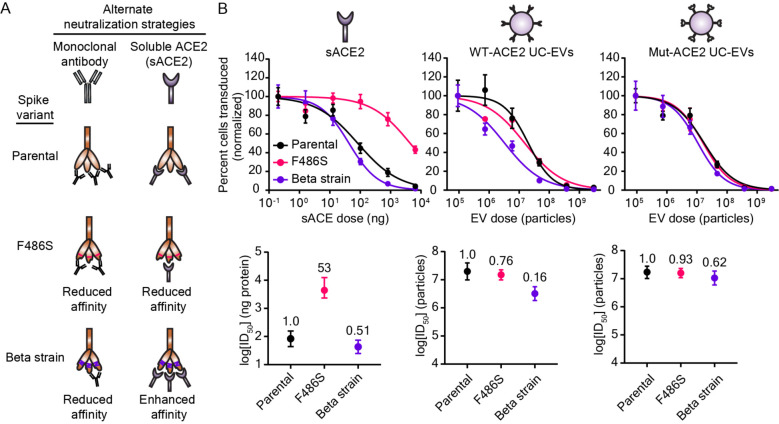
The ability of pathogens to develop drug resistance is a global health challenge. The SARS-CoV-2 virus presents an urgent need wherein several variants of concern resist neutralization by monoclonal antibody therapies and vaccine-induced sera. Decoy nanoparticles-cell-mimicking particles that bind and inhibit virions-are an emerging class of therapeutics that may overcome such drug resistance challenges. To date, we lack quantitative understanding as to how design features impact performance of these therapeutics. To address this gap, here we perform a systematic, comparative evaluation of various biologically-derived nanoscale vesicles, which may be particularly well-suited to sustained or repeated administration in the clinic due to low toxicity, and investigate their potential to inhibit multiple classes of model SARS-CoV-2 virions. A key finding is that such particles exhibit potent antiviral efficacy across multiple manufacturing methods, vesicle subclasses, and virus-decoy binding affinities. In addition, these cell-mimicking vesicles effectively inhibit model SARS-CoV-2 variants that evade monoclonal antibodies and recombinant protein-based decoy inhibitors. This study provides a foundation of knowledge that may guide the design of decoy nanoparticle inhibitors for SARS-CoV-2 and other viral infections.
病原体产生耐药性的能力是一项全球性的健康挑战。严重急性呼吸综合征冠状病毒2(SARS-CoV-2)病毒带来了紧迫需求,因为几种值得关注的变体对单克隆抗体疗法和疫苗诱导血清的中和作用具有抗性。诱饵纳米颗粒——结合并抑制病毒粒子的细胞模拟颗粒——是一类新兴的治疗方法,可能克服此类耐药性挑战。迄今为止,我们对设计特征如何影响这些治疗方法的性能缺乏定量认识。为了填补这一空白,我们在此对各种生物衍生的纳米级囊泡进行了系统的比较评估,由于毒性低,这些囊泡可能特别适合在临床中持续或重复给药,并研究它们抑制多种类别的SARS-CoV-2模型病毒粒子的潜力。一个关键发现是,此类颗粒在多种制造方法、囊泡亚类以及病毒诱饵结合亲和力方面均表现出强大的抗病毒功效。此外,这些细胞模拟囊泡有效地抑制了逃避单克隆抗体和基于重组蛋白的诱饵抑制剂的SARS-CoV-2模型变体。这项研究提供了一个知识基础,可指导针对SARS-CoV-2和其他病毒感染的诱饵纳米颗粒抑制剂的设计。