Jamshed Wasim, Prakash M, Devi S Suriya Uma, Ibrahim Rabha W, Shahzad Faisal, Nisar Kottakkaran Sooppy, Eid Mohamed R, Abdel-Aty Abdel-Haleem, Khashan M Motawi, Yahia I S
Department of Mathematics, Capital University of Science and Technology (CUST), Islamabad, 44000, Pakistan.
Department of Mathematics, Dr. N.G.P. Institute of Technology, Coimbatore, 641048, India.
Sci Rep. 2021 Dec 15;11(1):24032. doi: 10.1038/s41598-021-03392-8.
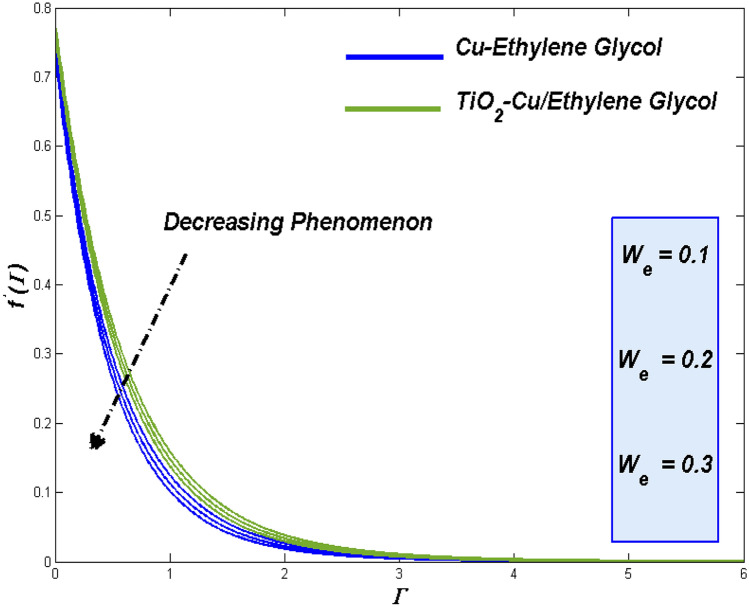
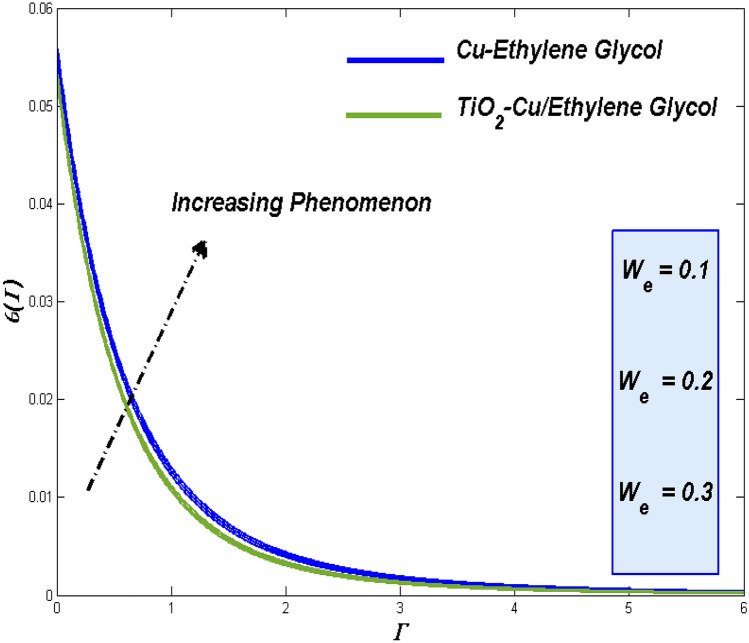
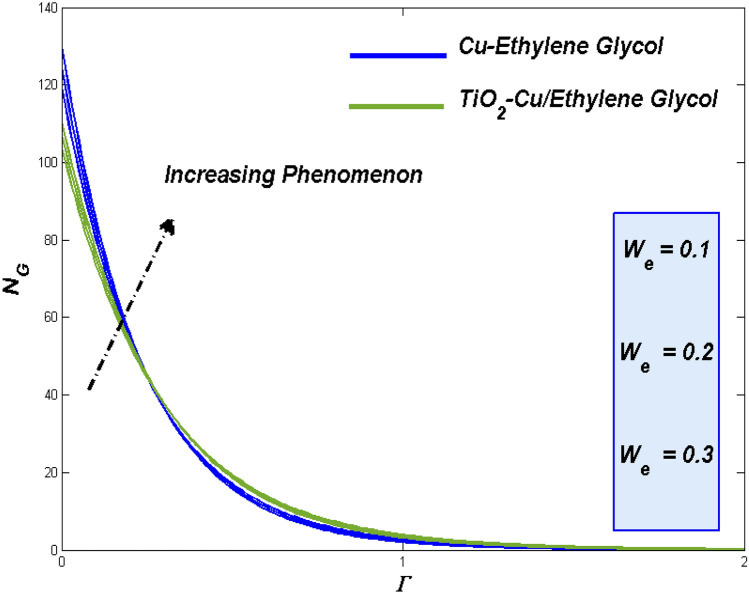
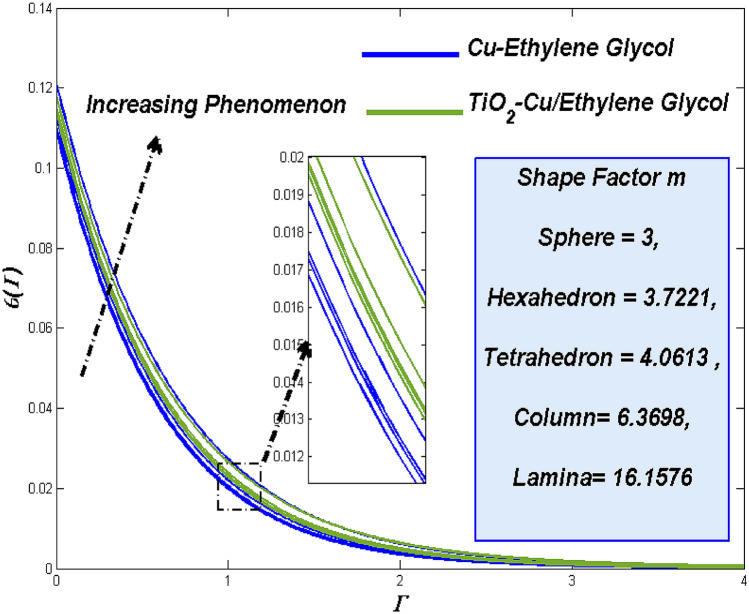
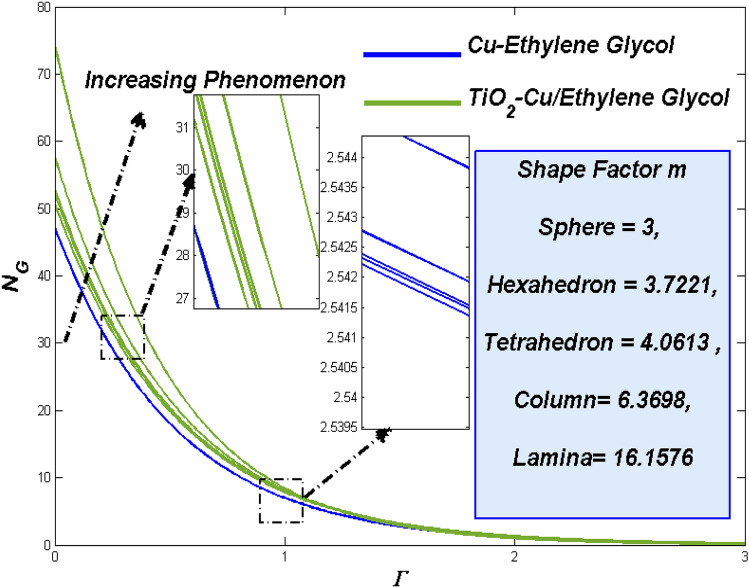
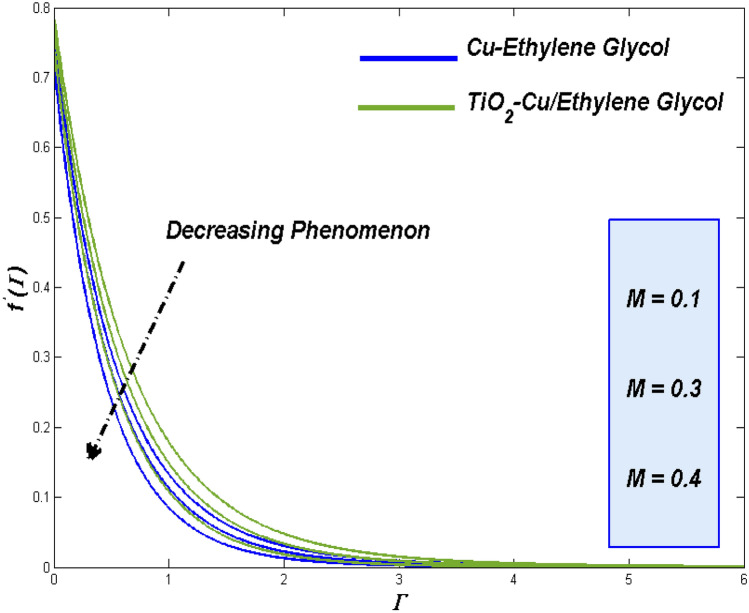
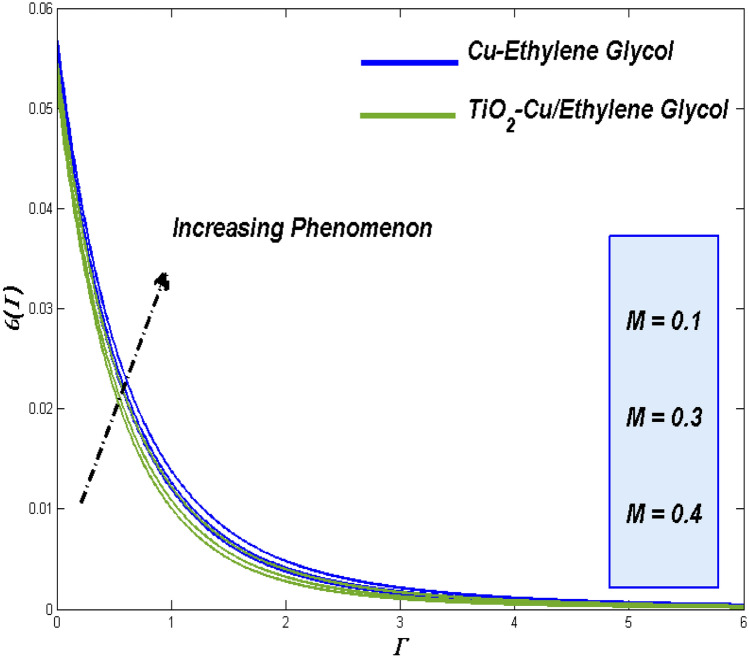
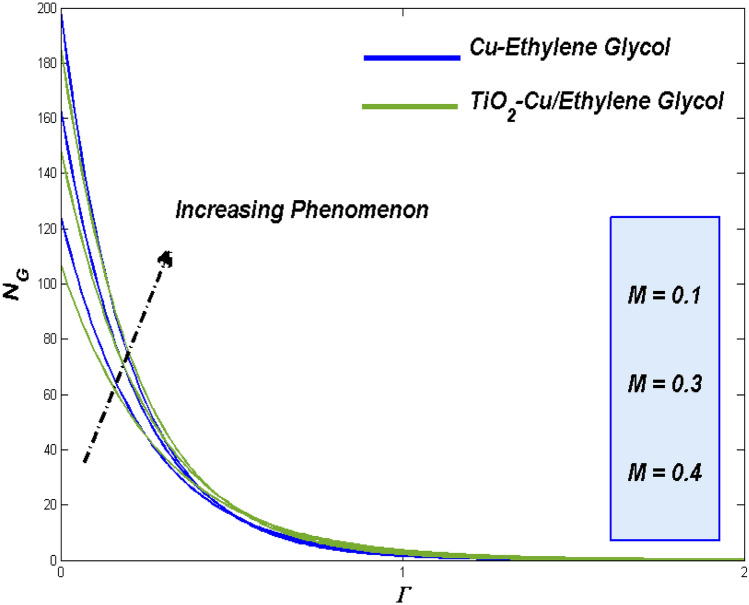
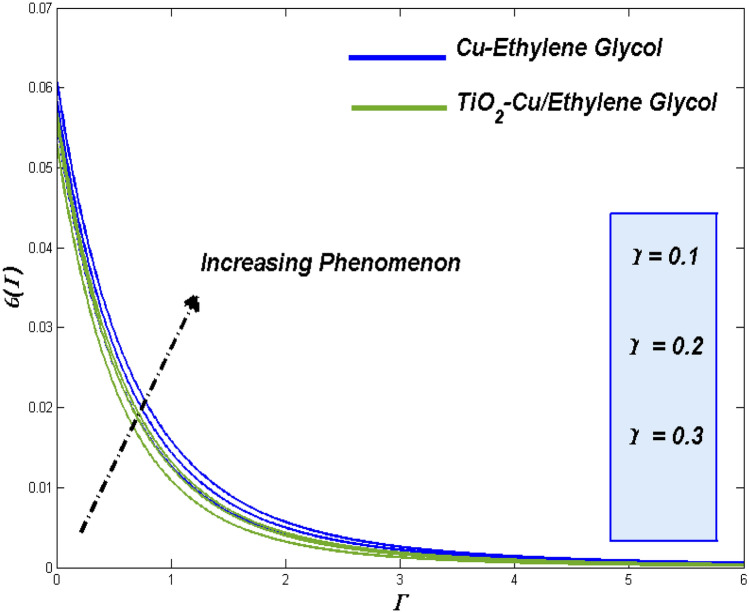
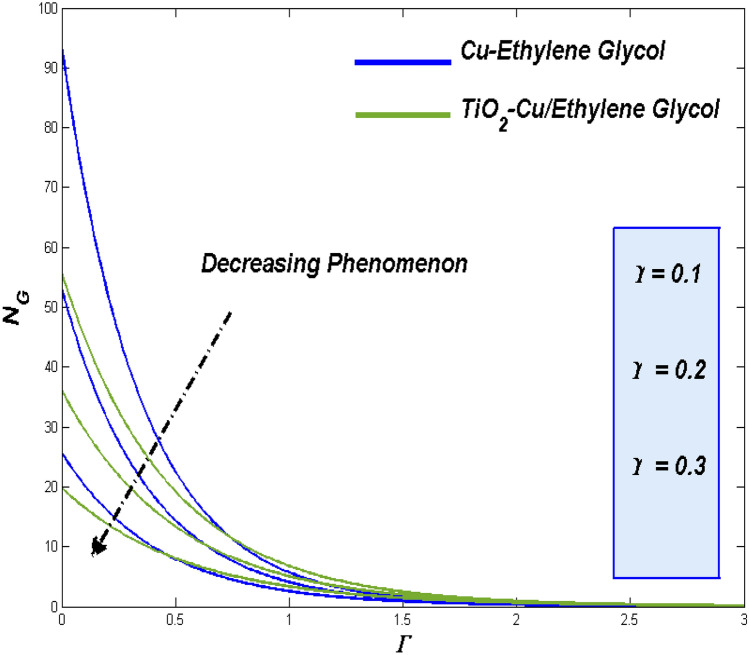
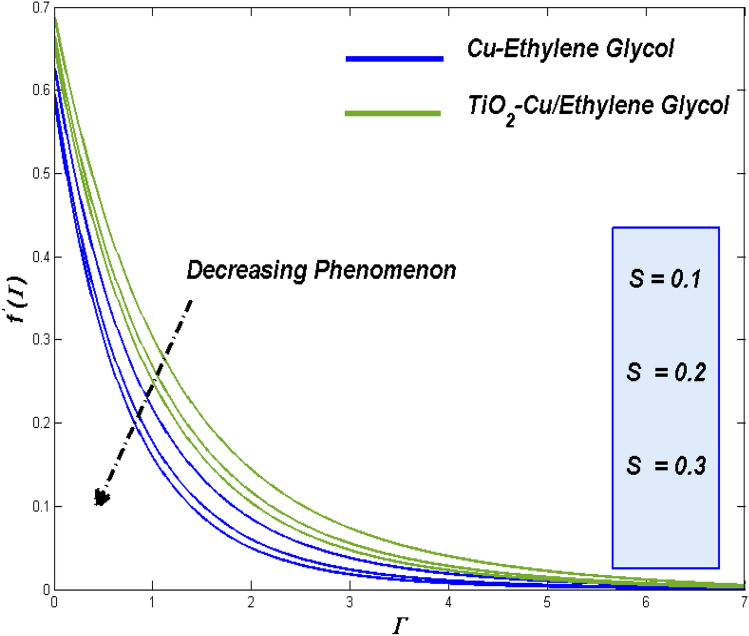
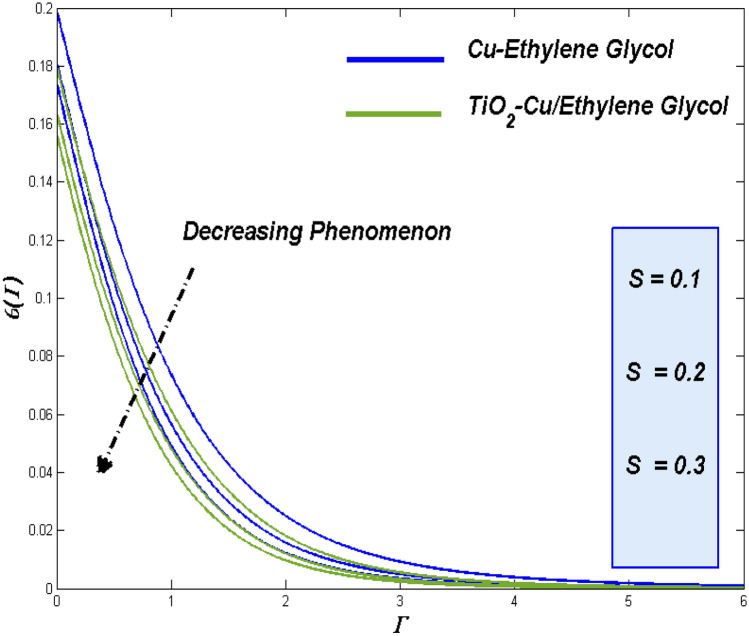
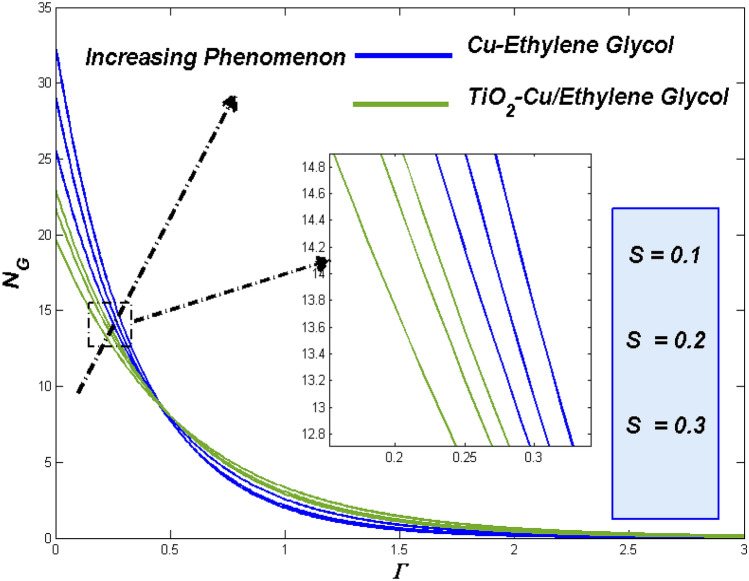
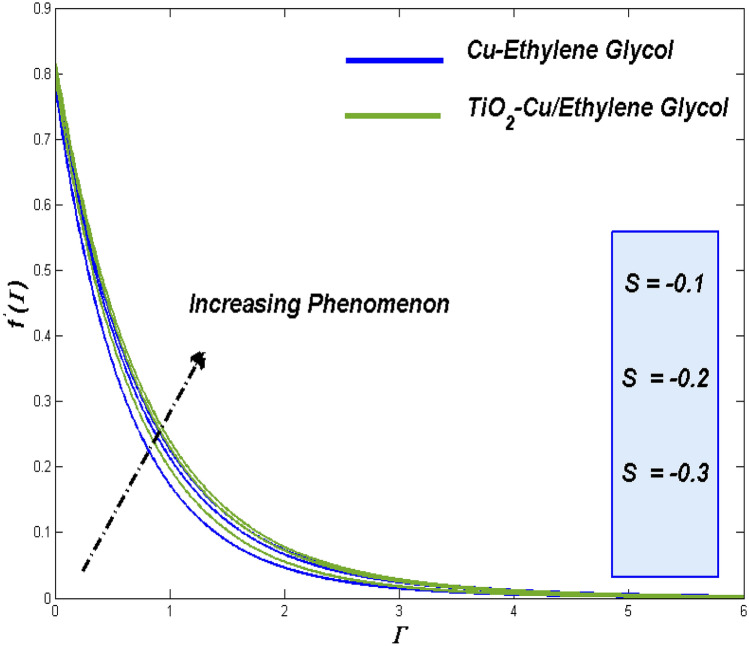
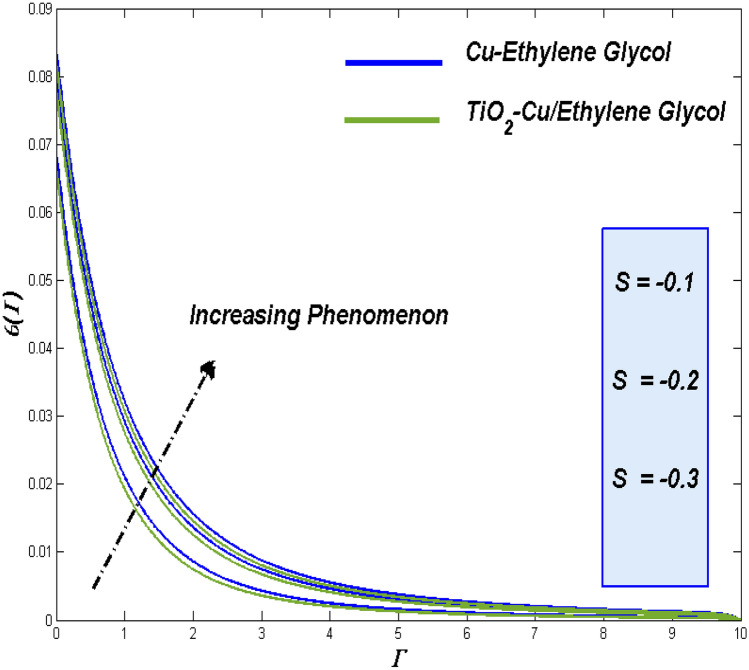
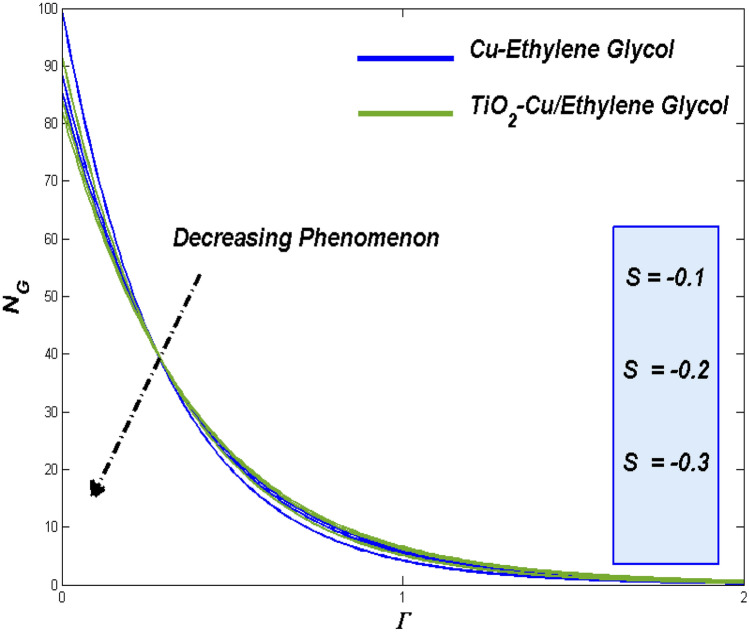
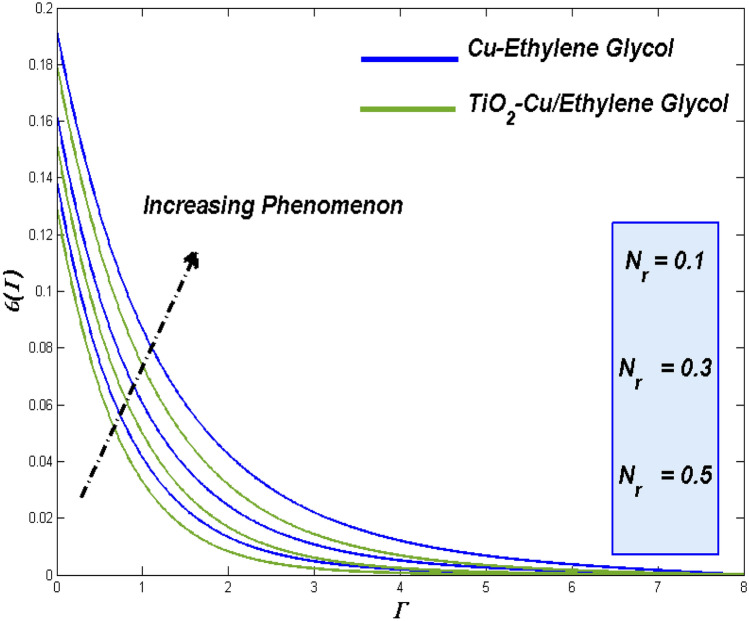
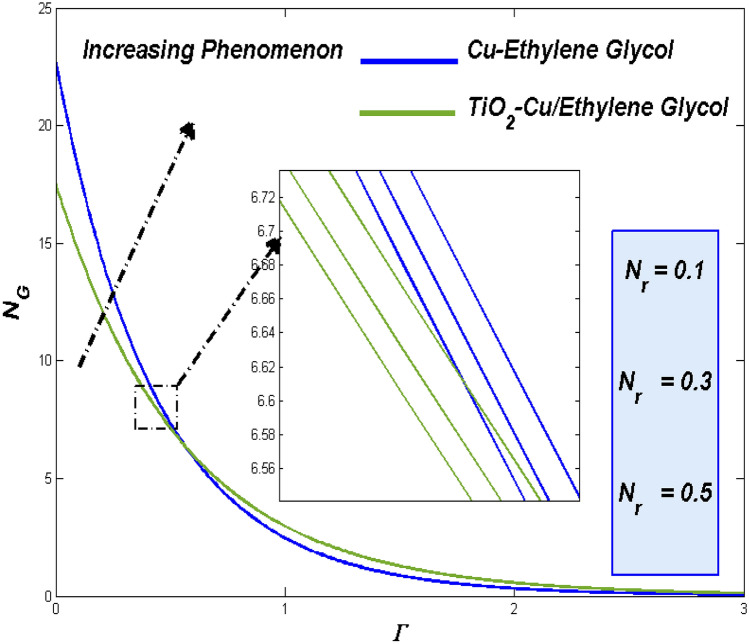
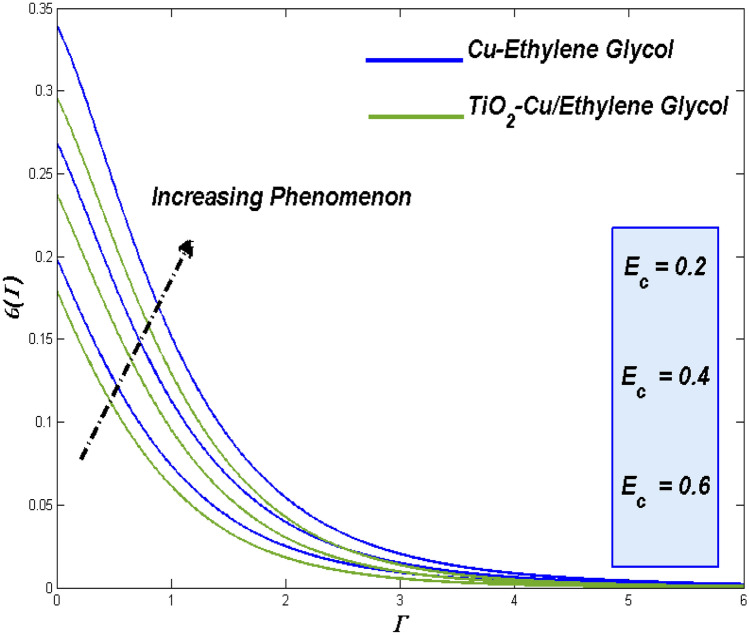
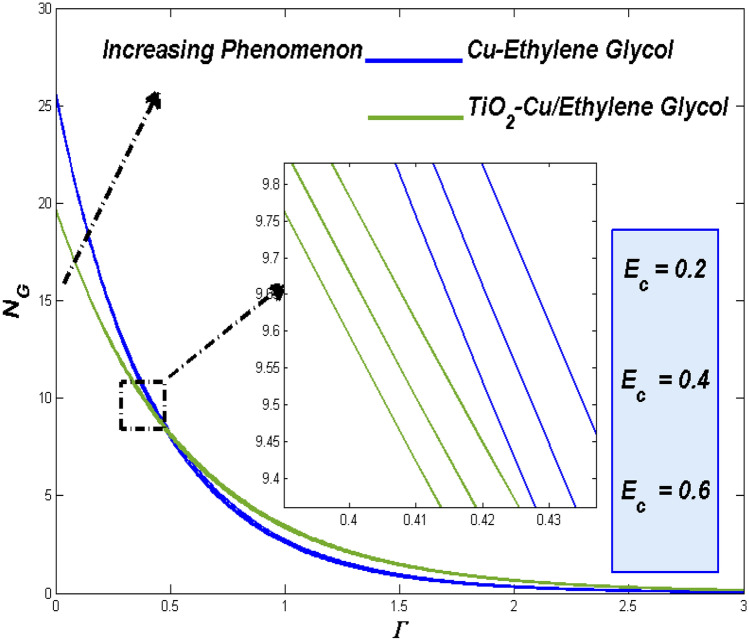
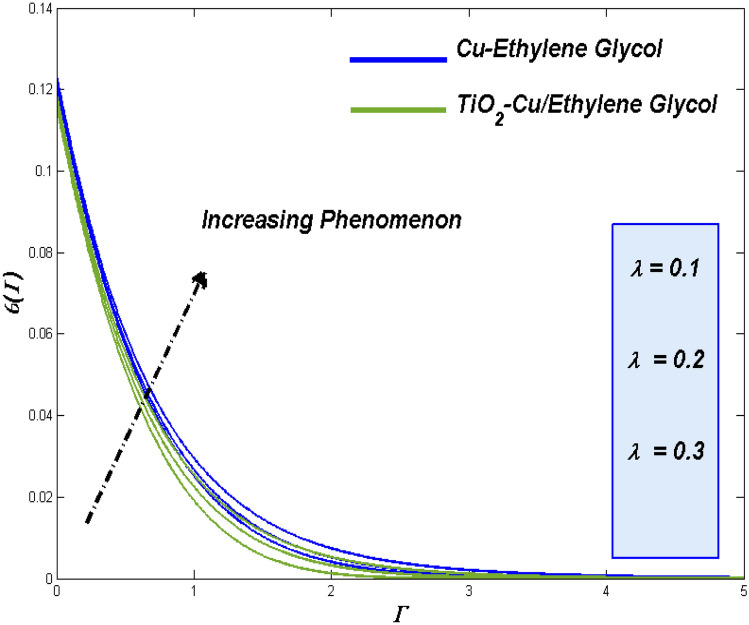
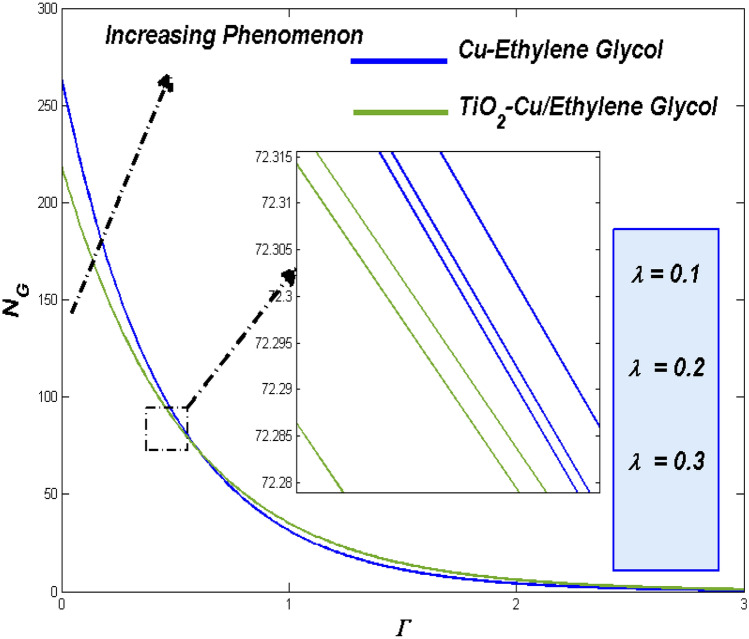
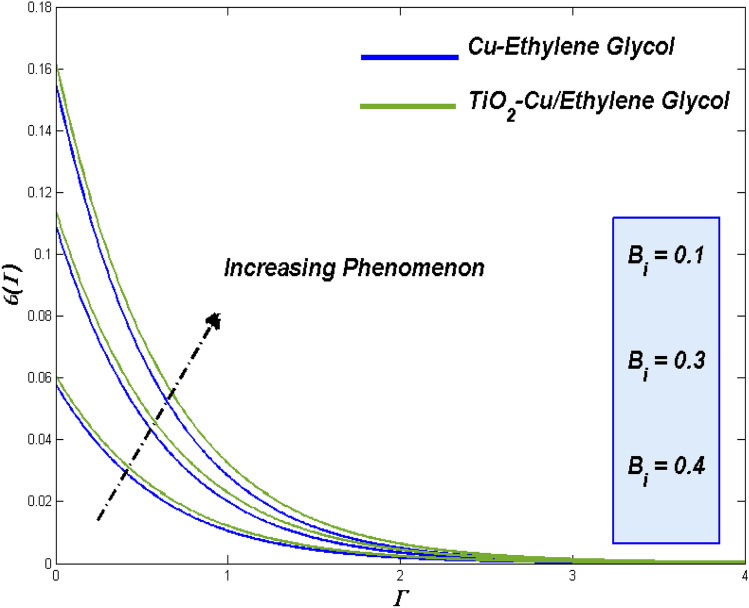
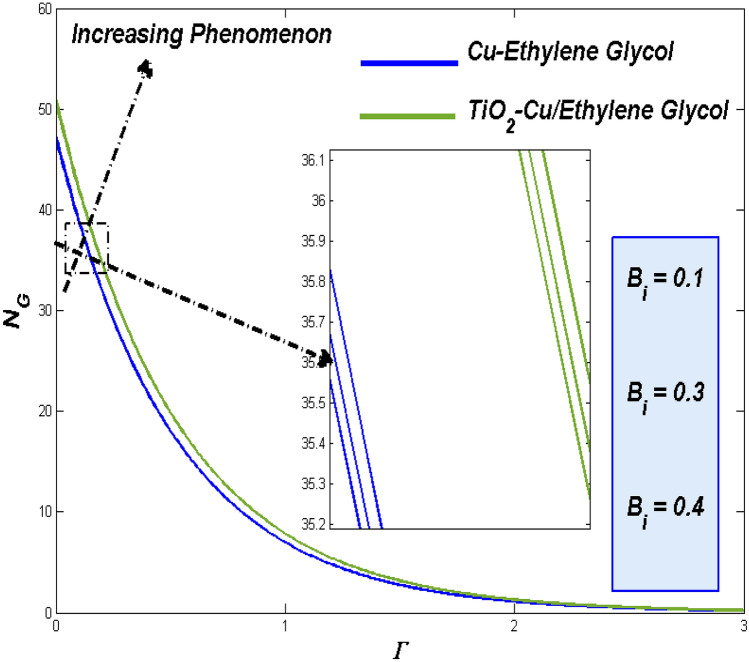
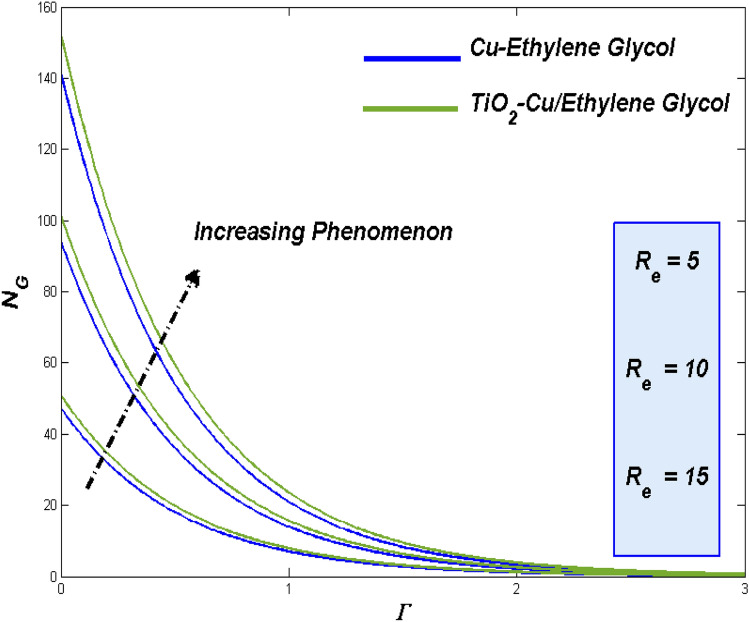
A novel hybrid nanofluid was explored in order to find an efficient heat-transmitting fluid to replace standard fluids and revolutionary nanofluids. By using tangent hyperbolic hybrid combination nanoliquid with non-Newtonian ethylene glycol (EG) as a basis fluid and a copper (Cu) and titanium dioxide (TiO) mixture, this work aims to investigate the viscoelastic elements of the thermal transferring process. Flow and thermal facts, such as a slippery extended surface with magnetohydrodynamic (MHD), suction/injection, form factor, Joule heating, and thermal radiation effects, including changing thermal conductivity, were also integrated. The Keller-Box method was used to perform collective numerical computations of parametric analysis using governing equivalences. In the form of graphs and tables, the results of TiO-Cu/EG hybrid nanofluid were compared to those of standard Cu/EG nanofluid in important critical physical circumstances. The entropy generation study was used to examine energy balance and usefulness for important physically impacting parameters. Detailed scrutiny on entropy development get assisted with Weissenberg number, magnetic parameter, fractional volumes, injection parameter, thermal radiation, variable thermal conductivity, Biot number, shape variation parameter, Reynolds and Brinkman number. Whereas the entropy gets resisted for slip and suction parameter. In this case, spotted entropy buildup with important parametric ranges could aid future optimization.
为了找到一种高效的传热流体来替代标准流体和具有革命性的纳米流体,人们探索了一种新型混合纳米流体。以非牛顿乙二醇(EG)为基础流体,铜(Cu)和二氧化钛(TiO)混合物为原料,采用正切双曲混合组合纳米流体,旨在研究热传递过程中的粘弹性元素。还综合考虑了流动和热学因素,如具有磁流体动力学(MHD)的光滑扩展表面、抽吸/注入、形状因子、焦耳热以及热辐射效应(包括热导率变化)。使用凯勒-博克斯方法,通过控制方程对参数分析进行集体数值计算。在重要的关键物理条件下,将TiO-Cu/EG混合纳米流体的结果与标准Cu/EG纳米流体的结果以图表形式进行了比较。熵产生研究用于考察重要物理影响参数的能量平衡和有用性。对熵发展的详细审查借助魏森贝格数、磁参数、分数体积、注入参数、热辐射、可变热导率、毕奥数、形状变化参数、雷诺数和布林克曼数进行。而熵则受到滑移和抽吸参数的抑制。在这种情况下,确定重要参数范围内的熵积累有助于未来的优化。