Paul Papin ICO Cancer Center, CRCINA, INSERM U1232, Université de Nantes, Université d'Angers, 49055 Angers, France.
Int J Oncol. 2022 Jan;60(1). doi: 10.3892/ijo.2021.5295. Epub 2021 Dec 16.
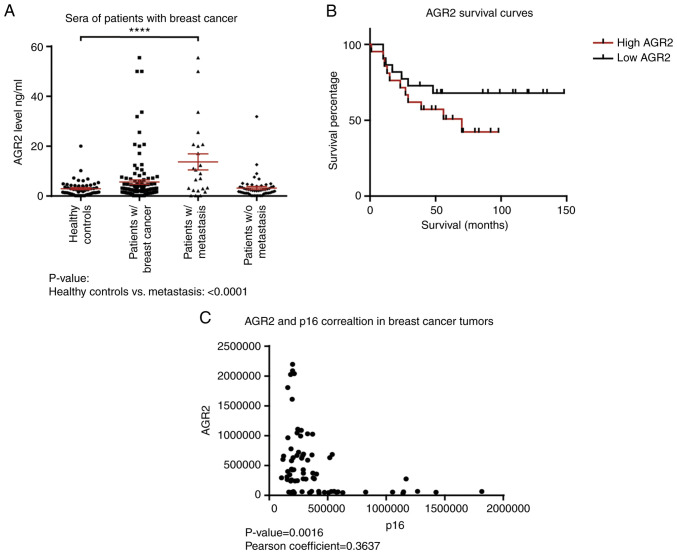
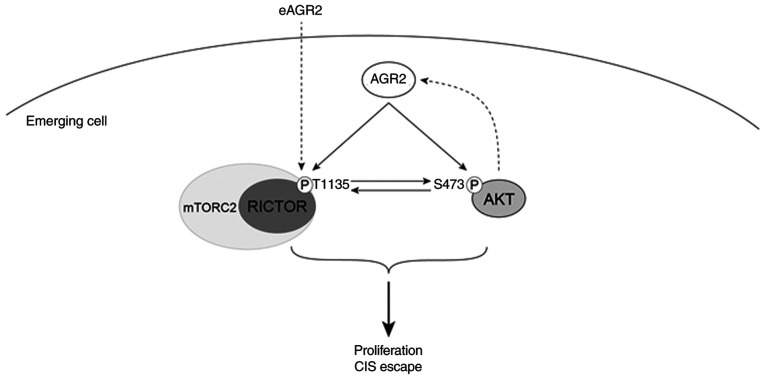
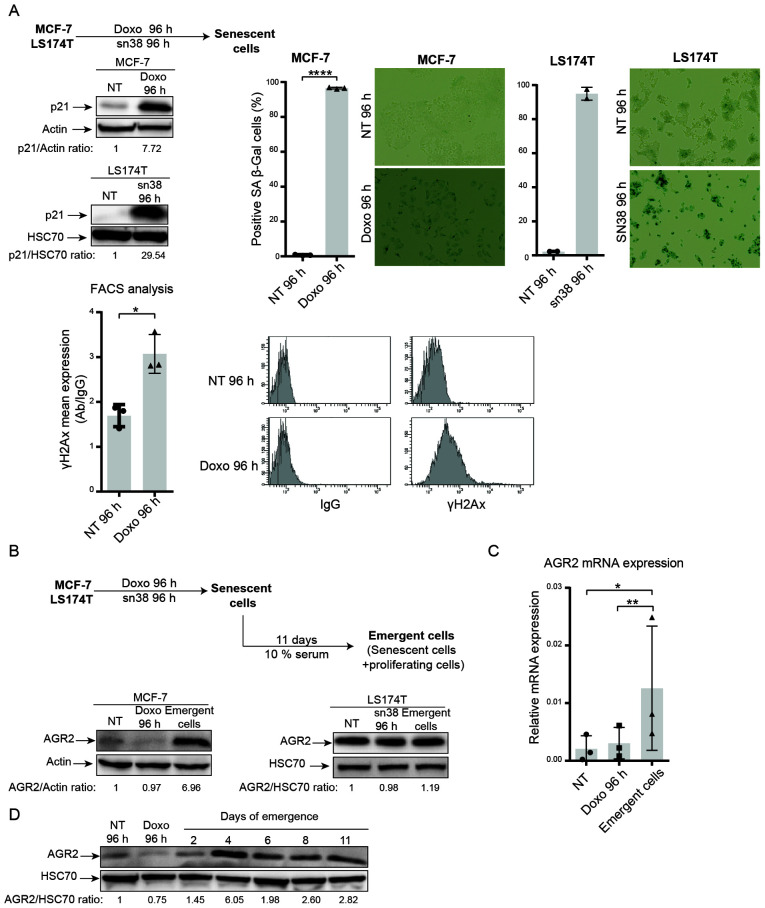
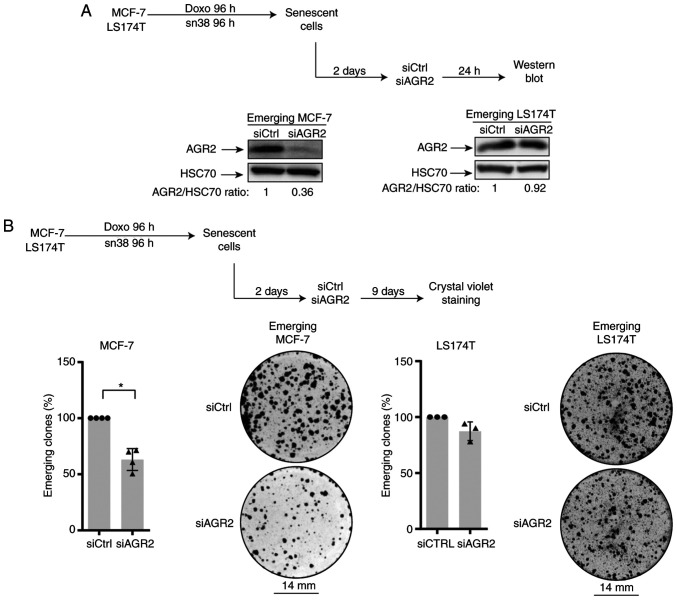
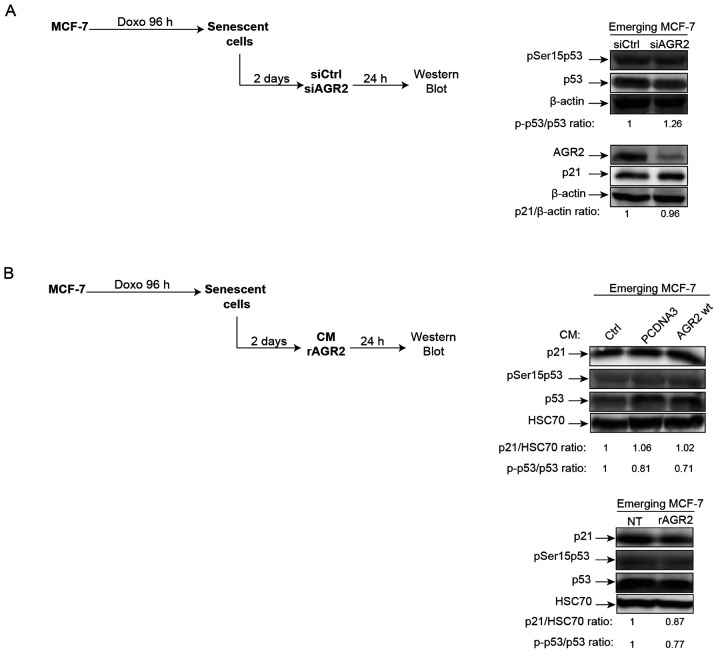
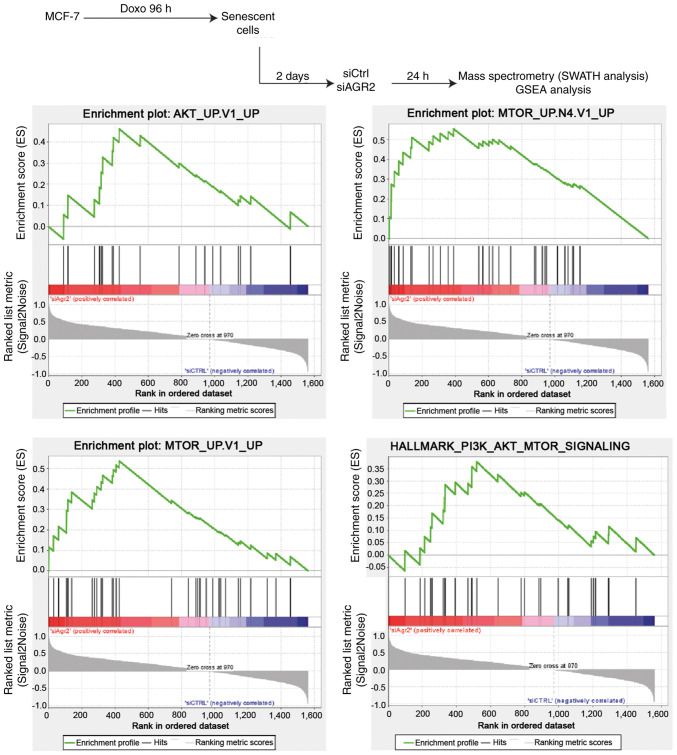
Among the different chemotherapies available, genotoxic drugs are widely used. In response to these drugs, particularly doxorubicin, tumor cells can enter into senescence. Chemotherapy‑induced senescence (CIS) is a complex response. Long described as a definitive arrest of cell proliferation, the present authors and various groups have shown that this state may not be complete and could allow certain cells to reproliferate. The mechanism could be due to the activation of new signaling pathways. In the laboratory, the proteins involved in these pathways and triggering cell proliferation were studied. The present study determined a new role for anterior gradient protein 2 (AGR2) in patients and in a senescence escape model. AGR2's implication in breast cancer patients and proliferation of senescent cells was assessed based on a SWATH‑MS proteomic study of patients' samples and RNA interference technology on cell lines. First, AGR2 was identified and it was found that its concentration is higher in the serum of patients with breast cancer and that this high concentration is associated with metastasis occurrence. An inverse correlation between intratumoral AGR2 expression and the senescence marker p16 was also observed. This observation led to the study of the role of AGR2 in the CIS escape model. In this model, it was found that AGR2 is overexpressed in cells during senescence escape and that its loss considerably reduces this phenomenon. Furthermore, it was shown that the extracellular form of AGR2 stimulated the reproliferation of senescent cells. The power of proteomic analysis based on the SWATH‑MS approach allowed the present study to highlight the mammalian target of rapamycin (mTOR)/AKT signaling pathway in the senescence escape mechanism mediated by AGR2. Analysis of the two signaling pathways revealed that AGR2 modulated RICTOR and AKT phosphorylation. All these results showed that AGR2 expression in sera and tumors of breast cancer patients is a marker of tumor progression and metastasis occurrence. They also showed that its overexpression regulates CIS escape via activation of the mTOR/AKT signaling pathway.
在可用的各种化疗药物中,遗传毒性药物被广泛应用。针对这些药物,特别是阿霉素,肿瘤细胞可以进入衰老状态。化疗诱导的衰老(CIS)是一种复杂的反应。尽管之前将其描述为细胞增殖的明确停滞,但本研究的作者和其他研究小组已经表明,这种状态可能并不完全,并且可能允许某些细胞进行再增殖。其机制可能归因于新信号通路的激活。在实验室中,研究了这些通路中涉及的蛋白质以及触发细胞增殖的蛋白质。本研究在患者和衰老逃逸模型中确定了前梯度蛋白 2(AGR2)的新作用。通过对患者样本的 SWATH-MS 蛋白质组学研究和细胞系中的 RNA 干扰技术,评估了 AGR2 在乳腺癌患者中的作用及其对衰老细胞增殖的影响。首先,鉴定出 AGR2,并发现其在乳腺癌患者血清中的浓度较高,并且这种高浓度与转移的发生有关。还观察到肿瘤内 AGR2 表达与衰老标志物 p16 呈负相关。这一观察结果促使研究 AGR2 在 CIS 逃逸模型中的作用。在该模型中,发现 AGR2 在衰老逃逸期间在细胞中过度表达,并且其缺失大大减少了这种现象。此外,还表明 AGR2 的细胞外形式刺激了衰老细胞的再增殖。基于 SWATH-MS 方法的蛋白质组学分析的强大功能使本研究能够突出 AGR2 介导的衰老逃逸机制中的雷帕霉素靶蛋白(mTOR)/AKT 信号通路。对两条信号通路的分析表明,AGR2 调节 RICTOR 和 AKT 的磷酸化。所有这些结果表明,AGR2 在乳腺癌患者的血清和肿瘤中的表达是肿瘤进展和转移发生的标志物。它们还表明,其过度表达通过激活 mTOR/AKT 信号通路来调节 CIS 逃逸。