Department of Ophthalmology and Visual Science, Seoul St. Mary's Hospital, College of Medicine, The Catholic University of Korea, Seoul, Republic of Korea.
Catholic Institute for Visual Science, College of Medicine, The Catholic University of Korea, Seoul, Republic of Korea.
J Diabetes Res. 2021 Dec 8;2021:4920937. doi: 10.1155/2021/4920937. eCollection 2021.
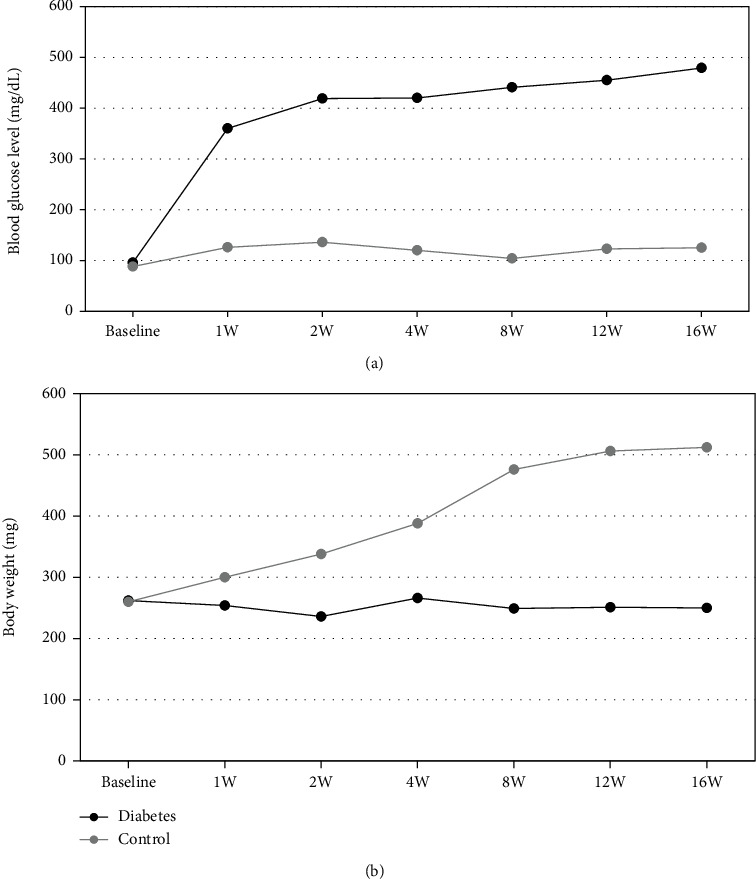
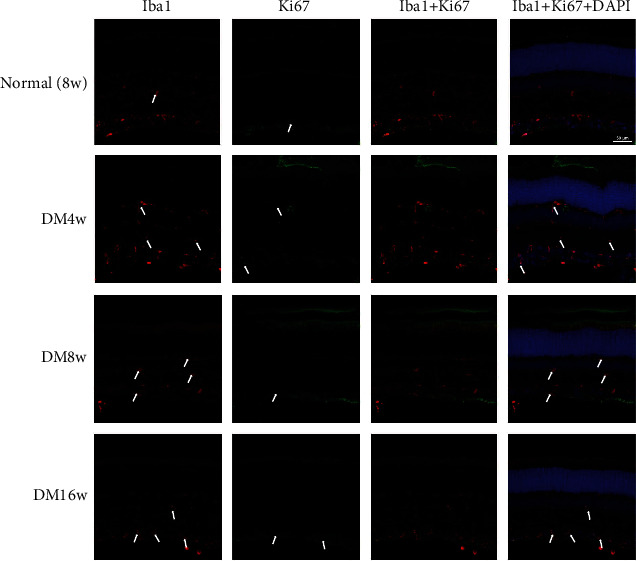
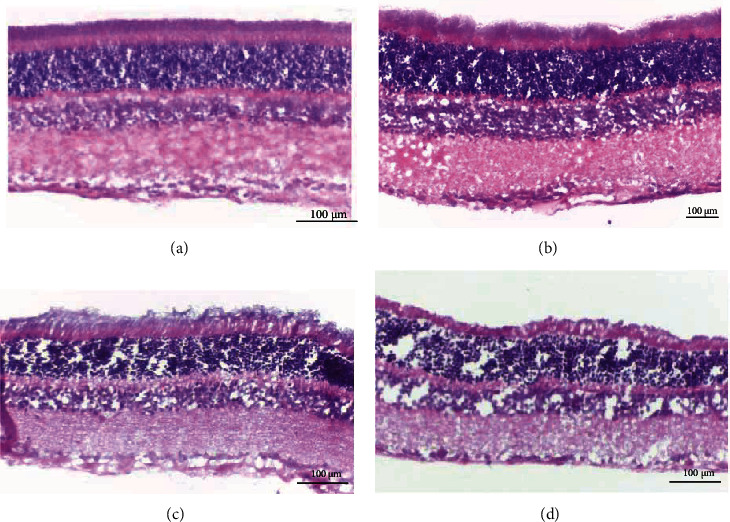
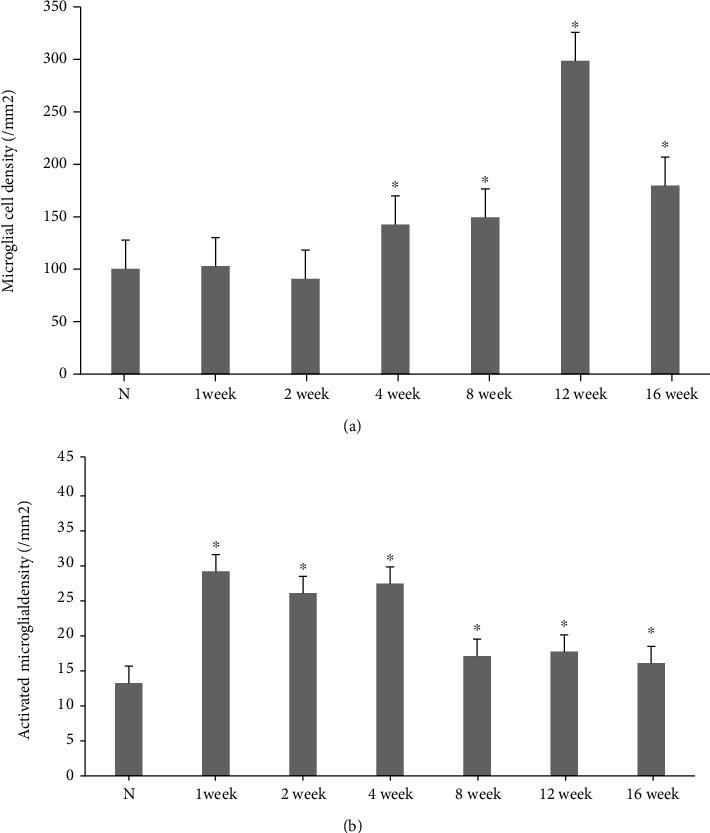
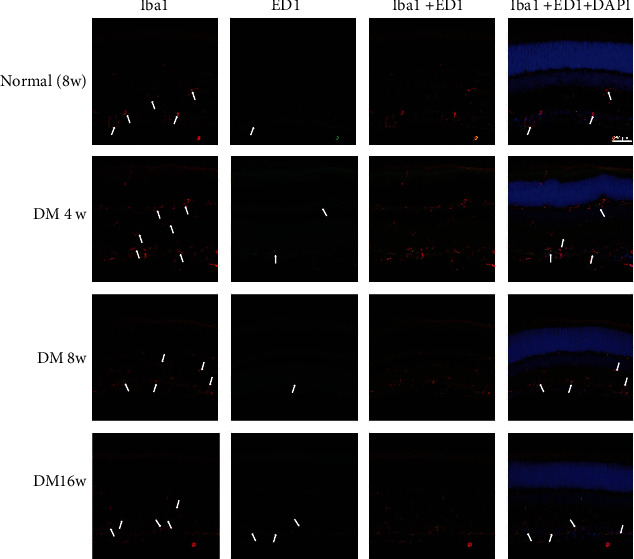
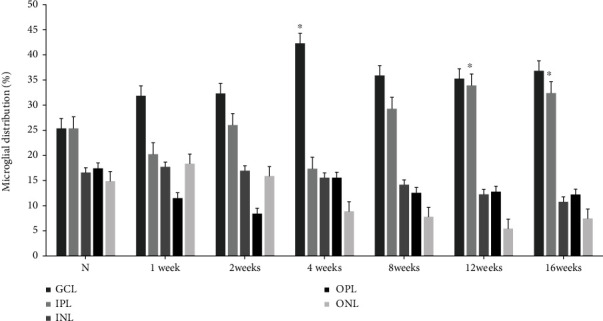
Although morphological changes in microglia have been reported to be associated with diabetic retinopathy, little is known about the early changes in the microglia and macrophages during the progression of this condition. The present study was aimed at characterizing retinal microglial activation in the early stages of experimental diabetic retinopathy. Toward this end, a model of diabetic retinopathy was generated by intraperitoneally injecting male Sprague-Dawley rats with streptozotocin. No apparent histological changes were observed during the early stages of experimental diabetic retinopathy. However, at 4 to 16 weeks after the onset of diabetes, the retinas from diabetic rats exhibited higher density of microglia than those from age-matched normal controls, with microglial density peaking at 12 weeks. In particular, the proportion of the activated microglia increased significantly in the diabetic rats, specifically in the nerve fiber and ganglion cell layers, whereas it decreased in the inner plexiform layer within 12 weeks. Furthermore, the resident retinal microglial cells were activated immediately after diabetes induction, peaked at 12 weeks, and remained for up to 16 weeks after disease onset. Thus, experimental diabetic retinopathy causes gradual hypoxia and neuroinflammation, followed by the activation of microglia and the migration of macrophages. The distribution and density of retinal microglial activation changed typically with the progression of the disease in early-stage diabetic rats.
尽管已有研究报道称小胶质细胞的形态变化与糖尿病性视网膜病变有关,但对于该疾病进展过程中小胶质细胞和巨噬细胞的早期变化知之甚少。本研究旨在描述实验性糖尿病性视网膜病变早期阶段视网膜小胶质细胞的激活情况。为此,通过向雄性 Sprague-Dawley 大鼠腹腔内注射链脲佐菌素建立糖尿病性视网膜病变模型。在实验性糖尿病性视网膜病变的早期阶段,未观察到明显的组织学变化。然而,在糖尿病发病后 4 至 16 周,糖尿病大鼠的视网膜中小胶质细胞的密度高于年龄匹配的正常对照组,小胶质细胞密度在 12 周时达到峰值。特别是,糖尿病大鼠的激活小胶质细胞的比例显著增加,特别是在神经纤维和节细胞层,而在 12 周内,内丛状层中的小胶质细胞密度则降低。此外,在诱导糖尿病后,驻留的视网膜小胶质细胞立即被激活,在 12 周时达到峰值,并在疾病发病后 16 周内持续存在。因此,实验性糖尿病性视网膜病变导致逐渐发生缺氧和神经炎症,随后小胶质细胞被激活,巨噬细胞发生迁移。在早期糖尿病大鼠中,视网膜小胶质细胞激活的分布和密度随疾病的进展而发生典型变化。