Department of Neuroscience, Neurosurgery, Uppsala University, 752 37, Uppsala, Sweden.
Department of Surgical Sciences, Radiology, Uppsala University, Uppsala, Sweden.
Acta Neurochir (Wien). 2022 Mar;164(3):615-624. doi: 10.1007/s00701-021-05040-6. Epub 2021 Dec 22.
A major challenge in management of traumatic brain injury (TBI) is to assess the heterogeneity of TBI pathology and outcome prediction. A reliable outcome prediction would have both great value for the healthcare provider, but also for the patients and their relatives. A well-known prediction model is the International Mission for Prognosis and Analysis of Clinical Trials (IMPACT) prognostic calculator. The aim of this study was to externally validate all three modules of the IMPACT calculator on TBI patients admitted to Uppsala University hospital (UUH).
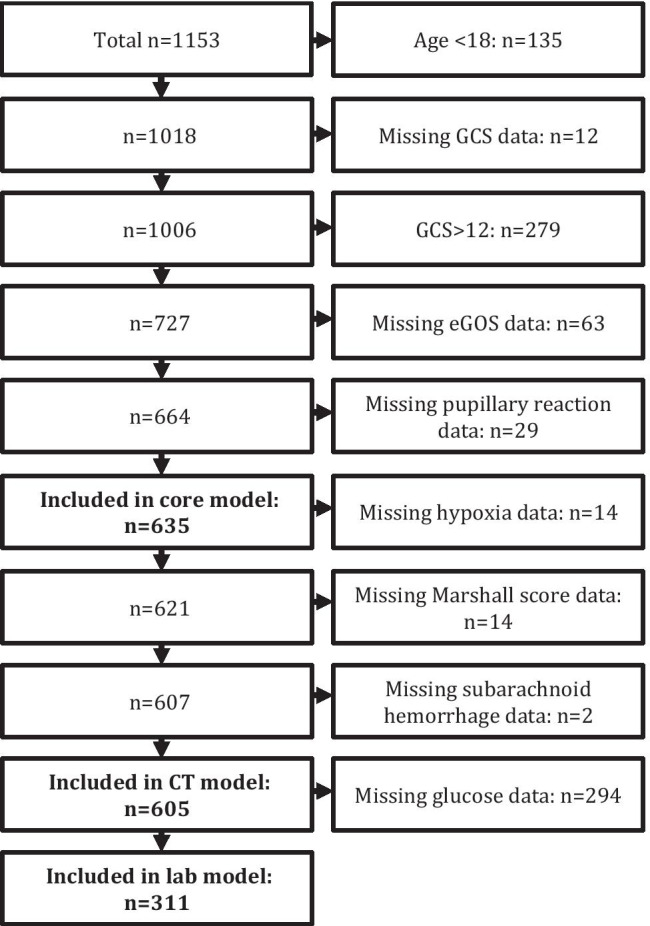
TBI patients admitted to UUH are continuously enrolled into the Uppsala neurointensive care unit (NICU) TBI Uppsala Clinical Research (UCR) quality register. The register contains both clinical and demographic data, radiological evaluations, and outcome assessments based on the extended Glasgow outcome scale extended (GOSE) performed at 6 months to 1 year. In this study, we included 635 patients with severe TBI admitted during 2008-2020. We used IMPACT core parameters: age, motor score, and pupillary reaction.
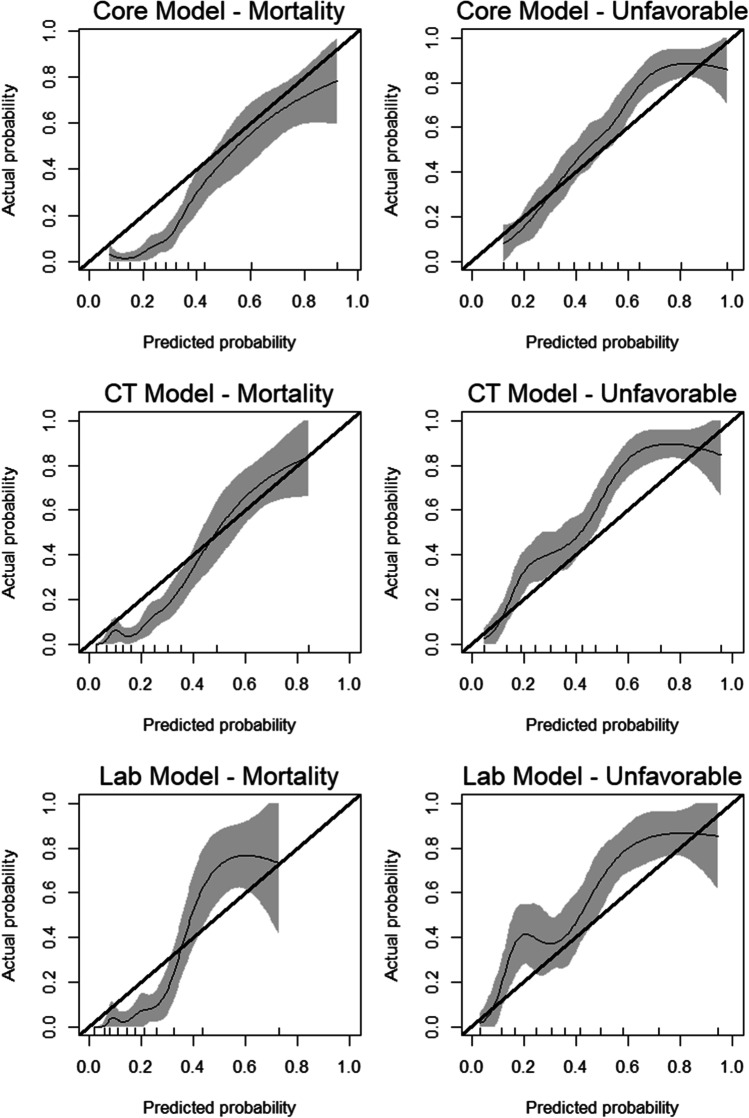
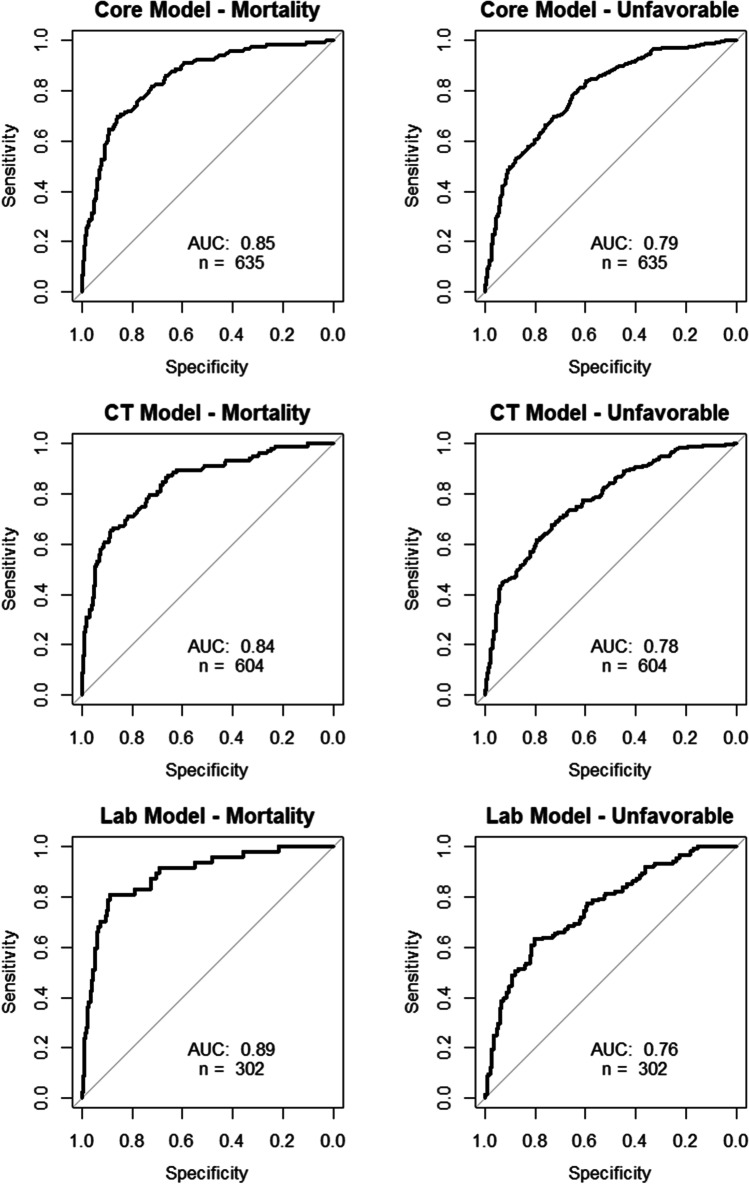
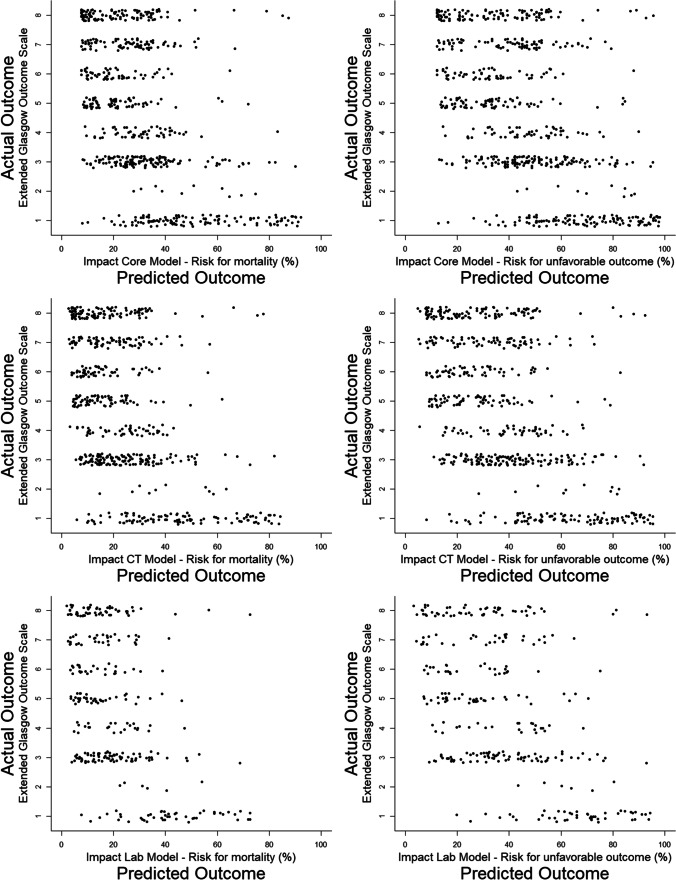
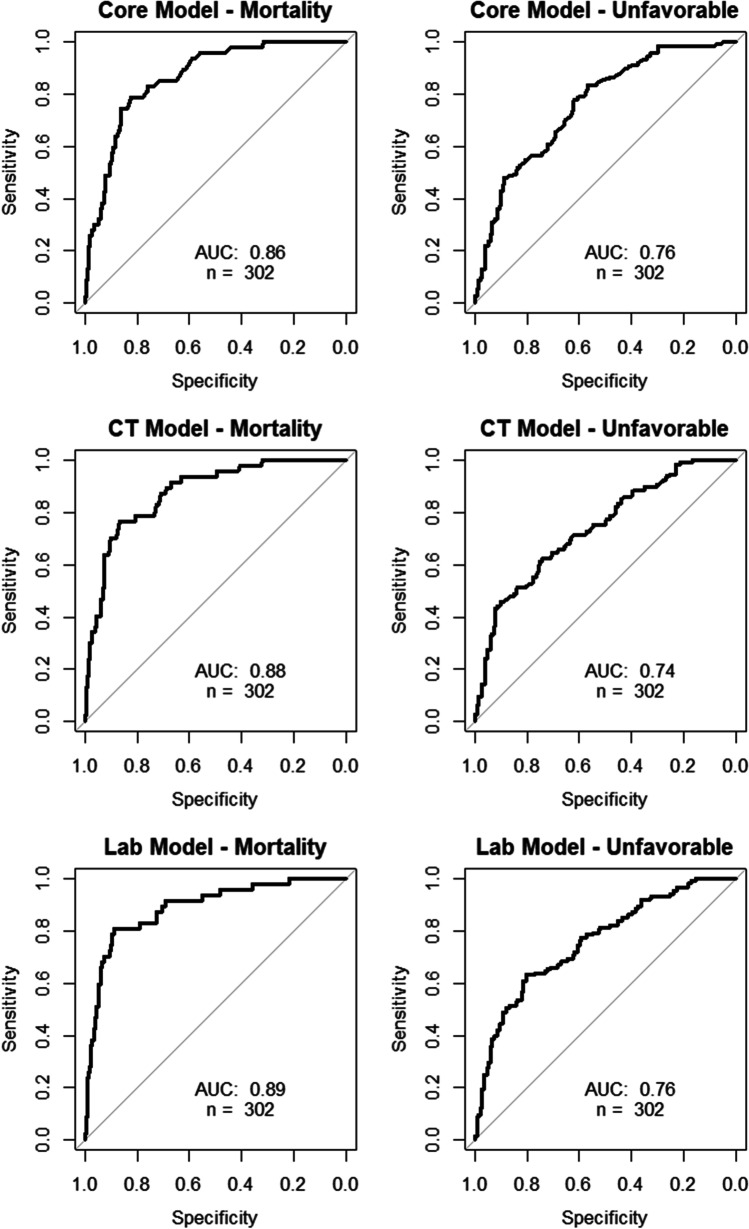
The patients had a median age of 56 (range 18-93), 142 female and 478 male. Using the IMPACT Core model to predict outcome resulted in an AUC of 0.85 for mortality and 0.79 for unfavorable outcome. The CT module did not increase AUC for mortality and slightly decreased AUC for unfavorable outcome to 0.78. However, the lab module increased AUC for mortality to 0.89 but slightly decreased for unfavorable outcome to 0.76. Comparing the predicted risk to actual outcomes, we found that all three models correctly predicted low risk of mortality in the surviving group of GOSE 2-8. However, it produced a greater variance of predicted risk in the GOSE 1 group, denoting general underprediction of risk. Regarding unfavorable outcome, all models once again underestimated the risk in the GOSE 3-4 groups, but correctly predicts low risk in GOSE 5-8.
The results of our study are in line with previous findings from centers with modern TBI care using the IMPACT model, in that the model provides adequate prediction for mortality and unfavorable outcome. However, it should be noted that the prediction is limited to 6 months outcome and not longer time interval.
创伤性脑损伤(TBI)管理的一个主要挑战是评估 TBI 病理和预后的异质性。可靠的预后预测对医疗保健提供者具有重要价值,对患者及其家属也具有重要价值。一个著名的预后模型是国际创伤预后分析与临床试验任务组(IMPACT)预后计算器。本研究的目的是在乌普萨拉大学医院(UUH)收治的 TBI 患者中对外科医生验证 IMPACT 计算器的所有三个模块。
UUH 神经重症监护病房(NICU)TBI 乌普萨拉临床研究(UCR)质量登记处连续收治 TBI 患者。该登记处包含基于 6 个月至 1 年扩展格拉斯哥预后量表(GOSE)进行的临床和人口统计学数据、影像学评估和预后评估。在本研究中,我们纳入了 2008 年至 2020 年期间收治的 635 例严重 TBI 患者。我们使用了 IMPACT 核心参数:年龄、运动评分和瞳孔反应。
患者的中位年龄为 56 岁(范围 18-93 岁),女性 142 例,男性 478 例。使用 IMPACT 核心模型预测结局,死亡率的 AUC 为 0.85,不良结局的 AUC 为 0.79。CT 模块并未增加死亡率的 AUC,略微降低了不良结局的 AUC 至 0.78。然而,实验室模块增加了死亡率的 AUC 至 0.89,但略微降低了不良结局的 AUC 至 0.76。将预测风险与实际结局进行比较,我们发现所有三个模型在 GOSE 2-8 的存活组中均正确预测了低死亡率风险。然而,它在 GOSE 1 组中产生了更大的预测风险方差,这表明风险普遍被低估。关于不良结局,所有模型再次低估了 GOSE 3-4 组的风险,但正确预测了 GOSE 5-8 的低风险。
本研究结果与使用 IMPACT 模型的现代 TBI 治疗中心的先前研究结果一致,即该模型对死亡率和不良结局提供了足够的预测。然而,应该注意的是,预测仅限于 6 个月的结局,而不是更长的时间间隔。