Department of Chemistry, Yale University, New Haven, CT 06520.
Department of Molecular Biophysics and Biochemistry, Yale University, New Haven, CT 06520.
Proc Natl Acad Sci U S A. 2022 Jan 4;119(1). doi: 10.1073/pnas.2116765118.
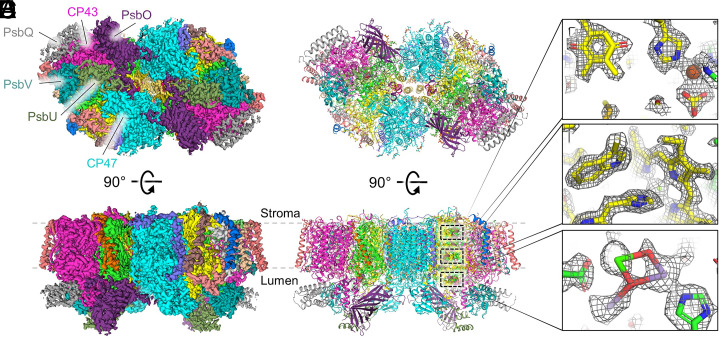
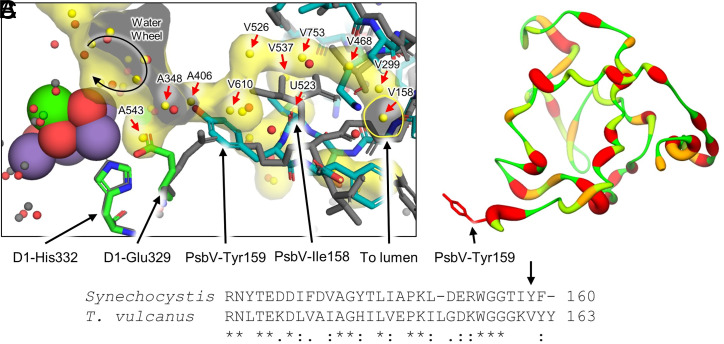
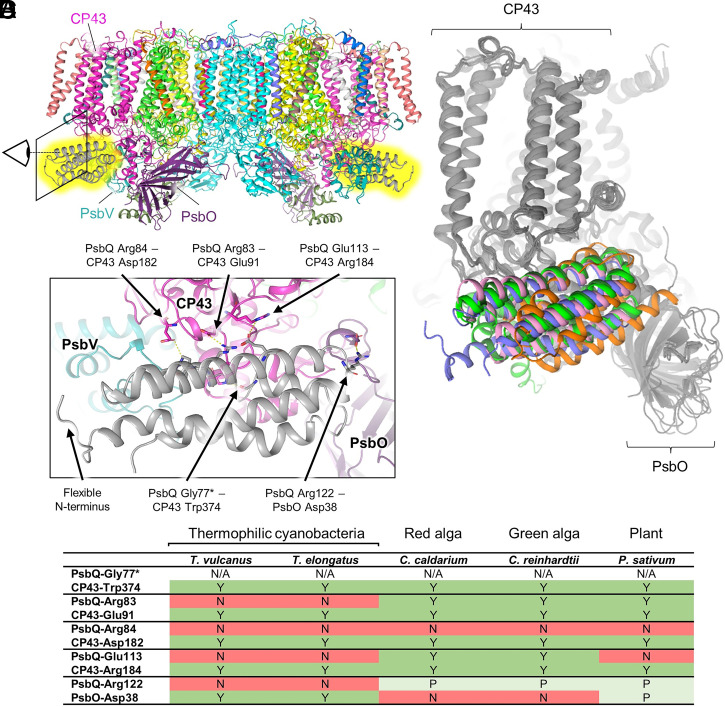
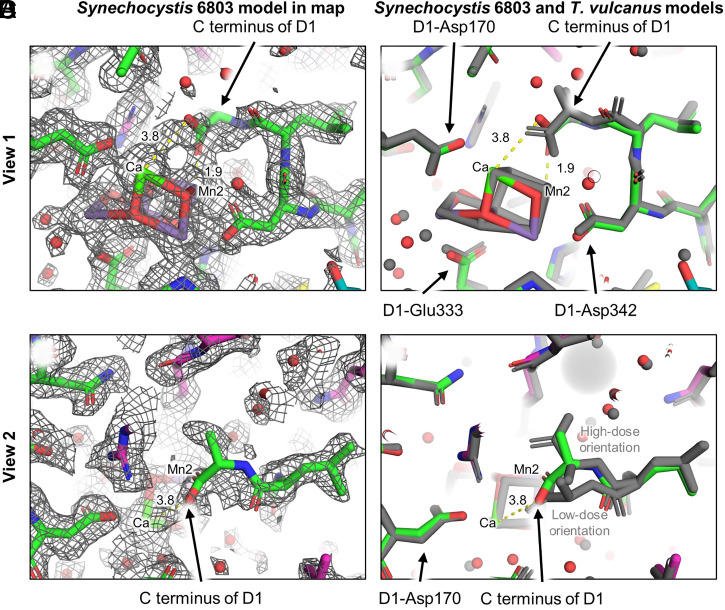
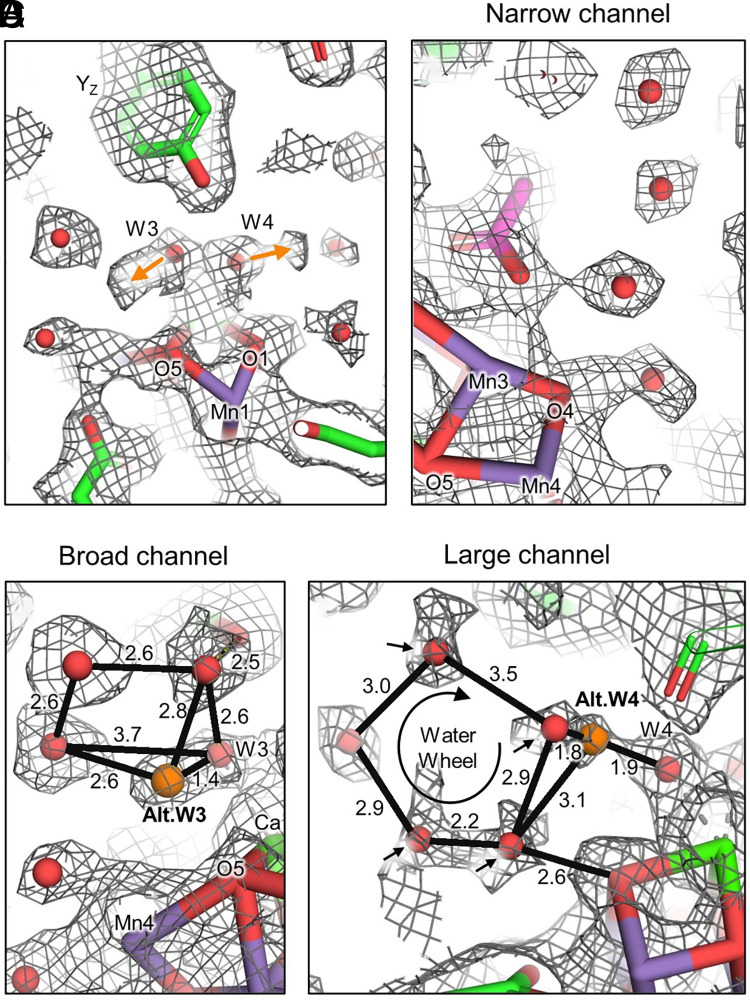
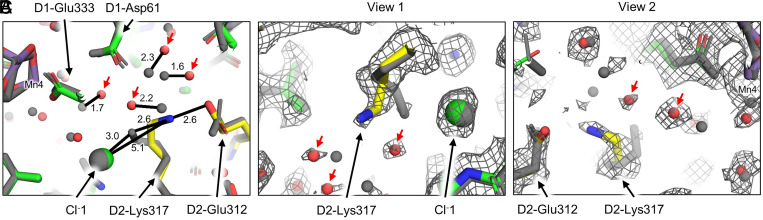
Photosystem II (PSII) enables global-scale, light-driven water oxidation. Genetic manipulation of PSII from the mesophilic cyanobacterium sp. PCC 6803 has provided insights into the mechanism of water oxidation; however, the lack of a high-resolution structure of oxygen-evolving PSII from this organism has limited the interpretation of biophysical data to models based on structures of thermophilic cyanobacterial PSII. Here, we report the cryo-electron microscopy structure of PSII from sp. PCC 6803 at 1.93-Å resolution. A number of differences are observed relative to thermophilic PSII structures, including the following: the extrinsic subunit PsbQ is maintained, the C terminus of the D1 subunit is flexible, some waters near the active site are partially occupied, and differences in the PsbV subunit block the Large (O1) water channel. These features strongly influence the structural picture of PSII, especially as it pertains to the mechanism of water oxidation.
光系统 II(PSII)能够实现全球范围内的光驱动水氧化。对嗜热蓝藻 PSII 的基因操作提供了对水氧化机制的深入了解;然而,由于缺乏该生物体产氧 PSII 的高分辨率结构,限制了对基于嗜热蓝藻 PSII 结构的模型的生物物理数据的解释。在这里,我们报道了来自 sp. PCC 6803 的 PSII 的低温电子显微镜结构,分辨率为 1.93 Å。与嗜热 PSII 结构相比,观察到了一些差异,包括:外亚基 PsbQ 得以保留,D1 亚基的 C 末端是灵活的,活性位点附近的一些水部分被占据,以及 PsbV 亚基的差异阻塞了大(O1)水通道。这些特征强烈影响 PSII 的结构图景,特别是在水氧化机制方面。