Sheikh Irtiza N, Roth Michael, Stavinoha Peter L
Division of Pediatrics and Patient Care, The University of Texas MD Anderson Cancer Center, 1515 Holcombe Blvd., Houston, TX 77030, USA.
Children (Basel). 2021 Nov 29;8(12):1100. doi: 10.3390/children8121100.
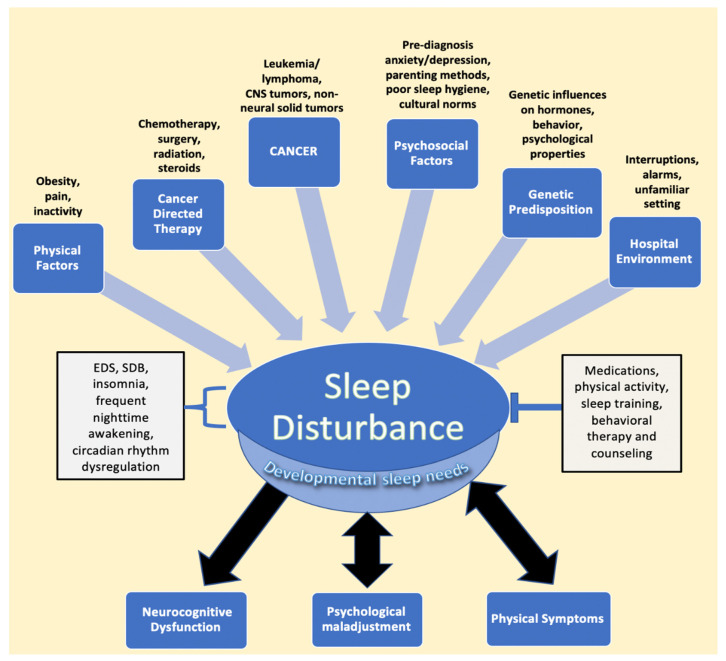
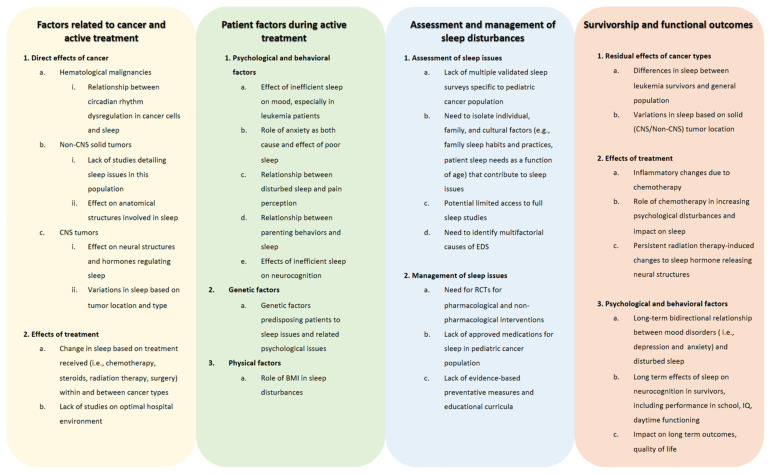
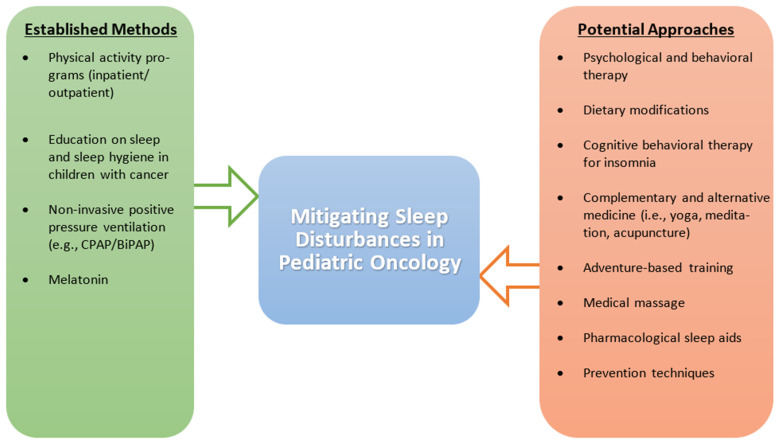
Sleep disturbances represent an understudied yet common source of distress among pediatric cancer patients and survivors, with deleterious effects on quality of life. Sleep issues stem from multiple risk factors, yet individual contributors are difficult to isolate, consequently impeding the identification of targets for intervention. In many pediatric cancer patients, disrupted sleep and its negative impact on quality of life continue into adulthood and may affect various functional domains. This literature review highlights the types and prevalence of sleep disturbances in pediatric cancer patients during active treatment and through survivorship. Potential etiological and risk factors for disturbed sleep are summarized, including the effects of cancer and its treatment, psychosocial and family factors, as well as individual-patient aspects, such as genetics, mood and coping skills. While existing assessment and management strategies are reviewed, the literature is incomplete, and significant gaps emerge in our understanding of sleep disturbances in pediatric cancer patients and survivors. The review concludes with recommendations of areas where further research is needed. The aims of this review include increasing clinicians' awareness of sleep disturbances as a significant source of poor quality of life in pediatric cancer patients and survivors and directing researchers to gaps in our understanding of sleep disturbances in pediatric cancer patients and survivors.
睡眠障碍是儿科癌症患者及其幸存者中一个研究不足但常见的困扰源,对生活质量有有害影响。睡眠问题源于多种风险因素,但难以分离出个体因素,因此阻碍了干预目标的确定。在许多儿科癌症患者中,睡眠中断及其对生活质量的负面影响会持续到成年,并可能影响各个功能领域。这篇文献综述强调了儿科癌症患者在积极治疗期间及整个幸存者阶段睡眠障碍的类型和患病率。总结了睡眠障碍的潜在病因和风险因素,包括癌症及其治疗的影响、心理社会和家庭因素,以及个体患者方面的因素,如遗传学、情绪和应对技巧。虽然对现有的评估和管理策略进行了综述,但文献并不完整,我们对儿科癌症患者及其幸存者睡眠障碍的理解存在重大差距。综述最后提出了需要进一步研究的领域建议。本综述的目的包括提高临床医生对睡眠障碍的认识,睡眠障碍是儿科癌症患者及其幸存者生活质量差的一个重要来源,并引导研究人员关注我们对儿科癌症患者及其幸存者睡眠障碍理解上的差距。