Yang Yang, Guo Xing-Ming, Wang Hui, Zheng Yi-Neng
Key Laboratory of Biorheology Science and Technology, Ministry of Education, College of Bioengineering, Chongqing University, Chongqing 400044, China.
Department of Radiology, The First Affiliated Hospital of Chongqing Medical University, Chongqing 400016, China.
Diagnostics (Basel). 2021 Dec 13;11(12):2349. doi: 10.3390/diagnostics11122349.
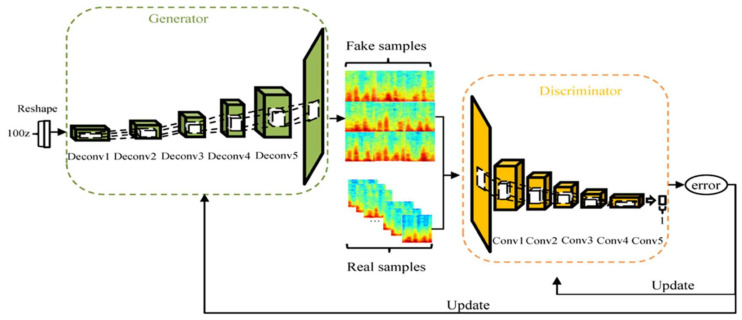
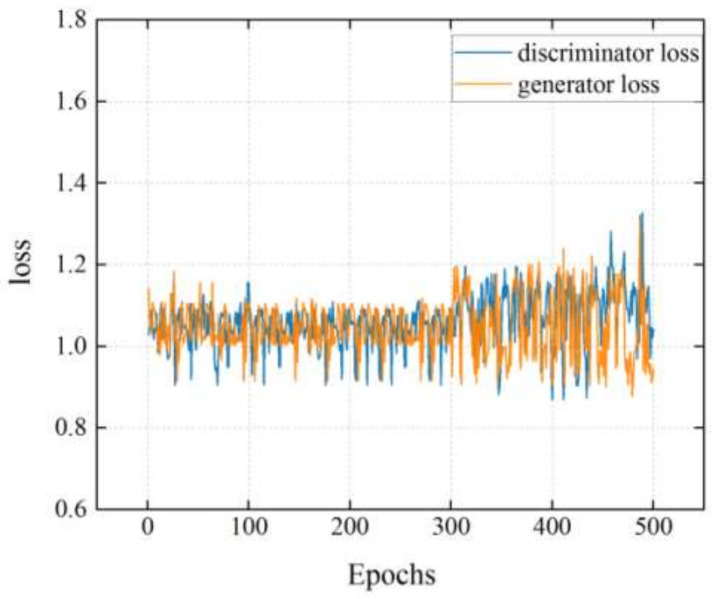
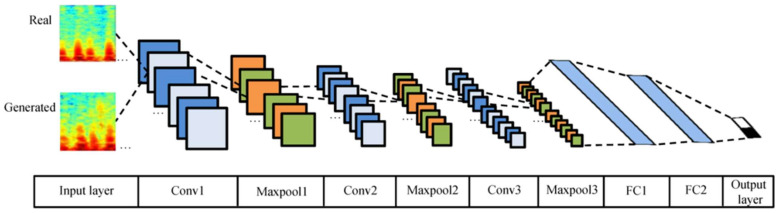
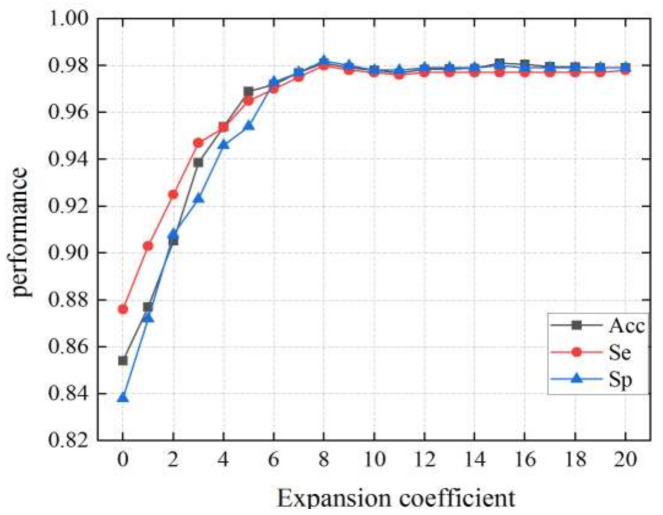
The aggravation of left ventricular diastolic dysfunction (LVDD) could lead to ventricular remodeling, wall stiffness, reduced compliance, and progression to heart failure with a preserved ejection fraction. A non-invasive method based on convolutional neural networks (CNN) and heart sounds (HS) is presented for the early diagnosis of LVDD in this paper. A deep convolutional generative adversarial networks (DCGAN) model-based data augmentation (DA) method was proposed to expand a HS database of LVDD for model training. Firstly, the preprocessing of HS signals was performed using the improved wavelet denoising method. Secondly, the logistic regression based hidden semi-Markov model was utilized to segment HS signals, which were subsequently converted into spectrograms for DA using the short-time Fourier transform (STFT). Finally, the proposed method was compared with VGG-16, VGG-19, ResNet-18, ResNet-50, DenseNet-121, and AlexNet in terms of performance for LVDD diagnosis. The result shows that the proposed method has a reasonable performance with an accuracy of 0.987, a sensitivity of 0.986, and a specificity of 0.988, which proves the effectiveness of HS analysis for the early diagnosis of LVDD and demonstrates that the DCGAN-based DA method could effectively augment HS data.
左心室舒张功能障碍(LVDD)的加重会导致心室重构、室壁僵硬度增加、顺应性降低,并进展为射血分数保留的心力衰竭。本文提出了一种基于卷积神经网络(CNN)和心音(HS)的非侵入性方法用于LVDD的早期诊断。提出了一种基于深度卷积生成对抗网络(DCGAN)模型的数据增强(DA)方法来扩充用于模型训练的LVDD心音数据库。首先,使用改进的小波去噪方法对心音信号进行预处理。其次,利用基于逻辑回归的隐半马尔可夫模型对心音信号进行分割,随后使用短时傅里叶变换(STFT)将其转换为频谱图用于数据增强。最后,将所提出的方法在LVDD诊断性能方面与VGG-16、VGG-19、ResNet-18、ResNet-50、DenseNet-121和AlexNet进行比较。结果表明,所提出的方法具有合理的性能,准确率为0.987,灵敏度为0.986,特异性为0.988,这证明了心音分析用于LVDD早期诊断的有效性,并表明基于DCGAN的数据增强方法可以有效地扩充心音数据。