Beijing International Cooperation Base for Science and Technology on NAFLD Diagnosis, Beijing Key Laboratory of Hepatitis C and Immunotherapy for Liver Diseases, Peking University Hepatology Institute, Peking University People's Hospital, Beijing 100044, China.
Beijing Tsinghua Changgung Hospital, Tsinghua University, Beijing 102218, China.
Cells. 2021 Nov 25;10(12):3300. doi: 10.3390/cells10123300.
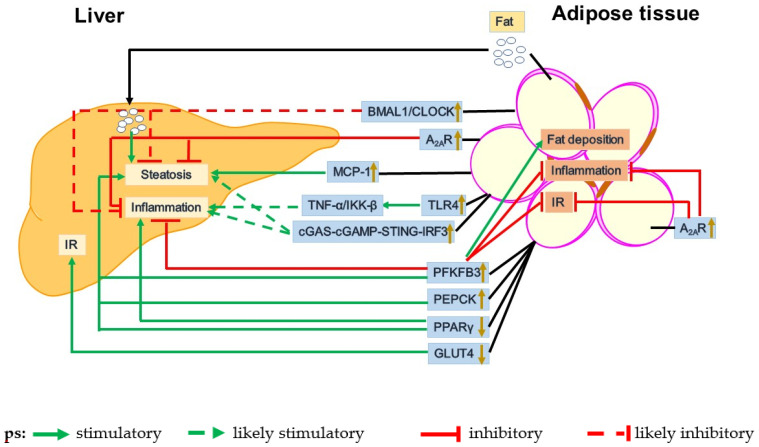
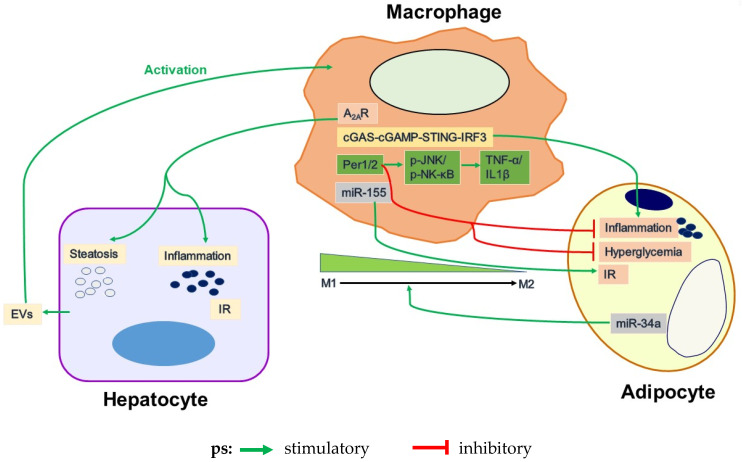
Obesity is a serious ongoing health problem that significantly increases the incidence of nonalcoholic fatty liver disease (NAFLD). During obesity, adipose tissue dysfunction is obvious and characterized by increased fat deposition (adiposity) and chronic low-grade inflammation. The latter has been implicated to critically promote the development and progression of NAFLD, whose advanced form non-alcoholic steatohepatitis (NASH) is considered one of the most common causes of terminal liver diseases. This review summarizes the current knowledge on obesity-related adipose dysfunction and its roles in the pathogenesis of hepatic steatosis and inflammation, as well as liver fibrosis. A better understanding of the crosstalk between adipose tissue and liver under obesity is essential for the development of new and improved preventive and/or therapeutic approaches for managing NAFLD.
肥胖是一个严重的持续存在的健康问题,显著增加了非酒精性脂肪性肝病(NAFLD)的发病率。在肥胖期间,脂肪组织功能障碍是明显的,其特征是脂肪沉积增加(肥胖)和慢性低度炎症。后者被认为严重促进了 NAFLD 的发展和进展,其晚期形式非酒精性脂肪性肝炎(NASH)被认为是终末期肝病的最常见原因之一。这篇综述总结了肥胖相关脂肪组织功能障碍及其在肝脂肪变性和炎症以及肝纤维化发病机制中的作用的最新知识。更好地了解肥胖状态下脂肪组织和肝脏之间的相互作用,对于开发新的和改进的预防和/或治疗方法来管理 NAFLD 至关重要。