Capozza Paolo, Pratelli Annamaria, Camero Michele, Lanave Gianvito, Greco Grazia, Pellegrini Francesco, Tempesta Maria
Department of Veterinary Medicine, University of Bari Aldo Moro, 70010 Valenzano, Italy.
Animals (Basel). 2021 Dec 14;11(12):3548. doi: 10.3390/ani11123548.
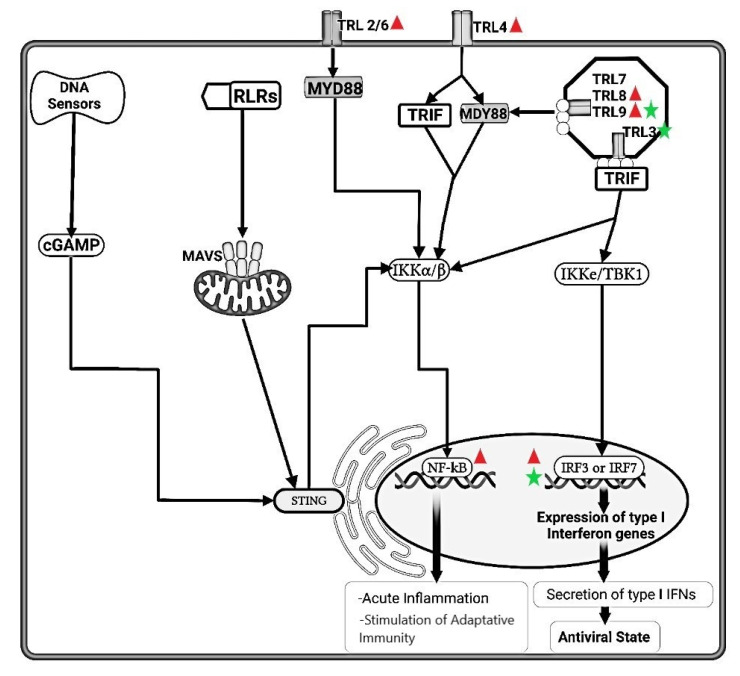
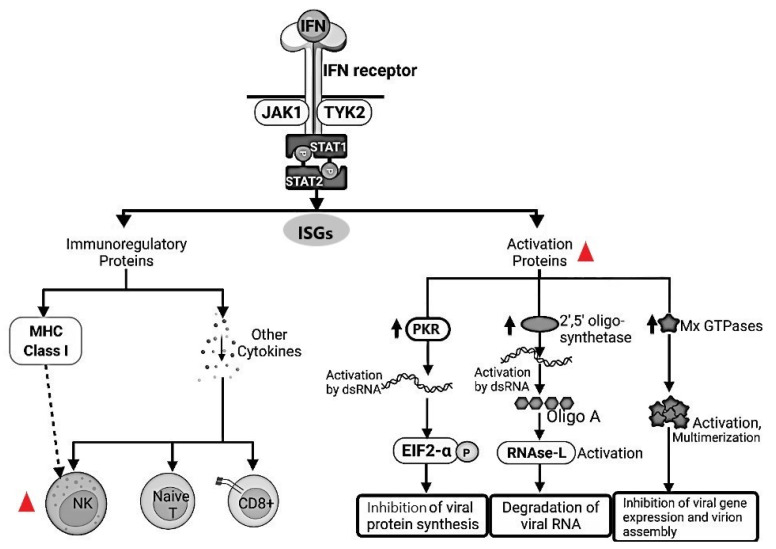
Over time, feline viruses have acquired elaborateopportunistic properties, making their infections particularly difficult to prevent and treat. Feline coronavirus (FCoV) and feline herpesvirus-1 (FeHV-1), due to the involvement of host genetic factors and immune mechanisms in the development of the disease and more severe forms, are important examples of immune evasion of the host's innate immune response by feline viruses.It is widely accepted that the innate immune system, which providesan initial universal form of the mammalian host protection from infectious diseases without pre-exposure, plays an essential role in determining the outcome of viral infection.The main components of this immune systembranchare represented by the internal sensors of the host cells that are able to perceive the presence of viral component, including nucleic acids, to start and trigger the production of first type interferon and to activate the cytotoxicity by Natural Killercells, often exploited by viruses for immune evasion.In this brief review, we providea general overview of the principal tools of innate immunity, focusing on the immunologic escape implemented byFCoVand FeHV-1 duringinfection.
随着时间的推移,猫科动物病毒获得了复杂的机会性特性,使其感染特别难以预防和治疗。猫冠状病毒(FCoV)和猫疱疹病毒-1(FeHV-1),由于宿主遗传因素和免疫机制参与疾病的发展以及更严重的形式,是猫科动物病毒逃避宿主先天免疫反应的重要例子。人们普遍认为,先天免疫系统在没有预先接触的情况下为哺乳动物宿主提供了一种初始的普遍形式的传染病保护,在决定病毒感染的结果方面起着至关重要的作用。这个免疫系统分支的主要组成部分由宿主细胞的内部传感器代表,这些传感器能够感知病毒成分(包括核酸)的存在,启动并触发I型干扰素的产生,并激活自然杀伤细胞的细胞毒性,而病毒经常利用这些来逃避免疫。在这篇简短的综述中,我们提供了先天免疫主要工具的概述,重点关注FCoV和FeHV-1在感染期间实施的免疫逃逸。