Department of Psychiatric Nursing and Human Sciences, Ribeirão Preto College of Nursing, University of São Paulo, Ribeirão Preto 14040-902, Brazil.
College of Nursing, Saskatoon Campus Health Sciences, University of Saskatchewan, Saskatoon, SK S7N 5E5, Canada.
Int J Environ Res Public Health. 2021 Dec 11;18(24):13094. doi: 10.3390/ijerph182413094.
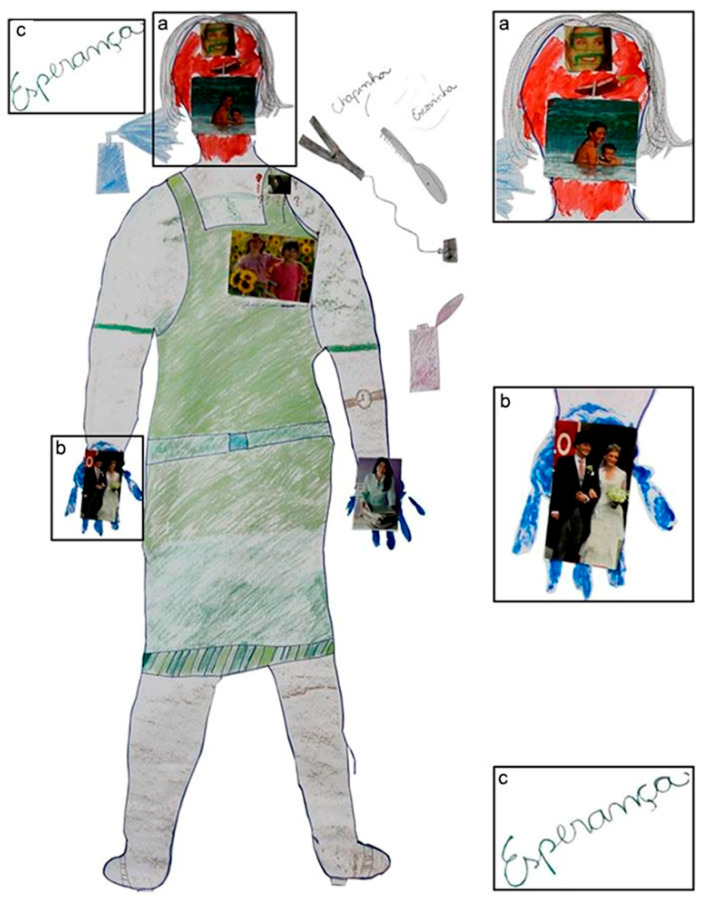
Vulnerable women are considered a priority in public policies and research agendas. It is necessary to understand better the specificities of their daily lives and the meanings they attribute to their experiences, as this undoubtedly contributes to more grounded and culturally appropriate practices. Additionally, innovative techniques in qualitative research are demanded in academia. This narrative research study was carried out with fourteen women from a Brazilian socioeconomically vulnerable neighborhood. We used the body-mapping technique to investigate the experiences of women with mental health disorders or psychosocial distress. The aim was to analyze the self-perception about daily stressors and discuss the feasibility of this technique to facilitate this group's storytelling. Data collection was performed through focus groups, guided by the body-mapping technique steps, and supplemented with individual interviews. Interpersonal conflicts and violence were the main stressors. These strongly impacted the well-being of these women and their children. Some important personal qualities and resilience were identified. Body-mapping played a fundamental role in facilitating storytelling. It amplified the linguistic possibilities for participants to express their feelings and promoted reflections about the present, past, and glimpses into the future.
弱势妇女是公共政策和研究议程的重点关注对象。有必要更好地了解她们日常生活的特殊性和她们对自身经历的理解,因为这无疑有助于更深入地了解和采取更具文化适应性的实践措施。此外,学术界也需要创新的定性研究方法。本叙事研究对来自巴西一个社会经济弱势社区的 14 名妇女进行了研究。我们使用身体绘图技术来调查患有精神健康障碍或心理困扰的妇女的经历。目的是分析她们对日常压力源的自我认知,并讨论该技术对促进该群体讲述自身故事的可行性。通过焦点小组收集数据,以身体绘图技术的步骤为指导,并辅以个人访谈。人际冲突和暴力是主要的压力源。这些压力源对这些妇女及其子女的幸福感产生了重大影响。确定了一些重要的个人品质和适应力。身体绘图在促进讲述故事方面发挥了重要作用。它扩大了参与者表达感受的语言可能性,并促进了对现在、过去和未来的思考。