The Children's Hospital of Zhejiang University School of Medicine and National Clinical Research Center for Child Health, Hangzhou, China.
Hangzhou Medical College of Bioengineering, Hangzhou, China.
Front Immunol. 2021 Dec 7;12:791753. doi: 10.3389/fimmu.2021.791753. eCollection 2021.
Infection of SARS-CoV-2 may cause acute respiratory syndrome. It has been reported that SARS-CoV-2 nucleocapsid protein (N-protein) presents early in body fluids during infection. The direct involvement of N-protein in lung injury is poorly understood.
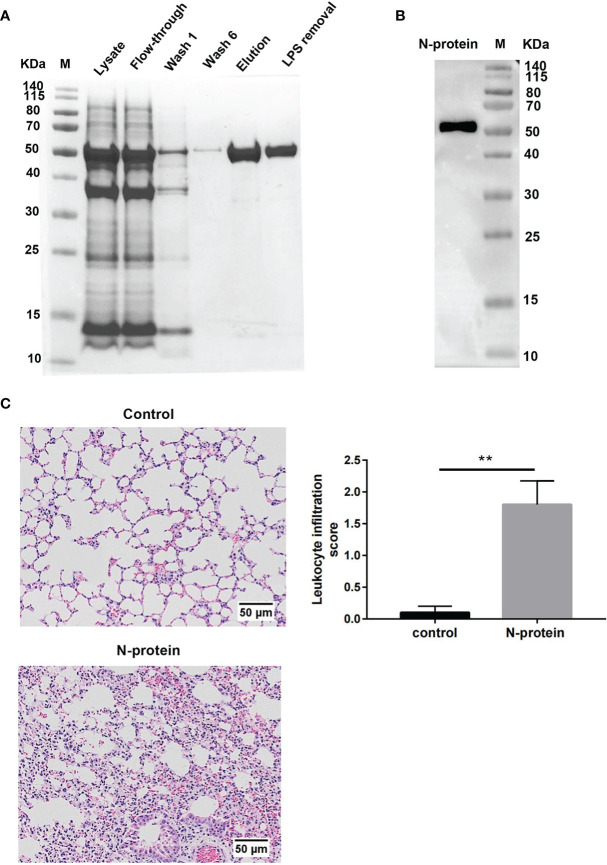
Recombinant N-protein was pretreated with polymyxin B, a lipopolysaccharide (LPS)-neutralizing agent. C57BL/6, C3H/HeJ (resistant to LPS), and C3H/HeN (control for C3H/HeJ) mice were exposed to N-protein intratracheal administration to examine acute lung injury. , bone marrow-derived macrophages (BMDMs) were cultured with N-protein to study phosphorylation of nuclear factor kappa B (NF-ĸB) p65, macrophage polarization, and expression of proinflammatory cytokines.
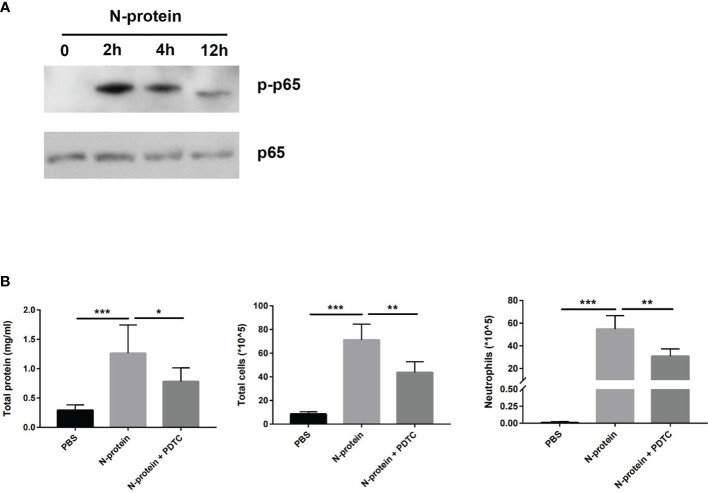
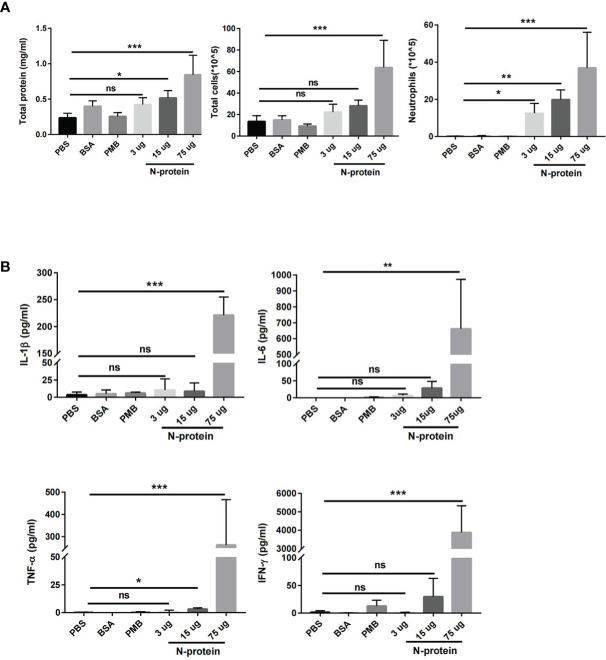
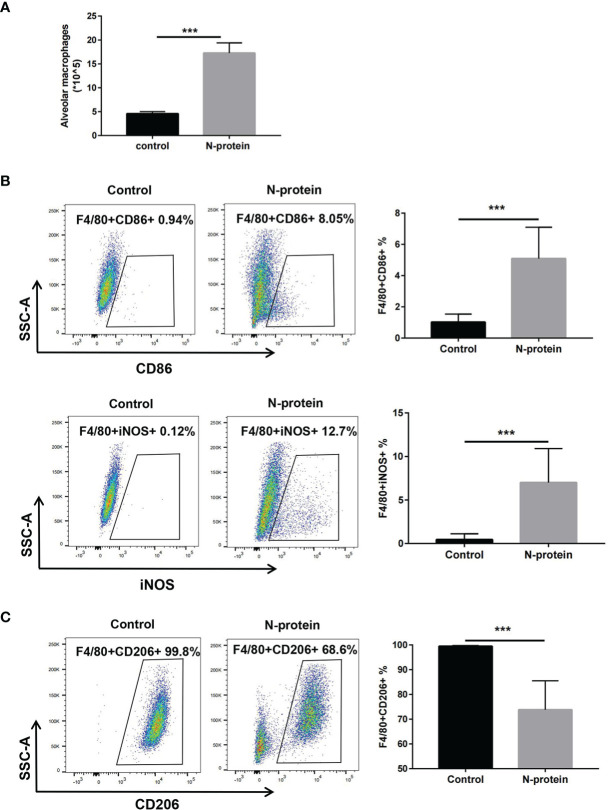
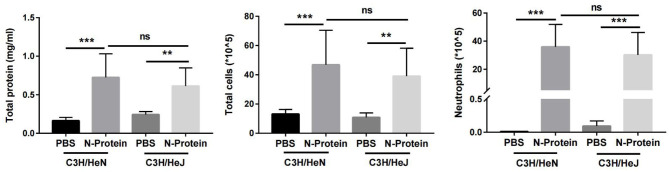
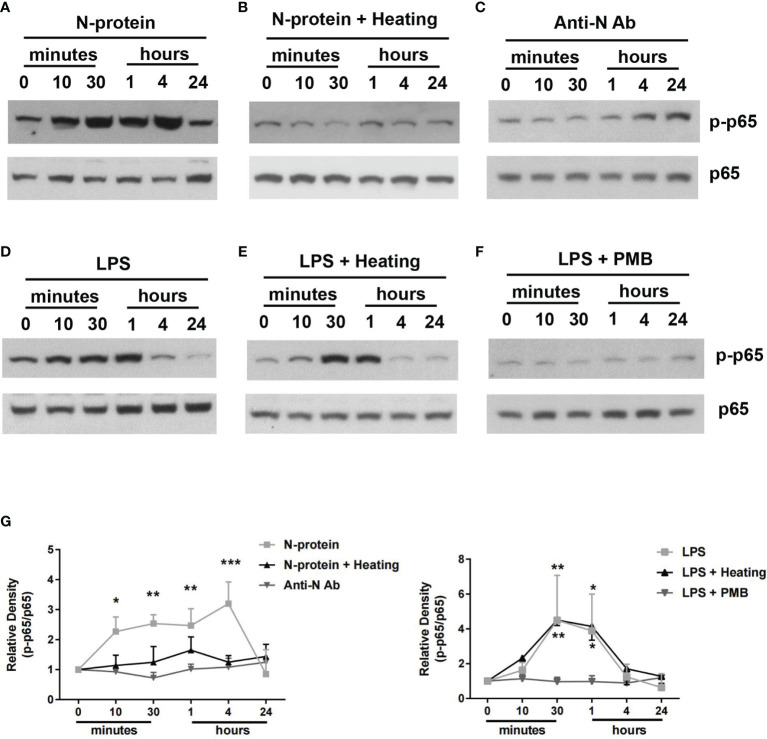
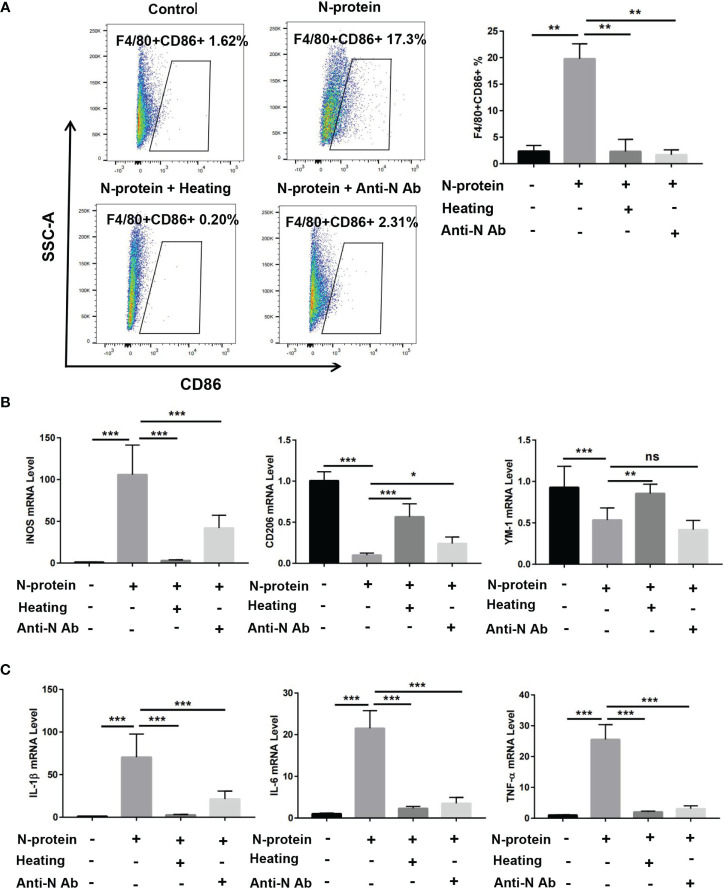
N-protein produced acute lung injury in C57BL/6 mice, with elevated protein permeability, total cell count, neutrophil infiltration, and proinflammatory cytokines in the bronchioalveolar lavage. N-protein also induced lung injury in both C3H/HeJ and C3H/HeN mice, indicating that the effect could not be attributed to the LPS contamination. N-protein triggered phosphorylation of NF-ĸB p65 , which was abolished by both N-protein denaturation and treatment with an antibody for N-protein, demonstrating that the effect is N-protein specific. In addition, N-protein promoted M1 macrophage polarization and the expression of proinflammatory cytokines, which was also blocked by N-protein denaturation and antibody for N-protein. Furthermore, N-protein induced NF-ĸB p65 phosphorylation in the lung, while pyrrolidine dithiocarbamate, an NF-ĸB inhibitor, alleviated the effect of N-protein on acute lung injury.
SARS-CoV-2 N-protein itself is toxic and induces acute lung injury in mice. Both N-protein and NF-ĸB pathway may be therapeutic targets for treating multi-organ injuries in Coronavirus disease 2019 (COVID-19).
感染 SARS-CoV-2 可能会导致急性呼吸综合征。据报道,SARS-CoV-2 核衣壳蛋白(N 蛋白)在感染期间早期存在于体液中。N 蛋白直接参与肺损伤的机制尚不清楚。
用多黏菌素 B 预处理重组 N 蛋白,多黏菌素 B 是一种脂多糖(LPS)中和剂。C57BL/6、C3H/HeJ(对 LPS 有抗性)和 C3H/HeN(C3H/HeJ 的对照)小鼠通过气管内滴注 N 蛋白来检测急性肺损伤。用 N 蛋白培养骨髓来源的巨噬细胞(BMDMs),以研究核因子 kappa B(NF-ĸB)p65 的磷酸化、巨噬细胞极化和促炎细胞因子的表达。
N 蛋白在 C57BL/6 小鼠中引起急性肺损伤,表现为蛋白通透性增加、总细胞计数增加、中性粒细胞浸润和支气管肺泡灌洗液中促炎细胞因子增多。N 蛋白也能诱导 C3H/HeJ 和 C3H/HeN 小鼠的肺损伤,表明这种效应不能归因于 LPS 污染。N 蛋白触发 NF-ĸB p65 的磷酸化,该磷酸化被 N 蛋白变性和 N 蛋白抗体处理所消除,表明该效应是 N 蛋白特异性的。此外,N 蛋白促进 M1 巨噬细胞极化和促炎细胞因子的表达,N 蛋白变性和 N 蛋白抗体也能阻断这一作用。此外,N 蛋白诱导肺中 NF-ĸB p65 的磷酸化,而 NF-ĸB 抑制剂吡咯烷二硫代氨基甲酸盐可减轻 N 蛋白对急性肺损伤的作用。
SARS-CoV-2 N 蛋白本身具有毒性,可引起小鼠急性肺损伤。N 蛋白和 NF-ĸB 通路可能是治疗 2019 年冠状病毒病(COVID-19)多器官损伤的治疗靶点。