Poultry Department, Faculty of Agriculture, Zagazig University, Zagazig, 44511, Egypt.
Department of Agricultural Microbiology, Faculty of Agriculture, Zagazig University, Zagazig, 44511, Egypt.
Poult Sci. 2022 Feb;101(2):101590. doi: 10.1016/j.psj.2021.101590. Epub 2021 Nov 9.
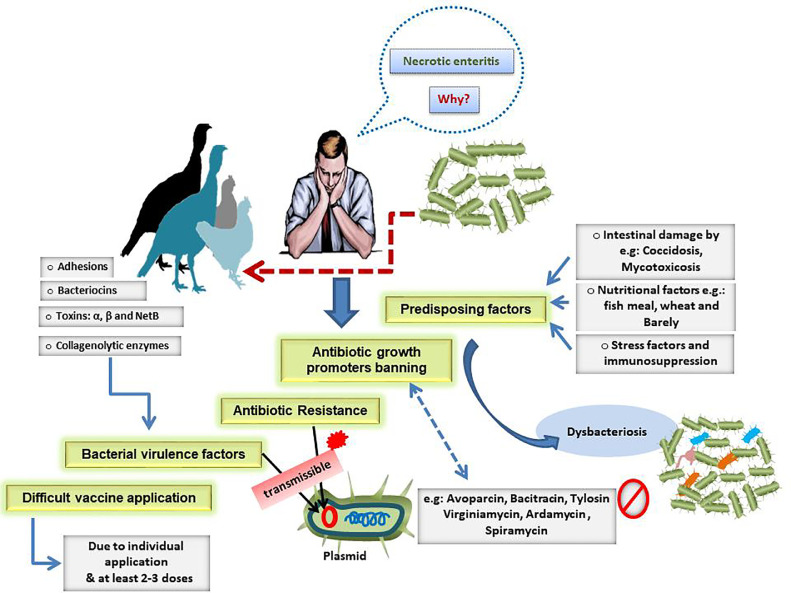
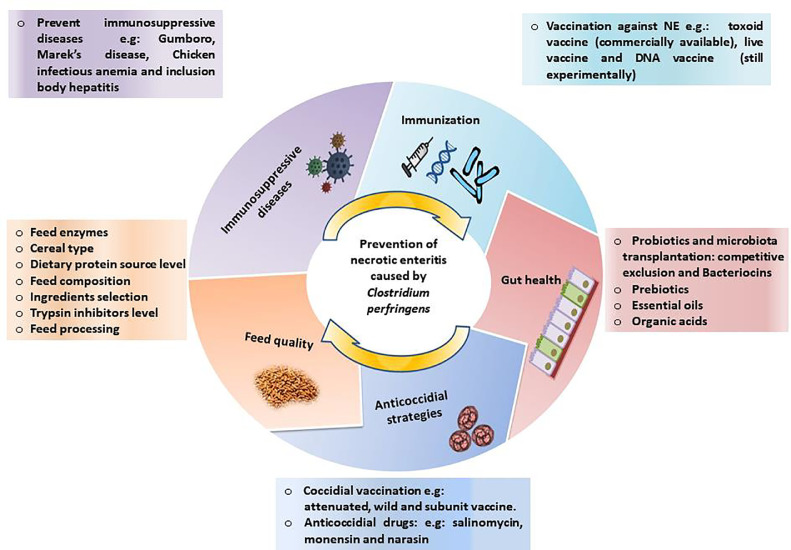
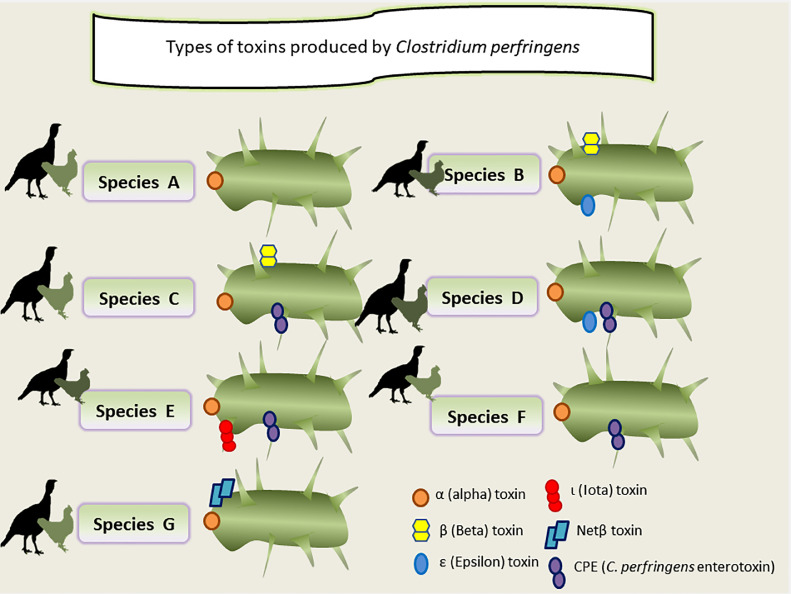
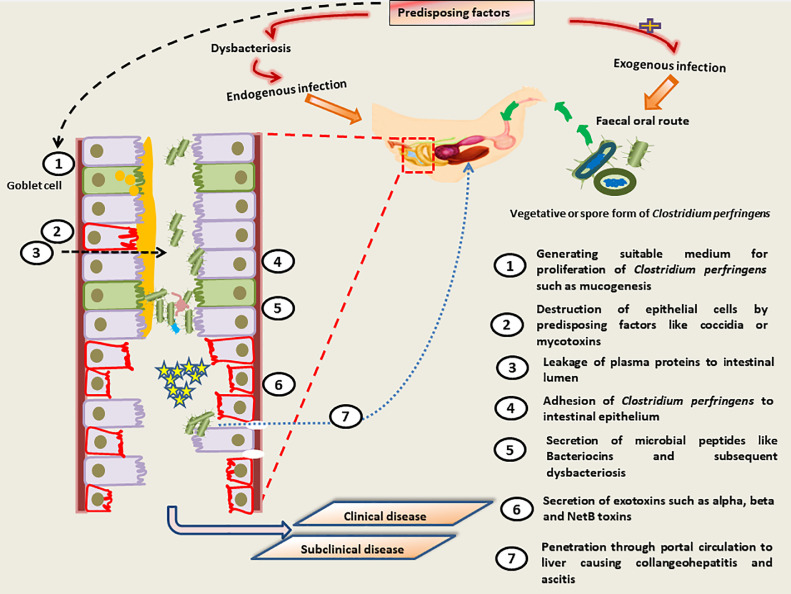
In line with the substantial increase in the broiler industry worldwide, Clostridium perfringens-induced necrotic enteritis (NE) became a continuous challenge leading to high economic losses, especially after banning antimicrobial growth promoters in feeds by many countries. The disease is distributed worldwide in either clinical or subclinical form, causing a reduction in body weight or body weight gain and the feed conversion ratio, impairing the European Broiler Index or European Production Efficiency Factor. There are several predisposing factors in the development of NE. Clinical signs varied from inapparent signs in case of subclinical infection (clostridiosis) to obvious enteric signs (morbidity), followed by an increase in mortality level (clostridiosis or clinical infection). Clinical and laboratory diagnoses are based on case history, clinical signs, gross and histopathological lesions, pathogenic agent identification, serological testing, and molecular identification. Drinking water treatment is the most common route for the administration of several antibiotics, such as penicillin, bacitracin, and lincomycin. Strict hygienic management practices in the farm, careful selection of feed ingredients for ration formulation, and use of alternative antibiotic feed additives are all important in maintaining broiler efficiency and help increase the profitability of broiler production. The current review highlights NE caused by C. perfringens and explains the advances in the understanding of C. perfringens virulence factors involved in the pathogenesis of NE with special emphasis on the use of available antibiotic alternatives such as herbal extracts and essential oils as well as vaccines for the control and prevention of NE in broiler chickens.
随着全球肉鸡产业的大幅增长,产气荚膜梭菌引起的坏死性肠炎(NE)成为持续的挑战,导致了高经济损失,尤其是在许多国家禁止在饲料中使用抗菌生长促进剂之后。该疾病在世界范围内以临床或亚临床形式分布,导致体重减轻或体重增加和饲料转化率降低,损害欧洲肉鸡指数或欧洲生产效率系数。NE 的发生有几个诱发因素。临床症状从亚临床感染(梭菌病)的无症状迹象到明显的肠道症状(发病),然后死亡率水平升高(梭菌病或临床感染)。临床和实验室诊断基于病史、临床症状、大体和组织病理学病变、病原体鉴定、血清学检测和分子鉴定。饮水处理是几种抗生素(如青霉素、杆菌肽和林可霉素)给药的最常见途径。农场严格的卫生管理措施、精心选择饲料成分进行配方、以及使用替代抗生素饲料添加剂,对于维持肉鸡生产效率和提高肉鸡生产盈利能力都非常重要。本综述重点介绍了产气荚膜梭菌引起的 NE,并解释了对产气荚膜梭菌毒力因子在 NE 发病机制中作用的理解进展,特别强调了可用抗生素替代品(如草药提取物和精油)以及疫苗的使用,以控制和预防肉鸡的 NE。