Schreiner Tamara, Sauter Dorena, Friz Maren, Heil Julia, Morlock Gertrud Elisabeth
Institute of Nutritional Science, Chair of Food Science, and TransMIT Center for Effect-Directed Analysis, Justus Liebig University Giessen, Giessen, Germany.
Front Pharmacol. 2021 Dec 9;12:755941. doi: 10.3389/fphar.2021.755941. eCollection 2021.
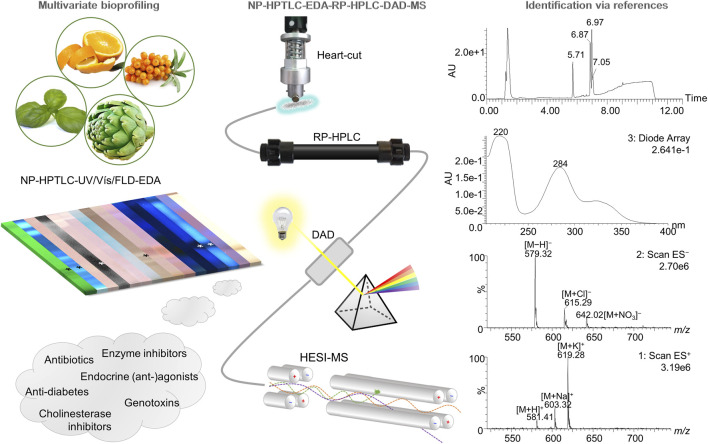
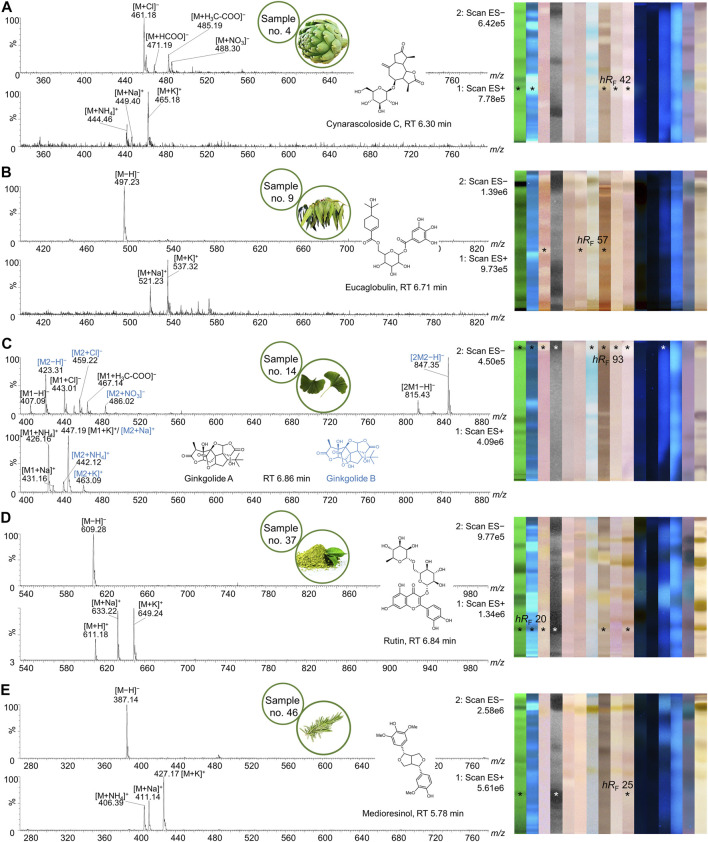
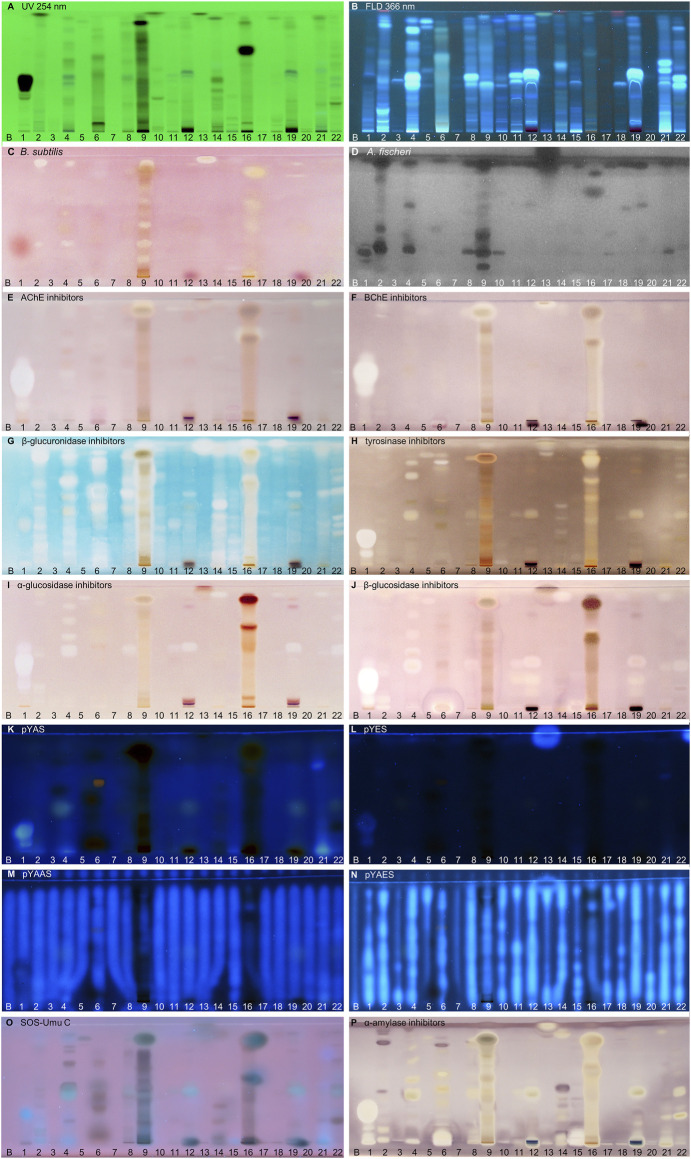
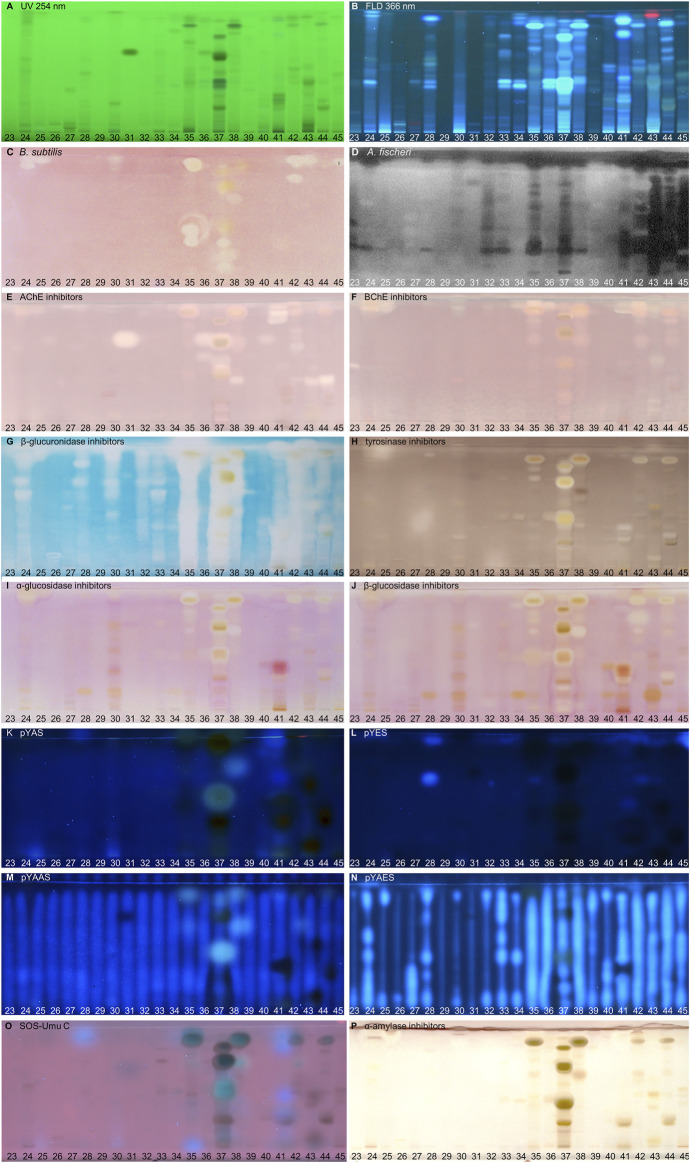
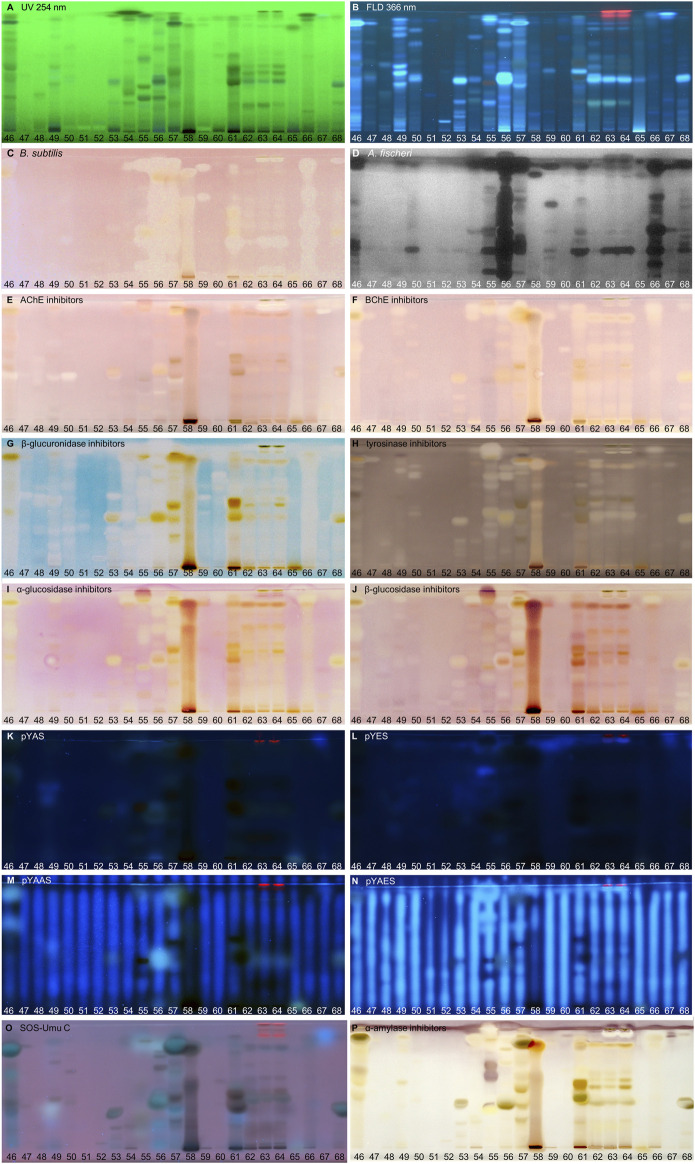
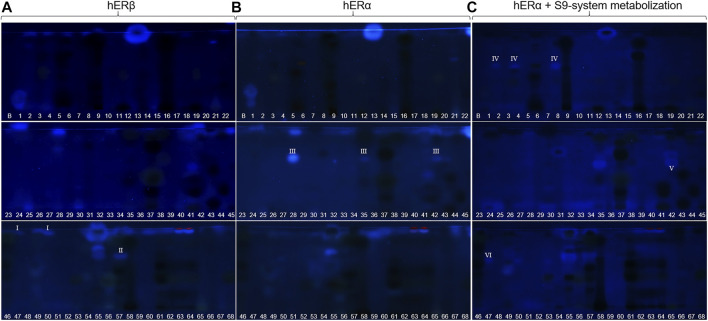
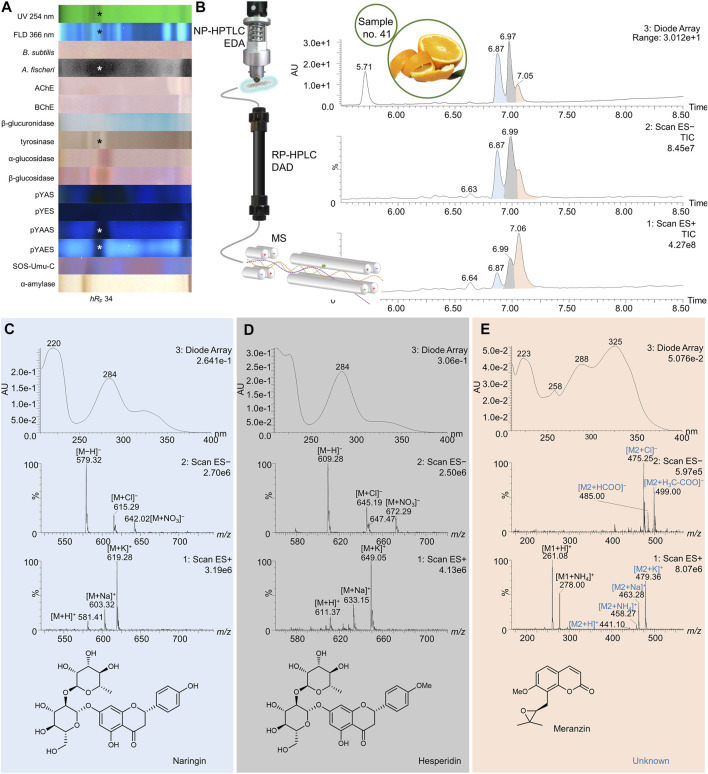
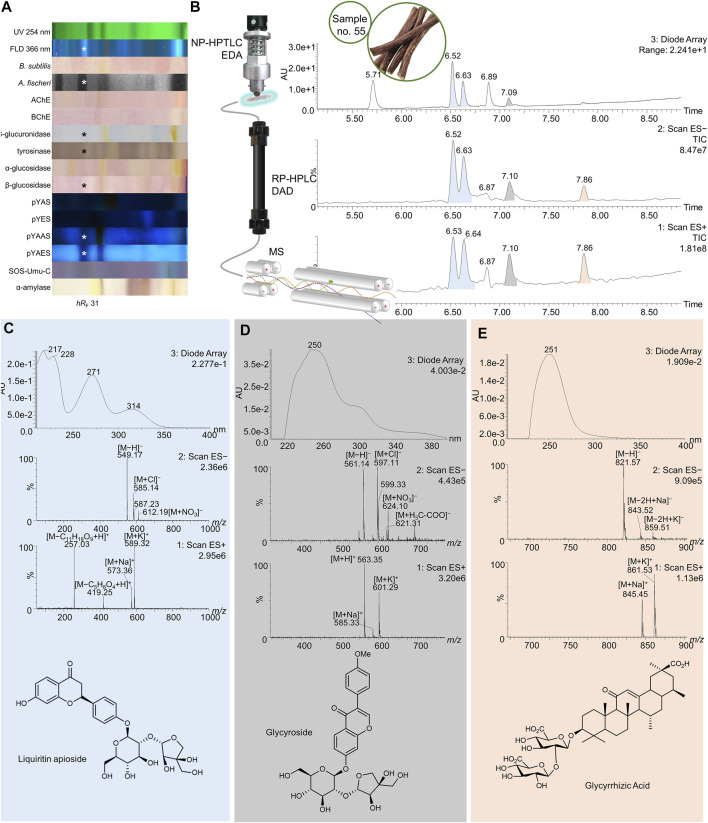
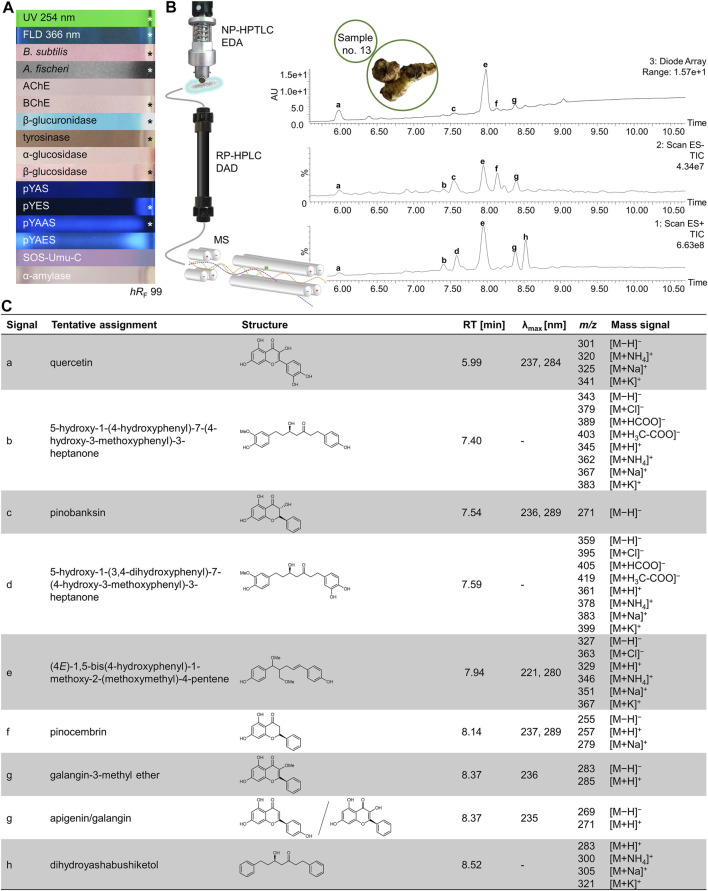
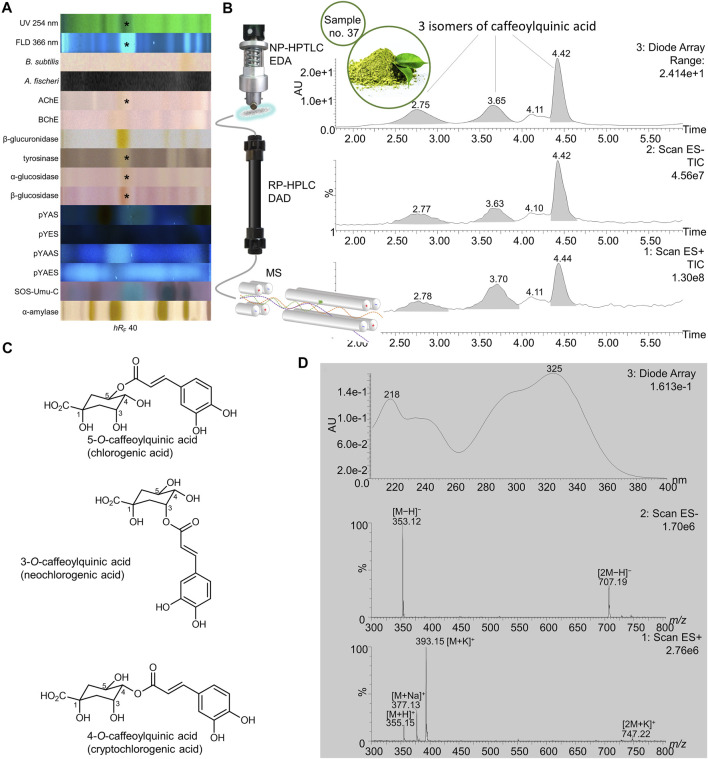
The beneficial effects of plant-rich diets and traditional medicines are increasingly recognized in the treatment of civilization diseases due to the abundance and diversity of bioactive substances therein. However, the important active portion of natural food or plant-based medicine is presently not under control. Hence, a paradigm shift from quality control based on marker compounds to effect-directed profiling is postulated. We investigated 68 powdered plant extracts (botanicals) which are added to food products in food industry. Among them are many plants that are used as traditional medicines, herbs and spices. A generic strategy was developed to evaluate the bioactivity profile of each botanical as completely as possible and to straightforwardly assign the most potent bioactive compounds. It is an 8-dimensional hyphenation of normal-phase high-performance thin-layer chromatography with multi-imaging by ultraviolet, visible and fluorescence light detection as well as effect-directed assay and heart-cut of the bioactive zone to orthogonal reversed-phase high-performance liquid chromato-graphy-photodiode array detection-heated electrospray ionization mass spectrometry. In the non-target, effect-directed screening via 16 different on-surface assays, we tentatively assigned more than 60 important bioactive compounds in the studied botanicals. These were antibacterials, estrogens, antiestrogens, androgens, and antiandrogens, as well as acetylcholinesterase, butyrylcholinesterase, α-amylase, α-glucosidase, β-glucosidase, β-glucuronidase, and tyrosinase inhibitors, which were on-surface heart-cut eluted from the bioautogram or enzyme inhibition autogram to the next dimension for further targeted characterization. This biological-physicochemical hyphenation is able to detect and control active mechanisms of traditional medicines or botanicals as well as the essentials of plant-based food. The array of 1,292 profiles (68 samples × 19 detections) showed the versatile bioactivity potential of natural food. It reveals how efficiently and powerful our natural food contributes to our homeostasis.
富含植物的饮食和传统药物因其所含生物活性物质的丰富性和多样性,在文明病治疗中的有益作用日益得到认可。然而,目前天然食品或植物性药物的重要活性部分并未得到管控。因此,有人提出从基于标记化合物的质量控制向效应导向分析的范式转变。我们研究了食品工业中添加到食品中的68种植物粉末提取物(植物药)。其中有许多植物被用作传统药物、草药和香料。我们制定了一种通用策略,以尽可能全面地评估每种植物药的生物活性谱,并直接确定最有效的生物活性化合物。它是正相高效薄层色谱与多成像的八维联用,通过紫外、可见光和荧光检测以及效应导向分析,并将生物活性区进行中心切割,连接到正交反相高效液相色谱 - 光电二极管阵列检测 - 加热电喷雾电离质谱。在通过16种不同的表面分析进行的非靶向效应导向筛选中,我们初步确定了所研究植物药中的60多种重要生物活性化合物。这些化合物包括抗菌剂、雌激素、抗雌激素、雄激素、抗雄激素,以及乙酰胆碱酯酶、丁酰胆碱酯酶、α -淀粉酶、α -葡萄糖苷酶、β -葡萄糖苷酶、β -葡萄糖醛酸酶和酪氨酸酶抑制剂,它们从生物自显影图或酶抑制自显影图上进行表面中心切割洗脱,进入下一维度进行进一步的靶向表征。这种生物 - 物理化学联用能够检测和控制传统药物或植物药的活性机制以及植物性食品的关键成分。1292个谱图(68个样品×19次检测)的阵列展示了天然食品多样的生物活性潜力。它揭示了我们的天然食品对维持体内平衡的贡献是多么高效和强大。