Ramirez Maria F, Cata Juan P
Department of Anesthesiology and Perioperative Medicine, The University of Texas MD Anderson Cancer Center, Houston, TX, United States.
Anesthesiology and Surgical Oncology Research Group, Houston, TX, United States.
Front Oncol. 2021 Dec 8;11:788918. doi: 10.3389/fonc.2021.788918. eCollection 2021.
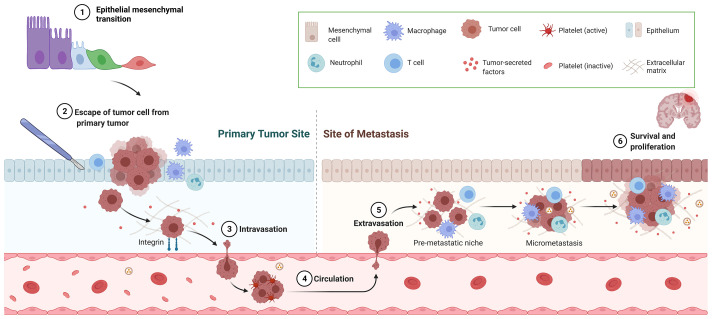
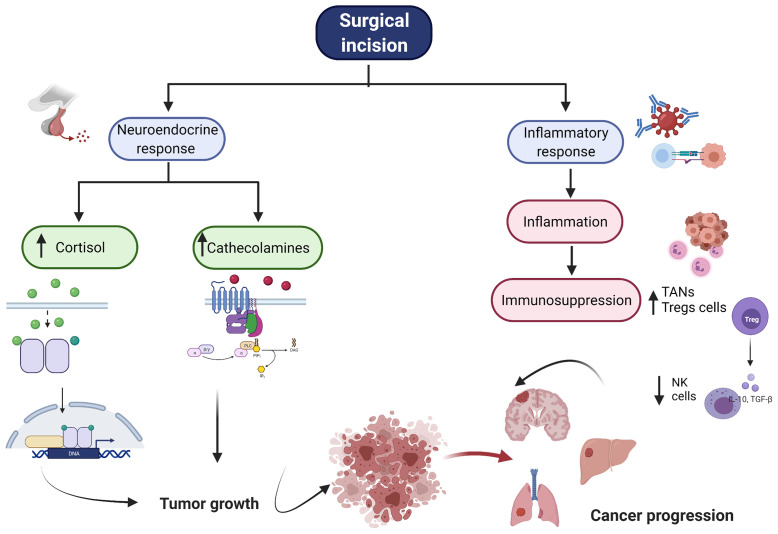
Despite advances in cancer treatments, surgery remains one of the most important therapies for solid tumors. Unfortunately, surgery promotes angiogenesis, shedding of cancer cells into the circulation and suppresses anti-tumor immunity. Together this increases the risk of tumor metastasis, accelerated growth of pre-existing micro-metastasis and cancer recurrence. It was theorized that regional anesthesia could influence long-term outcomes after cancer surgery, however new clinical evidence demonstrates that the anesthesia technique has little influence in oncologic outcomes. Several randomized controlled trials are in progress and may provide a better understanding on how volatile and intravenous hypnotics impact cancer progression. The purpose of this review is to summarize the effect of the anesthesia techniques on the immune system and tumor microenvironment (TME) as well as to summarize the clinical evidence of anesthesia techniques on cancer outcomes.
尽管癌症治疗取得了进展,但手术仍然是实体瘤最重要的治疗方法之一。不幸的是,手术会促进血管生成、癌细胞进入循环系统,并抑制抗肿瘤免疫。这些因素共同增加了肿瘤转移、已有微转移加速生长和癌症复发的风险。理论上认为区域麻醉可能会影响癌症手术后的长期预后,然而新的临床证据表明麻醉技术对肿瘤学预后影响很小。几项随机对照试验正在进行中,可能会让我们更好地了解挥发性和静脉催眠药如何影响癌症进展。本综述的目的是总结麻醉技术对免疫系统和肿瘤微环境(TME)的影响,以及总结麻醉技术对癌症预后的临床证据。