Rata Delia Mihaela, Cadinoiu Anca Niculina, Popa Marcel, Atanase Leonard Ionut, Daraba Oana Maria, Popescu Irina, Romila Laura Ecaterina, Ichim Daniela Luminita
Faculty of Medical Dentistry, Apollonia University of Iasi, 700511 Iasi, Romania.
Petru Poni Institute of Macromolecular Chemistry, Aleea Grigore Ghica Voda 41A, 700487 Iasi, Romania.
Pharmaceutics. 2021 Dec 4;13(12):2079. doi: 10.3390/pharmaceutics13122079.
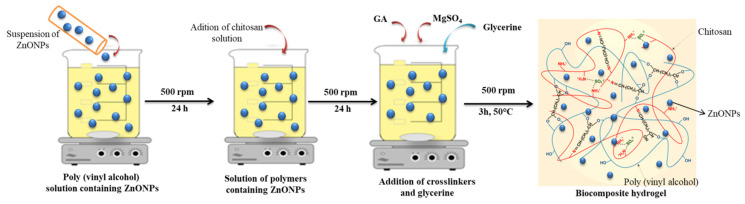
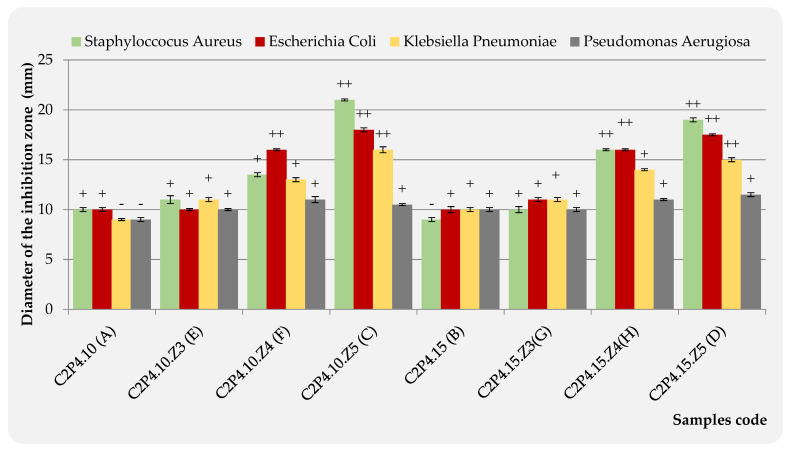
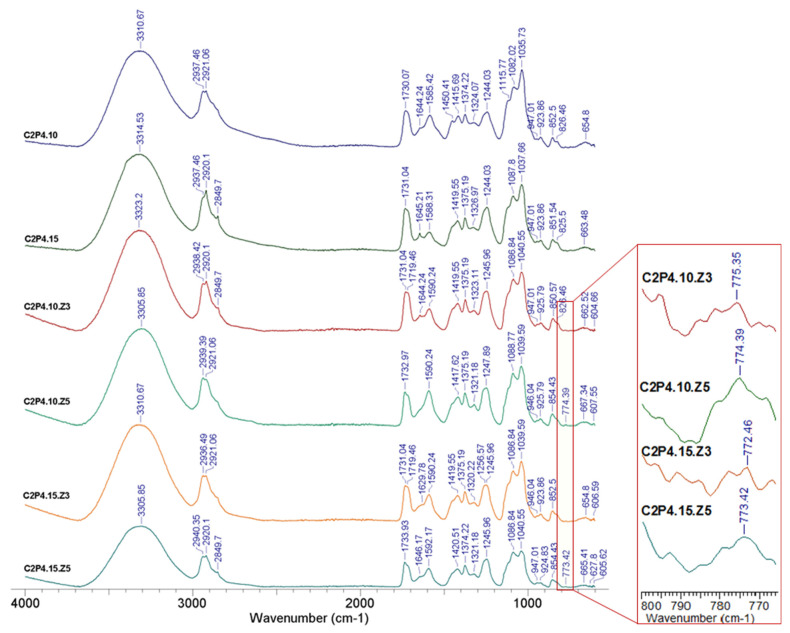
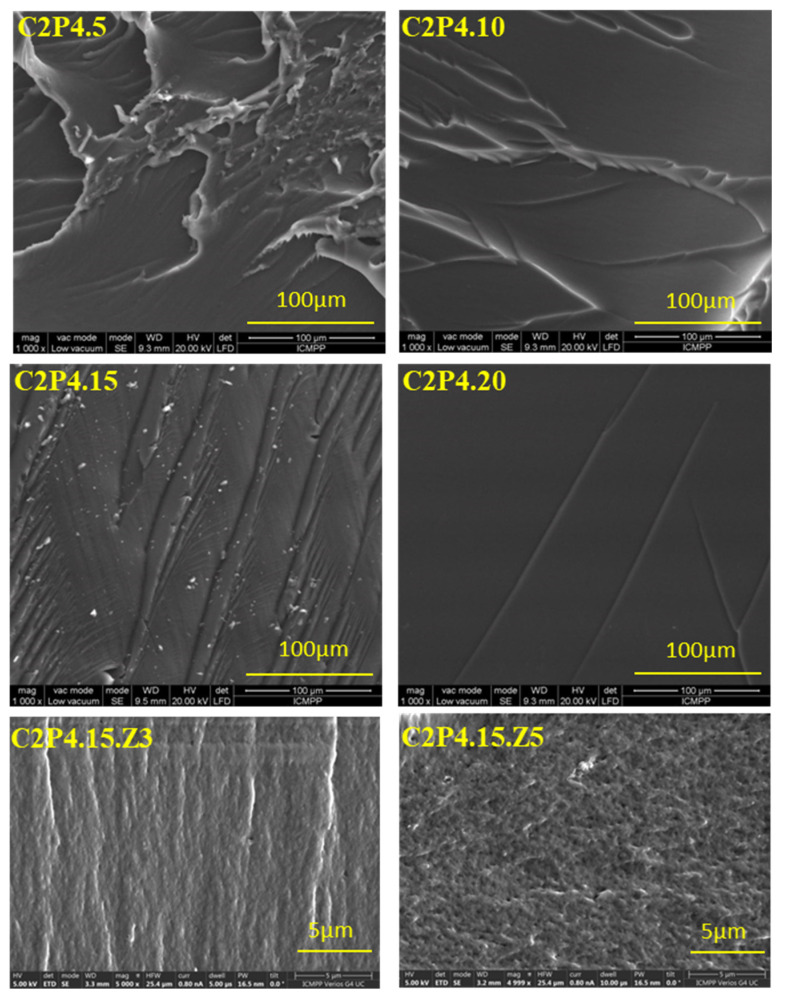
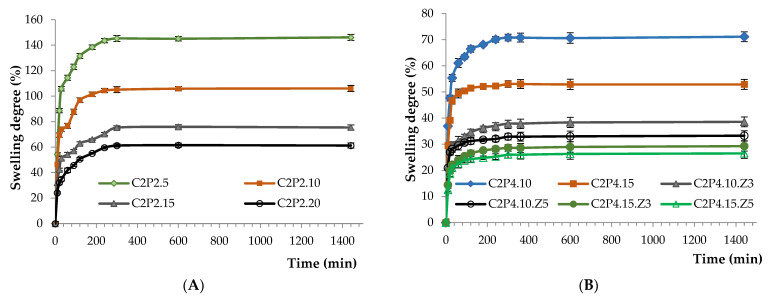
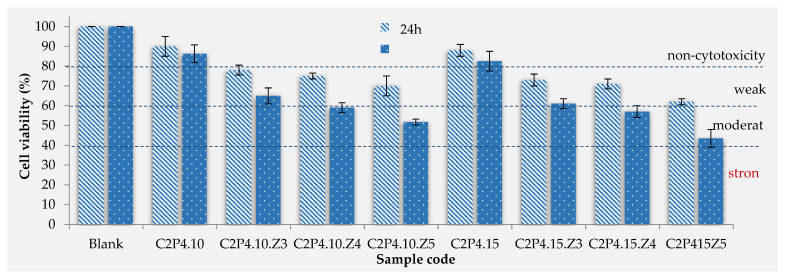
Hydrogels based on natural and synthetic polymers and inorganic nanoparticles proved to be a viable strategy in the fight against some Gram-positive and Gram-negative bacteria. Additionally, numerous studies have demonstrated the advantages of using ZnO nanoparticles in medicine due to their high antibacterial efficacy and relatively low cost. Consequently, the purpose of our study was to incorporate ZnO nanoparticles into chitosan/poly (vinyl alcohol)-based hydrogels in order to obtain a biocomposite with antimicrobial properties. These biocomposite hydrogels, prepared by a double crosslinking (covalent and ionic) were characterized from a structural, morphological, swelling degree, and mechanical point of view. FTIR spectroscopy demonstrated both the apparition of new imine and acetal bonds due to covalent crosslinking and the presence of the sulfate group following ionic crosslinking. The morphology, swelling degree, and mechanical properties of the obtained hydrogels were influenced by both the degree of covalent crosslinking and the amount of ZnO nanoparticles incorporated. In vitro cytotoxicity assessment showed that hydrogels without ZnONPs are non-cytotoxic while the biocomposite hydrogels are weak (with 3% ZnONPs) or moderately (with 4 and 5% ZnONPs) cytotoxic. Compared to nanoparticle-free hydrogels, the biocomposite hydrogels show significant antimicrobial activity against , , and .
基于天然和合成聚合物以及无机纳米粒子的水凝胶被证明是对抗某些革兰氏阳性和革兰氏阴性细菌的一种可行策略。此外,大量研究表明,由于氧化锌纳米粒子具有高抗菌功效且成本相对较低,因此在医学中使用具有诸多优势。因此,我们研究的目的是将氧化锌纳米粒子掺入壳聚糖/聚乙烯醇基水凝胶中,以获得具有抗菌性能的生物复合材料。这些通过双重交联(共价和离子交联)制备的生物复合水凝胶,从结构、形态、溶胀度和力学角度进行了表征。傅里叶变换红外光谱表明,由于共价交联出现了新的亚胺键和缩醛键,并且在离子交联后存在硫酸根。所得水凝胶的形态、溶胀度和力学性能受共价交联程度和掺入的氧化锌纳米粒子量的影响。体外细胞毒性评估表明,不含氧化锌纳米粒子的水凝胶无细胞毒性,而生物复合水凝胶具有较弱的细胞毒性(含3%氧化锌纳米粒子)或中等程度的细胞毒性(含4%和5%氧化锌纳米粒子)。与不含纳米粒子的水凝胶相比,生物复合水凝胶对[此处原文缺失具体细菌名称]表现出显著的抗菌活性。