Department of Food Science, Biotechnical Faculty, University of Ljubljana, SI-1000 Ljubljana, Slovenia.
Nutrients. 2021 Dec 18;13(12):4545. doi: 10.3390/nu13124545.
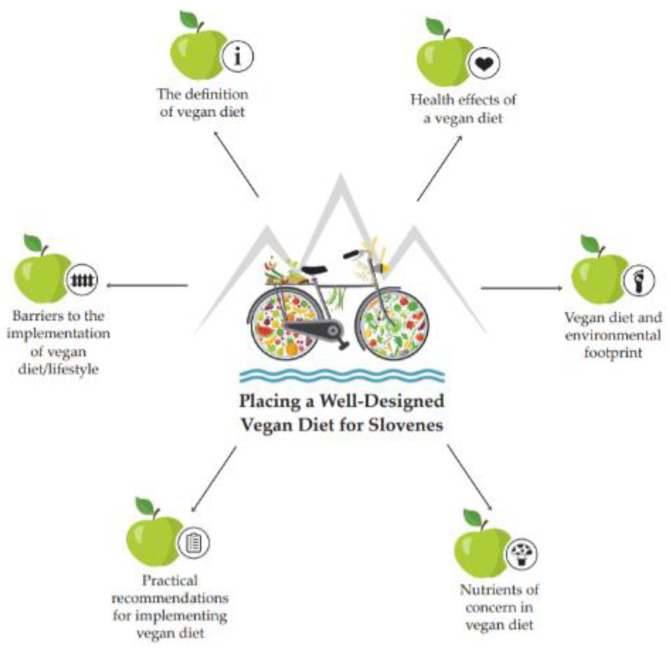
Interest in vegan diets has increased globally as well as in Slovenia. The quantity of new scientific data requires a thorough synthesis of new findings and considerations about the current reserved position of the vegan diet in Slovenia. There is frequently confusion about the benefits of vegetarian diets that are often uncritically passed on to vegan diets and vice versa. This narrative review aims to serve as a framework for a well-designed vegan diet. We present advice on how to maximize the benefits and minimize the risks associated with the vegan diet and lifestyle. We highlight the proper terminology, present the health effects of a vegan diet and emphasize the nutrients of concern. In addition, we provide guidance for implementing a well-designed vegan diet in daily life. We conducted a PubMed search, up to November 2021, for studies on key nutrients (proteins, vitamin B, vitamin D, omega-3 long chain polyunsaturated fatty acids (eicosapentaenoic acid (EPA) and docosahexaenoic acid (DHA)), calcium, iron, zinc, iodine and selenium) in vegan diets. Given the limited amount of scientific evidence, we focus primarily on the general adult population. A well-designed vegan diet that includes a wide variety of plant foods and supplementation of vitamin B, vitamin D in the winter months and potentially EPA/DHA is safe and nutritionally adequate. It has the potential to maintain and/or to improve health. For physically active adult populations, athletes or individuals with fast-paced lifestyles, there is room for further appropriate supplementation of a conventional vegan diet according to individuals' health status, needs and goals without compromising their health. A healthy vegan lifestyle, as included in government guidelines for a healthy lifestyle, includes regular physical activity, avoidance of smoking, restriction of alcohol and appropriate sleep hygiene.
随着素食主义在全球范围内的兴起,包括斯洛文尼亚在内,人们对素食的兴趣也日益浓厚。新的科学数据数量庞大,需要对新发现进行彻底的综合分析,并对斯洛文尼亚素食主义的现有保留立场进行审议。人们经常对素食的益处感到困惑,这些益处往往未经批判性地传递给素食主义者,反之亦然。本叙述性综述旨在为设计良好的素食提供一个框架。我们提出了如何最大限度地提高素食的益处并降低与之相关的风险的建议。我们强调了正确的术语,介绍了素食对健康的影响,并强调了需要关注的营养素。此外,我们还为在日常生活中实施精心设计的素食提供了指导。我们在 PubMed 上进行了搜索,截至 2021 年 11 月,检索了关于关键营养素(蛋白质、维生素 B、维生素 D、ω-3 长链多不饱和脂肪酸(二十碳五烯酸(EPA)和二十二碳六烯酸(DHA))、钙、铁、锌、碘和硒)在素食中的研究。鉴于科学证据有限,我们主要关注一般成年人群体。精心设计的素食包括各种植物性食物,并在冬季补充维生素 B、维生素 D,以及潜在的 EPA/DHA,是安全且营养充足的。它有可能维持和/或改善健康。对于活跃的成年人群体、运动员或生活节奏快的个体,根据个人的健康状况、需求和目标,对传统的素食进行适当的补充是有空间的,而不会损害他们的健康。健康的素食生活方式,如政府健康生活方式指南中所包含的,包括定期的体育活动、避免吸烟、限制饮酒和适当的睡眠卫生。