Yan Ke, Le Yao, Mengen Hu, Zhongbo Li, Zhulin Huang
Key Laboratory of Materials Physics, CAS Center for Excellence in Nanoscience, and Anhui Key Laboratory of Nanomaterials and Nanotechnology, Institute of Solid State Physics, HIPS, Chinese Academy of Sciences, Hefei 230031, China.
College of Light Textile Engineering and Art, Anhui Agricultural University, Hefei 230036, China.
Polymers (Basel). 2021 Dec 16;13(24):4419. doi: 10.3390/polym13244419.
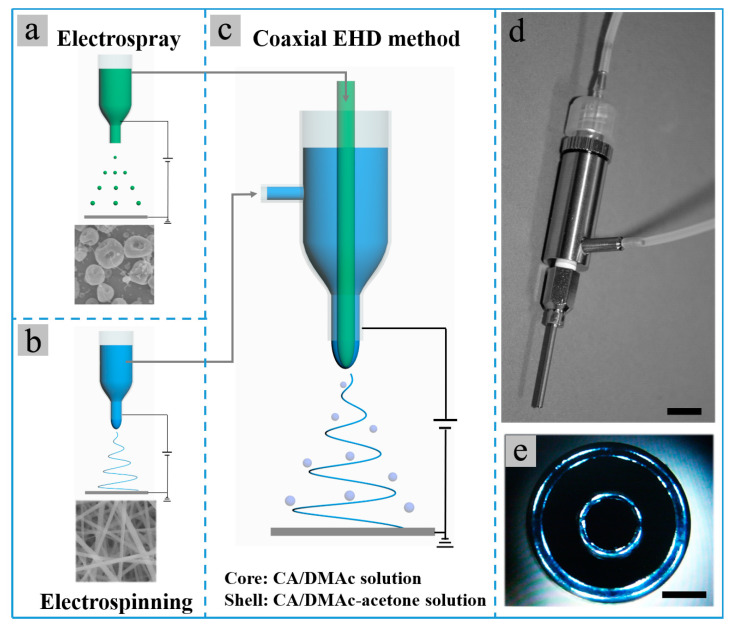
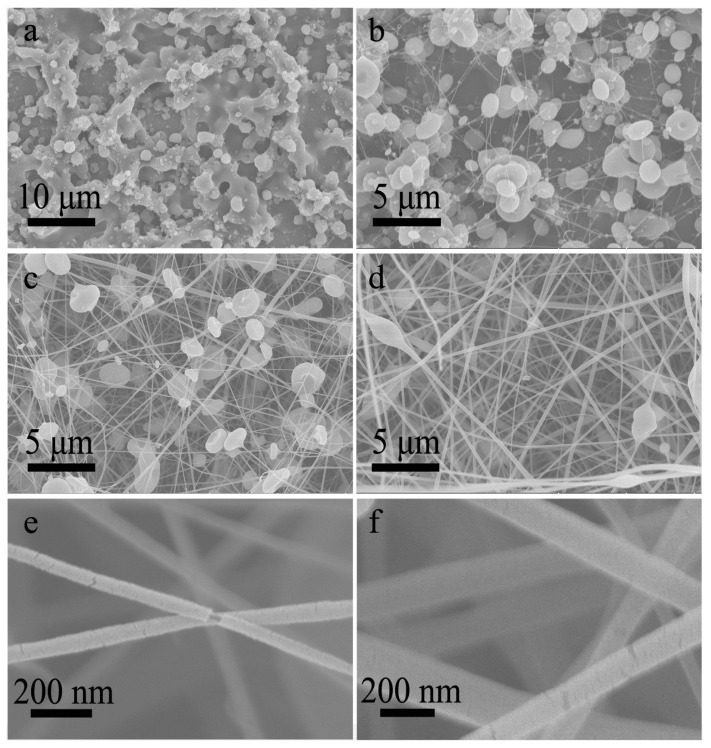
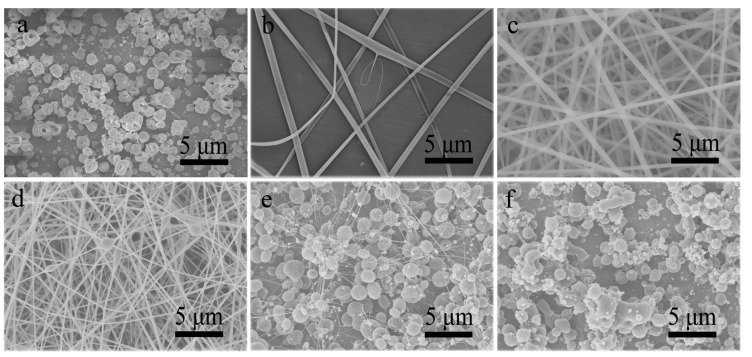
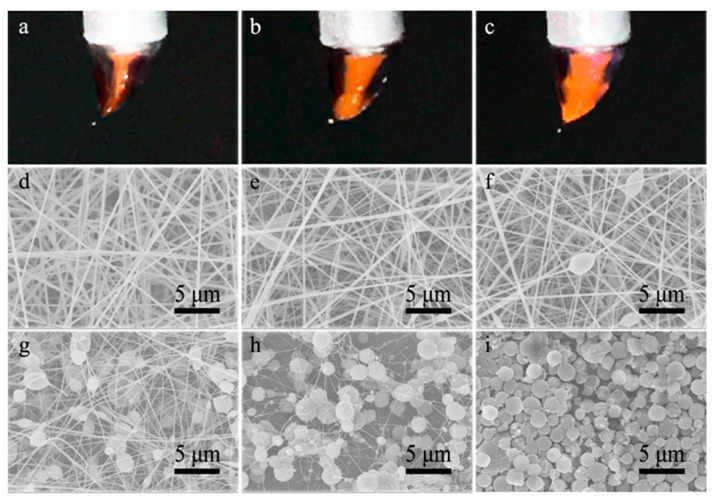
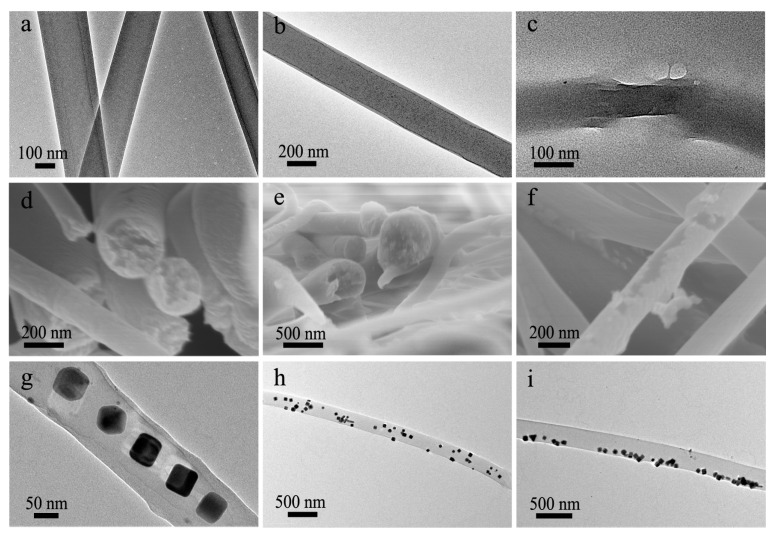
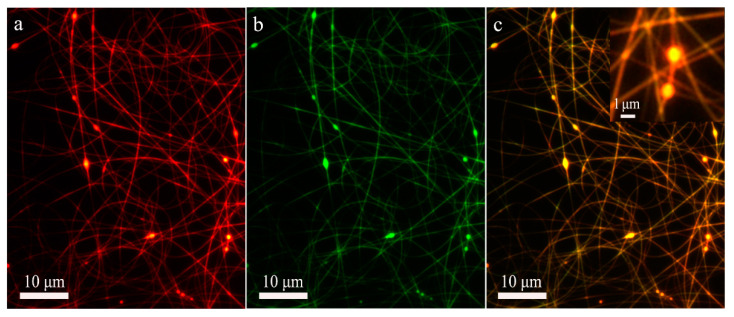
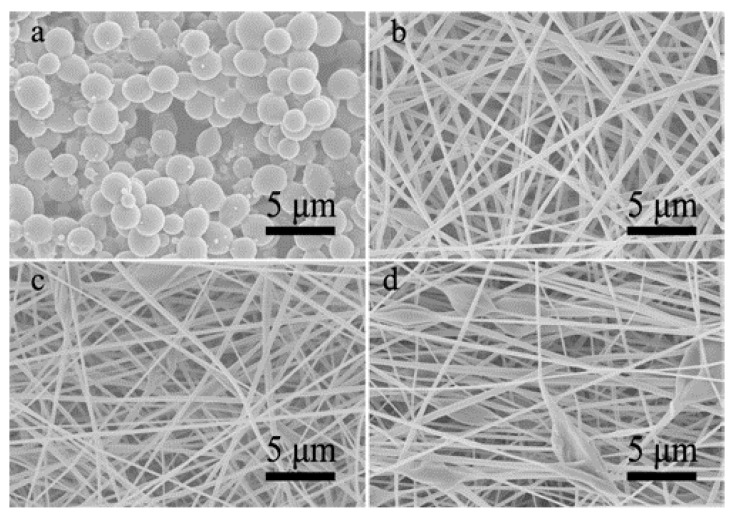
Coaxial electrospinning (co-electrospinning) technique has greatly expanded the universality of fabricating core-shell polymer nanofibers. However, the effect of solution miscibility on the morphology of co-electrospun products remains unclear. Herein, different cellulose acetate (CA) solutions with high solution miscibility but distinctly different electrospinnability were used to survey the effect of solution miscibility on the co-electrospinning process. The structural characterizations show that co-electrospun products are composed of nanofibers with and without the core-shell structure. This indicates that partial solution mixing occurred during the co-electrospinning process instead of absolute no-mixing or complete mixing. Importantly, the solution miscibility also shows a significant influence on the product morphology. In particular, the transformation from nanofibers to microparticles was realized with the increase of core-to-shell flow ratio during the co-electrospinning of core electrosprayable CA/dimethylacetamide (DMAc) solution and shell electrospinnable CA/acetone-DMAc (2/1, /) solution. Results show that the solution miscibility exerts a significant effect on not only the formation of core-shell structure but also the product morphology. This work provides a new insight for the in-depth understanding of the co-electrospinning process.
同轴静电纺丝(共静电纺丝)技术极大地扩展了制备核壳聚合物纳米纤维的通用性。然而,溶液混溶性对共静电纺丝产物形态的影响仍不明确。在此,使用具有高溶液混溶性但电纺丝性能明显不同的不同醋酸纤维素(CA)溶液来研究溶液混溶性对共静电纺丝过程的影响。结构表征表明,共静电纺丝产物由具有和不具有核壳结构的纳米纤维组成。这表明在共静电纺丝过程中发生了部分溶液混合,而不是绝对不混合或完全混合。重要的是,溶液混溶性对产物形态也有显著影响。特别是,在核可电喷雾的CA/二甲基乙酰胺(DMAc)溶液和壳可静电纺丝的CA/丙酮 - DMAc(2/1,/)溶液的共静电纺丝过程中,随着核壳流速比的增加,实现了从纳米纤维到微粒的转变。结果表明,溶液混溶性不仅对核壳结构的形成有显著影响,而且对产物形态也有显著影响。这项工作为深入理解共静电纺丝过程提供了新的见解。