Department of Neuromuscular Diseases, Queen Square Institute of Neurology, University College London, London WC1N 3BG, United Kingdom.
The Francis Crick Institute, London NW1 1AT, United Kingdom.
Genome Res. 2022 Jan;32(1):71-84. doi: 10.1101/gr.275939.121. Epub 2021 Dec 28.
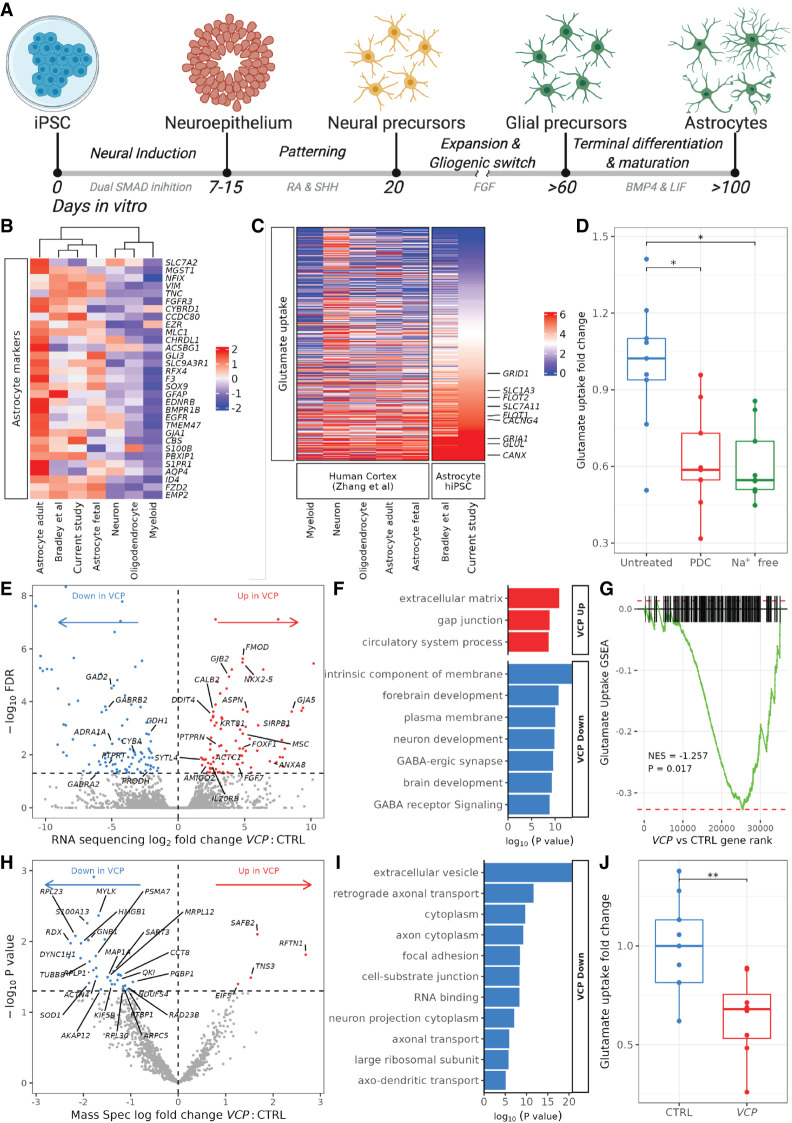
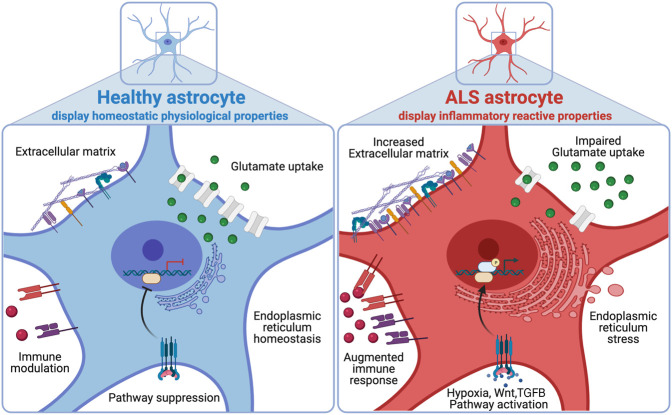
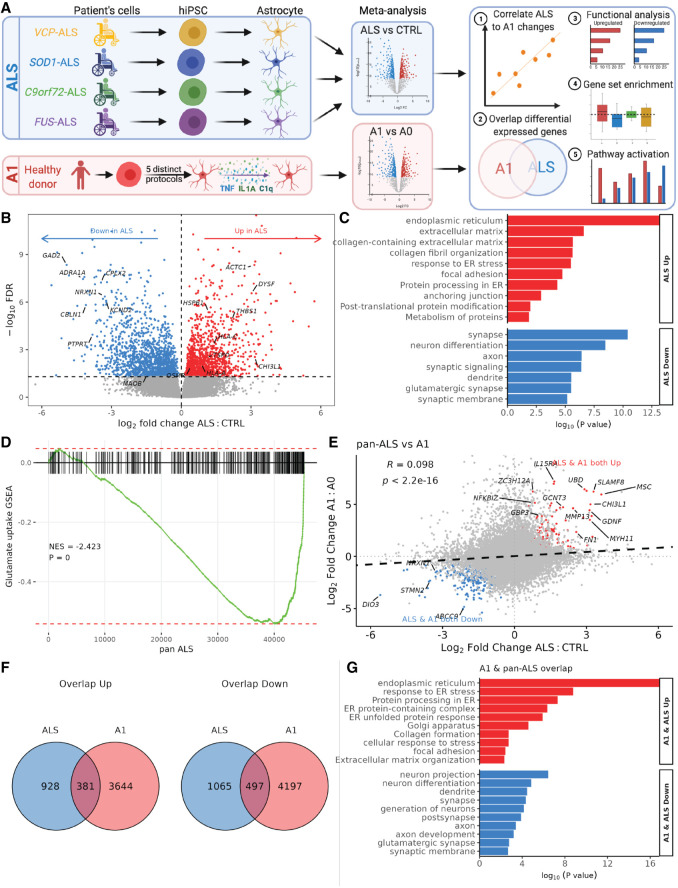
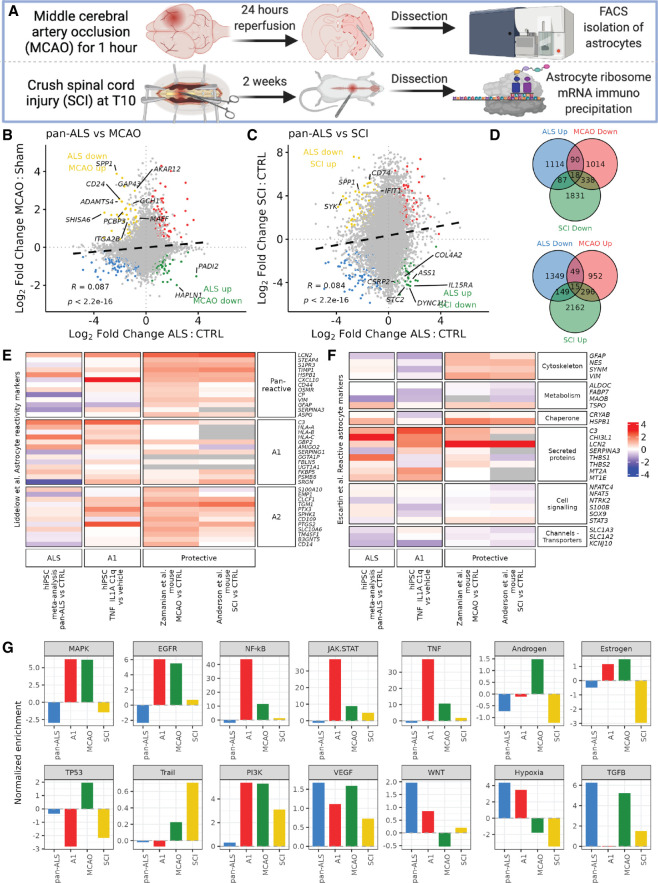
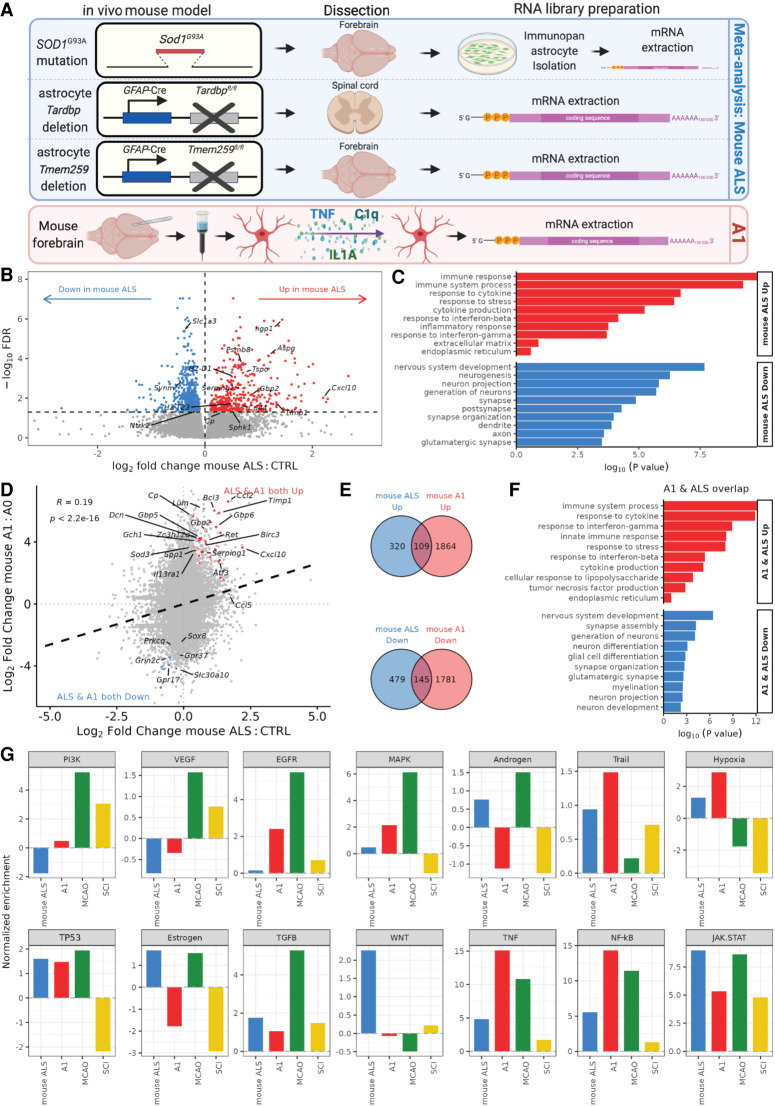
Astrocytes contribute to motor neuron death in amyotrophic lateral sclerosis (ALS), but whether they adopt deleterious features consistent with inflammatory reactive states remains incompletely resolved. To identify inflammatory reactive features in ALS human induced pluripotent stem cell (hiPSC)-derived astrocytes, we examined transcriptomics, proteomics, and glutamate uptake in -mutant astrocytes. We complemented this by examining other ALS mutations and models using a systematic meta-analysis of all publicly-available ALS astrocyte sequencing data, which included hiPSC-derived astrocytes carrying , , and gene mutations as well as mouse ALS astrocyte models with mutation, deletion, and (also known as membralin) deletion. ALS astrocytes were characterized by up-regulation of genes involved in the extracellular matrix, endoplasmic reticulum stress, and the immune response and down-regulation of synaptic integrity, glutamate uptake, and other neuronal support processes. We identify activation of the TGFB, Wnt, and hypoxia signaling pathways in both hiPSC and mouse ALS astrocytes. ALS changes positively correlate with TNF, IL1A, and complement pathway component C1q-treated inflammatory reactive astrocytes, with significant overlap of differentially expressed genes. By contrasting ALS changes with models of protective reactive astrocytes, including middle cerebral artery occlusion and spinal cord injury, we uncover a cluster of genes changing in opposing directions, which may represent down-regulated homeostatic genes and up-regulated deleterious genes in ALS astrocytes. These observations indicate that ALS astrocytes augment inflammatory processes while concomitantly suppressing neuronal supporting mechanisms, thus resembling inflammatory reactive states and offering potential therapeutic targets.
星形胶质细胞有助于肌萎缩侧索硬化症(ALS)中运动神经元的死亡,但它们是否具有与炎症反应状态一致的有害特征仍未完全解决。为了确定 ALS 人诱导多能干细胞(hiPSC)衍生星形胶质细胞中的炎症反应特征,我们检查了转录组学、蛋白质组学和谷氨酸摄取。我们通过使用所有公开可用的 ALS 星形胶质细胞测序数据的系统荟萃分析来检查其他 ALS 突变和模型来补充这一点,该分析包括携带 、 和 基因突变的 hiPSC 衍生星形胶质细胞以及具有 突变、 缺失和 (也称为膜联蛋白)缺失的小鼠 ALS 星形胶质细胞模型。ALS 星形胶质细胞的特征是参与细胞外基质、内质网应激和免疫反应的基因上调,以及突触完整性、谷氨酸摄取和其他神经元支持过程的下调。我们在 hiPSC 和小鼠 ALS 星形胶质细胞中鉴定出 TGFB、Wnt 和缺氧信号通路的激活。ALS 变化与 TNF、IL1A 和补体途径成分 C1q 处理的炎症反应性星形胶质细胞呈正相关,差异表达基因有显著重叠。通过将 ALS 变化与保护性反应性星形胶质细胞模型(包括大脑中动脉闭塞和脊髓损伤)进行对比,我们发现了一组在相反方向上变化的基因,这可能代表 ALS 星形胶质细胞中下调的稳态基因和上调的有害基因。这些观察结果表明,ALS 星形胶质细胞增强了炎症过程,同时抑制了神经元支持机制,因此类似于炎症反应状态,并提供了潜在的治疗靶点。