• 文献检索
  • 文档翻译
  • 深度研究
  • 学术资讯
  • Suppr Zotero 插件Zotero 插件
  • 邀请有礼
  • 套餐&价格
  • 历史记录
应用&插件
Suppr Zotero 插件Zotero 插件浏览器插件Mac 客户端Windows 客户端微信小程序
定价
高级版会员购买积分包购买API积分包
服务
文献检索文档翻译深度研究API 文档MCP 服务
关于我们
关于 Suppr公司介绍联系我们用户协议隐私条款
关注我们

Suppr 超能文献

核心技术专利:CN118964589B侵权必究
粤ICP备2023148730 号-1Suppr @ 2026

文献检索

告别复杂PubMed语法,用中文像聊天一样搜索,搜遍4000万医学文献。AI智能推荐,让科研检索更轻松。

立即免费搜索

文件翻译

保留排版,准确专业,支持PDF/Word/PPT等文件格式,支持 12+语言互译。

免费翻译文档

深度研究

AI帮你快速写综述,25分钟生成高质量综述,智能提取关键信息,辅助科研写作。

立即免费体验

揭示韩国 COVID-19 大流行的时空模式。

Discovering spatiotemporal patterns of COVID-19 pandemic in South Korea.

机构信息

Department of Applied Mathematics, Kyung Hee University, Yongin, Republic of Korea.

Department of Mathematics, Texas State University, San Marcos, TX, USA.

出版信息

Sci Rep. 2021 Dec 28;11(1):24470. doi: 10.1038/s41598-021-03487-2.

DOI:10.1038/s41598-021-03487-2
PMID:34963690
原文链接:https://pmc.ncbi.nlm.nih.gov/articles/PMC8714822/
Abstract

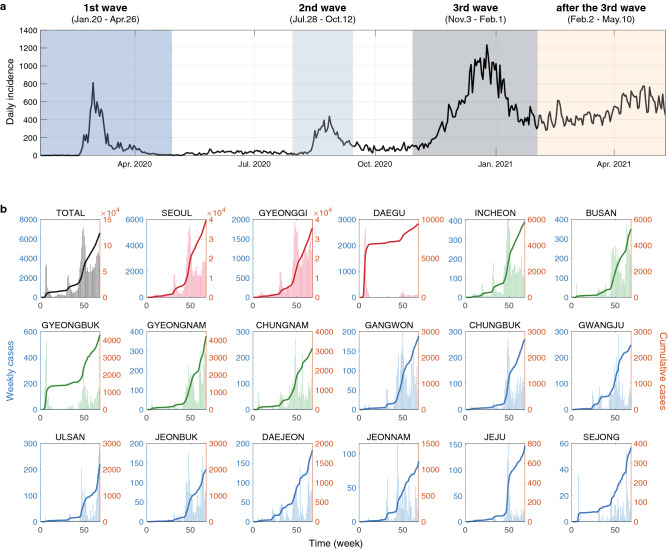
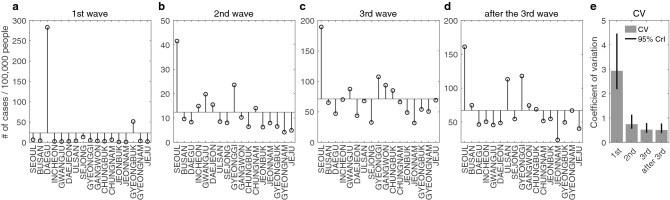
A novel severe acute respiratory syndrome coronavirus 2 emerged in December 2019, and it took only a few months for WHO to declare COVID-19 as a pandemic in March 2020. It is very challenging to discover complex spatial-temporal transmission mechanisms. However, it is crucial to capture essential features of regional-temporal patterns of COVID-19 to implement prompt and effective prevention or mitigation interventions. In this work, we develop a novel framework of compatible window-wise dynamic mode decomposition (CwDMD) for nonlinear infectious disease dynamics. The compatible window is a selected representative subdomain of time series data, in which compatibility between spatial and temporal resolutions is established so that DMD can provide meaningful data analysis. A total of four compatible windows have been selected from COVID-19 time-series data from January 20, 2020, to May 10, 2021, in South Korea. The spatiotemporal patterns of these four windows are then analyzed. Several hot and cold spots were identified, their spatial-temporal relationships, and some hidden regional patterns were discovered. Our analysis reveals that the first wave was contained in the Daegu and Gyeongbuk areas, but it spread rapidly to the whole of South Korea after the second wave. Later on, the spatial distribution is seen to become more homogeneous after the third wave. Our analysis also identifies that some patterns are not related to regional relevance. These findings have then been analyzed and associated with the inter-regional and local characteristics of South Korea. Thus, the present study is expected to provide public health officials helpful insights for future regional-temporal specific mitigation plans.

摘要

一种新型严重急性呼吸系统综合症冠状病毒 2 于 2019 年 12 月出现,仅用了几个月时间,世界卫生组织就于 2020 年 3 月宣布 COVID-19 为大流行。发现复杂的时空传播机制极具挑战性。然而,捕捉 COVID-19 的区域性时空模式的基本特征对于实施及时有效的预防或缓解干预措施至关重要。在这项工作中,我们开发了一种新的兼容窗口动态模态分解(CwDMD)框架,用于非线性传染病动力学。兼容窗口是时间序列数据的一个选定代表性子域,其中建立了空间和时间分辨率之间的兼容性,以便 DMD 可以提供有意义的数据分析。总共从 2020 年 1 月 20 日至 2021 年 5 月 10 日韩国的 COVID-19 时间序列数据中选择了四个兼容窗口。然后分析了这四个窗口的时空模式。确定了一些热点和冷点,发现了它们的时空关系和一些隐藏的区域模式。我们的分析表明,第一波疫情局限于大邱和庆尚北道地区,但第二波疫情后迅速蔓延到韩国全境。之后,第三波疫情后,空间分布变得更加均匀。我们的分析还发现,一些模式与区域相关性无关。然后对这些发现进行了分析,并与韩国的区域和地方特征相关联。因此,本研究有望为公共卫生官员提供有价值的见解,以制定未来针对特定区域和时间的缓解计划。

https://cdn.ncbi.nlm.nih.gov/pmc/blobs/2729/8714822/1c56778c9235/41598_2021_3487_Fig8_HTML.jpg
https://cdn.ncbi.nlm.nih.gov/pmc/blobs/2729/8714822/ed8c41cf588d/41598_2021_3487_Fig1_HTML.jpg
https://cdn.ncbi.nlm.nih.gov/pmc/blobs/2729/8714822/716dc43c3d98/41598_2021_3487_Fig2_HTML.jpg
https://cdn.ncbi.nlm.nih.gov/pmc/blobs/2729/8714822/4739de04f475/41598_2021_3487_Fig3_HTML.jpg
https://cdn.ncbi.nlm.nih.gov/pmc/blobs/2729/8714822/facf0e39ab46/41598_2021_3487_Fig4_HTML.jpg
https://cdn.ncbi.nlm.nih.gov/pmc/blobs/2729/8714822/f12c36aa4c23/41598_2021_3487_Fig5_HTML.jpg
https://cdn.ncbi.nlm.nih.gov/pmc/blobs/2729/8714822/61560908532f/41598_2021_3487_Fig6_HTML.jpg
https://cdn.ncbi.nlm.nih.gov/pmc/blobs/2729/8714822/5a97507430b1/41598_2021_3487_Fig7_HTML.jpg
https://cdn.ncbi.nlm.nih.gov/pmc/blobs/2729/8714822/1c56778c9235/41598_2021_3487_Fig8_HTML.jpg
https://cdn.ncbi.nlm.nih.gov/pmc/blobs/2729/8714822/ed8c41cf588d/41598_2021_3487_Fig1_HTML.jpg
https://cdn.ncbi.nlm.nih.gov/pmc/blobs/2729/8714822/716dc43c3d98/41598_2021_3487_Fig2_HTML.jpg
https://cdn.ncbi.nlm.nih.gov/pmc/blobs/2729/8714822/4739de04f475/41598_2021_3487_Fig3_HTML.jpg
https://cdn.ncbi.nlm.nih.gov/pmc/blobs/2729/8714822/facf0e39ab46/41598_2021_3487_Fig4_HTML.jpg
https://cdn.ncbi.nlm.nih.gov/pmc/blobs/2729/8714822/f12c36aa4c23/41598_2021_3487_Fig5_HTML.jpg
https://cdn.ncbi.nlm.nih.gov/pmc/blobs/2729/8714822/61560908532f/41598_2021_3487_Fig6_HTML.jpg
https://cdn.ncbi.nlm.nih.gov/pmc/blobs/2729/8714822/5a97507430b1/41598_2021_3487_Fig7_HTML.jpg
https://cdn.ncbi.nlm.nih.gov/pmc/blobs/2729/8714822/1c56778c9235/41598_2021_3487_Fig8_HTML.jpg

相似文献

1
Discovering spatiotemporal patterns of COVID-19 pandemic in South Korea.揭示韩国 COVID-19 大流行的时空模式。
Sci Rep. 2021 Dec 28;11(1):24470. doi: 10.1038/s41598-021-03487-2.
2
An analysis of the dynamic spatial spread of COVID-19 across South Korea.对 COVID-19 在韩国各地动态空间传播的分析。
Sci Rep. 2022 Jun 7;12(1):9364. doi: 10.1038/s41598-022-13301-2.
3
Spatial variability in reproduction number and doubling time across two waves of the COVID-19 pandemic in South Korea, February to July, 2020.2020 年 2 月至 7 月韩国 COVID-19 大流行两波期间繁殖数和倍增时间的空间变异性。
Int J Infect Dis. 2021 Jan;102:1-9. doi: 10.1016/j.ijid.2020.10.007. Epub 2020 Oct 8.
4
COVID-19 in South Korea: epidemiological and spatiotemporal patterns of the spread and the role of aggressive diagnostic tests in the early phase.韩国的 COVID-19 疫情:传播的流行病学和时空模式,以及在早期阶段积极诊断检测的作用。
Int J Epidemiol. 2020 Aug 1;49(4):1106-1116. doi: 10.1093/ije/dyaa119.
5
Conversations and Medical News Frames on Twitter: Infodemiological Study on COVID-19 in South Korea.推特上的对话与医学新闻框架:韩国新冠肺炎信息流行病学研究
J Med Internet Res. 2020 May 5;22(5):e18897. doi: 10.2196/18897.
6
Spatiotemporal pattern of COVID-19 and government response in South Korea (as of May 31, 2020).2020 年 5 月 31 日韩国新冠肺炎疫情时空分布特征及政府应对措施
Int J Infect Dis. 2020 Sep;98:328-333. doi: 10.1016/j.ijid.2020.07.004. Epub 2020 Jul 4.
7
Comparative infection modeling and control of COVID-19 transmission patterns in China, South Korea, Italy and Iran.中国、韩国、意大利和伊朗的 COVID-19 传播模式比较感染建模与控制。
Sci Total Environ. 2020 Dec 10;747:141447. doi: 10.1016/j.scitotenv.2020.141447. Epub 2020 Aug 3.
8
Transmission dynamics and control of two epidemic waves of SARS-CoV-2 in South Korea.韩国两波 SARS-CoV-2 疫情的传播动态和控制。
BMC Infect Dis. 2021 May 26;21(1):485. doi: 10.1186/s12879-021-06204-6.
9
Communication and Cooperation Between the Medical Academy, Medical Association, and Local Government: Health Counseling Program After Recovery From Coronavirus Disease 2019 (COVID-19) in Daegu.医学科学院、医学协会与地方政府之间的沟通与合作:大邱市 2019 冠状病毒病(COVID-19)康复后的健康咨询计划。
Front Public Health. 2021 Jan 13;8:563757. doi: 10.3389/fpubh.2020.563757. eCollection 2020.
10
Spatial distribution of SARS-CoV-2 infection in schools, South Korea.韩国学校中 SARS-CoV-2 感染的空间分布。
Epidemiol Infect. 2022 Nov 8;150:e194. doi: 10.1017/S095026882200173X.

引用本文的文献

1
A novel framework for inferring dynamic infectious disease transmission with graph attention: a COVID-19 case study in Korea.一种基于图注意力推断动态传染病传播的新框架:韩国新冠肺炎案例研究
BMC Public Health. 2025 May 22;25(1):1884. doi: 10.1186/s12889-025-23059-7.
2
The moderating role of cognitive fusion in the relationship between trait and state anger in episodic migraine, chronic migraine and healthy controls.认知融合在发作性偏头痛、慢性偏头痛及健康对照者的特质愤怒与状态愤怒关系中的调节作用。
Sci Rep. 2025 Apr 15;15(1):12865. doi: 10.1038/s41598-025-96227-9.
3
Significant impact of the covid-19 pandemic on methane emissions evaluated by comprehensive statistical analysis of satellite data.

本文引用的文献

1
A Spatio-temporal analysis of COVID-19 outbreak in Italy.意大利新冠肺炎疫情的时空分析
Reg Sci Policy Prac. 2020 Dec;12(6):1047-1062. doi: 10.1111/rsp3.12376. Epub 2020 Dec 9.
2
Understanding the spatio-temporal pattern of COVID-19 outbreak in India using GIS and India's response in managing the pandemic.利用地理信息系统(GIS)了解印度新冠肺炎疫情的时空模式以及印度在管理该疫情方面的应对措施。
Reg Sci Policy Prac. 2020 Dec;12(6):1063-1103. doi: 10.1111/rsp3.12359. Epub 2020 Nov 29.
3
Effectiveness of Covid-19 Vaccines against the B.1.617.2 (Delta) Variant.
综合卫星数据分析评估新冠疫情对甲烷排放的重大影响。
Sci Rep. 2024 Sep 28;14(1):22475. doi: 10.1038/s41598-024-72843-9.
4
Oscillating spatiotemporal patterns of COVID-19 in the United States.美国新冠肺炎的振荡时空模式。
Sci Rep. 2024 Sep 16;14(1):21562. doi: 10.1038/s41598-024-72517-6.
5
Virtual Reality in Acute and Chronic Pain Medicine: An Updated Review.虚拟现实在急慢性疼痛医学中的应用:最新综述
Curr Pain Headache Rep. 2024 Sep;28(9):893-928. doi: 10.1007/s11916-024-01246-2. Epub 2024 Apr 8.
6
Retinal imaging for the assessment of stroke risk: a systematic review.用于评估中风风险的视网膜成像:一项系统评价。
J Neurol. 2024 May;271(5):2285-2297. doi: 10.1007/s00415-023-12171-6. Epub 2024 Mar 2.
7
Impact of coronavirus disease 2019 on cancer care: How the pandemic has changed cancer utilization and expenditures.新型冠状病毒肺炎对癌症治疗的影响:大流行如何改变癌症的利用和支出。
PLoS One. 2024 Feb 8;19(2):e0296808. doi: 10.1371/journal.pone.0296808. eCollection 2024.
8
Detection of COVID-19 epidemic outbreak using machine learning.利用机器学习检测新冠疫情爆发
Front Public Health. 2023 Dec 18;11:1252357. doi: 10.3389/fpubh.2023.1252357. eCollection 2023.
9
Dynamic Patterns and Modeling of Early COVID-19 Transmission by Dynamic Mode Decomposition.基于动态模式分解的 COVID-19 早期传播的动态模式与建模。
Prev Chronic Dis. 2023 Oct 26;20:E95. doi: 10.5888/pcd20.230089.
10
Unequal burdens of COVID-19 infection: a nationwide cohort study of COVID-19-related health inequalities in Korea.COVID-19 感染的不平等负担:韩国 COVID-19 相关健康不平等的全国队列研究。
Epidemiol Health. 2023;45:e2023068. doi: 10.4178/epih.e2023068. Epub 2023 Jul 31.
Covid-19 疫苗对 B.1.617.2(德尔塔)变异株的有效性。
N Engl J Med. 2021 Aug 12;385(7):585-594. doi: 10.1056/NEJMoa2108891. Epub 2021 Jul 21.
4
Role of meteorological factors in the transmission of SARS-CoV-2 in the United States.气象因素在美国 2019 冠状病毒病传播中的作用。
Nat Commun. 2021 Jun 14;12(1):3602. doi: 10.1038/s41467-021-23866-7.
5
Reliability of Google Trends: Analysis of the Limits and Potential of Web Infoveillance During COVID-19 Pandemic and for Future Research.谷歌趋势的可靠性:新冠疫情期间及未来研究中网络信息监测的局限性与潜力分析
Front Res Metr Anal. 2021 May 25;6:670226. doi: 10.3389/frma.2021.670226. eCollection 2021.
6
Estimating COVID-19 mortality in Italy early in the COVID-19 pandemic.估算 COVID-19 大流行早期意大利的 COVID-19 死亡率。
Nat Commun. 2021 May 12;12(1):2729. doi: 10.1038/s41467-021-22944-0.
7
Spatiotemporal pattern of COVID-19 spread in Brazil.巴西 COVID-19 传播的时空模式。
Science. 2021 May 21;372(6544):821-826. doi: 10.1126/science.abh1558. Epub 2021 Apr 14.
8
Risk Assessment of Importation and Local Transmission of COVID-19 in South Korea: Statistical Modeling Approach.韩国 COVID-19 输入和本地传播风险评估:统计建模方法。
JMIR Public Health Surveill. 2021 Jun 1;7(6):e26784. doi: 10.2196/26784.
9
Effectiveness of Intervention Strategies on MERS-CoV Transmission Dynamics in South Korea, 2015: Simulations on the Network Based on the Real-World Contact Data.干预策略对韩国 2015 年中东呼吸综合征冠状病毒传播动力学的影响:基于真实世界接触数据的网络模拟。
Int J Environ Res Public Health. 2021 Mar 29;18(7):3530. doi: 10.3390/ijerph18073530.
10
Modelling and predicting the spatio-temporal spread of COVID-19, associated deaths and impact of key risk factors in England.建立模型并预测英格兰地区 COVID-19 的时空传播、相关死亡人数以及关键风险因素的影响。
Sci Rep. 2021 Mar 8;11(1):5378. doi: 10.1038/s41598-021-83780-2.