Beijing Institutes of Life Science, Chinese Academy of Sciences, Beijing 100101, China.
Center for Excellence in Biotic Interactions, University of Chinese Academy of Sciences, Beijing 100049, China.
Proc Natl Acad Sci U S A. 2022 Jan 4;119(1). doi: 10.1073/pnas.2115753118.
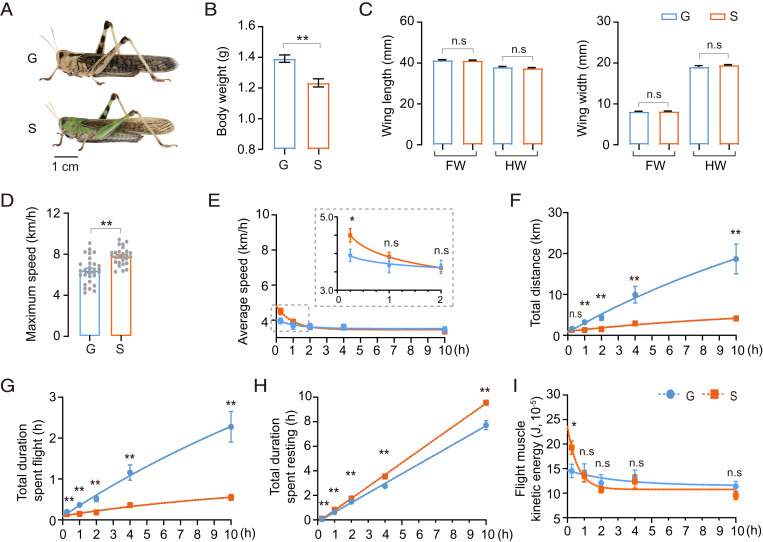
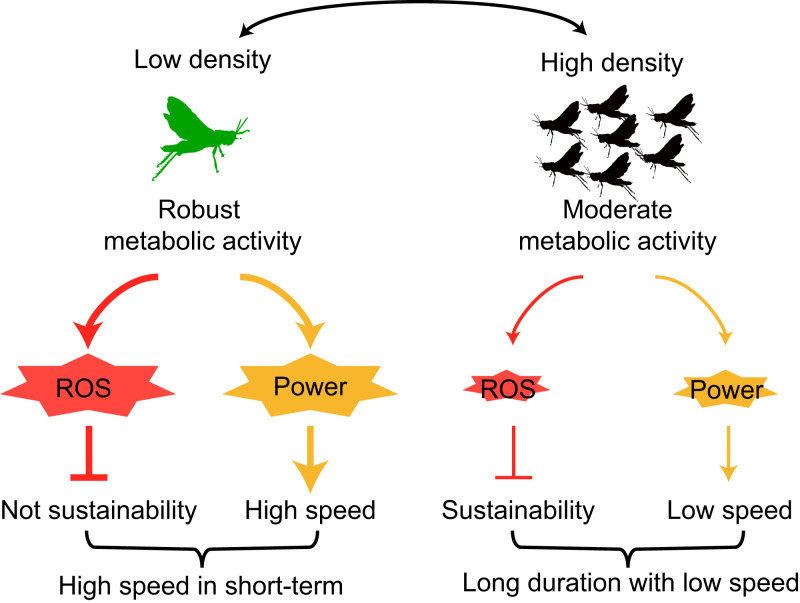
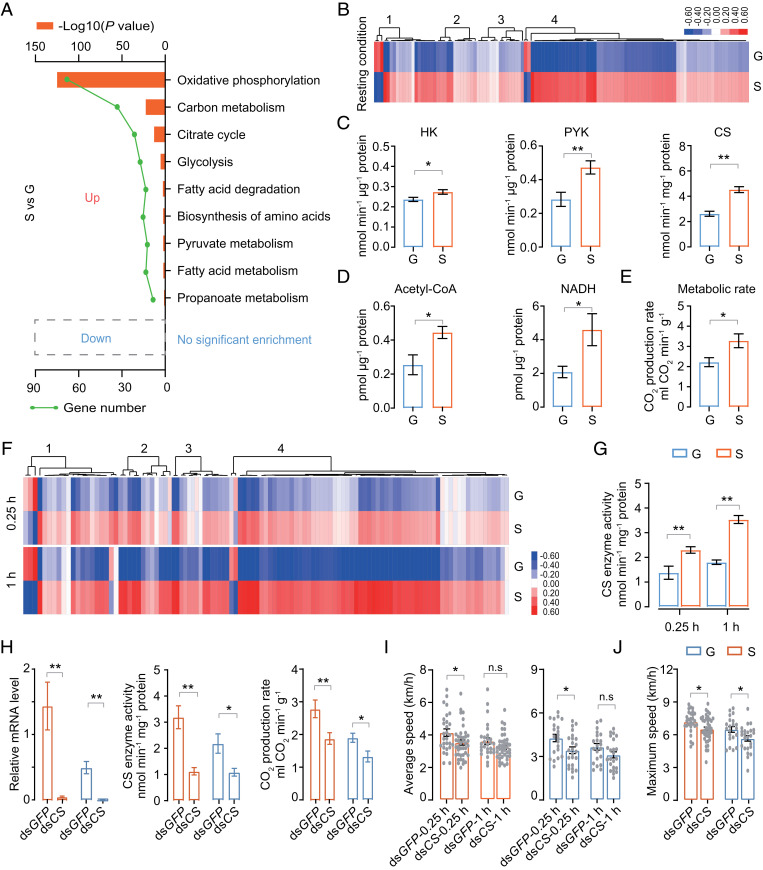
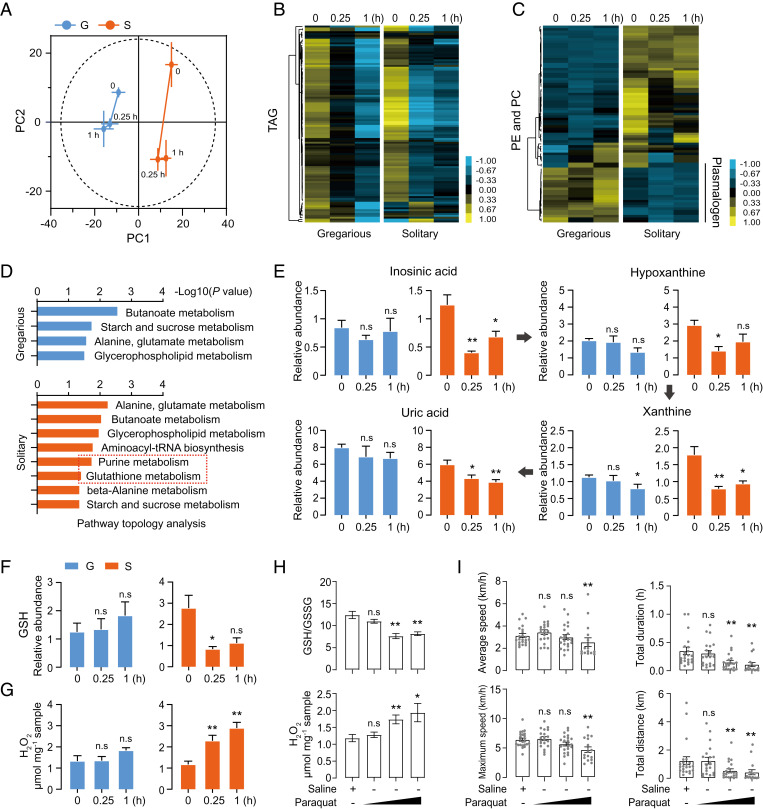
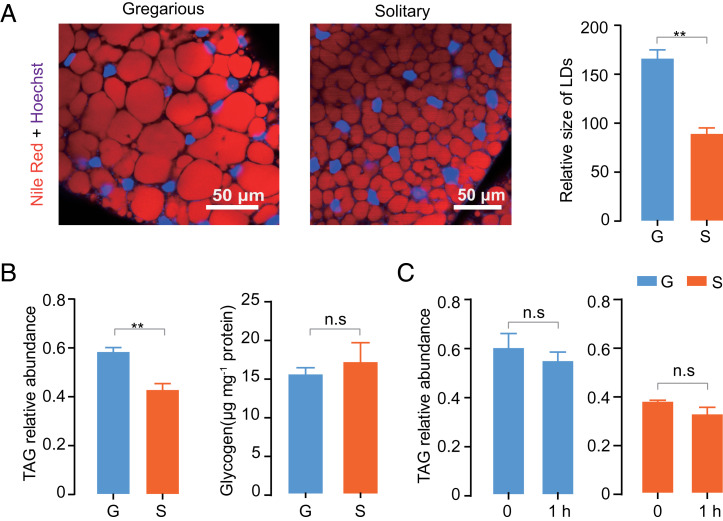
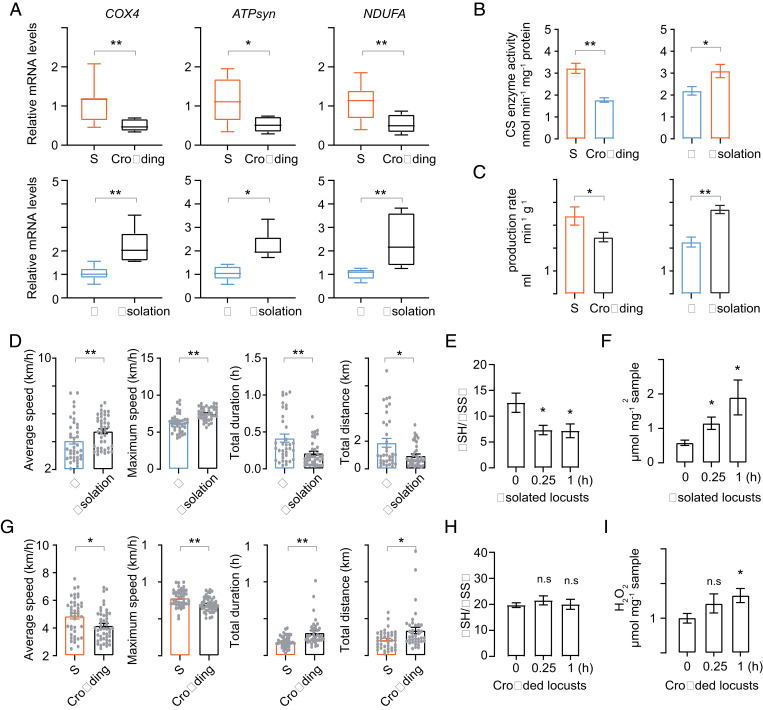
Flight ability is essential for the enormous diversity and evolutionary success of insects. The migratory locusts exhibit flight capacity plasticity in gregarious and solitary individuals closely linked with different density experiences. However, the differential mechanisms underlying flight traits of locusts are largely unexplored. Here, we investigated the variation of flight capacity by using behavioral, physiological, and multiomics approaches. Behavioral assays showed that solitary locusts possess high initial flight speeds and short-term flight, whereas gregarious locusts can fly for a longer distance at a relatively lower speed. Metabolome-transcriptome analysis revealed that solitary locusts have more active flight muscle energy metabolism than gregarious locusts, whereas gregarious locusts show less evidence of reactive oxygen species production during flight. The repression of metabolic activity by RNA interference markedly reduced the initial flight speed of solitary locusts. Elevating the oxidative stress by paraquat injection remarkably inhibited the long-distance flight of gregarious locusts. In respective crowding and isolation treatments, energy metabolic profiles and flight traits of solitary and gregarious locusts were reversed, indicating that the differentiation of flight capacity depended on density and can be reshaped rapidly. The density-dependent flight traits of locusts were attributed to the plasticity of energy metabolism and degree of oxidative stress production but not energy storage. The findings provided insights into the mechanism underlying the trade-off between velocity and sustainability in animal locomotion and movement.
飞行能力对于昆虫的巨大多样性和进化成功至关重要。群居和独居个体的蝗虫表现出与不同密度经验密切相关的飞行能力可塑性。然而,蝗虫飞行特征的差异机制在很大程度上尚未得到探索。在这里,我们使用行为、生理和多组学方法研究了飞行能力的变化。行为分析表明,独居蝗虫具有较高的初始飞行速度和短期飞行能力,而群居蝗虫可以以相对较低的速度飞行更长的距离。代谢组 - 转录组分析表明,独居蝗虫的飞行肌肉能量代谢比群居蝗虫更为活跃,而群居蝗虫在飞行过程中产生的活性氧物种较少。RNA 干扰对代谢活性的抑制显著降低了独居蝗虫的初始飞行速度。百草枯注射显著提高氧化应激水平,显著抑制群居蝗虫的长途飞行。在各自的拥挤和隔离处理中,独居和群居蝗虫的能量代谢谱和飞行特征发生了逆转,表明飞行能力的分化取决于密度,并可以迅速重塑。蝗虫的密度依赖的飞行特征归因于能量代谢的可塑性和氧化应激产生的程度,而不是能量储存。这些发现为动物运动和运动中速度和可持续性之间的权衡提供了机制方面的见解。