Department of Experimental Psychology, Heinrich Heine University Düsseldorf, Universitätsstrasse 1, 40225, Düsseldorf, Germany.
Sci Rep. 2021 Dec 30;11(1):24500. doi: 10.1038/s41598-021-04217-4.
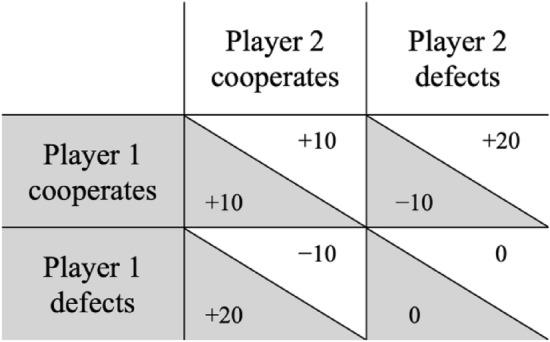
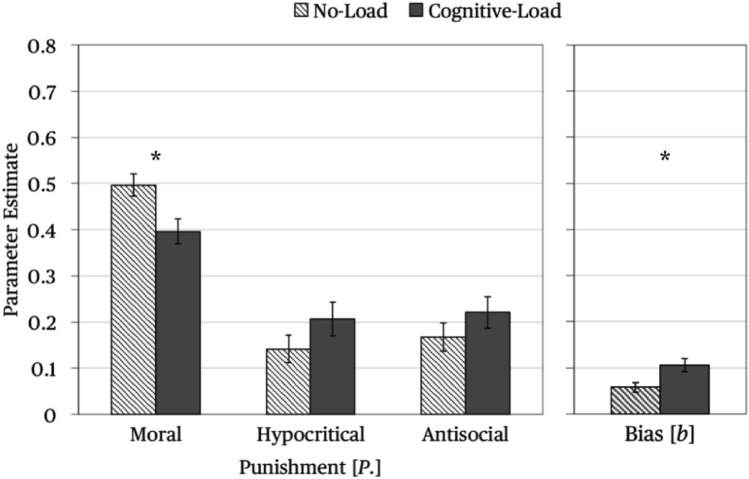
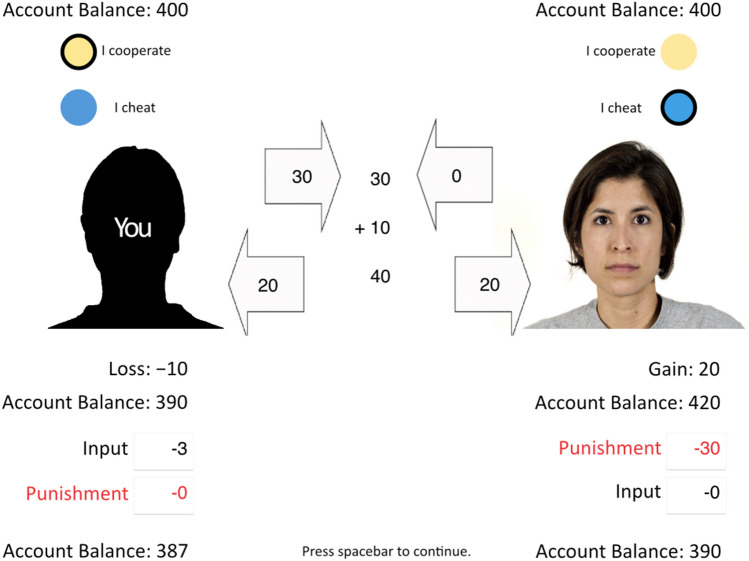
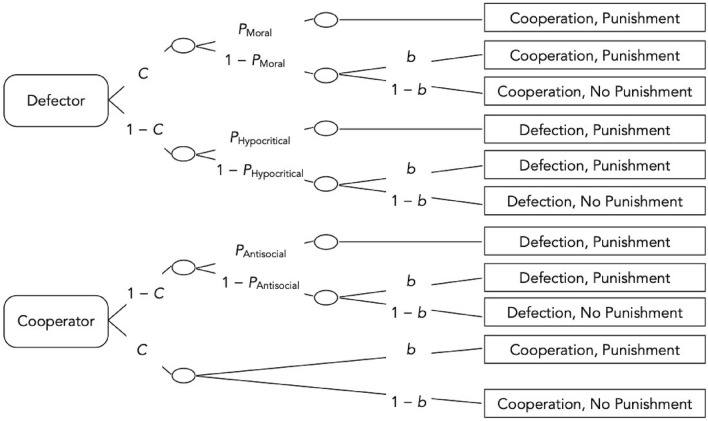
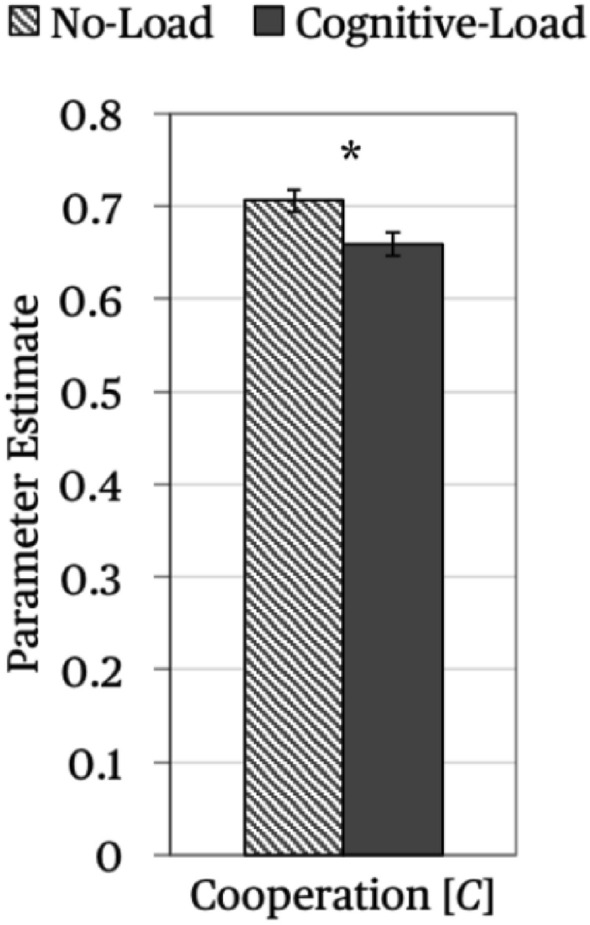
The present study serves to test whether cooperation and moral punishment are affected by cognitive load. Dual-process theories postulate that moral behavior is intuitive which leads to the prediction that cooperation and moral punishment should remain unaffected or may even increase when cognitive load is induced by a secondary task. However, it has also been proposed that cognitive control and deliberation are necessary to choose an economically costly but morally justified option. A third perspective implies that the effects of cognitive load may depend on the specific processes involved in social dilemmas. In the present study, participants played a simultaneous Prisoner's Dilemma game with a punishment option. First, both players decided to cooperate or defect. Then they had the opportunity to punish the partners. In the cognitive-load group, cognitive load was induced by a continuous tone classification task while the no-load group had no distractor task. Under cognitive load, cooperation and moral punishment decreased in comparison to the no-load condition. By contrast, hypocritical and antisocial punishment were not influenced by the dual-task manipulation. Increased cognitive load was associated with a bias to punish the partners irrespective of the outcome of the Prisoner's Dilemma game, suggesting that punishment was applied less purposefully in the cognitive-load condition. The present findings are thus in line with the idea that the availability of cognitive resources does not always have a suppressive effect on moral behaviors, but can have facilitating effects on cooperation and moral punishment.
本研究旨在测试合作和道德惩罚是否受到认知负荷的影响。双过程理论假设道德行为是直观的,这导致了这样的预测,即当认知负荷由次要任务引起时,合作和道德惩罚应该保持不受影响,甚至可能增加。然而,也有人提出,认知控制和深思熟虑是选择经济成本高但道德上合理的选择所必需的。第三种观点意味着认知负荷的影响可能取决于社会困境中涉及的具体过程。在本研究中,参与者玩了一个同时进行的囚徒困境游戏,并有惩罚选择。首先,两名玩家决定合作或背叛。然后,他们有机会惩罚合作伙伴。在认知负荷组中,认知负荷通过连续音调分类任务引起,而无负荷组没有分心任务。在认知负荷下,与无负荷条件相比,合作和道德惩罚减少。相比之下,虚伪和反社会的惩罚不受双重任务操作的影响。认知负荷的增加与惩罚合作伙伴的偏见有关,而不管囚徒困境游戏的结果如何,这表明在认知负荷条件下,惩罚的应用目的性较弱。因此,本研究结果与这样一种观点一致,即认知资源的可用性并不总是对道德行为产生抑制作用,而是对合作和道德惩罚有促进作用。