Laboratory of Innate Immunity and Signal Transduction, Division of Microbiology and Immunology, Department of Pathology, University of Utah School of Medicine, Salt Lake City, UT, USA.
Division of Microbiology and Immunology, Department of Pathology, University of Utah School of Medicine, Salt Lake City, UT, USA.
Sci Rep. 2021 Dec 30;11(1):24507. doi: 10.1038/s41598-021-04298-1.
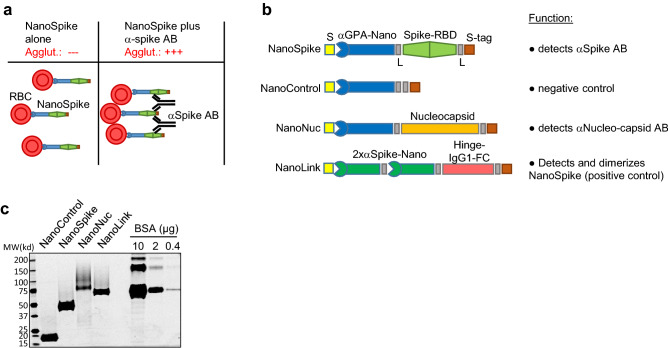
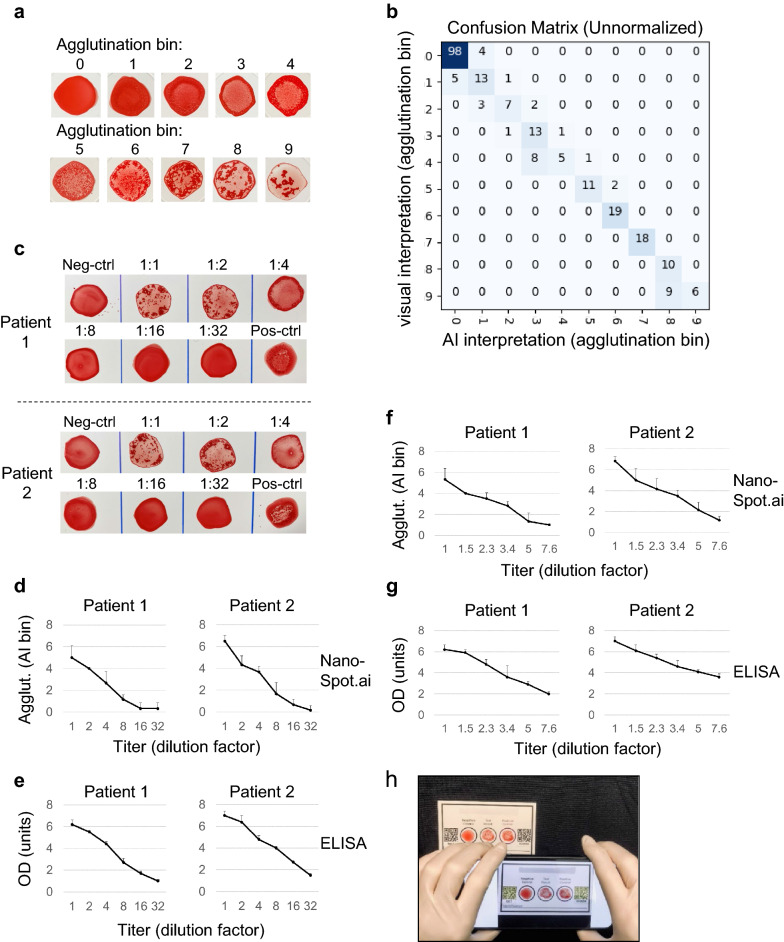
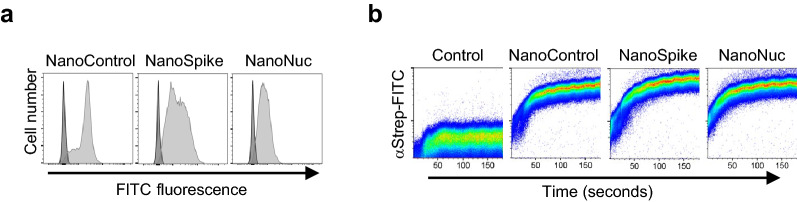
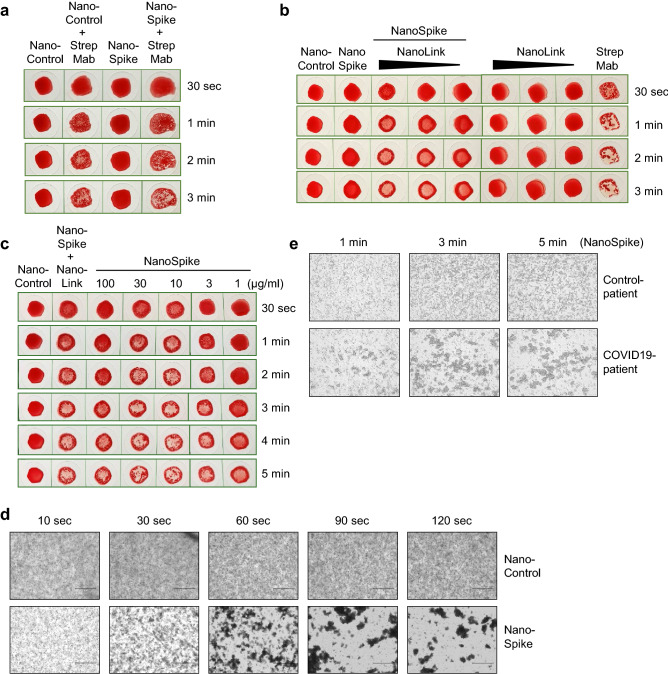
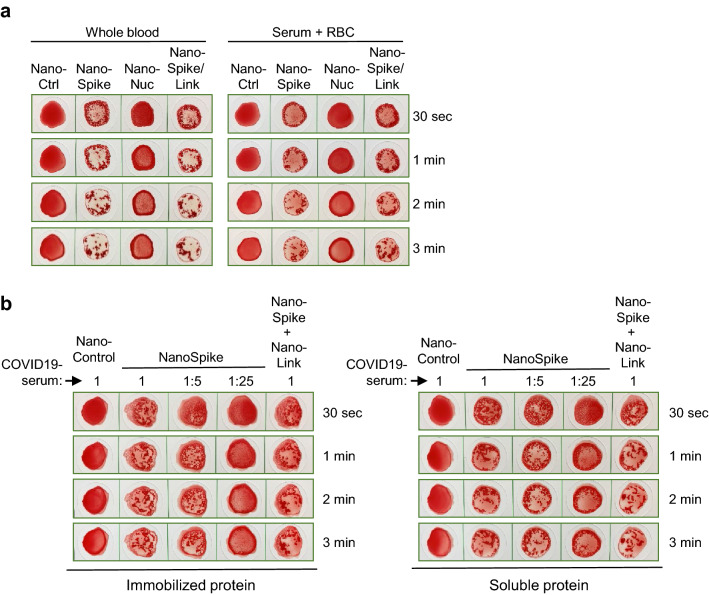
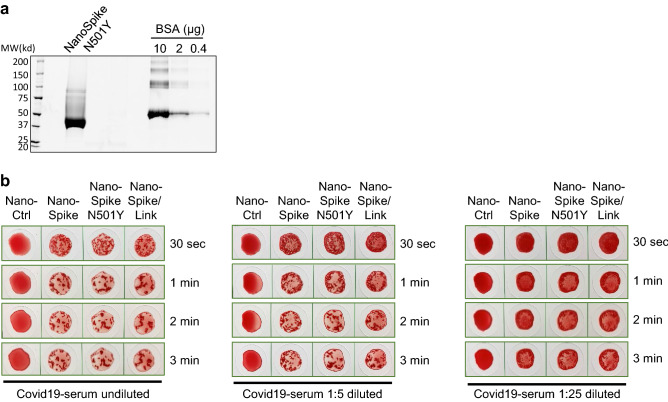
Diagnostic tests that detect antibodies (AB) against SARS-CoV-2 for evaluation of seroprevalence and guidance of health care measures are important tools for managing the COVID-19 pandemic. Current tests have certain limitations with regard to turnaround time, costs and availability, particularly in point-of-care (POC) settings. We established a hemagglutination-based AB test that is based on bi-specific proteins which contain a dromedary-derived antibody (nanobody) binding red blood cells (RBD) and a SARS-CoV-2-derived antigen, such as the receptor-binding domain of the Spike protein (Spike-RBD). While the nanobody mediates swift binding to RBC, the antigen moiety directs instantaneous, visually apparent hemagglutination in the presence of SARS-CoV-2-specific AB generated in COVID-19 patients or vaccinated individuals. Method comparison studies with assays cleared by emergency use authorization demonstrate high specificity and sensitivity. To further increase objectivity of test interpretation, we developed an image analysis tool based on digital image acquisition (via a cell phone) and a machine learning algorithm based on defined sample-training and -validation datasets. Preliminary data, including a small clinical study, provides proof of principle for test performance in a POC setting. Together, the data support the interpretation that this AB test format, which we refer to as 'NanoSpot.ai', is suitable for POC testing, can be manufactured at very low costs and, based on its generic mode of action, can likely be adapted to a variety of other pathogens.
用于评估血清流行率和指导医疗措施的检测 SARS-CoV-2 抗体(AB)的诊断检测是管理 COVID-19 大流行的重要工具。目前的检测在周转时间、成本和可用性方面存在一定的局限性,特别是在即时护理(POC)环境中。我们建立了一种基于血凝的 AB 检测方法,该方法基于双特异性蛋白,其中包含结合红细胞(RBC)的骆驼源抗体(纳米抗体)和 SARS-CoV-2 衍生抗原,例如 Spike 蛋白的受体结合域(Spike-RBD)。纳米抗体介导与 RBC 的快速结合,而抗原部分在 COVID-19 患者或接种疫苗的个体中产生的针对 SARS-CoV-2 的特异性 AB 存在时,会导致即刻、明显的肉眼可见的血凝。与通过紧急使用授权批准的检测方法的比较研究表明,该方法具有高特异性和灵敏度。为了进一步提高测试解释的客观性,我们开发了一种基于数字图像采集(通过手机)和基于定义的样本训练和验证数据集的机器学习算法的图像分析工具。初步数据,包括一项小型临床研究,为 POC 环境中的测试性能提供了原理证明。总的来说,这些数据支持这样的解释,即这种 AB 测试格式,我们称之为“NanoSpot.ai”,适合 POC 测试,可以以非常低的成本制造,并且基于其通用作用模式,可以很可能适用于多种其他病原体。