LaMonica Haley M, Iorfino Frank, Lee Grace Yeeun, Piper Sarah, Occhipinti Jo-An, Davenport Tracey A, Cross Shane, Milton Alyssa, Ospina-Pinillos Laura, Whittle Lisa, Rowe Shelley C, Dowling Mitchell, Stewart Elizabeth, Ottavio Antonia, Hockey Samuel, Cheng Vanessa Wan Sze, Burns Jane, Scott Elizabeth M, Hickie Ian B
Brain and Mind Centre, The University of Sydney, Camperdown, Australia.
InnoWell Pty Ltd, Sydney, Australia.
JMIR Ment Health. 2022 Mar 9;9(3):e33060. doi: 10.2196/33060.
Globally, there are fundamental shortcomings in mental health care systems, including restricted access, siloed services, interventions that are poorly matched to service users' needs, underuse of personal outcome monitoring to track progress, exclusion of family and carers, and suboptimal experiences of care. Health information technologies (HITs) hold great potential to improve these aspects that underpin the enhanced quality of mental health care.
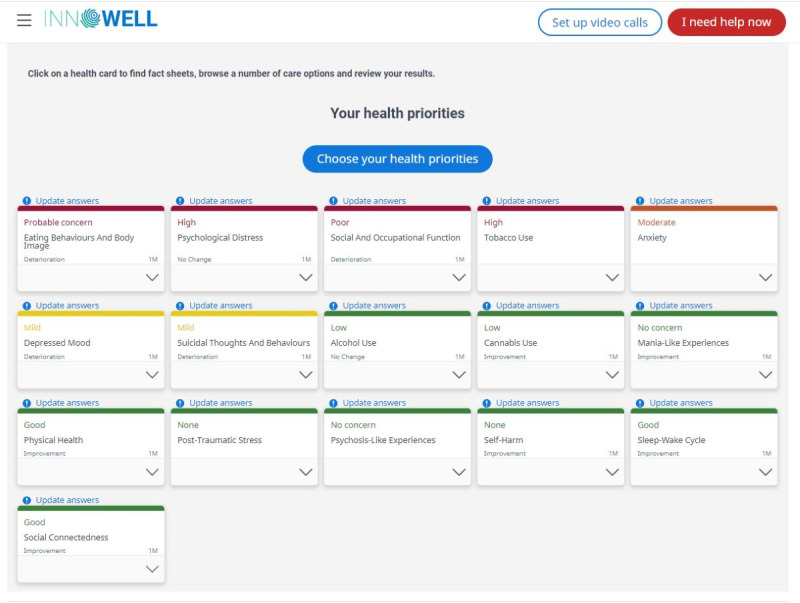
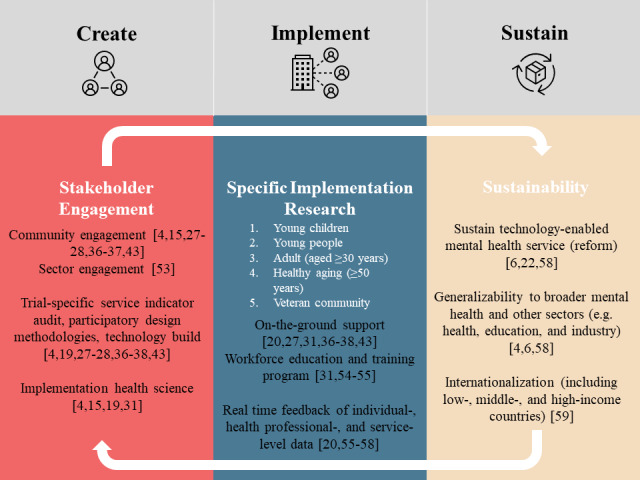
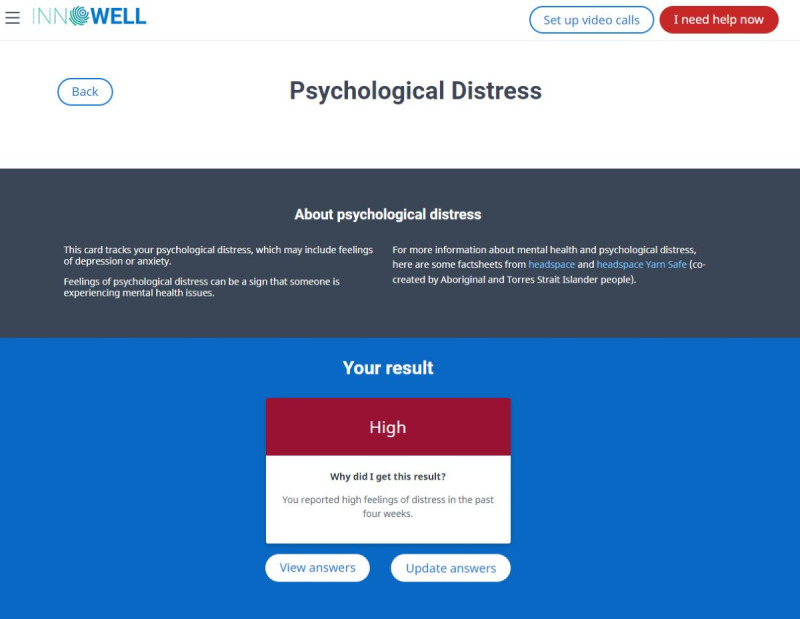
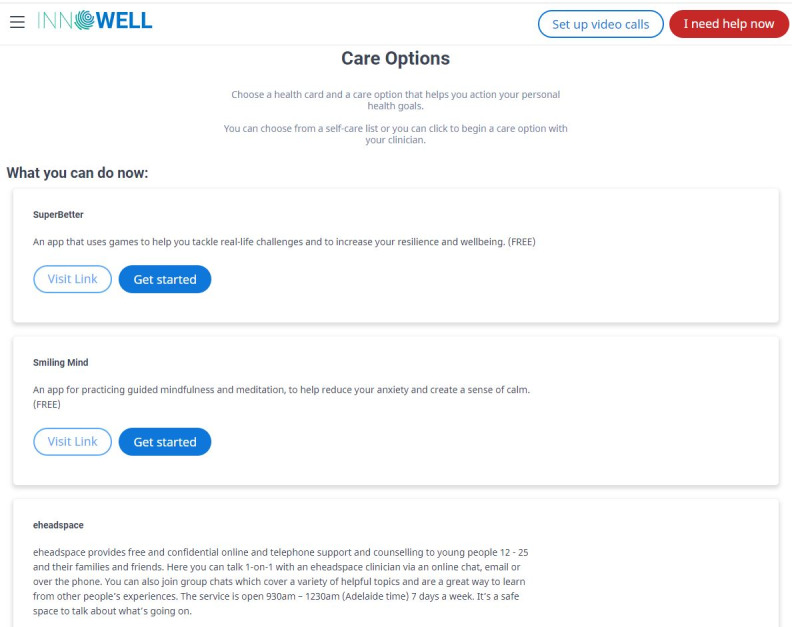
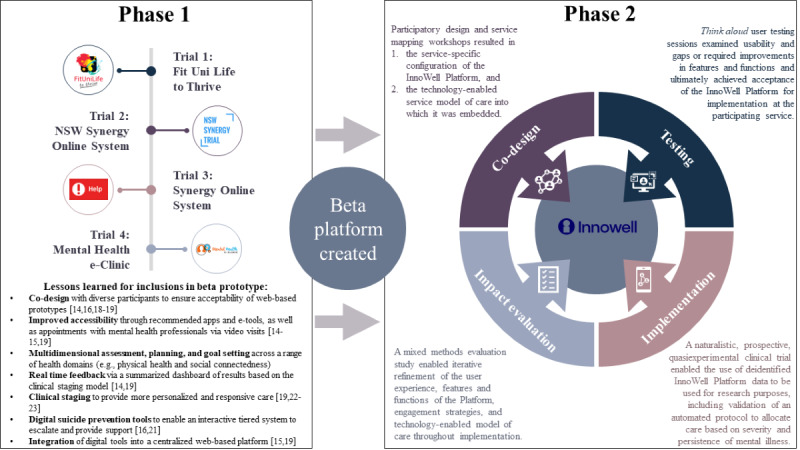
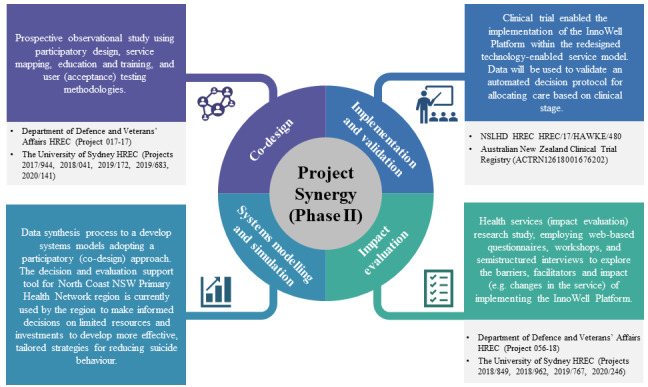
Project Synergy aimed to co-design, implement, and evaluate novel HITs, as exemplified by the InnoWell Platform, to work with standard health care organizations. The goals were to deliver improved outcomes for specific populations under focus and support organizations to enact significant system-level reforms.
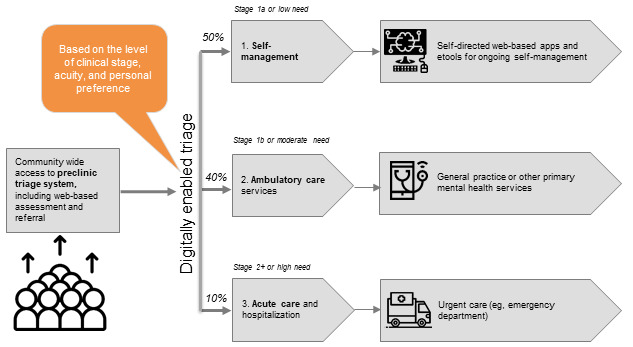
Participating health care organizations included the following: Open Arms-Veterans & Families Counselling (in Sydney and Lismore, New South Wales [NSW]); NSW North Coast headspace centers for youth (Port Macquarie, Coffs Harbour, Grafton, Lismore, and Tweed Heads); the Butterfly Foundation's National Helpline for eating disorders; Kildare Road Medical Centre for enhanced primary care; and Connect to Wellbeing North Coast NSW (administered by Neami National), for population-based intake and assessment. Service users, families and carers, health professionals, and administrators of services across Australia were actively engaged in the configuration of the InnoWell Platform to meet service needs, identify barriers to and facilitators of quality mental health care, and highlight potentially the best points in the service pathway to integrate the InnoWell Platform. The locally configured InnoWell Platform was then implemented within the respective services. A mixed methods approach, including surveys, semistructured interviews, and workshops, was used to evaluate the impact of the InnoWell Platform. A participatory systems modeling approach involving co-design with local stakeholders was also undertaken to simulate the likely impact of the platform in combination with other services being considered for implementation within the North Coast Primary Health Network to explore resulting impacts on mental health outcomes, including suicide prevention.
Despite overwhelming support for integrating digital health solutions into mental health service settings and promising impacts of the platform simulated under idealized implementation conditions, our results emphasized that successful implementation is dependent on health professional and service readiness for change, leadership at the local service level, the appropriateness and responsiveness of the technology for the target end users, and, critically, funding models being available to support implementation. The key places of interoperability of digital solutions and a willingness to use technology to coordinate health care system use were also highlighted.
Although the COVID-19 pandemic has resulted in the widespread acceptance of very basic digital health solutions, Project Synergy highlights the critical need to support equity of access to HITs, provide funding for digital infrastructure and digital mental health care, and actively promote the use of technology-enabled, coordinated systems of care.
在全球范围内,精神卫生保健系统存在一些根本性缺陷,包括获取服务受限、服务分散、干预措施与服务使用者需求不匹配、对个人结果监测的利用不足(无法跟踪进展情况)、排斥家庭和照顾者以及护理体验欠佳。健康信息技术(HITs)在改善这些支撑精神卫生保健质量提升的方面具有巨大潜力。
协同项目旨在共同设计、实施和评估新型健康信息技术,以InnoWell平台为例,与标准的医疗保健组织合作。目标是为重点关注的特定人群带来更好的结果,并支持各组织进行重大的系统层面改革。
参与的医疗保健组织包括:“张开双臂——退伍军人及家庭咨询”(位于新南威尔士州悉尼和利斯莫尔);新南威尔士州北海岸青少年心理健康服务中心(麦夸里港、科夫斯港、格拉夫顿、利斯莫尔和特威德角);蝴蝶基金会饮食失调全国求助热线;基尔代尔路医疗中心以加强初级保健;以及新南威尔士州北海岸“连接健康生活”(由Neami National管理),用于基于人群的接纳和评估。澳大利亚各地的服务使用者、家庭和照顾者、卫生专业人员以及服务管理人员积极参与InnoWell平台的配置,以满足服务需求,确定高质量精神卫生保健的障碍和促进因素,并突出服务流程中可能最适合整合InnoWell平台的环节。然后,在各自的服务中实施本地配置的InnoWell平台。采用了包括调查、半结构化访谈和研讨会在内的混合方法来评估InnoWell平台的影响。还采用了一种参与式系统建模方法,与当地利益相关者共同设计,以模拟该平台与北海岸初级卫生网络内正在考虑实施的其他服务相结合可能产生的影响,从而探索对精神卫生结果(包括自杀预防)的影响。
尽管将数字健康解决方案整合到精神卫生服务环境中得到了压倒性的支持,并且在理想化实施条件下模拟的平台具有良好的影响,但我们的结果强调,成功实施取决于卫生专业人员和服务机构对变革的准备情况、当地服务层面的领导力、技术对目标最终用户的适用性和响应性,以及至关重要的是,是否有可用的资金模式来支持实施。还强调了数字解决方案的关键互操作性位置以及使用技术协调医疗保健系统使用的意愿。
尽管新冠疫情导致非常基本的数字健康解决方案得到了广泛接受,但协同项目突出表明,迫切需要支持平等获取健康信息技术,为数字基础设施和数字精神卫生保健提供资金,并积极推广使用技术支持的协调护理系统。