Li Jie, Xiang Haitao, Huang Chao, Lu Jiashu
Department of Gastroenterology, The People's Hospital of Taizhou, The Fifth Affiliated Hospital of Nantong University, Taizhou, China.
Department of Neurosurgery, Suzhou Kowloon Hospital, Shanghai Jiaotong University School of Medicine, Suzhou, China.
Front Pharmacol. 2021 Dec 16;12:797298. doi: 10.3389/fphar.2021.797298. eCollection 2021.
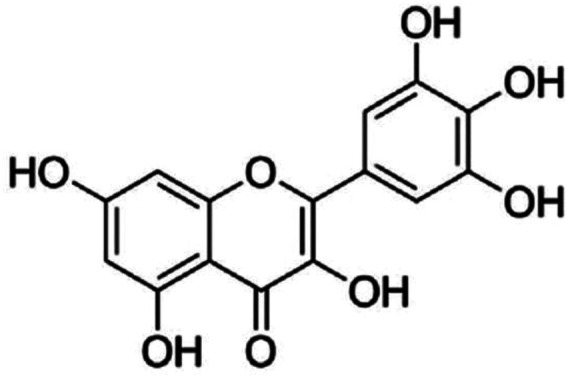
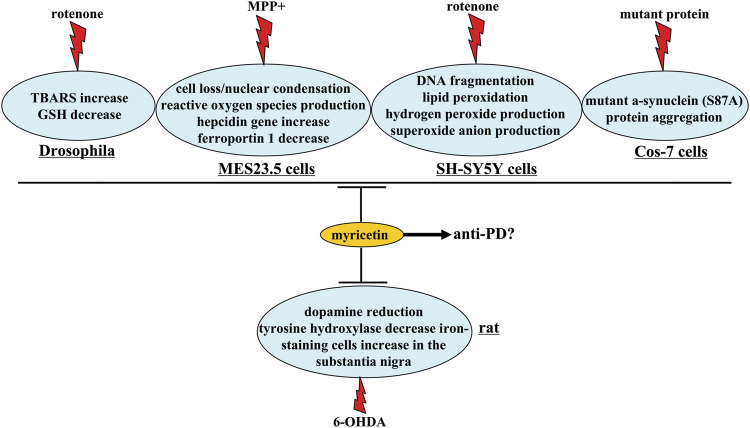
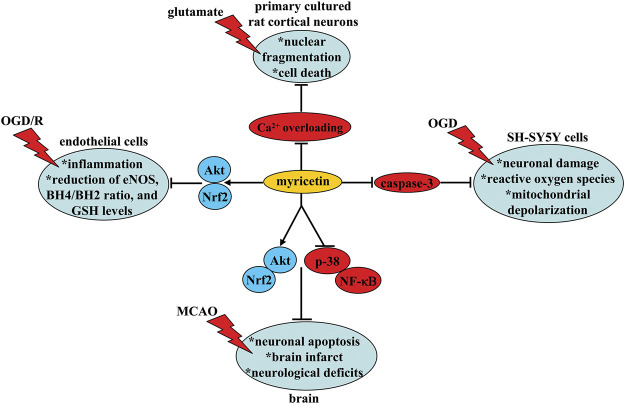
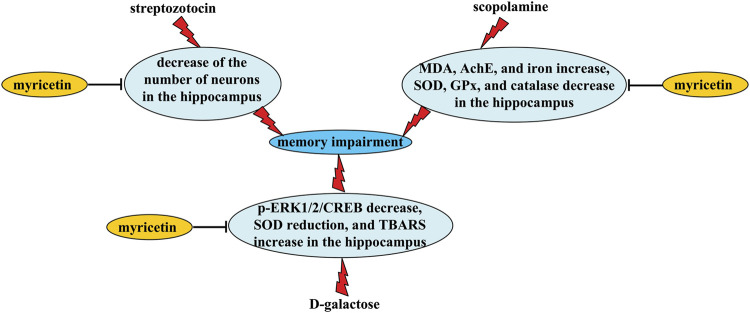
Myricetin is a natural flavonoid extracted from a variety of plants, such as medicinal herbs, vegetables, berries, and tea leaves. A growing body of evidence has reported that myricetin supplementation display therapeutic activities in a lot of nervous system disorders, such as cerebral ischemia, Alzheimer's disease, Parkinson's disease, epilepsy, and glioblastoma. Myricetin supplementation can also protect against pathological changes and behavioral impairment induced by multiple sclerosis and chronic stress. On the basis of these pharmacological actions, myricetin could be developed as a potential drug for the prevention and/or treatment of nervous system disorders. Mechanistic studies have shown that inhibition of oxidative stress, cellular apoptosis, and neuroinflammatory response are common mechanisms for the neuroprotective actions of myricetin. Other mechanisms, including the activation of the nuclear factor E2-related factor 2 (), extracellular signal-regulated kinase 1/2 (ERK1/2), protein kinase B (Akt), cyclic adenosine monophosphate-response element binding protein (CREB), and brain-derived neurotrophic factor (BDNF) signaling, inhibition of intracellular Ca increase, inhibition of c-Jun N-terminal kinase (JNK)-p38 activation, and suppression of mutant protein aggregation, may also mediate the neuroprotective effects of myricetin. Furthermore, myricetin treatment has been shown to promote the activation of the inhibitory neurons in the hypothalamic paraventricular nucleus, which subsequently produces anti-epilepsy effects. In this review, we make a comprehensive understanding about the pharmacological effects of myricetin in the nervous system, aiming to push the development of myricetin as a novel drug for the treatment of nervous system disorders.
杨梅素是一种从多种植物中提取的天然黄酮类化合物,如药草、蔬菜、浆果和茶叶等。越来越多的证据表明,补充杨梅素在许多神经系统疾病中具有治疗作用,如脑缺血、阿尔茨海默病、帕金森病、癫痫和胶质母细胞瘤。补充杨梅素还可以预防多发性硬化症和慢性应激引起的病理变化和行为障碍。基于这些药理作用,杨梅素有望开发成为预防和/或治疗神经系统疾病的潜在药物。机制研究表明,抑制氧化应激、细胞凋亡和神经炎症反应是杨梅素神经保护作用的常见机制。其他机制,包括激活核因子E2相关因子2()、细胞外信号调节激酶1/2(ERK1/2)、蛋白激酶B(Akt)、环磷酸腺苷反应元件结合蛋白(CREB)和脑源性神经营养因子(BDNF)信号通路,抑制细胞内钙升高,抑制c-Jun氨基末端激酶(JNK)-p38激活,以及抑制突变蛋白聚集,也可能介导杨梅素的神经保护作用。此外,杨梅素治疗已被证明可促进下丘脑室旁核中抑制性神经元的激活,从而产生抗癫痫作用。在这篇综述中,我们对杨梅素在神经系统中的药理作用进行了全面的了解,旨在推动杨梅素作为治疗神经系统疾病的新型药物的开发。